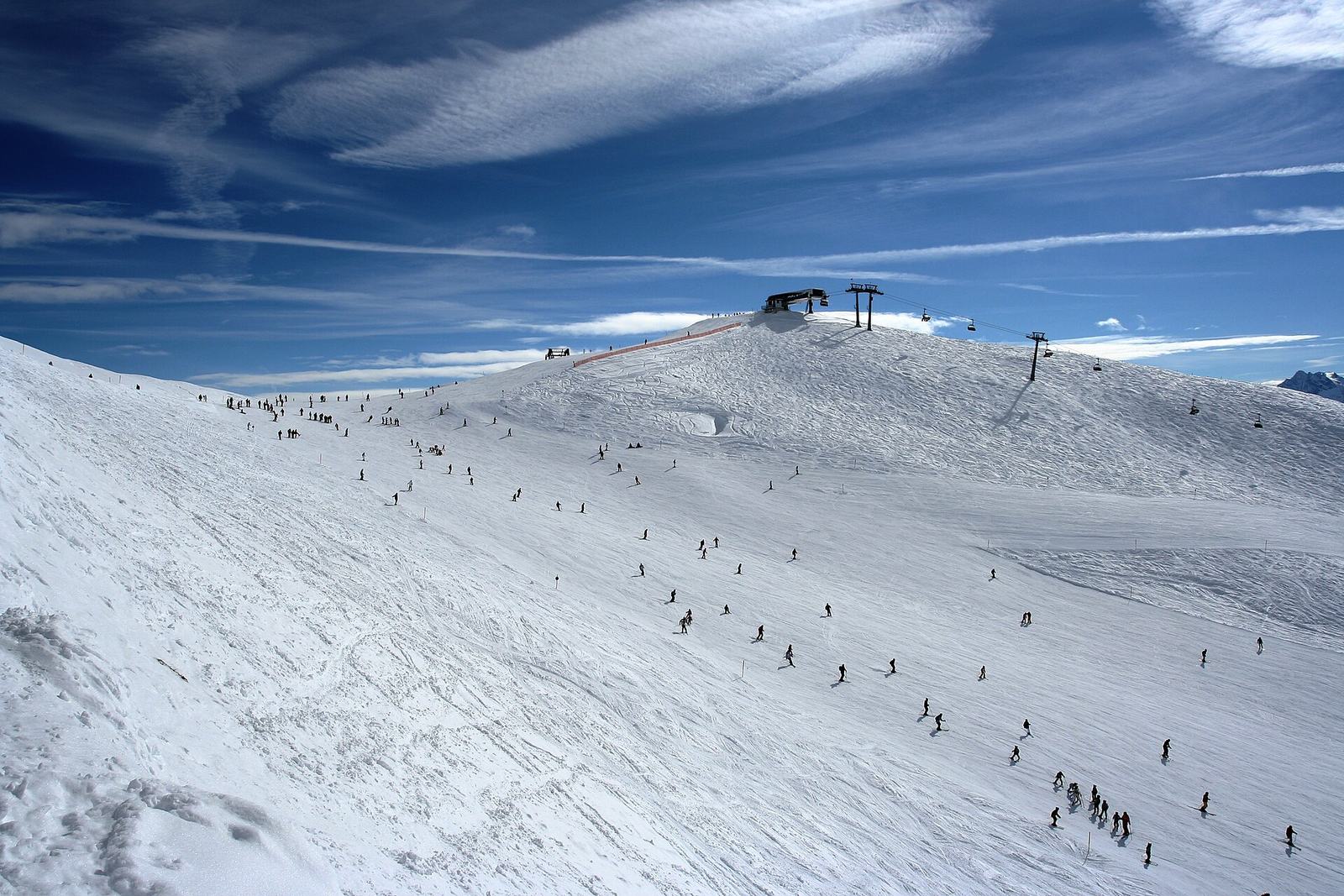
What to wear skiing is a three-layer question: a base layer against the skin that moves sweat away, a mid-layer that traps warm air, and a waterproof outer shell that blocks wind and snow. Add thin ski socks, gloves or mittens, goggles and a neck gaiter. The single rule that matters more than any purchase: no cotton, anywhere, in any layer.
That is the whole system, and it works from a $200 outfit to a $2,000 one. Everything else on this page is refinement — which fabrics, how thick, insulated or shell, gloves or mittens, and how to adapt the same three layers to a February morning at minus 10°F and an April afternoon at 45°F.
Skiing is the rare activity where you alternate between hard exercise and sitting motionless in the wind, sometimes within ninety seconds. That is why layering matters so much more here than in almost any other sport. One very warm coat cannot do both jobs. Three adjustable layers can.
The three-layer system in one table
| Layer | Job | Good materials | Never |
|---|---|---|---|
| Base | Move sweat off the skin | Merino wool, polyester, polypropylene | Cotton |
| Mid | Trap warm air | Fleece, light down, synthetic insulation, thick merino | Cotton |
| Outer | Block wind and water | Waterproof-breathable shell, or an insulated ski jacket | Anything “water-resistant” |
Two principles make the system work.
Each layer has one job. A base layer that is too warm stops moving sweat. A mid-layer that is not breathable traps it. An outer layer that is merely water-resistant lets snow through after an hour of falling over.
You adjust the middle. The base and outer stay on all day; the mid-layer comes off at 11am when the sun appears and goes back on for the last run. This is why a shell plus a separate mid-layer beats an insulated jacket for most people — the insulated jacket cannot be taken apart.
We go deeper on the whole system in the ski layering system.
Why cotton is the one genuine mistake
Cotton absorbs moisture and holds it against your skin. Once wet it stops insulating entirely and starts actively cooling you, and it dries extremely slowly in cold air. A cotton T-shirt under a ski jacket is the most common cause of a miserable afternoon, and it costs nothing to avoid.
This includes things people do not think of as cotton clothing: a favourite hoodie as a mid-layer, ordinary socks, ordinary underwear, jeans, and a cotton-blend beanie. In dry cold at low exertion you may get away with it. On a day where you sweat on the way up and then sit on a chairlift in wind, you will not.
The replacements are cheap. Synthetic base layers start around $25 a piece; merino costs more and is worth it if you ski often, mostly because it does not smell after three days. There is no performance case for cotton anywhere in a ski outfit.
Base layers: what to buy
Buy one or two sets of merino wool or synthetic base layers in a lightweight or midweight, and skip anything advertised as “thermal” that turns out to be cotton-blend. A set costs $40–$120 and is the layer most worth spending on, because it is the only one touching your skin all day.
Merino wool. Warm when damp, breathable, and it does not develop an odour over several days, which matters on a week-long trip with limited laundry. More expensive and less durable than synthetics.
Synthetic (polyester, polypropylene). Cheaper, more durable, dries faster, and smells noticeably worse by day three. Perfectly good.
Silk. Thin, light and pleasant, but insufficient in genuine cold.
The weight question: midweight is right for most people in most conditions. Lightweight for spring skiing or anyone who runs hot; heavyweight only for genuinely severe cold, and it is usually better to add a mid-layer than to thicken the base.
Two fit notes: base layers should be snug rather than tight, because the fabric has to touch skin to move moisture; and a quarter-zip top is more useful than a crew neck because it lets you vent without undressing. More in the best base layers for skiing.
Mid-layers: use what you already own
The mid-layer is the one place you almost certainly do not need to buy anything. A fleece, a light down or synthetic puffy, or a thick merino top all work. Ski-specific mid-layers exist and offer very little a $40 fleece does not.
What to choose depends on the day:
- Fleece — breathable, bulky, works when damp, unbeatable value. The default.
- Light synthetic insulation — warmer per ounce than fleece, still works when damp, packs down small enough to stuff in a jacket pocket.
- Light down — the warmest per ounce and the worst when wet. Excellent under a shell on a cold dry day, a liability on a wet one.
- Thick merino — comfortable, breathable, expensive, and heavy when it gets damp.
The mistake to avoid is a mid-layer that does not breathe — a fashion puffy with a nylon shell, for instance, traps moisture between itself and your base layer and makes the whole system fail. If you can only feel warmth and not airflow, it is the wrong piece.
On a genuinely cold day, two thin mid-layers beat one thick one, because you can remove half of it at lunchtime.
Insulated jacket or shell?
Buy a shell if you ski in varied conditions, want one jacket for several years, or run warm. Buy an insulated jacket if you ski a few days a year in reliably cold conditions, dislike managing layers, or are buying for a child. A shell plus a separate mid-layer is the more adaptable system and what most regular skiers end up with.
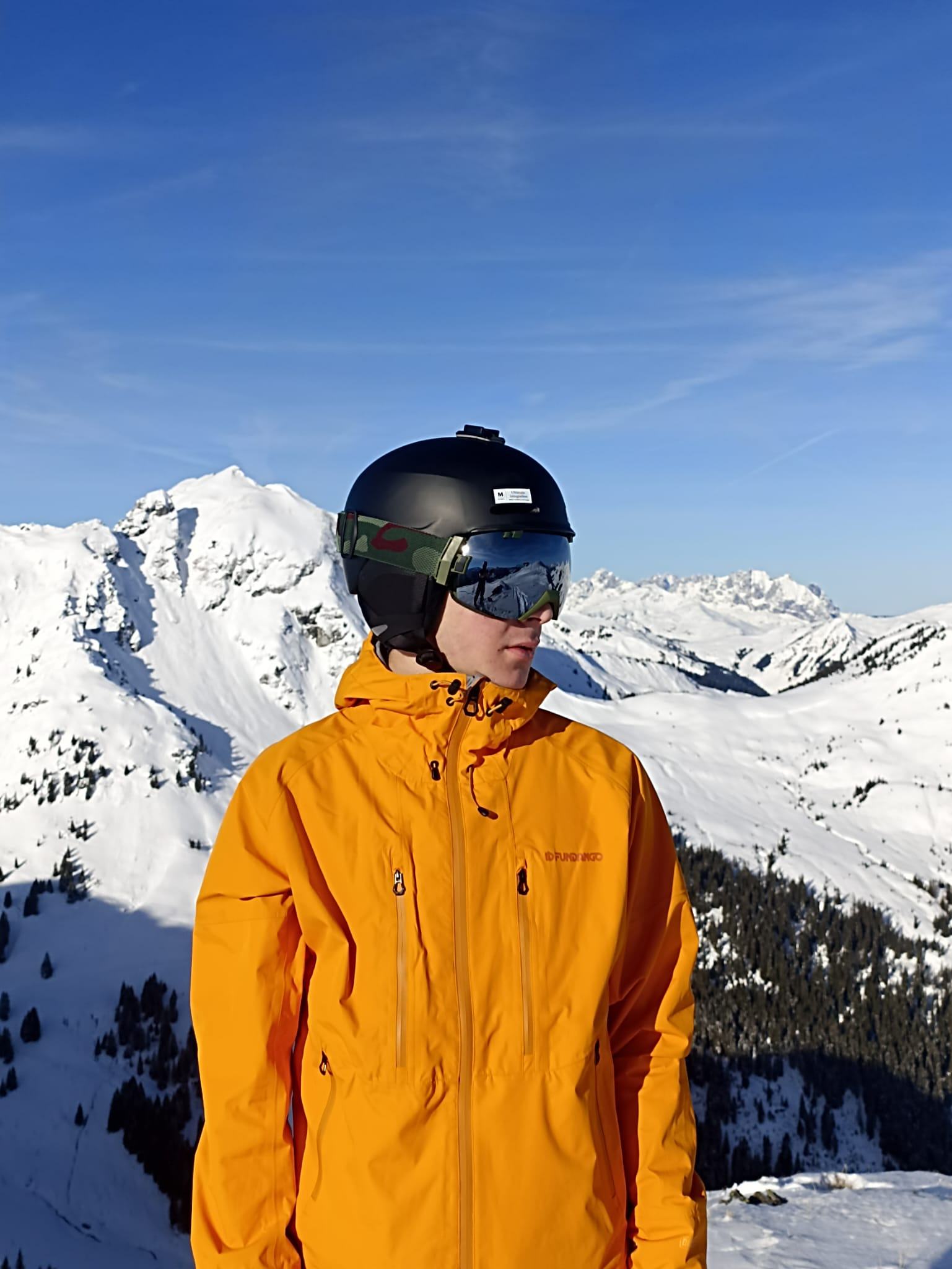
The shell. Waterproof and windproof, no insulation. You control warmth entirely with what goes underneath, which means the same jacket works at minus 10°F and at 50°F. Look for a waterproof rating around 10,000mm or above and taped seams. Pit zips — underarm vents — are the single most useful feature on any ski jacket and are worth seeking out.
The insulated jacket. Warmth built in. Simpler, warmer standing still, and prone to overheating the moment the sun comes out or you walk uphill. Genuinely the right answer for children, who lose mid-layers, and for once-a-year skiers in cold places.
Either way, three features actually matter:
- A powder skirt — the elasticated band inside the hem that stops snow going up your back when you fall.
- Pit zips, for the twenty minutes each day when you overheat.
- A helmet-compatible hood, or no hood at all. A hood that will not fit over a helmet is decoration.
What the waterproof numbers actually mean
Ski jackets carry two numbers, usually printed as something like 20,000mm / 20,000g. They are worth understanding, because they are the only specification on the label that reliably predicts whether you will be dry at 3pm.
The waterproof rating, in millimetres, is a hydrostatic head measurement: how tall a column of water the fabric holds before it leaks. Roughly:
- 5,000mm — light snow and short days only. Fine for a cold, dry, resort-skiing week; not fine for spring.
- 10,000mm — the sensible minimum for a ski jacket, and adequate for most people in most conditions.
- 15,000–20,000mm — comfortably waterproof in wet snow and rain. The right target if you ski the Pacific Northwest, New England or the Alps in spring.
- 28,000mm+ — genuinely bombproof, expensive, and more than a resort skier needs.
The breathability rating, in grams, measures how much water vapour passes through a square metre of fabric in 24 hours. Higher is better, and it matters more than people expect: a completely waterproof jacket that does not breathe traps your own sweat, which wets your base layer from the inside and produces exactly the problem the shell was meant to prevent. Around 10,000g is a reasonable floor; 20,000g is good.
Three things the numbers do not tell you:
- Taped seams. A 20,000mm fabric with untaped seams leaks at every stitch. Look for “fully taped” or “critically taped” — fully is better.
- The DWR finish. The durable water repellent coating on the outer face makes water bead rather than soak the face fabric. It wears off, and when it does the jacket “wets out” and stops breathing even though it is technically still waterproof. Re-proofing spray costs $15 and restores it; this is the single most common reason a good jacket stops working after three seasons.
- Zips and vents. A cheap jacket with pit zips outperforms an expensive one without them on any day warmer than about 25°F.
The practical summary: 10,000mm / 10,000g with fully taped seams and pit zips is a genuinely good ski jacket, and everything above that is comfort rather than necessity.
Insulated vs shell ski jacket works through the decision in more detail.
Ski trousers or bibs?
Trousers are simpler, cheaper and easier for bathroom stops. Bibs — trousers with a chest panel and shoulder straps — keep snow out completely, stay up without a belt, and are warmer around the middle. Bibs have gone from a niche choice to the default among regular skiers, and the reason is simply that snow cannot get in.
Whichever you choose, the specifications are the same as the jacket: waterproof rather than water-resistant, taped seams, and thigh vents, which do for your legs what pit zips do for your torso.
Two details that decide comfort:
- Trousers go over the boots, never tucked in. Every pair of ski trousers has an elasticated inner cuff designed to sit over the boot shell. Tucking them in puts snow in your boot on the first fall.
- Reinforced cuffs. The inside ankle of ski trousers gets slashed by the opposite ski edge. Cheap trousers without a reinforced panel there last one or two seasons.
Insulated or shell applies here too, and the answer is the same: shell trousers over a base layer adapt better; insulated trousers are warmer for people who ski cold. Ski pants vs bibs compares them properly.
Socks, gloves and the small things that decide the day
The cheapest items on this page have the largest effect on whether you enjoy yourself.
Socks. One pair. Thin. Tall enough to come above the boot cuff. Merino or synthetic. The universal beginner instinct — thick socks, or two pairs, for warmth — makes feet colder, because it compresses the boot liner, restricts circulation and stops the boot fitting. A thin ski sock in a properly fitted boot is warmer than a thick sock in a tight one. The best ski socks covers the details.
Gloves or mittens. Mittens are warmer, because fingers share heat; gloves offer more dexterity. If your hands run cold, take mittens and stop trying to solve it with thicker gloves. Either way: waterproof, with a long cuff that goes over or under the jacket sleeve consistently, and a leash if you are prone to dropping things from chairlifts. Liner gloves underneath add warmth and let you use a phone without exposing bare skin. Ski gloves vs mittens has the comparison.
Neck gaiter. The best value item in skiing at $15–$35. It closes the gap between helmet and jacket, can be pulled over your nose in wind, and weighs nothing. Never wear a scarf — loose ends and chairlifts are a genuinely dangerous combination.
Goggles. Not sunglasses. Snow reflects light upward, wind at speed hurts, and sunglasses fall off. For one pair, a mid-range lens with 30–50% visible light transmission works acceptably in most conditions. Flat light and snowfall need a high-VLT lens; bright high-altitude sun needs a dark one.
Helmet. Standard equipment. It also happens to be the warmest hat you will ever own.
Sunscreen and lip balm. Snow reflects UV upward and altitude increases exposure. Skiers burn under the chin and nose, which is both painful and faintly comic.
How do you stay warm skiing?
Stay warm by staying dry, not by adding thickness. Most cold skiers are cold because they sweated on the way up and then sat still on a chairlift in damp base layers. Vent before you overheat, add a layer before you get cold rather than after, keep your neck covered, and eat something — cold hits hardest when you are running on empty.
The specific fixes, in order of how much difference they make:
- Vent early. Open pit zips and thigh vents on the climb or the walk, before you sweat. Once a base layer is wet the day is compromised.
- Cover your neck and head. A large share of heat loss is from the head and neck, and a gaiter costs $20.
- Fix the boots, not the socks. Cold feet are almost always a fit problem, a circulation problem or a wet-sock problem. Thicker socks make all three worse.
- Eat and drink. Being cold is expensive in calories, and dehydration at altitude makes it worse.
- Get out of the wind. Wind strips heat far faster than still air at the same temperature, which is why an exposed treeless slope on a windy day is a completely different proposition from a sheltered one at the same reading.
- Move. Two runs is warmer than a long lunch in a cold lodge.
Chemical hand and toe warmers are cheap, work well and are worth carrying for a genuinely cold day — they are a better answer than another layer. Heated gloves and socks also work, cost $150–$300, and mostly solve a problem better solved by a proper boot fitting. More in how to stay warm skiing.
What to wear skiing in spring
Spring skiing needs less insulation and more sun protection. From mid-March, a base layer under a shell is frequently enough by mid-morning, and the day can start at 20°F and reach 50°F on a south-facing slope by lunchtime. The layer you will actually want is one you can take off and stuff in a pocket.
The spring-specific adjustments:
- Swap the heavy mid-layer for a light one you can carry.
- Lighter gloves, and take a spare pair — spring snow is wet and soaks gloves faster than cold snow.
- A high-quality lens or two. Spring light is intense and glare off wet snow is severe.
- Serious sunscreen. March and April at altitude are when people get genuinely burned.
- Waterproof still matters. Spring snow is wetter, and a shower-resistant jacket that survived February will wet through in April.
There is a corresponding late-season temptation to ski in jeans and a hoodie on a warm afternoon, which works until you fall once in wet snow. What to wear spring skiing covers the whole season.
What to wear at different temperatures
The same three layers cover the entire range; what changes is thickness and how much you vent. Here is what the system looks like across a real winter, with the caveat that wind changes everything — a still day at 10°F is more comfortable than a windy one at 25°F.
| Conditions | Base | Mid | Outer | Extras |
|---|---|---|---|---|
| Below 0°F, windy | Midweight or heavyweight | Two thin, or one thick | Insulated jacket, or shell with both mids | Mittens, liner gloves, gaiter over the nose, toe warmers |
| 0–15°F | Midweight | Fleece plus a light puffy | Shell or insulated | Mittens, gaiter, hand warmers on the chairlift |
| 15–30°F | Midweight | Fleece | Shell | Gloves, gaiter |
| 30–40°F | Lightweight | Thin fleece, removable | Shell, vents open | Lighter gloves, high-VLT lens if snowing |
| Above 40°F, sunny | Lightweight | None, or carried | Shell | Spare gloves, sunscreen, dark lens |
Two adjustments the table cannot capture.
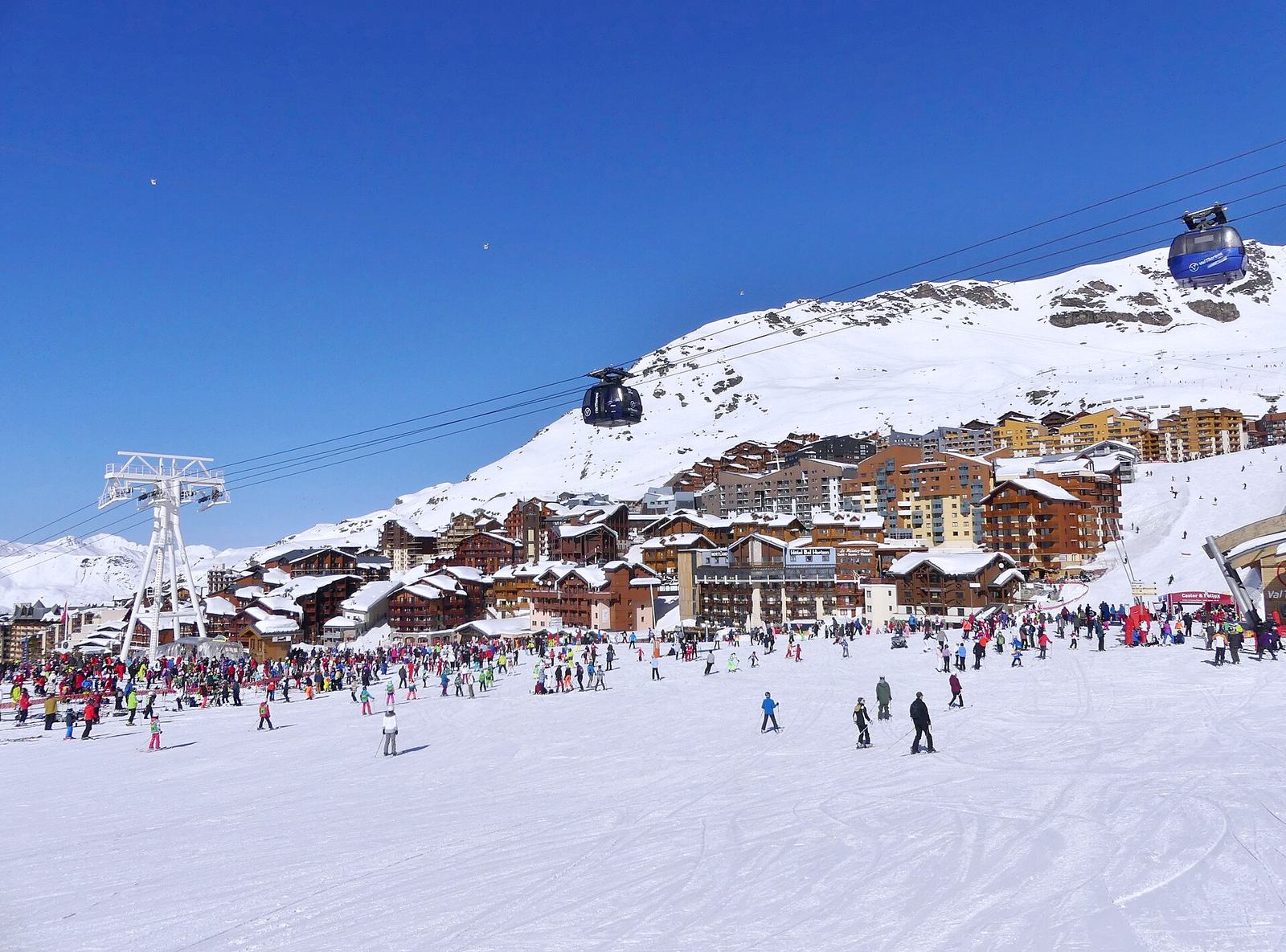
Altitude and exposure matter more than the forecast. The valley temperature is not the summit temperature. Colorado and high French resorts are routinely 15–20°F colder at the top than at the base, and an exposed, treeless ridge in wind is a different climate from a sheltered tree run five minutes away. Dress for the summit and vent on the way down.
Sitting still is the cold part. A chairlift ride is fifteen minutes of no exercise, full wind exposure and damp base layers. Almost everybody who is cold while skiing is cold on the lift rather than on the run. That is what the gaiter, the mittens and the hand warmers are actually for.
The other direction is real too: overdressing is the more common error among first-timers. People arrive expecting to be freezing, put on everything they own, sweat through it in the first hour and then get genuinely cold. Start slightly under-dressed, and carry the layer you took off.
Can you go skiing without ski clothes?
For one day, yes, with care. A waterproof rain jacket and waterproof over-trousers from a hiking shop, over a synthetic base layer and a fleece, will get you through a mild day. Waterproof walking gloves, wool socks and a neck gaiter fill the gaps. What you cannot substitute is waterproofing: jeans, a wool coat or a cotton hoodie will be soaked within an hour.
The workable improvisation kit:
- Hiking waterproofs — a rain shell and over-trousers. Less warm and less durable than ski clothing, entirely functional for a day.
- Running or hiking base layers you already own, provided they are synthetic or merino.
- A fleece as the mid-layer.
- Waterproof walking gloves, or ski gloves borrowed.
- Goggles, which are worth borrowing or buying even for one day — sunglasses genuinely do not work.
What will not do: jeans, any cotton layer, a wool overcoat, a scarf, ordinary trainers for the walk to the lifts, or a hoodie as an outer layer.
Renting clothing is also an option at many resorts and is worth considering for a first trip — jacket and trouser rental typically runs $25–$40 a day and lets you find out whether you like skiing before spending several hundred dollars on kit. What to wear skiing without ski clothes covers the improvisation properly, and ski outfit ideas covers the other end, where people actually enjoy putting an outfit together.
A complete packing list
Per person, for a week’s skiing:
On the mountain
- 2 base layer tops, 2 bottoms (merino or synthetic)
- 1–2 mid-layers (fleece or light insulation)
- 1 waterproof jacket
- 1 pair waterproof trousers or bibs
- 3–4 pairs thin ski socks
- 1 pair gloves or mittens, plus liner gloves
- 1–2 neck gaiters
- Goggles, ideally with a spare or interchangeable lens
- Helmet
- Sunscreen, lip balm with SPF
- Hand and toe warmers
Off the mountain
- Warm waterproof boots for the village — snow boots, not trainers
- A warm jacket that is not your ski jacket
- Ordinary clothes, a swimsuit if there is a pool or hot tub
- Slippers or indoor shoes for a condo
In the carry-on, not the checked bag
- Base layers, goggles, gloves, helmet if it fits
That last point is the one people learn the hard way. A ski bag that goes missing is an inconvenience; a bag with all your warm clothing in it is a lost day. The ski trip packing list covers the whole trip, and ski gear guide covers the hardware side.
What to wear off the mountain
Half of a ski trip happens with your boots off, and this is the part people pack badly. The failure mode is arriving in a mountain town in trainers, discovering the pavements are compacted ice, and spending the week either indoors or falling over.
Boots for the village. Warm, waterproof, with a grippy lug sole. This is the single most useful non-ski item you will pack. Trainers on an icy mountain pavement are genuinely hazardous, and stylish leather boots with a smooth sole are worse.
A second warm jacket. Your ski jacket will be damp, and it smells of a week of skiing by Wednesday. Something warm and casual for the evening makes a real difference.
Layers again. Mountain evenings are cold outside and hot inside — restaurants, bars and hotels in ski towns are heated to a degree that surprises visitors. A jumper you can take off beats a heavy coat you cannot.
A swimsuit. Pools, hot tubs and spas are standard at ski hotels and condominium complexes, and almost universal in Austria and Japan. It weighs nothing and gets forgotten constantly.
Slippers or indoor shoes for a self-catered apartment, where you will not want to wear outdoor boots and the floors are cold.
Two smaller things. Take a dry bag or a bin liner for wet gloves, socks and base layers on the way home. And boot dryers exist and are wonderful — many condos and hotels have them in a ski room, and if yours does not, taking the liners out overnight is the poor man’s version and works nearly as well.
The house rule about outerwear at dinner varies wildly by country: nobody in Austria minds, some Swiss and French restaurants do, and American resorts are entirely relaxed. If you are worried, one collared shirt or an ordinary jumper covers it.
Frequently asked questions
What should I wear skiing for the first time?
A synthetic or merino base layer, a fleece mid-layer, a waterproof jacket and waterproof trousers, one pair of thin ski socks, gloves or mittens, goggles, a neck gaiter and a helmet. Borrow or rent what you can — you do not need to buy ski clothing before knowing whether you like skiing.
Can I wear jeans skiing?
No. Jeans absorb water, stop insulating within minutes of your first fall, freeze stiff in cold air and take hours to dry. This is the most common clothing mistake among first-timers and it ruins the day rather than merely being uncomfortable.
How many layers should I wear skiing?
Three: base, mid and waterproof outer. On a very cold day, add a second thin mid-layer rather than a thicker single one, so you can remove half of it. On a warm spring day, a base layer under a shell is frequently enough.
Do I need special ski socks?
Yes, and only one pair at a time. Ski socks are thin, tall and made from merino or synthetic fibres, and they are shaped to sit inside a ski boot without bunching. Thick socks or two pairs make boots fit worse and feet colder.
Should I buy an insulated jacket or a shell?
A shell plus a separate mid-layer if you want one jacket that works across the whole season and all conditions. An insulated jacket if you ski a few days a year in reliably cold weather, dislike managing layers, or are buying for a child.
What do you wear under ski pants?
A base layer bottom, and nothing else. Not jeans, not leggings made of cotton, not tracksuit trousers. If it is genuinely cold, a midweight base layer replaces a lightweight one — but layering two pairs of trousers restricts movement and rarely helps.
How much does a ski outfit cost?
Roughly $200–$400 for a functional beginner outfit bought carefully in a sale, $600–$1,200 for good mid-range kit that lasts several seasons. Renting clothing at a resort costs about $25–$40 a day and is a sensible way to try skiing before committing.
The bottom line
Dressing for skiing is a system, not a shopping list, and the system is cheap to get right. Three layers, no cotton, thin socks, a neck gaiter, goggles and a helmet. That is a complete answer for a beginner and it remains the answer twenty years later, with better fabrics.
The two things worth spending money on: a genuinely waterproof outer layer, because water is the enemy rather than cold, and base layers, because they are against your skin for eight hours. The two things not worth spending money on in year one: a ski-specific mid-layer, and anything heated.
Next: the ski layering system for the detailed version, how to stay warm skiing if cold is your particular problem, the ski gear guide for skis, boots and helmets, and skiing for beginners if this is a first trip. If there are children involved, family ski vacations covers dressing them.
Clothing and rental price ranges checked 10 September 2026 for the 2026/27 season and compiled from published retail and resort rental rates. They are directional rather than quotes.
One packing note that matters more than any fabric rating: if you are flying, put the boots, helmet, goggles and one full base layer in your cabin bag. Outerwear can be rented or bought at any base area in an hour; boots that fit cannot. Our guide to flying with skis covers what airlines charge, what TSA will and will not let through, and what to do when a bag goes missing.
Sources
- NOAA National Weather Service — wind chill chart and cold weather safety
- National Ski Areas Association — slope safety and helmet guidance
- ASTM International — F2040, helmets for recreational snow sports
- Professional Ski Instructors of America (PSIA-AASI) — teaching and preparation guidance
Fabric performance descriptions reflect established properties of merino, synthetic and cotton fibres rather than any manufacturer’s claims; waterproof ratings are the industry-standard hydrostatic head measurement in millimetres.
Image credits
| Image | Photographer | Licence | Source |
|---|---|---|---|
| Rastkogel ski slope, Austria (featured image) | Petr Novák, Wikipedia | CC BY-SA 2.5 | Commons |
| Skier in helmet and goggles | Luca.trandafir | CC0 | Commons |
| Bad Gastein piste sign, Austria | Marek Ślusarczyk (Tupungato) | CC BY 3.0 | Commons |
| Val Thorens, France | Florian Pépellin | CC BY-SA 4.0 | Commons |
| Ski school at Passo Tonale | Zoran Kurelić Rabko | CC BY-SA 3.0 | Commons |
| Off-piste at Chamonix | Webwizzard | CC BY-SA 4.0 | Commons |