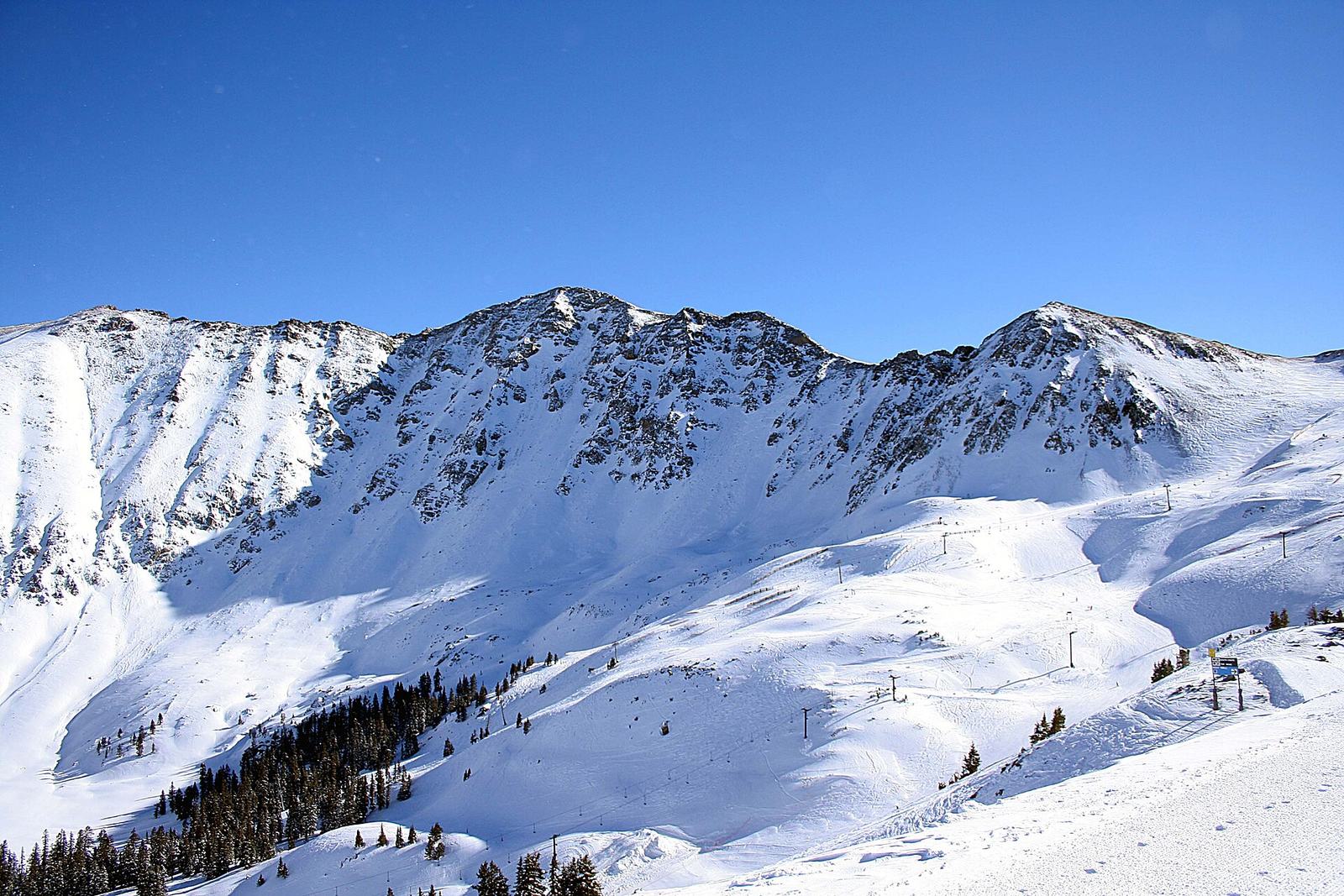
When is ski season in North America? The core runs from late November to early April, with the earliest resorts spinning lifts in mid-to-late October and a handful — Arapahoe Basin, Timberline, Mammoth — pushing into May or June. Europe runs early December to mid-April, Japan mid-December to early April. The best snow almost everywhere arrives between mid-January and mid-March.
Those are the outside edges. The far more useful question is not when a resort is technically open but when it is worth flying to, and those two dates can be six weeks apart. A Colorado resort that opens on 24 October is offering one white ribbon of machine-made snow down an otherwise brown mountain. That is a fine thing for a local with a season pass and a bad thing to build a holiday around.
This guide covers both: the actual calendar, and the honest version of what each part of it delivers. It also covers the 2026/27 forecast, which is unusual enough this year to be worth a section of its own.
The North American ski season at a glance
| Phase | Dates | What is open | Worth travelling for? |
|---|---|---|---|
| Race to open | Mid-to-late October | One or two runs, machine-made | No, unless you live nearby |
| Early season | November to mid-December | 30–60% of terrain, thin cover | Only for beginners or bargain hunters |
| Holiday peak | 20 December – 2 January | Most terrain, peak crowds, peak price | Only if the calendar forces it |
| Deep winter | January to mid-February | Everything, best snow, coldest days | Yes — the value window |
| Peak season | Mid-February to mid-March | Everything, deepest snowpack | Yes — the quality window |
| Spring | Mid-March to mid-April | Everything, softening | Yes — the underrated window |
| Late spring | Mid-April to June | Shrinking, upper mountain only | For the die-hards |
Two rules of thumb hold across almost every resort in North America. The snowpack is deepest in early March, not in January, because snow accumulates all winter. And the cheapest good conditions are in January, because demand collapses after New Year while the snow keeps arriving.
When does ski season start?
Most North American resorts open between mid-November and mid-December. A small group of high-altitude Colorado areas — Arapahoe Basin, Loveland, Keystone — compete each year to open first, typically in the second half of October. Opening day depends on overnight temperatures cold enough for snowmaking, not on snowfall, which is why the same resorts win the race every year.
As of 10 September 2026, very few resorts have committed to firm 2026/27 opening dates, and that is normal rather than evasive. Colorado’s early openers usually announce a target and then move it by a week in either direction depending on the first cold snap. Arapahoe Basin, at 10,780 feet with a north-facing base, and Loveland, sitting on the Continental Divide, both have the altitude and the water rights to make snow in October when almost nobody else can.
The rough regional pattern, based on typical years rather than announcements:
- High Colorado (A-Basin, Loveland, Keystone, Wolf Creek): mid-to-late October into early November
- Rest of Colorado, Utah, Wyoming, Montana: mid-to-late November, most by Thanksgiving
- Lake Tahoe and California: mid-November to early December, highly variable
- Pacific Northwest: late November to mid-December, snowfall-dependent rather than snowmaking-dependent
- Vermont, New Hampshire, Maine: mid-to-late November on machine-made snow
- The Alps: glacier skiing from October, most resorts from the first weekend of December
- Japan: mid-December, with Hokkaido often first
Check the resort’s own site rather than an aggregator, because opening dates change and resorts update their own pages first. We track the announcements as they land in ski resort opening dates, and cover what an early-season trip is actually like in early season skiing.
When does ski season end, and how long is it?
Most North American resorts close between the first and third weekend of April, giving a season of roughly 130 to 150 days. A handful run far longer: Arapahoe Basin regularly skis into June, Timberline on Mount Hood operates most of the year, and Mammoth has stayed open into July in strong years. Europe closes mid-to-late April, with glacier skiing continuing through summer.
Closing dates are decided by economics rather than snow. A resort with excellent April snow but empty parking closes anyway, because staffing a mountain for two hundred people a day loses money. This is why the end of the season is so uneven: the mountains that stay open late do so because they have a community that shows up, not because they have more snow than their neighbours.
The practical consequence for planning: April skiing is excellent and April terrain is unpredictable. You may find a full mountain in perfect corn snow, or you may find six runs and a lot of exposed rock. Check the open-terrain figure on the snow report, not the base depth, and check it the week before you go.
The season month by month
October. A race between three or four Colorado resorts. One run, machine-made, crowded with locals who have waited seven months. Charming; not a holiday.
November. Terrain expands week by week. Thanksgiving is the first proper crowd of the season and the first price step-up. Coverage is patchy and the moguls have rocks in them.
December. The first half is quiet, cheap and often surprisingly good. The second half is the most expensive and most crowded fortnight of the year, and the snowpack is frequently still building. If your only option is Christmas week, book early and accept both the price and the lift lines — the guide to skiing at Christmas covers how to make it work.
January. The best value in skiing. Cold, quiet, well covered, cheap. Storms are frequent and lift lines are short. The only genuine drawback is temperature, and that is a clothing problem rather than a scheduling one.
February. The strongest month for reliable snow and the worst for crowds and price. Presidents’ Day weekend and the school half-terms concentrate the entire season’s demand into about ten days.
March. The best all-round month. The snowpack peaks, the days get longer, storms are still frequent and the weather is warm enough to stay out all day. Prices soften after the first week in most places.
April. Soft snow, sunshine, closing parties, deck beer and cheap tickets. Terrain shrinks steadily, and south-facing slopes turn to slush by early afternoon. Ski mornings, stop at two.
May and June. A small, joyful group of resorts and a lot of hiking for turns. Not a destination trip for most people.
We put the argument for each in the best month to ski.

Which resorts have the longest and most reliable seasons
Season length is a product of three things: base elevation, aspect, and how much money the resort spends making snow. Snowfall barely enters into it, which surprises people.
| Resort | Base elevation | Typical season | Why it lasts |
|---|---|---|---|
| Arapahoe Basin, CO | 10,780 ft | Late Oct – early June | Highest base in the US, north-facing, cold |
| Timberline, OR | 5,960 ft | Most of the year | Palmer snowfield, permanent snow above the lodge |
| Mammoth, CA | 7,953 ft | Nov – late May, sometimes July | Enormous Sierra snowfall plus altitude |
| Loveland, CO | 10,800 ft | Late Oct – early May | Continental Divide, extreme snowmaking capacity |
| Killington, VT | 1,165 ft | Nov – late April | The largest snowmaking system in the East |
| Whistler Blackcomb, BC | 2,214 ft | Late Nov – late May | Glacier terrain up top, huge vertical range |
| Snowbird, UT | 7,760 ft | Late Nov – May | Cottonwood snowfall, north-facing cirques |
Altitude beats latitude, and aspect beats both. A north-facing slope at 10,000 feet in Colorado holds snow far longer than a south-facing slope at 6,000 feet in Vermont, which is why Colorado’s high resorts are simultaneously the first to open and the last to close.
The corollary matters for anyone booking either end of the season: base elevation is the single most useful number on a resort’s spec sheet in November and April, and almost nobody quotes it. Resorts advertise summit elevation and vertical drop, because those are more impressive. Look up the base.
There is also a reliability dimension that has nothing to do with the calendar. Continental snowpacks — Colorado, Utah, the northern Rockies — are cold, dry and stable through the winter. Maritime snowpacks — the Sierra, the Pacific Northwest, the Alps below about 5,000 feet — get much more snow but also get rain events that can wipe out a base in a weekend. A February rain-on-snow event at 4,000 feet in Tahoe is an ordinary occurrence; at 10,000 feet in Colorado it essentially does not happen.
What the 2026/27 forecast actually says
This season is unusual, and it is worth being precise about it rather than repeating last year’s assumptions.
As of the NOAA Climate Prediction Center’s September 2026 diagnostic discussion, El Niño is strengthening, with a greater than 90% chance of a very strong event during the Northern Hemisphere autumn and winter of 2026/27. The CPC puts the probability of the event reaching historic strength during October–December 2026 at around 75%, which would mean a three-month index above +2.5°C — stronger than any El Niño in the record since 1950.
That is a genuinely significant forecast, and it comes with a genuinely significant caveat that the CPC itself makes: a strong event raises the odds of the typical pattern, but the typical pattern is not guaranteed, and seasonal outlooks say very little about any individual mountain on any individual week.
With that firmly in mind, here is what strong El Niño winters have historically tended to mean for North American skiing:
| Region | Historical El Niño tendency | Confidence |
|---|---|---|
| Southern Colorado, New Mexico, Arizona | Wetter and snowier than average | Moderate |
| Southern Utah and the Southwest | Wetter than average | Moderate |
| Pacific Northwest, northern Idaho, Montana | Drier and warmer than average | Moderate |
| Northern Rockies and Wyoming | Below-average snowfall more likely | Low to moderate |
| Central Colorado | Near average — genuinely a coin flip | Low |
| Sierra Nevada and Tahoe | Highly variable; big years and busts both occur | Low |
| Northeast | Warmer, wetter storms; more mixed precipitation | Low to moderate |
How to actually use that. Not by booking Wolf Creek and cancelling Big Sky. Seasonal tendencies are weak signals compared with a single well-timed storm cycle, and the difference between a good trip and a bad one is almost always the ten days around your dates rather than the three months around your season. What the forecast justifies is a small tilt: if you were undecided between a southern Colorado trip and a northern Rockies trip this year, take the southern one, and buy the refundable pass option if the choice is expensive.
Why seasonal forecasts are weaker than they look
It is worth understanding what a seasonal outlook is actually claiming, because the gap between what it says and what people hear is enormous.
A seasonal forecast is a statement about the odds of a three-month average across a large region. It is not a statement about your resort, and it is emphatically not a statement about your week. A winter can finish 20% below its average snowfall total and still deliver a spectacular ten-day stretch in the middle of February — and the ten days are what you are buying.
Three specific reasons to hold the forecast loosely:
- Terrain overrides climate. Mountains generate their own weather. A single ridge can double snowfall over a valley twenty miles away, and no seasonal outlook resolves anything at that scale.
- Timing is invisible. A forecast that gets the season total exactly right tells you nothing about whether the snow arrives in December or March, which changes the trip completely.
- Skill is modest even at its best. Strong ENSO events are the situation in which seasonal forecasts perform best, and even then the historical hit rate for regional precipitation anomalies is well short of certainty. The CPC says as much in its own language: typical impacts are more likely, not guaranteed.
The practical upshot is not to ignore the forecast, but to use it the way you would use a weather-adjusted stock tip: as a small thumb on the scale for a decision you were already close to, never as the reason for the decision.
The other honest reading is that a very strong El Niño makes the northern tier a value play. If prices soften in Montana and the Pacific Northwest because everyone read the same forecast, and a storm cycle lands anyway, you will have an excellent and inexpensive week. We keep the seasonal picture updated through the winter in the ski season snow forecast.
Snowmaking is why the season starts when it does
Almost every ski resort in North America opens on manufactured snow, and understanding that changes how you read an opening date.
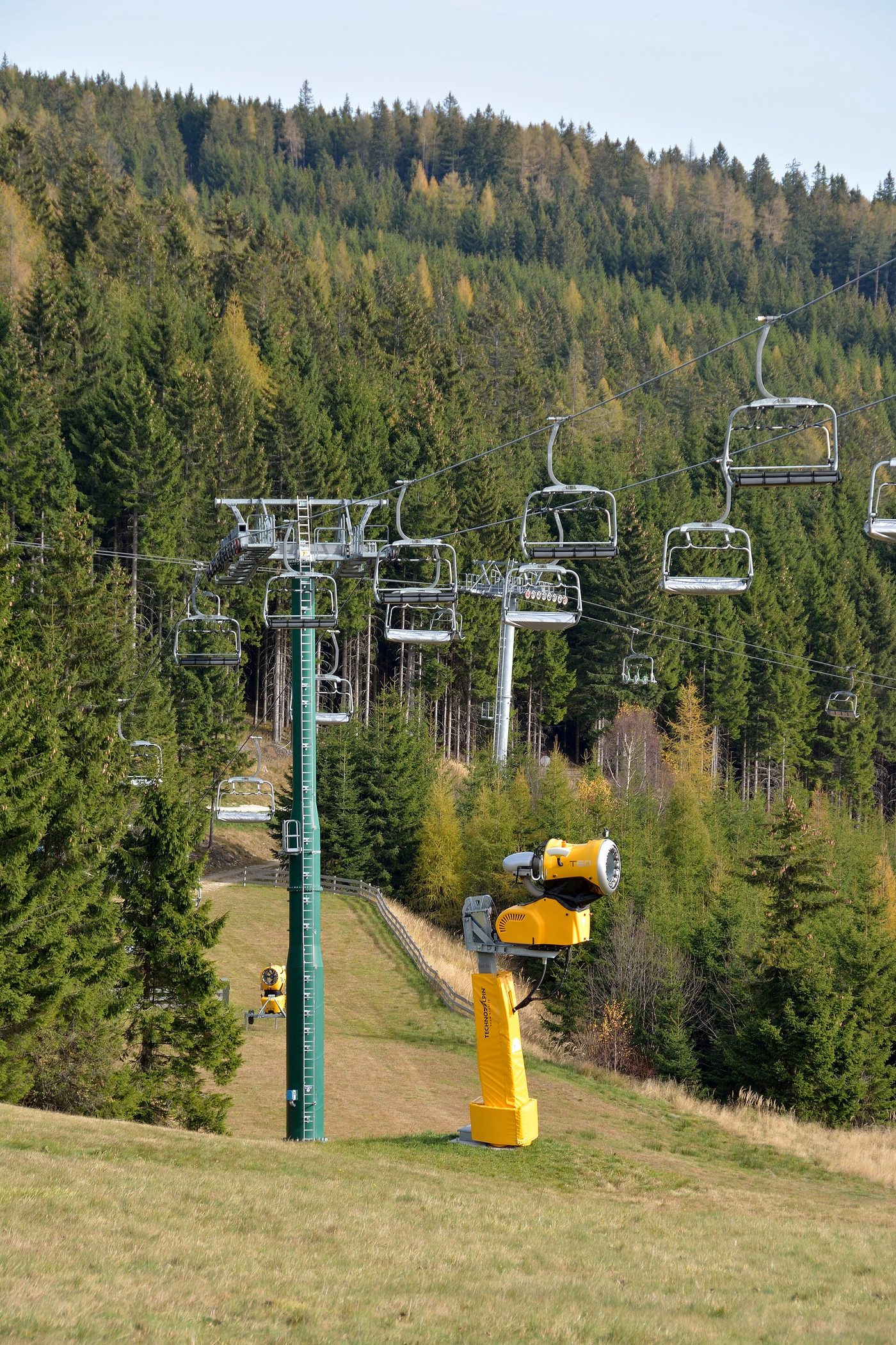
Snowmaking needs cold, not precipitation. The machines pump water through nozzles into cold air, and the water freezes into ice crystals on the way down. What matters is wet-bulb temperature, a combination of air temperature and humidity — a resort can make snow at 28°F in dry air and cannot make it at 28°F in damp air. This is why Colorado’s high, dry resorts open in October and equally cold but wetter mountains do not.
Three things worth knowing as a skier:
- Machine-made snow is denser and more durable than natural snow. It skis firmer, holds up better in warm weather, and forms the base that natural snow sits on all season.
- A resort’s snowmaking coverage figure matters more than its snowfall average for early-season and East Coast trips. Killington’s reputation for a long season is a snowmaking reputation.
- Snowmaking is water-intensive and increasingly contested, and several resorts now operate under withdrawal limits that affect how quickly they can open.
The full mechanics, including why some resorts can do it and others cannot, are in how snowmaking works.
What is the best month to ski?
March, for most people. The snowpack peaks in late February and early March, days are longer, temperatures are comfortable and prices fall once the school holidays end. January is the better choice if price is the binding constraint, and February is the better choice only if you can ski midweek and avoid the holiday weekends entirely.
The refinement depends on what you are optimising for:
- Best snow quality: mid-January to late February, when it is cold enough to keep powder light.
- Deepest snowpack: late February to mid-March.
- Best value: the second and third weeks of January, and the last two weeks of March.
- Best weather: March and early April — sunshine, longer days, no frozen fingers.
- Best for beginners: March, comfortably. Learning to ski while cold and miserable is twice as hard.
- Worst value: the last week of December and the Presidents’ Day weekend.
There is one more variable people forget: daylight. In early January the lifts close and it is essentially dark. In late March you get an extra two hours of usable light, which is close to an extra ski day across a week.
Christmas, Presidents’ Day and the crowd calendar
Ski demand is not smooth. It is concentrated into about twenty days a season, and those twenty days are the ones most people are forced to travel on.
The peaks, in order of severity:
- 26 December to 2 January. Maximum price, maximum crowds, often mediocre coverage.
- Presidents’ Day weekend (the third Monday in February). One of the busiest lift-line days of the year at every major US resort. Presidents’ Day ski crowds covers how to survive it.
- Martin Luther King Jr weekend in January, and the February school half-terms, which vary by state and stagger the load across two or three weeks.
- Any Saturday between mid-January and mid-March at a resort within two hours of a city. Summit County on a Saturday is a different sport from Summit County on a Tuesday.
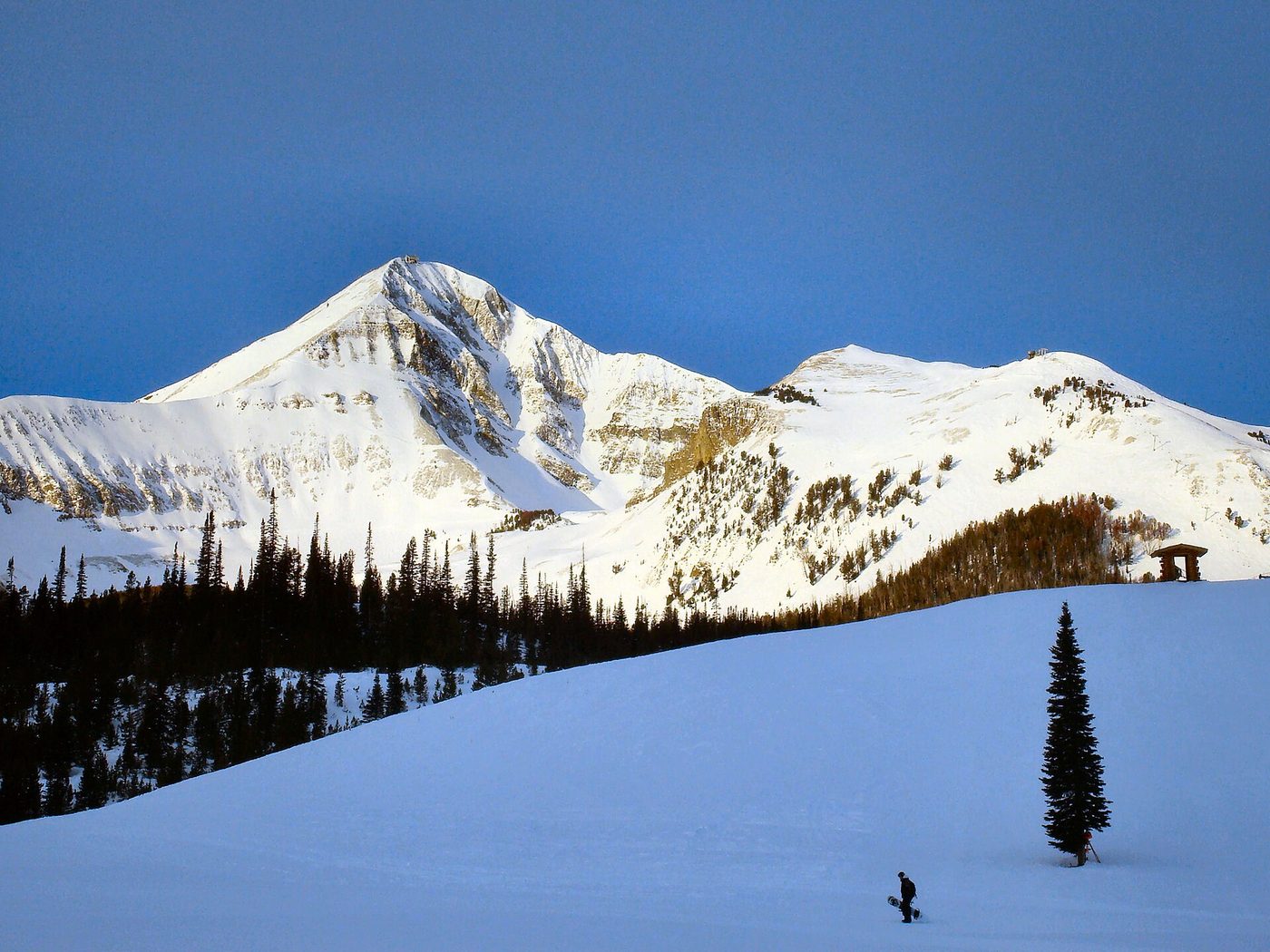
The two obvious counter-moves both work. Ski midweek: a Tuesday in February at a busy resort is quieter than a Saturday in April at a quiet one. And ski the holiday weekend itself rather than the days around it — Christmas Day and New Year’s Day are often noticeably quieter than 27 and 28 December, because people are travelling or eating. More of these in the least crowded days to ski.
Spring skiing: the most underrated part of the season
Mid-March to mid-April is the part of the season that regular skiers quietly prefer and that first-timers are talked out of by people who think spring snow means slush.
What you get: the deepest snowpack of the year, ten hours of daylight, temperatures where you can ski in one layer, cheap lift tickets, thin crowds, and corn snow — the granular, forgiving surface that forms when the top layer melts and refreezes overnight. Corn is genuinely delightful to ski and much easier for intermediates than either powder or ice.
What you give up: reliable powder, north-facing consistency after midday, and terrain at lower elevations as the season closes down.
The technique for a spring day is simple and almost nobody follows it. Start early, follow the sun, and stop before you get tired. East-facing slopes soften first, then south, then west. By two in the afternoon the sunny aspects are heavy and the shaded ones have not softened at all. Skiing until four because the ticket is paid for is how people get hurt in April.
Spring skiing covers the full playbook, including which resorts hold their snow best.
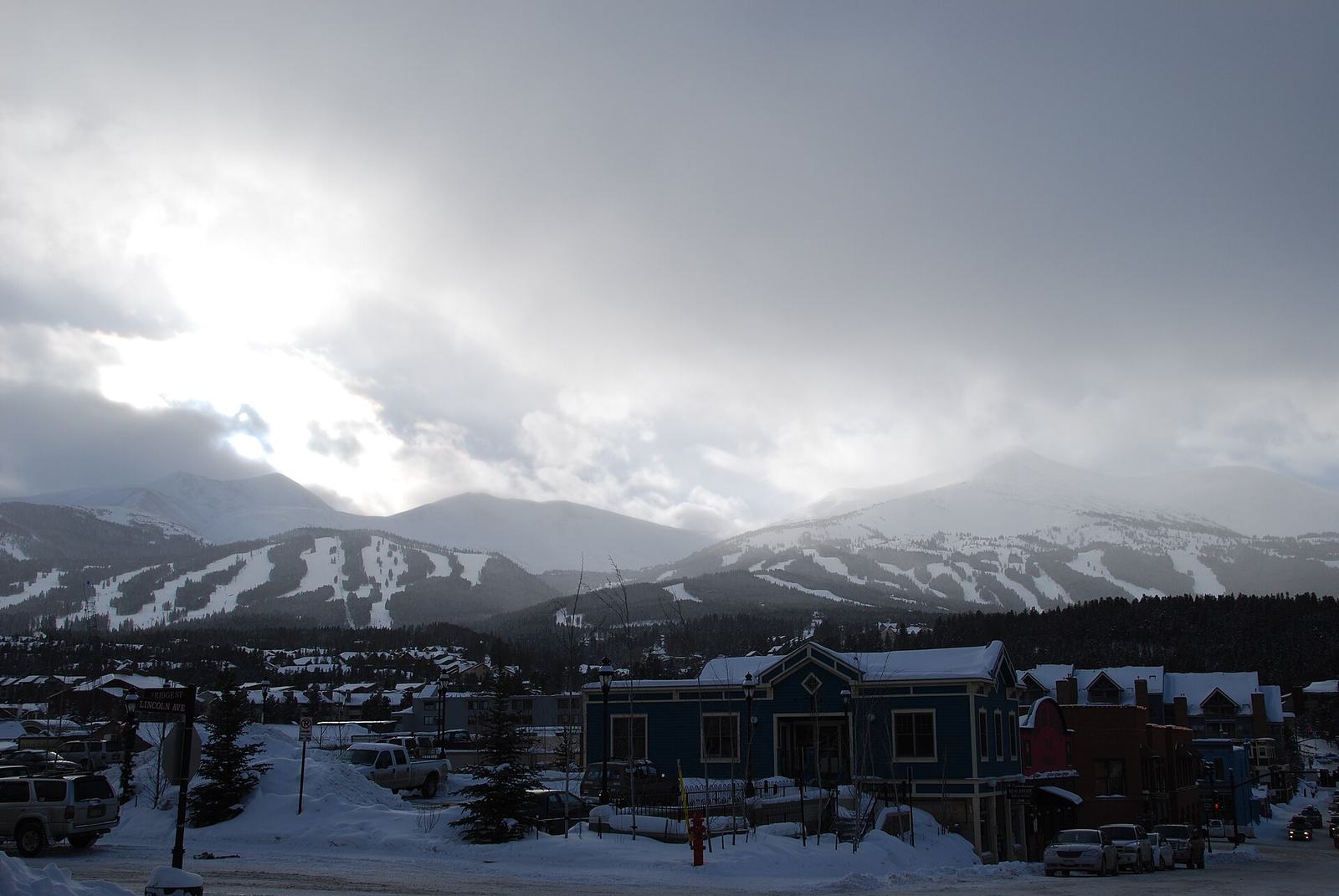
How do you read a snow report without being fooled?
Ignore the base depth and the season total. Read three numbers instead: new snow in the last 24 and 48 hours, the number of lifts and runs currently open, and the upper mountain temperature. Those three tell you what today will actually be like. Base depth tells you what a measuring stake in one location says, and resorts choose the location.
The other tells worth knowing:
- “Packed powder” means groomed. It is the default condition and says nothing about quality.
- A high season-to-date total with no recent snow means a firm, tracked-out mountain.
- Open terrain percentage is the honest early-season number. Sixty percent open in December is a real mountain; twenty percent is a ribbon.
- Wind holds are invisible on a snow report and can shut the best terrain on the best day. Check the lift status page, not just the snow page.
- Webcams do not lie. Two minutes on a base-area camera beats any written report.
We go through a real report line by line in how to read a snow report, and cover the aggressive version — arranging your life so you are there on the right day — in how to chase powder days.
Choosing your week: a decision table
Most people cannot ski whenever they like. The question is usually not “when is best” but “which of my three possible weeks is least bad”, and that has a cleaner answer than it looks.
| If your constraint is… | Take | Avoid | Because |
|---|---|---|---|
| Price above everything | Second or third week of January | Late December, Presidents’ Day | Demand collapses after New Year while snow keeps arriving |
| A first-timer in the group | Mid-March | January | Warmth and daylight matter more than snow quality at green-run speed |
| Guaranteed open terrain | Late February to mid-March | November, April | Peak snowpack, everything running |
| School holidays, no flexibility | The first days of the holiday, midweek if possible | The middle weekend | Arrival and departure days are quieter than the middle |
| Powder, and you can move fast | Any time mid-January to February | Fixed bookings months out | Powder is a storm-cycle event, not a date |
| Sunshine and long days | Late March into April | December, early January | Two extra hours of daylight and no frozen fingers |
| Empty slopes | Early December, midweek late January, April | Any Saturday, any holiday | Demand is concentrated into about twenty days a season |
Two things that make almost any week better, whatever it is. Ski Sunday to Friday rather than Saturday to Saturday — the same number of days, materially shorter lift lines, and cheaper lodging at both ends. And arrive the evening before your first ski day, which converts a travel day into a ski day and is worth more than any amount of clever date-shopping.
One more thing worth being honest about: for a first trip, the exact week matters much less than people fear. A beginner spending four days on green runs with an instructor will have a good time in January, February or March, and will barely notice the snowpack differences that obsess experienced skiers. If your dates are fixed, stop optimising and start booking.
The other calendars: Europe, Japan and the southern hemisphere
The Alps. Glacier skiing from October at Tignes, Val Thorens, Hintertux and Zermatt. Most resorts open the first weekend of December and close between mid-April and early May. The European peak weeks are the February half-terms and the fortnight around Christmas, and prices behave much as they do in America. High, snow-sure resorts above 6,000 feet are the ones to pick either side of the core season — see skiing in Europe.
Japan. Mid-December to early April, with the famous Hokkaido snowfall concentrated in January and early February. Japan’s season is shorter and much more front-loaded than North America’s: January is emphatically the month.
Southern hemisphere. June to early October in Chile, Argentina, New Zealand and Australia, peaking in August. This is a genuine option for a northern-summer ski trip and a poor one for anyone expecting Alpine terrain at Alpine prices.
The upshot is that skiing is available every month of the year somewhere, which is a fun fact and a bad basis for a holiday. The best snow in each hemisphere sits in a window about eight weeks wide.
Frequently asked questions
When does ski season start in Colorado?
Colorado’s earliest resorts — Arapahoe Basin, Loveland and Keystone — usually open in the second half of October on machine-made snow. Most Colorado resorts open between mid-November and Thanksgiving. Firm 2026/27 dates were still unannounced as of 10 September 2026.
What month has the best snow for skiing?
February and early March, when the snowpack is deepest and temperatures are still cold enough to keep the snow light. January runs a close second with better prices, and mid-March offers the best combination of depth, daylight and comfort.
Is skiing in December worth it?
The first two weeks of December are quiet, cheap and often better than expected. The fortnight from 20 December is the most expensive and most crowded of the season, frequently on a snowpack that is still building. Go early in the month if you have the choice.
How long does ski season last?
Roughly 130 to 150 days at a typical North American resort, from a mid-to-late November opening to a closing weekend in early April. Arapahoe Basin, Timberline and Mammoth run considerably longer, occasionally into June or July.
Will 2026/27 be a good snow year?
NOAA’s Climate Prediction Center forecasts a greater than 90% chance of a very strong El Niño for winter 2026/27, with around a 75% chance of historic strength in October–December. Historically that tilts odds toward a wetter southern tier and a drier Pacific Northwest and northern Rockies — but seasonal outlooks are weak signals for any single resort or week.
When is the cheapest time to ski?
The second and third weeks of January, and the last two weeks of March into April. Both sit immediately after a demand peak. Early December is cheaper still, with a real risk of limited terrain.
Can you ski in the summer in North America?
Yes, in a limited way. Timberline on Mount Hood operates lift-served skiing through most of the summer on the Palmer snowfield, and Arapahoe Basin and Mammoth sometimes run into June or July. For a genuine summer ski holiday, the southern hemisphere is the better answer.
The bottom line
The season is longer than most people think and worth travelling for during a much narrower window. Late October to June exists; mid-January to mid-March is when it is good; March is the single best compromise between snow, daylight, price and comfort.
For 2026/27 there is one extra thing to weigh. A very strong El Niño is forecast with unusual confidence, which historically favours the southern Rockies and disfavours the Pacific Northwest and northern Rockies. Tilt slightly, do not bet, and remember that one good storm cycle in your week beats any seasonal outlook.
From here: the best month to ski if you are still choosing dates, ski resort opening dates as the 2026/27 announcements land, and how to plan a ski trip to put the dates into a booking sequence. If the budget is what is driving the dates, ski trip cost shows exactly how much moving a week saves, and the best ski resorts in the US covers which mountains hold snow longest.
Forecast information from the NOAA Climate Prediction Center ENSO diagnostic discussion, checked 10 September 2026. Opening and closing dates are typical ranges; confirm the current season directly with the resort.
Colorado runs one of the longest seasons in the country: Arapahoe Basin and Loveland race to open in October and A-Basin routinely skis into June. Our Colorado skiing guide covers which resorts open first, which hold their snow longest, and what a strong El Niño may mean for the southern part of the state.
Every window in this calendar asks for something different on your body: midweight layers in January, a shell you can vent in March, and serious sun protection in April. What to wear skiing covers the whole temperature range in one system.
Timing behaves a little differently in the Wasatch. Utah’s snow is dry enough that a midweek day three days after a storm often skis better than the Saturday scramble, and April at Cottonwood elevations is still deep long after Colorado has gone slushy. The month-by-month reasoning for the state is in our Utah ski resorts guide, alongside the resort-by-resort numbers.
Tahoe deserves its own note on timing, because its seasonal snowfall swings from roughly 200 inches to over 700 — a wider range than any other major US destination. The upside is that its spring, from March into May, is one of the most reliably enjoyable stretches of skiing in the country. Our guide to Lake Tahoe ski resorts explains what Sierra snow is actually like and when to go.
The eastern calendar behaves differently from the western one. Killington and Sunday River open on manufactured snow in early November, February is both the best conditions and the worst crowds, and the thing to watch in the forecast is rain rather than snow — a rain-then-freeze cycle is what produces the surface that gives the region its reputation. Our guide to east coast ski resorts works through the season month by month.
Sources
- NOAA Climate Prediction Center — ENSO diagnostic discussion, September 2026, checked 10 September 2026
- NOAA National Weather Service — seasonal outlooks and mountain forecasts
- Arapahoe Basin — season dates and operating information
- National Ski Areas Association — season length and industry operating data
- Ikon Pass — 26/27 access dates and blackout calendar, checked 10 September 2026
Regional El Niño tendencies are drawn from the historical climatology of past strong events and are described as tendencies rather than forecasts; the Climate Prediction Center is explicit that typical impacts are not guaranteed even in a very strong event.
Image credits
| Image | Photographer | Licence | Source |
|---|---|---|---|
| Arapahoe Basin East Wall (featured image) | Keflavich | Public domain | Commons |
| Mammoth Mountain | Plane777 | Public domain | Commons |
| Snow gun and chairlift, Mönichkirchen | Peter Haas | CC BY-SA 3.0 | Commons |
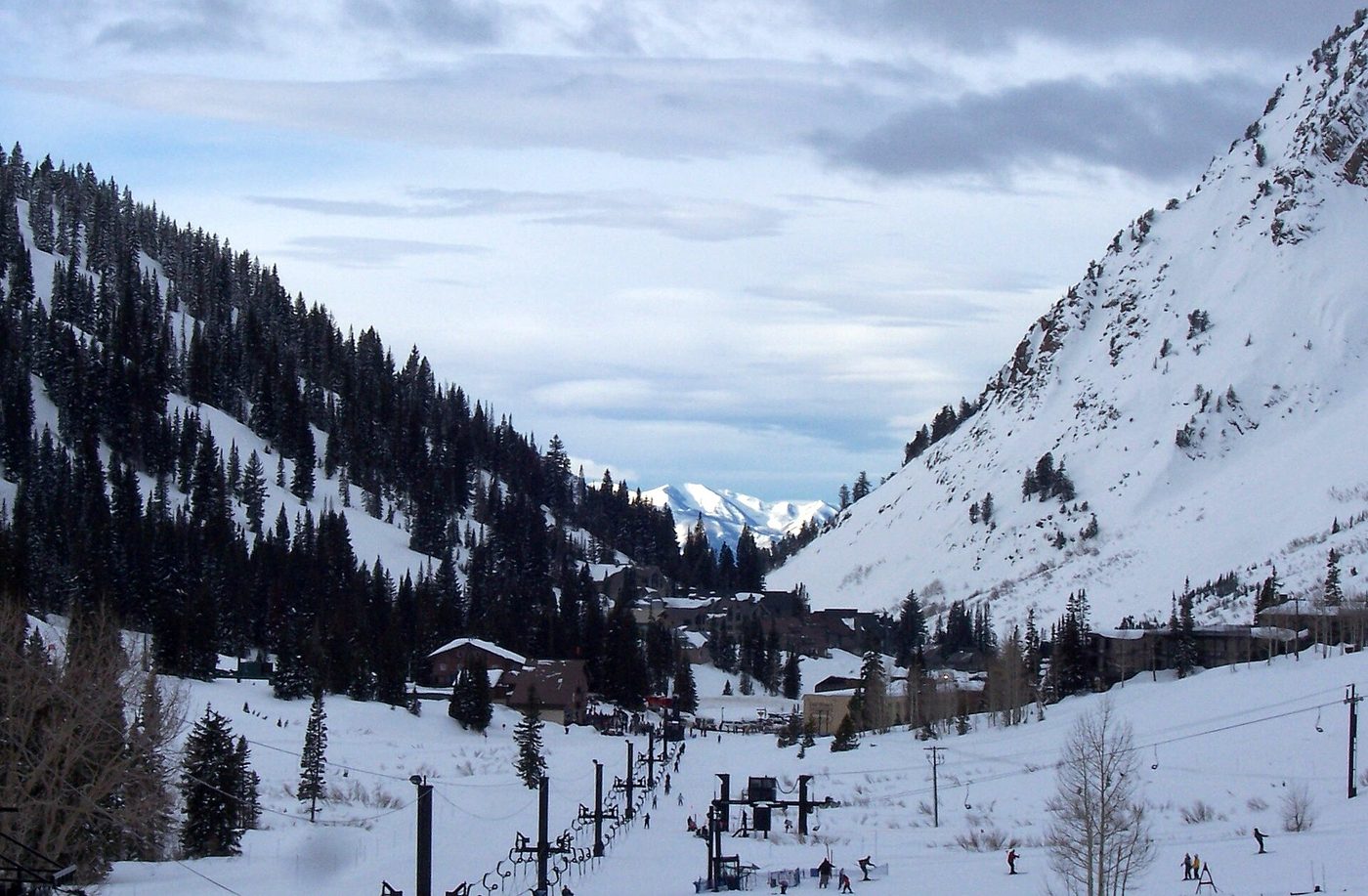
| Alta, Little Cottonwood Canyon | Baileypalblue | Public domain | Commons |
| Breckenridge, Colorado | Jasen Miller | CC BY 2.0 | Commons |
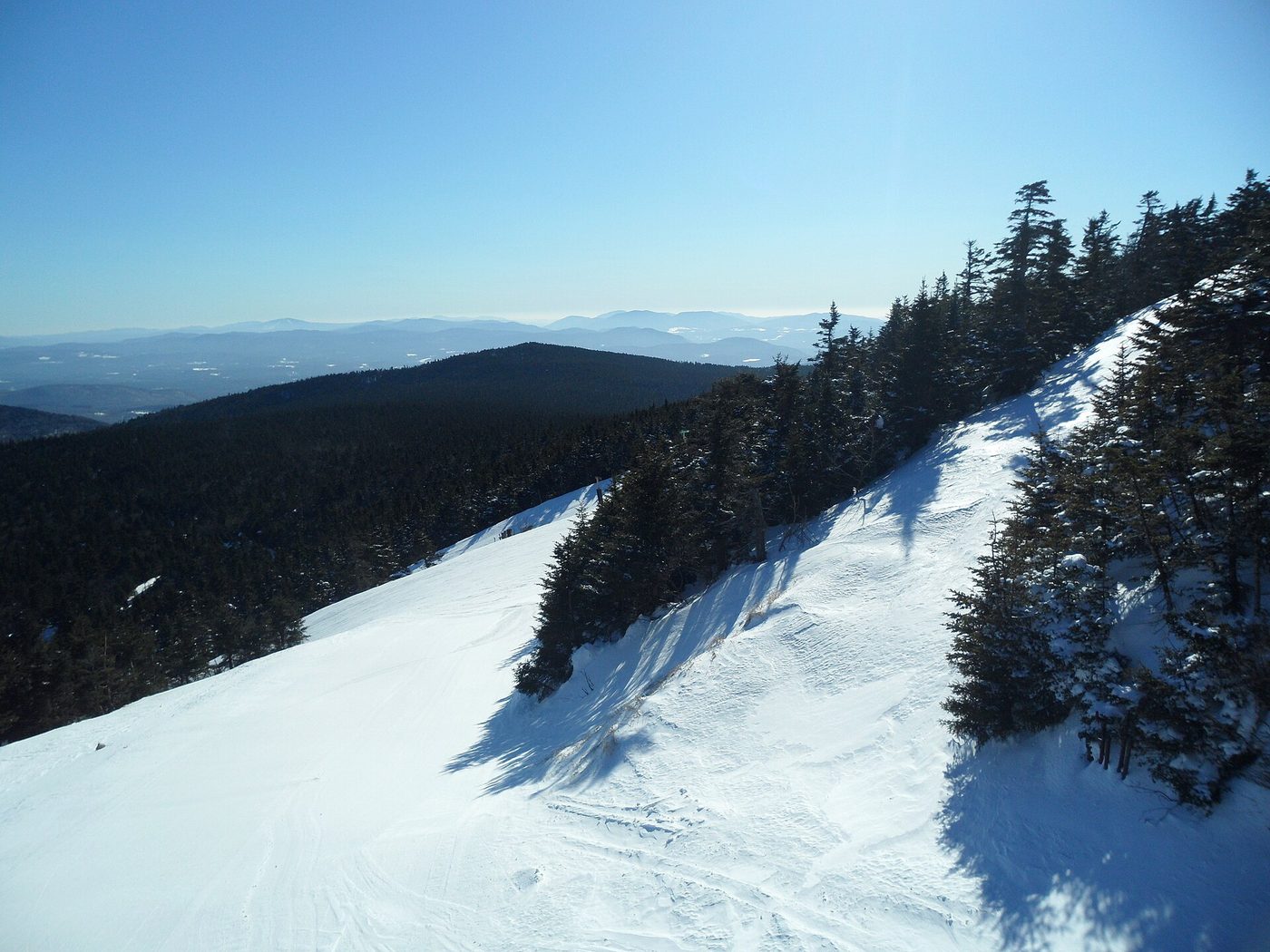
| Killington, Vermont | EgorovaSvetlana | CC BY-SA 4.0 | Commons |
| Lone Peak, Big Sky | Dennis Matheson | CC BY-SA 2.0 | Commons |