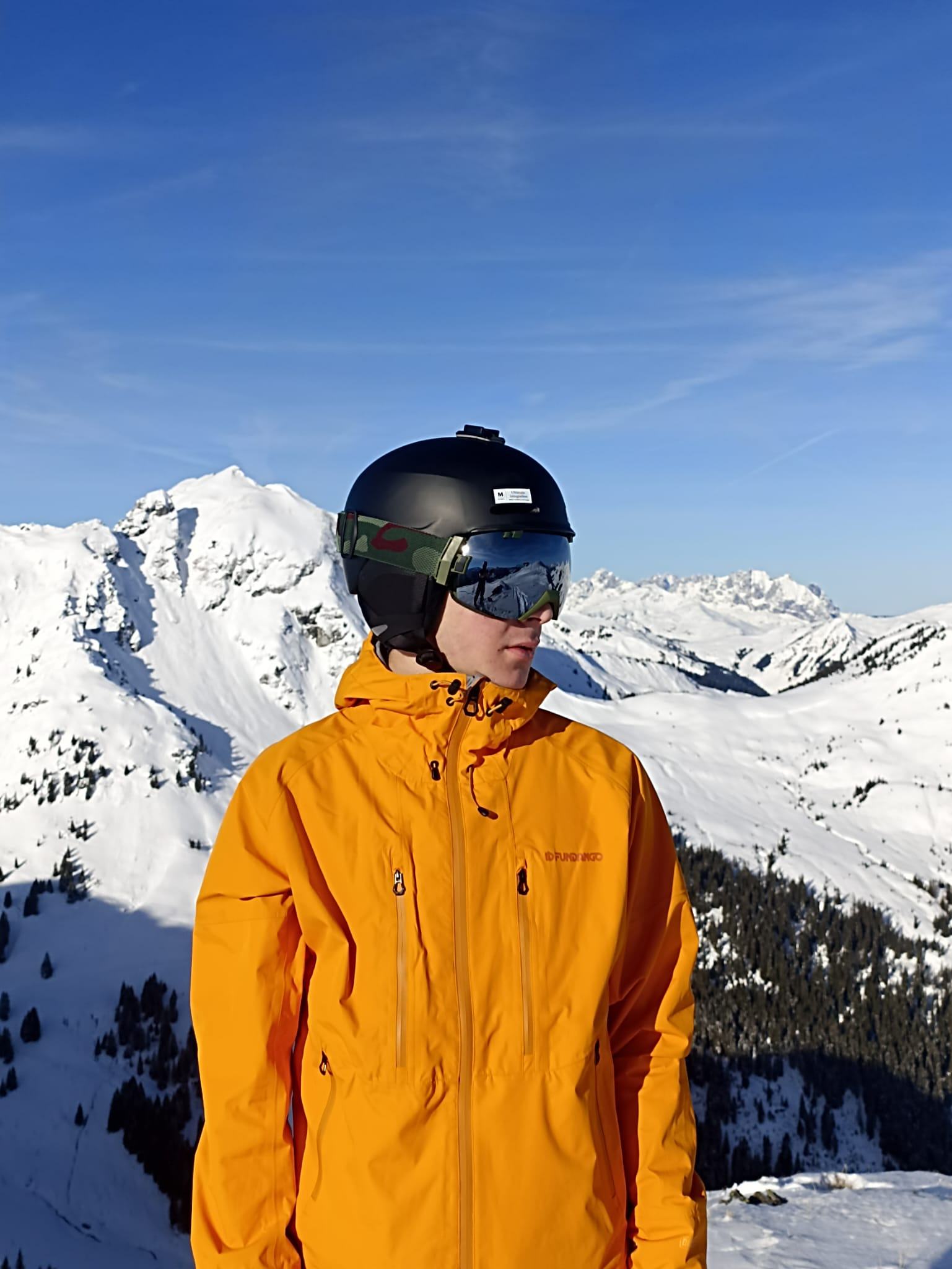
The short version of ski gear for beginners: rent the skis, boots and poles, buy the clothing, and buy or rent a helmet. Skis are the worst first purchase anyone makes, because the right ski changes as you improve. Boots are the best eventual purchase, because fit matters more than anything else on your body and rental boots fit worst. Everything past that is optional for at least a season.
The ski industry is very good at persuading people to buy things they do not need, and the beginner is the most profitable customer in the shop. So this guide does the opposite: it goes item by item, explains what the thing actually does, says whether a first-year skier should own it, and gives an honest price band for 2026/27.
Where numbers appear, they are checked on 10 September 2026 and are directional ranges rather than quotes. Gear pricing swings hugely between the autumn launch and the spring clearance, which is a fact worth exploiting and is covered at the end.
The complete gear list, and who should own what
| Item | Rent, buy or skip | Typical cost to buy | Notes |
|---|---|---|---|
| Skis | Rent for at least one full season | $400–$900 with bindings | The classic beginner mistake |
| Ski boots | Rent year one, buy from about 10 days a year | $300–$700 | The single highest-return purchase |
| Bindings | Rent with the skis | $200–$400 | Must be professionally set and tested |
| Poles | Rent, or buy cheaply | $40–$120 | Almost nobody needs expensive poles |
| Helmet | Buy — cheap and personal | $60–$200 | Certification matters, price mostly does not |
| Goggles | Buy | $40–$250 | The lens tint matters more than the brand |
| Jacket | Buy or borrow | $150–$600 | Shell versus insulated is the real decision |
| Ski trousers or bibs | Buy or borrow | $120–$400 | Waterproof, not water-resistant |
| Base layers | Buy | $40–$120 per set | Merino or synthetic; never cotton |
| Mid-layer | Use what you own | $0–$150 | A fleece you already have is fine |
| Ski socks | Buy | $15–$30 a pair | One thin pair, not two thick ones |
| Gloves or mittens | Buy | $40–$150 | Mittens are warmer |
| Neck gaiter | Buy | $15–$35 | The highest warmth-per-dollar item in skiing |
| Ski bag | Buy only if you fly with gear | $80–$250 | See the travel section |
| Back protector, avalanche kit | Skip for resort skiing | — | Backcountry equipment, not beginner equipment |
The pattern is consistent: rent the hardware, own the soft goods. Hardware is expensive, fit-dependent and changes as you improve. Clothing is comparatively cheap, entirely personal, and works just as well in year five as in year one.
Should you rent or buy ski equipment?
Rent for your first season, and probably your second. A rental package — skis, boots and poles — runs roughly $35–$55 a day, or $300–$500 for a week, and 10–20% less if you book online in advance. Buying a beginner setup costs $700–$1,600 before clothing. The crossover point where owning pays is around 10 to 15 ski days a year, and it arrives for boots long before it arrives for skis.
The arguments for renting go beyond price:
- Your ski needs change fast. The ski that suits a cautious green-run skier in December is genuinely wrong for the same person in March. Renting lets your equipment track your ability.
- Rental fleets are serviced. Skis are waxed and edges tuned between users, which is more than most owners manage.
- You can try things. Demo programmes let you ski three different skis in a week for the price of one rental, which is the fastest way to learn what you actually like.
- No travel problem. No ski bag, no airline fees, no lugging.
The arguments for buying, once you are past the crossover:
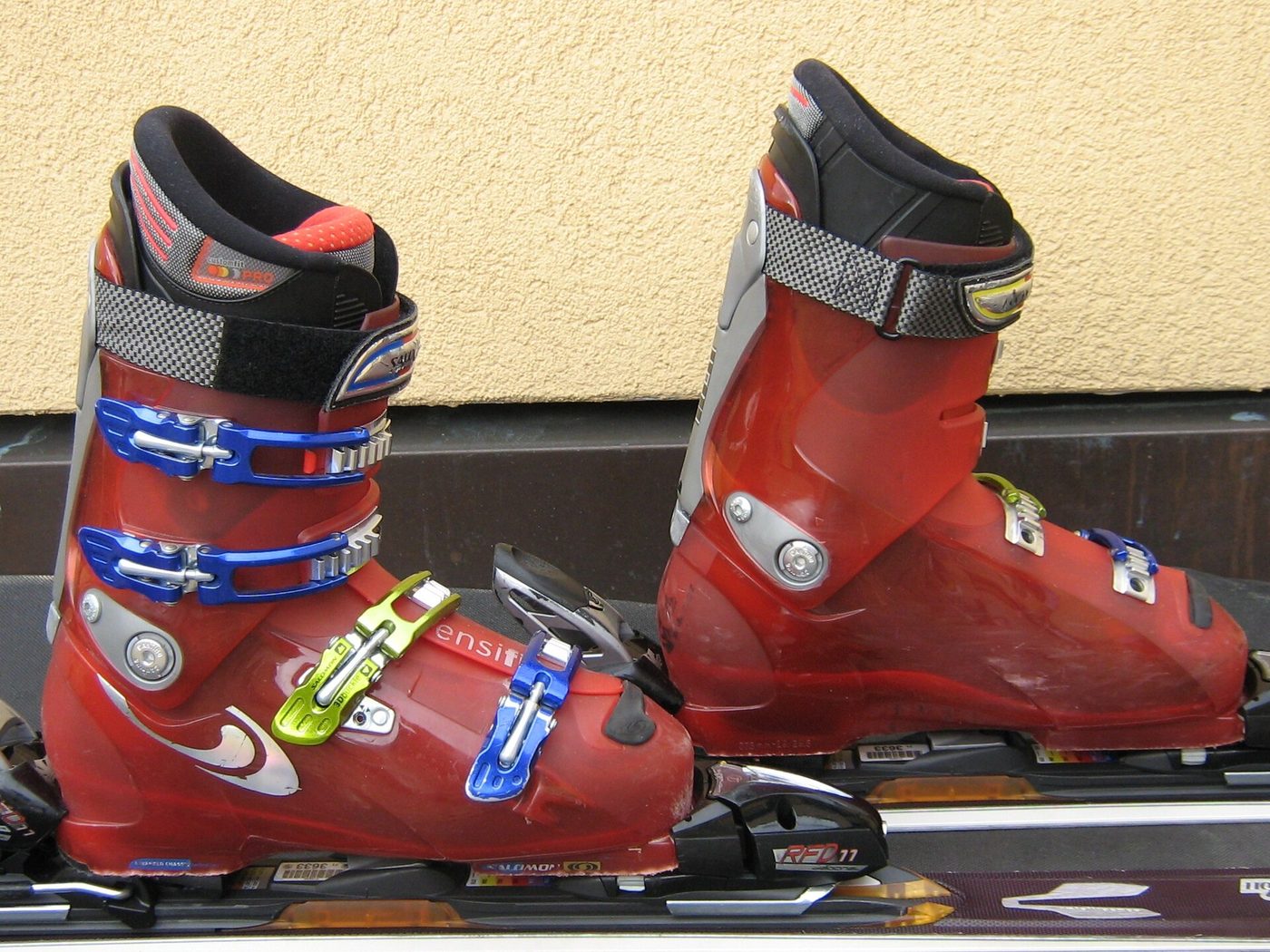
- Boots that fit. This is the real one. Rental boots are sized in whole increments, packed out by hundreds of previous feet, and never quite right.
- Consistency. Skiing the same skis every day makes you better faster than skiing whatever the shop has in your length.
- Cost, eventually. At 15 days a year, ownership pays for itself in two seasons.
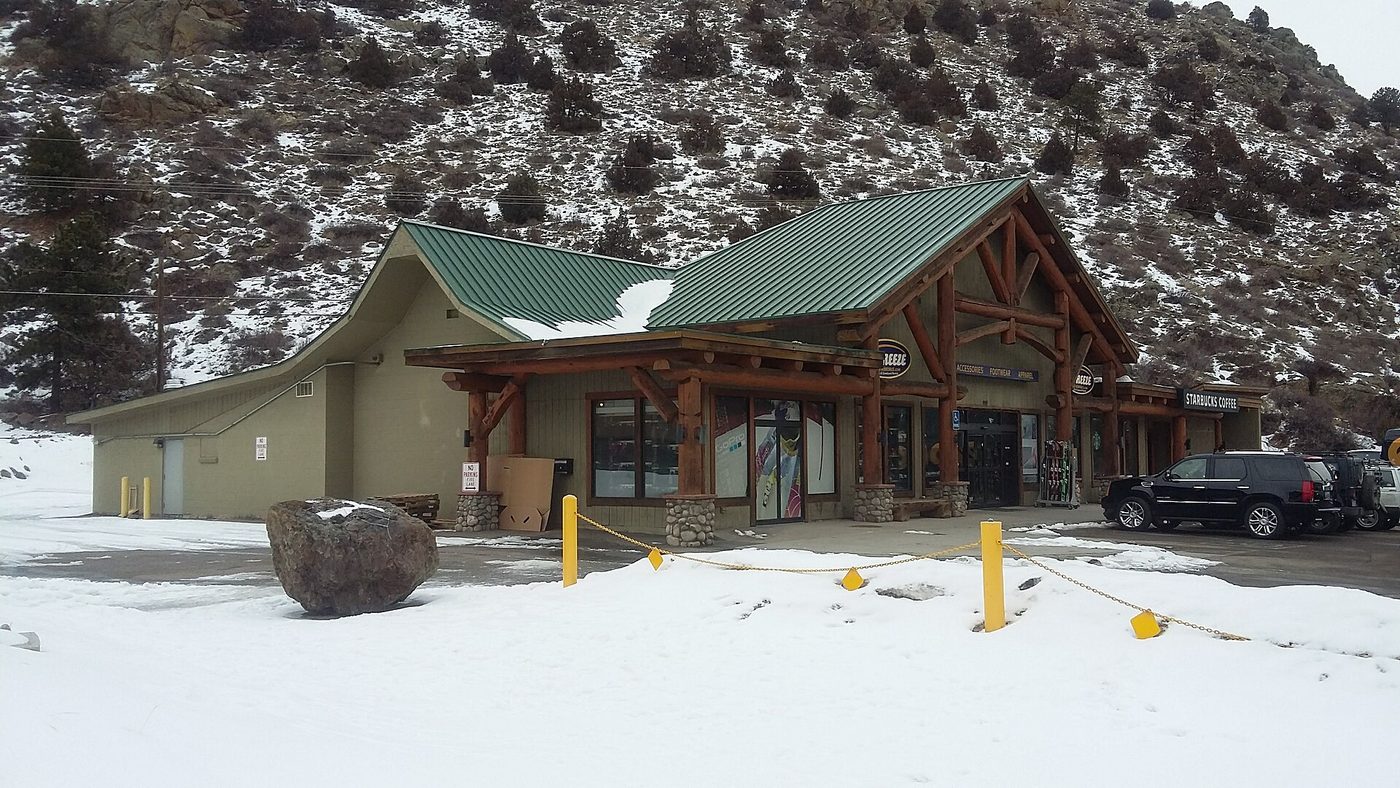
Where to rent matters too: book online in advance and rent off-mountain if you can. A shop in the valley town is routinely 20–40% cheaper than the resort base-area equivalent, and the fitting is less rushed because they are not serving four hundred people between 8 and 9am.
The full arithmetic, including the family version where four people rent, is in rent or buy ski gear.
Ski boots: the only piece that really matters
If you buy one thing, buy boots. The boot is the interface between you and the ski — every input you make travels through it — and a boot that fits badly makes a good skier feel clumsy and a beginner feel hopeless.
Fit, in one paragraph. Standing upright in a properly fitted boot, your toes should just brush the front. Flex your knees forward and they should pull back off the end. Your heel should not lift. The boot should feel snug and mildly alarming in the shop, because a boot that feels comfortable standing on carpet will feel like a bucket on a slope.
Three specifications to understand:
- Mondopoint size. Ski boots are sized in centimetres of foot length, not US shoe sizes. Have your foot measured; do not guess from your shoe size.
- Flex rating. Roughly 60–80 for beginners, 90–110 for intermediates, 120+ for advanced and racers. A stiff boot is not a better boot; it is a boot that demands more from you. Beginners in stiff boots cannot flex them at all, which removes their main control input.
- Last width. The width across the forefoot, typically 98mm (narrow), 100mm (medium) or 102mm+ (wide). Wide feet in a narrow last is the most common source of boot pain.
Two things worth paying for: a proper fitting by someone who measures your foot and watches you flex, and — if you buy — a heat-moulded liner. One thing not worth paying for: a race-level boot, unless you race.
If your feet hurt on a rental day, go back to the shop at lunchtime. It is free, they expect it, and half of all first-trip foot pain is a buckle done up wrong. Detail in how to choose ski boots.
Skis: what the numbers mean
You do not need to buy skis, but you will be handed some, and understanding four numbers makes the rental conversation far more useful.
Length. Beginner skis should come to somewhere between your chin and your nose when stood on end; shorter is easier to turn and more forgiving. Rental shops size down for beginners deliberately, and that is correct, not condescension.
Waist width. The width under the boot, in millimetres. Roughly 70–85mm for piste skiing and hard snow, 85–100mm all-mountain, 100mm+ for powder. A beginner on groomed runs wants the narrow end — narrower skis turn from edge to edge faster, which is exactly what learning requires.
Turn radius. A number in metres describing how tightly the ski wants to turn. Small radius (11–14m) means quick, short turns; large radius (18m+) means long, fast arcs. Beginners want small.
Camber and rocker. Camber is the upward arch under the middle of the ski that gives grip on hard snow; rocker is the upturn at the tip and tail that helps in soft snow and makes turn initiation easier. Most modern beginner and all-mountain skis combine both, and the mix is why a modern ski is dramatically easier to learn on than one from twenty years ago.
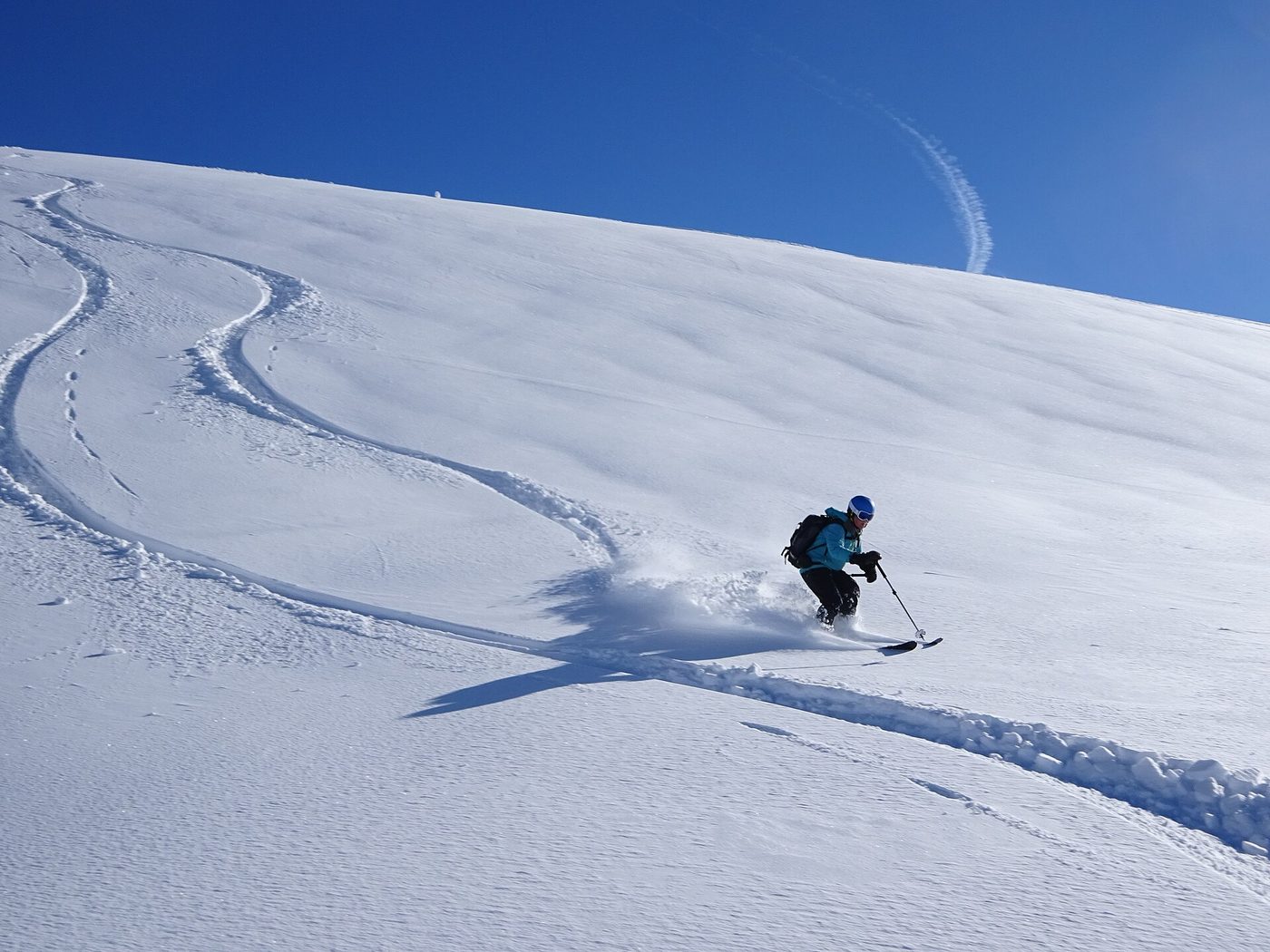
The honest verdict on wide skis: they are photogenic, they are excellent in deep snow, and if you ski mostly groomed runs in the East or on a firm Colorado morning, a wide ski is actively worse than a narrow one. Buy for the snow you actually ski, not the snow in the advertisement. How to choose skis goes deeper, and buying used skis covers the secondhand market, which is genuinely good value if you know what to check.
Bindings: the part that has to be set correctly
The binding holds your boot to the ski and — crucially — releases it when a fall generates enough force to injure your leg. This is the one piece of ski equipment where an amateur adjustment is genuinely dangerous.
The DIN setting (also called the release value) is the number that determines how much force triggers a release. It is calculated from your weight, height, age, boot sole length and self-declared skier type, using an industry standard. A shop technician sets it and tests it on a calibrated machine.
Two rules that matter:
- Never adjust your own DIN. Set too low, bindings pre-release and dump you on a turn. Set too high, they do not release when they should, and the force goes into your knee instead. This is the mechanism behind a large share of serious ski injuries.
- Get bindings tested annually if you own them, and declare your real ability rather than the one you aspire to. Skier type is not a compliment; it is an input.
Two more practical notes. Boot sole length has to match the binding — modern boots come in different sole standards (alpine, GripWalk, touring) and not every boot works with every binding, which is a genuine compatibility trap when buying secondhand. And bindings have a service life; manufacturers publish “indemnified” lists, and shops will refuse to work on bindings that have aged off them. Ski bindings explained covers all of it.
Helmets and goggles: the two things every beginner should own
Helmets. Buy one. They cost $60–$200, they are personal equipment you will not want to share, and rental helmets are $10 a day, so ownership pays back in a week of skiing.
What actually matters:
- Certification. Look for ASTM F2040 (the US standard for recreational snow sports helmets) or CE EN 1077 (the European equivalent). The two test differently — ASTM drops helmets faster and onto flat, hemispherical and edge anvils, while EN 1077 uses a flat anvil at a lower speed — and ASTM is generally regarded as the more demanding of the two. Many helmets carry both.
- Fit. Snug all round with no pressure points, and no movement when you shake your head with the strap undone. A loose helmet is closer to a hat than to protection.
- Rotational impact systems. MIPS and its competitors add a low-friction layer intended to reduce rotational forces. The evidence is reasonably good and the cost is modest, so take it if it is available in your fit.
What does not matter: brand, price above about $150, and vents you will never adjust.
Goggles. Buy these too, and buy for the lens rather than the logo. The number to understand is VLT — visible light transmission, the percentage of light the lens lets through.
| Conditions | VLT range | Lens colour, roughly |
|---|---|---|
| Bright sun, high altitude | 5–20% | Dark grey, black, mirrored |
| Mixed sun and cloud | 20–45% | Rose, amber, bronze |
| Overcast and flat light | 45–70% | Yellow, gold, light rose |
| Snowfall, dusk, night skiing | 60–90% | Clear, pale yellow |
The practical answer for one pair of goggles: a mid-range VLT of 30–50%, which is passable in most conditions and terrible in none. If you buy two lenses, make the second one a high-VLT flat-light lens — that is the condition where poor goggles genuinely stop you skiing, because you cannot see the terrain in front of you.
Two more things: sunglasses are not a substitute, and never put wet goggles face-down in snow or wipe the inside of the lens — the anti-fog coating is fragile and rubbing it off ruins them permanently.
More in the best ski helmet and the ski goggle lens guide.
What clothing do you actually need?
Clothing is where beginners overspend on the wrong things and underspend on the right ones. The system is three layers, and the principle is that each one has a single job.
Base layer. Sits against the skin and moves sweat away from it. Merino wool or a synthetic. Never cotton, which absorbs moisture, stops insulating and makes you cold for the rest of the day. A set costs $40–$120 and is the layer most worth spending on.
Mid-layer. Traps warm air. A fleece, a light down or synthetic jacket, or a thick merino top. This is the layer you almost certainly already own — there is no need to buy a ski-specific one.
Outer layer. Blocks wind and water. This is the layer that has to be genuinely waterproof rather than “water-resistant”, and the distinction is not marketing: water-resistant fabric wets through in an hour of falling in wet snow.
The one decision inside that system:
Insulated jacket or shell? An insulated jacket has the mid-layer built in — warmer, simpler, less flexible, and prone to overheating on a warm spring day. A shell is waterproof and nothing else, worn over whatever mid-layer the day requires. A shell plus a separate mid-layer is the better system for almost everyone, because it adapts. An insulated jacket is easier for children and for people who ski once a year in cold conditions.
Three items whose value is out of proportion to their cost:
- A neck gaiter, $15–$35. Nothing else buys as much warmth per dollar, and it stops the gap between helmet and jacket that ruins cold days.
- One pair of thin ski socks, $15–$30. Thick socks and two pairs both make boots fit worse and feet colder, which is exactly backwards from what everyone assumes.
- Waterproof trousers over the boots, never tucked in. Snow goes down tucked-in trousers within one fall.
What to skip in year one: heated everything, ski-specific mid-layers, bibs unless you already know you prefer them, and anything described as a “system” that requires you to buy two matching items. What to wear skiing has the full layering guide.
Poles, and the one measurement worth knowing
Poles are the least important piece of equipment and the easiest to get wrong. To size them: turn a pole upside down, grip it under the basket, and your elbow should sit at 90 degrees. If it does not, change the length.
That is essentially it. Aluminium poles at $40–$70 are fine for almost everybody; carbon poles are lighter, more expensive and snap rather than bend. Beginners often ski better without poles for the first day or two, and many instructors will take them away — this is deliberate, because poles give a nervous beginner something to lean on and leaning on things is the opposite of what skiing requires.
One safety note that is not obvious: do not put your hands through the straps in trees or terrain parks. A pole that catches while strapped to your wrist is a common source of thumb injuries. Ski pole sizing has the detail.
What ski gear do you need for a child?
Rent everything, buy nothing except clothing, and size for now rather than for next year. Children’s rental packages are cheap — often $25–$35 a day — and multi-day and season-long rental programmes are cheaper still. Buying skis for a growing child is money set on fire.
The child-specific points:
- Season-long rental programmes at most resorts and many local shops let you swap sizes mid-season as the child grows. This is the correct answer for anyone skiing more than a week a year.
- Helmets are non-negotiable and should fit now, not “with room to grow”. A loose helmet does not work.
- Mittens, not gloves, for small children. Warmer and vastly easier to get on.
- One-piece suits for the under-sixes. No gap at the waist, no snow down the back, and much easier to manage.
- Do not buy adult-style boots for children. Children’s boots are deliberately soft and easy to buckle, and that is right for them.

Kids’ ski gear covers sizing and the season-rental programmes in detail, and family ski vacations covers the wider trip.
Maintenance: what your skis actually need
Owned skis need two things: wax, every four to six days of skiing, and an edge tune, once or twice a season. Both are cheap at a shop — a basic wax and tune runs $30–$60 — and both make a bigger difference to how skis feel than most upgrades do.
What the two jobs do:
Waxing replaces the wax in the ski base that wears away with use. Dry bases are visibly white and chalky, feel slow and sticky, and are genuinely harder to turn. Wax is also the cheapest performance improvement available to any skier.
Edge tuning restores the sharp steel edge that grips hard snow. Blunt edges slide on ice, which beginners interpret as their own failure and is in fact a maintenance problem. Edges also need burrs removed after hitting rocks.
A base repair fills gouges in the plastic base. Deep gouges that show the core need attention promptly.
Doing it yourself is satisfying, costs $100–$200 in tools, and pays back after about ten tunes. Doing it badly is worse than not doing it. How to wax skis walks through it.
Rental gear needs none of this — the shop does it — which is another quiet argument for renting in year one.
Travelling with ski gear
If you fly with your own equipment, you need a ski bag, and the choice is narrower than it looks. A padded single or double ski bag with wheels is the right answer for most people; unpadded bags are lighter and offer no protection, and roller bags are worth the weight for the walk through the airport.
The practical rules:
- Most major US carriers now treat a ski bag plus a boot bag as a single checked item, at the ordinary bag fee rather than an oversize charge, provided the combined weight stays under 50 pounds. United, Delta, American and Alaska all do this. Confirm with your carrier — the details change every season.
- Ordinary checked-bag fees rose across the industry in April 2026 and now sit around $35–$50 for a first bag on most carriers, more at the airport than prepaid online.
- Put boots in the carry-on if you can. Skis can be replaced by a rental shop in an hour; boots that fit cannot.
- Pack clothing around the skis for padding, and to use the weight allowance you have already paid for.
- Photograph your gear before you check it. Claims are much easier with a photograph.
The best ski bag for travel compares the options, and ski travel logistics covers shipping skis, which for a long trip is sometimes cheaper than flying with them.
When is the best time to buy ski gear?
Late season and early autumn. March to May clearance sales discount the outgoing year’s equipment by 30–50%, and that equipment is functionally identical to next year’s in almost every case. The second window is August and September, when shops clear remaining old stock before the new season lands at full price.
The buying calendar, roughly:
| Period | What to buy | Discount |
|---|---|---|
| March–May | Everything — end-of-season clearance | 30–50% |
| June–August | Last year’s skis and boots online | 30–60% |
| September–October | Remaining old stock; new-season launches | 20–30% on old stock |
| November–February | Nothing you can avoid | Full price |
| Late season demo sales | Ex-rental and ex-demo skis | 40–60% |
Two things to know. Boots are the exception to buying online — the fitting matters far more than the discount, and a badly fitting bargain boot is worth less than nothing. And ex-demo skis are excellent value: they have been skied hard for a season, they are serviced properly, and they cost about half.
The one thing never worth buying in a hurry: anything at a resort base-area shop mid-trip. That is the most expensive retail in skiing, and it exists to sell $40 gloves to people who forgot theirs. When to buy ski gear on sale tracks the calendar.
The gear people buy that they should not
A short, opinionated list. Every item here sells well and earns its keep for almost nobody in their first three seasons.
Wide powder skis as a first purchase. They are the most photogenic ski in the shop and the worst one to learn on. On a groomed run a 110mm ski is slow edge-to-edge, tiring and unhelpful. Buy for the snow you ski most, which for the overwhelming majority of people is groomed.
Stiff, high-flex boots. A 130-flex boot is not an upgrade for a beginner; it is a boot they physically cannot bend, which removes their main means of control. Softer is correct, and shop staff who push stiffer boots at novices are selling, not fitting.
Back protectors for resort skiing. Genuinely useful in a terrain park or in serious backcountry terrain. Superfluous for a beginner on green runs.
Heated socks, heated gloves, heated insoles. They work. They also cost $150–$300 and mostly solve a problem better solved by a thin sock, a properly fitted boot and a neck gaiter. Buy them in year three if your feet are still cold.
A second pair of goggles before a second lens. Two lenses in one frame cost less than two frames and cover the same range of conditions.
Ski-specific socks in quantity. Two pairs is enough for a week; they are made to be worn and washed.
Anything at a base-area shop mid-trip. The highest-margin retail in skiing, existing largely to sell forgotten gloves at a premium to people with no alternative.
And one that is not a purchase at all: do not accept hand-me-down bindings without a shop check. Bindings age off manufacturers’ indemnified lists, and a shop will refuse to service or set an old one — for good reasons that have to do with the springs no longer releasing predictably.
Frequently asked questions
What ski gear do I need as a beginner?
Rent skis, boots and poles. Buy or borrow a waterproof jacket and trousers, base layers, a mid-layer, thin ski socks, gloves or mittens, goggles and a neck gaiter. Buy a helmet, which pays for itself against rental in about a week of skiing.
Should I buy or rent skis for my first season?
Rent. The right ski changes as you improve, rental fleets are professionally serviced, and buying a beginner setup costs $700–$1,600 before clothing. Ownership starts paying at about 10 to 15 ski days a year, and it makes sense for boots long before skis.
How much does a full set of ski gear cost?
Roughly $1,200–$2,500 for a complete new setup including skis, bindings, boots, helmet, goggles and clothing. A careful buyer using end-of-season sales and ex-demo skis can halve that. Renting hardware and buying only clothing costs $400–$900 up front.
What is a DIN setting?
The release value on your bindings — how much force is needed before the binding lets your boot go. It is calculated from weight, height, age, boot sole length and skier type, and set and tested by a shop technician. Never adjust it yourself; both too high and too low cause injuries.
Do I need a ski helmet?
Yes. Helmets cost $60–$200, are worn by the large majority of skiers, and are cheap insurance. Look for ASTM F2040 or CE EN 1077 certification, prioritise fit over price, and take a rotational-impact system such as MIPS if it is available in a helmet that fits.
What goggle lens should I buy?
For one pair, a mid-range VLT of 30–50%, which works acceptably in most conditions. Low VLT (5–20%) is for bright sun; high VLT (60–90%) for snowfall, flat light and night skiing. Flat light is where cheap goggles genuinely stop you skiing well.
How often should skis be waxed?
Every four to six days of skiing for most people. A dry base looks chalky and white, feels slow and makes turning harder. A shop wax and edge tune costs $30–$60 and improves how skis feel more than most equipment upgrades do.
The bottom line
Ski gear is simpler than the shop wants it to be. Rent the hardware in year one, own the clothing, buy a helmet, and put your money into a good pair of goggles and — eventually — properly fitted boots.
The two purchases that repay most: boots that fit, once you are skiing more than about ten days a year, and goggles that work in flat light. The two that repay least: skis bought in the first season, and anything bought at full price in February.
Next: what to wear skiing for the clothing side in detail, skiing for beginners if this is a first trip, rent or buy ski gear for the crossover maths, and ski trip cost for where gear sits in the overall budget.
Prices checked 10 September 2026 for the 2026/27 season and compiled from published rental and retail rates. Gear pricing moves substantially between the autumn launch and the spring clearance — see the buying calendar above.
Regional conditions should shape what you buy. Sierra snow is dense and often wet, so Tahoe rewards a stiffer, wider ski, a genuinely waterproof shell at 15,000mm or better, and a mid-to-high VLT goggle lens for the flat light that comes with a Pacific storm. Our guide to Lake Tahoe ski resorts covers why the snow behaves the way it does.
One destination changes the rent-or-bring calculation completely. Japanese rental fleets at Niseko and Hakuba stock genuinely wide powder skis as standard, which suit the snow better than most skis people fly with — so the usual advice inverts: bring boots, goggles with a low-light lens, and a face covering, and rent the skis. Our guide to skiing in Japan covers what to pack for those conditions.
Equipment only takes you so far. The most common intermediate plateau is a technique habit — sitting back, skidding the tails, turning with the shoulders — and no ski fixes that. The one piece of gear that genuinely matters for progression is a correctly set binding: release values are calculated from your weight, height, age, boot sole length and skier type on a calibrated machine, and should never be adjusted at home. Our guide to how to get better at skiing covers the technique side.
Sources
- ASTM International — F2040, Standard Specification for Helmets Used for Recreational Snow Sports
- National Ski Areas Association — helmet use, safety and Your Responsibility Code
- Professional Ski Instructors of America (PSIA-AASI) — equipment and teaching guidance
- Epic Pass — Epic Mountain Rewards rental and retail discounts, checked 10 September 2026
- Ikon Pass — partner rental and retail benefits, checked 10 September 2026
Binding release values are set to an industry standard using weight, height, age, boot sole length and skier type; the calculation and the calibrated testing are shop functions and are not something to attempt at home. Rental and retail price ranges are compiled from published rates across multiple shops and resorts and are directional.
Image credits
| Image | Photographer | Licence | Source |
|---|---|---|---|
| Skier in helmet and goggles (featured image) | Luca.trandafir | CC0 | Commons |
| Alpine ski boots in bindings | Chianti90 | Public domain | Commons |
| Ski rental shop, Dumont, Colorado | Xnatedawgx | CC BY-SA 4.0 | Commons |
| Off-piste at Chamonix | Webwizzard | CC BY-SA 4.0 | Commons |
| Park City First Time lift | InSapphoWeTrust | CC BY-SA 2.0 | Commons.jpg) |
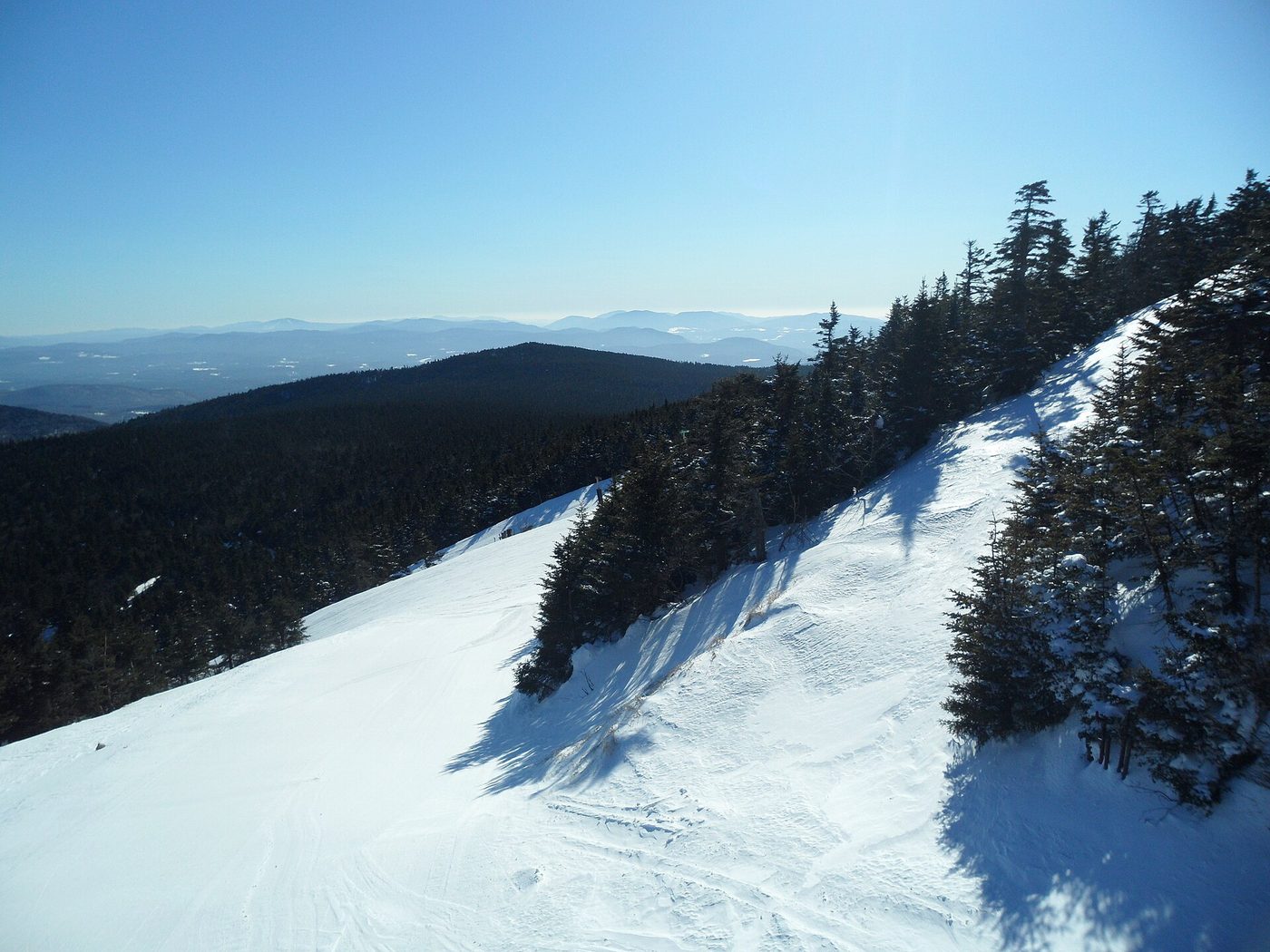
| Killington, Vermont | EgorovaSvetlana | CC BY-SA 4.0 | Commons |