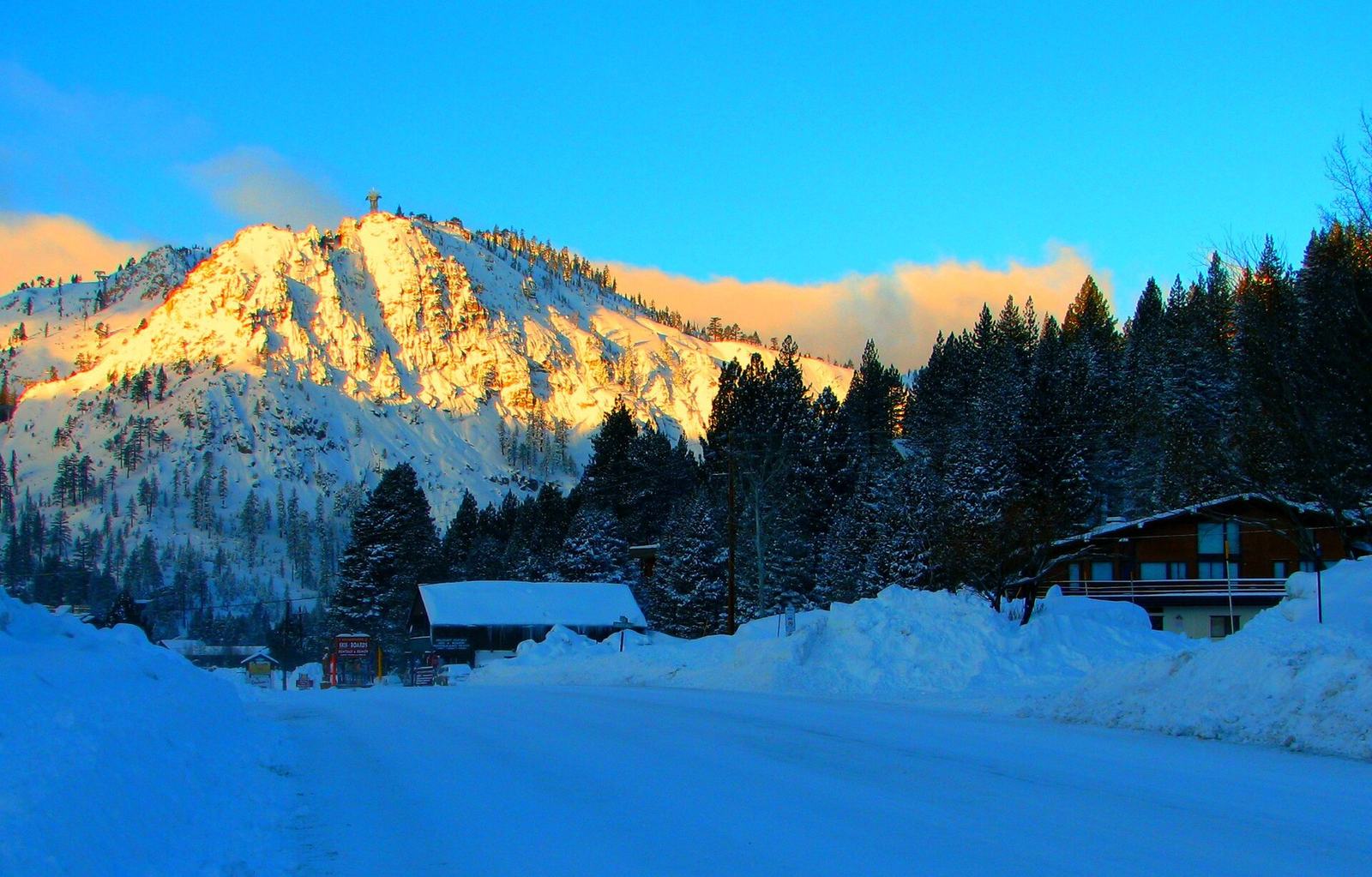
Lake Tahoe ski resorts give you more skiable terrain within an hour’s drive than anywhere else in North America — a dozen ski areas ringing one alpine lake, with Palisades Tahoe’s 6,000 acres and Heavenly’s near-5,000 at the two extremes. What Tahoe does not give you is predictability. Sierra snowfall swings from 200 inches to 700 inches between seasons, and the snow itself is heavy. Choose Tahoe for variety, views and access from a major airport; do not choose it expecting Utah’s snow.
The lake is the point. Almost every ski area here has a view of it, and several are built so that you ski toward it all day, 1,600 feet of blue water below you the whole way down. It is the best-looking skiing in the United States and nobody seriously disputes that.
The complication is that “Tahoe” is not one place. It is a basin the size of a small county, with two shores that feel like different states, two rival pass empires that split the resorts cleanly between them, and a mountain highway system that turns into a car park on any Saturday morning when it has snowed. Getting a Tahoe trip right means choosing a shore, a pass and a set of driving habits before you choose a mountain.
Every Lake Tahoe ski resort, and what it is for
Twelve to fifteen ski areas depending on how you count, in a ring around the lake plus a couple just outside it. These are the ones worth planning a trip around.
| Resort | Shore | Skiable acres | Vertical | Avg. snowfall | 2026/27 pass |
|---|---|---|---|---|---|
| Palisades Tahoe | North / West | 6,000 | 2,850 ft | 400 in | Ikon (unlimited, incl. Base) |
| Heavenly | South | ~4,800 | 3,500 ft | ~360 in | Epic (unlimited) |
| Northstar | North | ~3,000 | 2,280 ft | ~350 in | Epic (unlimited) |
| Kirkwood | South (Carson Pass) | ~2,300 | ~2,000 ft | ~350 in | Epic (unlimited) |
| Sugar Bowl | Donner Summit | ~1,650 | ~1,500 ft | ~500 in | Independent |
| Mt. Rose | North (Nevada) | ~1,200 | 1,440 ft | ~350 in | Independent |
| Sierra-at-Tahoe | South | ~2,000 | ~2,200 ft | ~480 in | Independent |
| Diamond Peak | North (Incline) | ~655 | 1,840 ft | ~300 in | Independent |
| Homewood | West | ~1,260 | ~1,650 ft | ~450 in | Independent |
| Mammoth Mountain | 3 hr south | 3,500 | 3,100 ft | ~400 in | Ikon (unlimited, incl. Base) |
Palisades Tahoe’s figures come from the resort’s own statistics page, checked 10 September 2026 — 6,000 acres across Palisades and Alpine Meadows combined, 39 lifts, 288 trails, base 6,200 ft, summit 9,050 ft. Other figures are resort-reported and cross-checked; treat acreage everywhere in the industry as directional.
Four things worth pulling out of that table before we go resort by resort.
Palisades Tahoe is the biggest and the most complete. Two mountains linked by the Base to Base Gondola, eight peaks, 39 lifts, and terrain that ranges from a genuinely good beginner area to the most notorious lift-served cliff zone in America. It is also unlimited on the Ikon Base Pass, which makes it the single best value in the basin for anyone holding that pass.
Mt. Rose has the highest base in Tahoe at 8,260 feet. In a basin where rain-on-snow is a real risk, base elevation matters more than it does anywhere else in the country. When the freezing level rises, Mt. Rose is often the only place still getting snow.
Sugar Bowl and Sierra-at-Tahoe get the most snow and neither is on a major pass. Donner Summit is a snow magnet, and Sugar Bowl’s ~500-inch average beats every Epic and Ikon resort in the basin.
Mammoth is not in Tahoe — it is three hours south in the Eastern Sierra — but it is on the same pass, gets more consistent snow at higher elevation, and routinely skis into late May. Anyone building an Ikon trip to California should look at it seriously.
Which pass covers Lake Tahoe in 2026/27?
Tahoe is the cleanest illustration in the country of the Epic/Ikon fork, because the two companies each own a cluster of resorts on opposite sides of the lake and the passes share nothing.
Epic gives you Heavenly, Northstar and Kirkwood, all unlimited. That is a genuinely strong Tahoe package: the biggest lake views (Heavenly), the best family and intermediate terrain (Northstar), and the most serious steep skiing in the south (Kirkwood). Three resorts, three completely different experiences, one pass, $1,145 for a full adult Epic Pass as of 10 September 2026.
Ikon gives you Palisades Tahoe, and gives it to you unlimited on both the full pass and the Base Pass. One resort, but the largest one, and it is really two mountains. Ikon also gives you Mammoth unlimited on Base, and Mammoth is arguably the best skiing in California.
Neither pass covers Sugar Bowl, Mt. Rose, Sierra-at-Tahoe, Diamond Peak or Homewood — the independents, which is where the value and the local character live.
| If you hold | Tahoe access | The honest read |
|---|---|---|
| Epic Pass ($1,145) | Heavenly, Northstar, Kirkwood — all unlimited | Best variety. Three genuinely different mountains |
| Ikon Pass (from $1,449) | Palisades Tahoe unlimited, plus Mammoth | Best single resort, plus the Eastern Sierra |
| Ikon Base (from $1,019) | Palisades Tahoe and Mammoth, both unlimited | Remarkable value for a Base tier |
| Independents | Everything else, day tickets | Sugar Bowl and Sierra get more snow than any of them |
Pass prices and access checked 10 September 2026 against the operators’ own pages. Both passes raise prices during autumn; see our ski pass guide.
The honest verdict: for Tahoe specifically, Epic wins on variety and Ikon wins on value. Three unlimited resorts beats one, and Heavenly, Northstar and Kirkwood are far enough apart in character that you will not get bored. But Ikon Base at around $1,019 gives you unlimited Palisades Tahoe and unlimited Mammoth, which is the strongest Base-tier proposition either company offers anywhere.
If you are travelling from out of state for a week, Epic is the better Tahoe pass. If you live in California and ski fifteen days, Ikon Base and a couple of independent days is hard to beat.
North Shore or South Shore?
North for skiing, south for everything else. The North Shore has more terrain, more resorts and quieter towns; the South Shore has Heavenly, casinos, a proper nightlife and the cheapest lodging on the lake. Most people who ski Tahoe repeatedly end up north; most people on a first trip stay south and enjoy it.
North Shore and West Shore — Truckee, Tahoe City, Incline Village, Squaw Valley. This is where the density is: Palisades Tahoe, Northstar, Sugar Bowl, Mt. Rose, Diamond Peak and Homewood are all within about 40 minutes of each other. Truckee is a real mountain town with a railway station, good restaurants and an actual year-round population. Lodging is more expensive than the south, and the towns close earlier.
South Shore — South Lake Tahoe and Stateline. Heavenly’s gondola loads from the middle of town, the Nevada state line puts casinos and their subsidised hotel rooms 200 yards from the lift, and Kirkwood and Sierra-at-Tahoe are 30 to 45 minutes away. It is louder, cheaper and more crowded, and the après options run past 9pm, which is not true of most of the North Shore.
| North / West Shore | South Shore | |
|---|---|---|
| Resorts within 45 min | 6+ | 3 |
| Biggest resort | Palisades Tahoe, 6,000 ac | Heavenly, ~4,800 ac |
| Lodging cost | Higher | Lower, especially casino hotels |
| Nightlife | Quiet, early | Casinos, late |
| Best airport | Reno, 45–75 min | Reno, 75–90 min |
| Character | Mountain towns | Resort strip |
The compromise nobody mentions: Truckee. It is 15 minutes from Northstar, 25 from Palisades, 20 from Sugar Bowl, and on the Amtrak line. It has the best food in the basin and none of the resort-strip feel, and a car parked there reaches almost everything.
What is Sierra snow actually like?
Heavy, abundant and variable. “Sierra cement” is a real phenomenon — Pacific storms arrive with high moisture content and Tahoe’s base elevations are low enough that snow often falls warm. When Tahoe gets a big storm it gets a lot, but the snow is dense, sets up fast, and can turn to crust when the sun comes out.
That is the honest version, and it comes with three important qualifications.
Tahoe’s variability is extreme. Seasonal totals swing from around 200 inches in a bad year to over 700 in a good one. There is no other major US destination with that range. Some seasons Tahoe is the best skiing in the country; some seasons it barely opens until January. Anyone booking Tahoe six months out is taking a genuine bet.
Elevation is the mitigating factor. The higher the base, the more likely snow stays snow. Mt. Rose at 8,260 feet, Kirkwood at 7,800, Palisades’ upper mountain and Mammoth at 7,953 feet all hold up when the lower resorts are getting rain. If the forecast shows a warm storm, ski high.
Dense snow is good for some things. Tahoe’s snowpack is stable and deep, which makes for excellent spring skiing — corn snow from March into May, sunshine, and the lake below you. Tahoe’s spring season is genuinely one of the best in the country, and it is when the crowds thin and the prices fall. Our ski season guide covers timing in more detail.
The comparison people want: Utah’s Cottonwood resorts average 500 to 546 inches of much drier snow at higher elevation; Tahoe averages 350 to 500 inches of heavier snow with far more year-to-year variance. If snow quality is your first priority, Utah ski resorts is the honest answer. If views, variety and a short flight from the Bay Area matter more, Tahoe wins comfortably.
The resorts, honestly assessed
Palisades Tahoe — the big one
6,000 acres across two mountains, 39 lifts, 288 trails, 2,850 feet of vertical from a 6,200-foot base. The 1960 Winter Olympics were held here, and the terrain still has that character: big open faces, exposed rock, and a set of named cliff zones — the Palisades themselves, KT-22, Eagle’s Nest — that are among the most serious lift-served terrain in North America.
What gets lost in the reputation is that Palisades is also a genuinely good resort for everyone else. The beginner terrain at High Camp, reached by the cable car rather than by skiing down, is unusually well designed, and the Alpine Meadows side is a friendlier, mellower mountain with excellent intermediate cruising.
The Base to Base Gondola links Palisades and Alpine Meadows, which turns two good resorts into one large one. Before it existed you drove between them.
Not worth it if: you want a village with a life of its own. The Palisades base village is pleasant and small; Truckee and Tahoe City are where you eat.
Heavenly — the view, and the state line
Heavenly’s selling point is unarguable: you ski with 1,600 feet of Lake Tahoe below you and the Carson Valley on the other side, and the gondola loads from the middle of South Lake Tahoe. Roughly 4,800 acres, 3,500 feet of vertical — the most in Tahoe — and terrain spread across California and Nevada.
The trade is that Heavenly is spread out and the layout is confusing. Getting from the California side to the Nevada side and back takes commitment, and the lower mountain on the California side gets thin in warm spells. It is also the busiest resort in the basin on a holiday weekend.
Best for: a first Tahoe trip, groups with non-skiers, anyone who wants the town and the mountain in the same place.
Northstar — the family answer
About 3,000 acres, 2,280 feet of vertical, immaculate grooming and the most sheltered terrain in Tahoe — Northstar sits in trees, which means it skis well in wind and flat light when the exposed resorts are unpleasant. The village is purpose-built, walkable and expensive, with an ice rink and fire pits and a level of polish that families either love or find synthetic.
The honest limitation is that Northstar is not a mountain for advanced skiers. The Backside has good intermediate and lower-advanced terrain and there is decent tree skiing, but nothing that will hold an expert for a week.
Best for: families, intermediates, storm days and windy days.
Kirkwood — the serious one
Kirkwood is 35 minutes past South Lake Tahoe over Carson Pass, sits at a 7,800-foot base, gets excellent snow, and has the most consistently steep terrain in the region. The Wall, Sentinel Bowl and the Cirque are genuinely difficult. It is also small, remote, has almost no village to speak of, and the road in closes.
Kirkwood is the local’s answer in the south, and the reason a lot of Epic passholders keep the pass. It is not a place to base a week for a mixed group.
Sugar Bowl and Sierra-at-Tahoe — the independents that get the snow
Sugar Bowl sits on Donner Summit and averages around 500 inches, the most in the basin. It is compact, historic, has a gondola from the car park because there is no road to the village, and is beloved by people who have been going for thirty years.
Sierra-at-Tahoe is 20 minutes from South Lake Tahoe, gets around 480 inches, and has the best tree skiing in the region by some distance. It reopened after significant wildfire damage and the forest is still recovering in places, which the resort has been unusually straightforward about.
Neither is on Epic or Ikon. Both are cheaper. Both are worth a day.
Mt. Rose, Diamond Peak and Homewood — the small ones
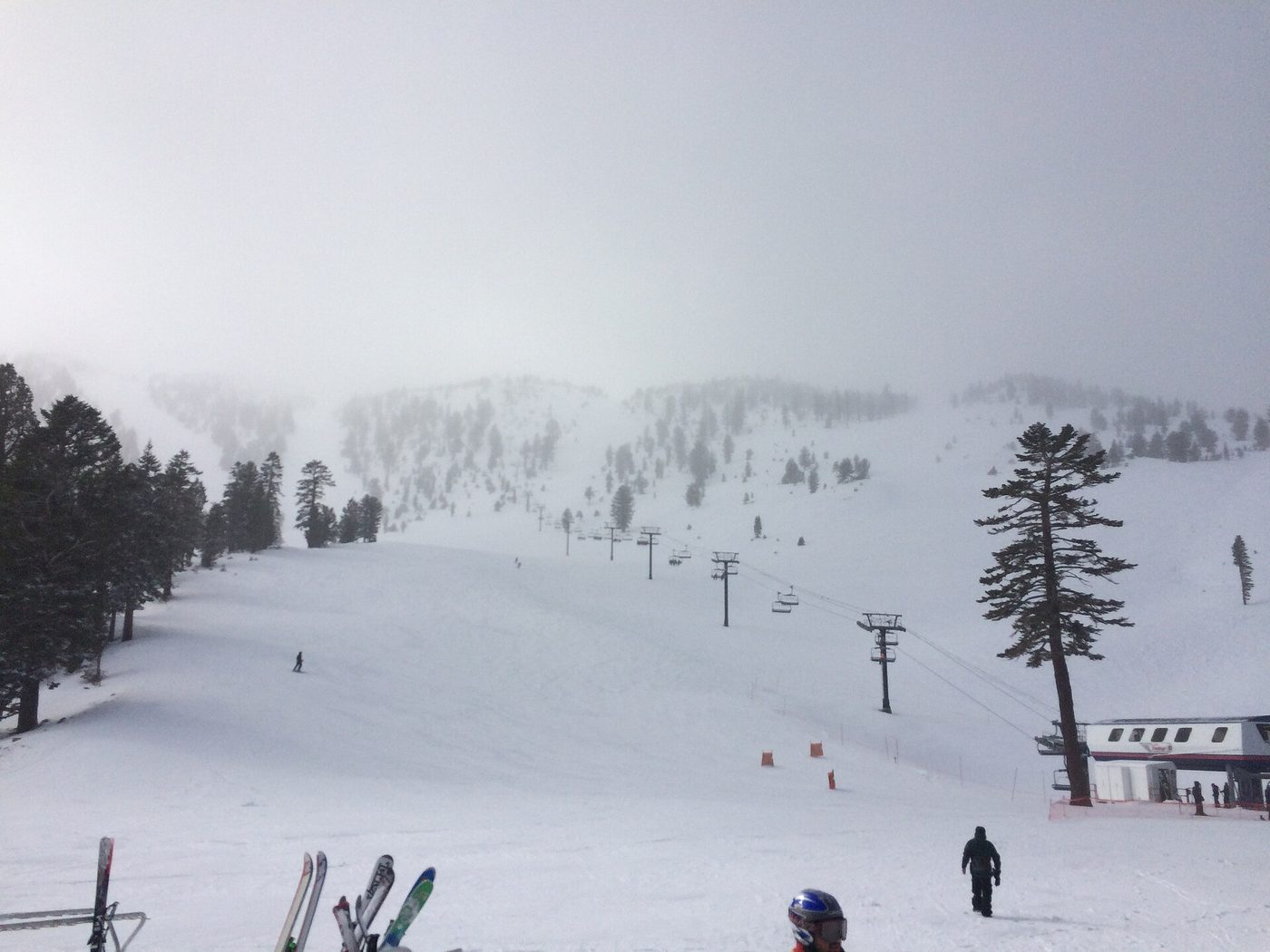
Mt. Rose has the highest base in Tahoe at 8,260 feet, which makes it the storm-day insurance policy, and the Chutes are steep. Diamond Peak at Incline Village is small, cheap, family-friendly and has the best lake view per dollar in the basin. Homewood on the West Shore is mid-redevelopment into a residential club — but the Tahoe Regional Planning Agency required a community access plan that protects public access in perpetuity, so day tickets and season passes must remain available to anyone on a first-come, first-served basis. Report of it “going private” overstates the case; report of it being unchanged understates it.

What about California beyond Tahoe, and the Pacific Northwest?
Tahoe is not the whole West Coast, and two of the most interesting mountains in the country are outside it.
Mammoth Mountain — 3,500 acres, 3,100 feet of vertical, an 11,053-foot summit, and a season that runs November into late May and occasionally into July. It is three hours south of Tahoe and six from Los Angeles, it is unlimited on the Ikon Base Pass, and it gets more reliable snow than the Tahoe basin because it is higher and further south in the Sierra crest’s storm track. If you are on Ikon and flying to California, Mammoth deserves half your trip.
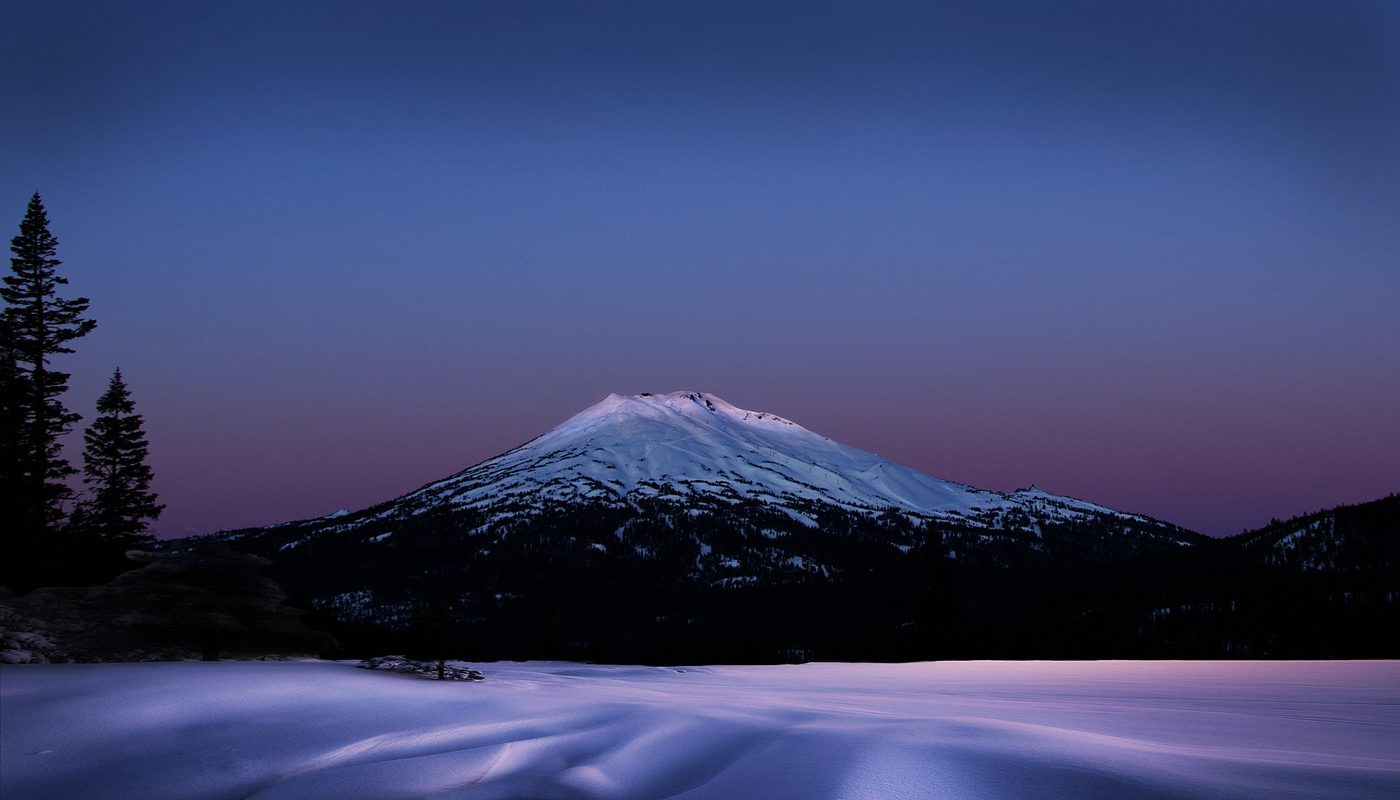
Mt. Bachelor, Oregon — 4,323 acres of a volcano you can ski in every direction from the summit, a long season, and a fraction of the crowds of a California resort. Bend is one of the better ski towns in the country.
Mt. Baker, Washington — averages around 663 inches, the most of any ski area in the United States, and holds the world record for a single season’s snowfall. It is small, has almost no infrastructure, and the snow is heavy. It is a pilgrimage rather than a family holiday.
Timberline, Oregon — skis most of the year on the Palmer snowfield, which makes it the longest season in North America. Crystal Mountain, Washington is on Ikon and has the best terrain in the state.
The Pacific Northwest trade is straightforward: enormous snowfall, mild temperatures, frequent rain at the base, and vastly lower prices and crowds than California or Colorado. In a strong El Niño winter, which 2026/27 is forecast to be, the historical tendency is drier and warmer in the PNW and northern Rockies — a tendency, not a forecast, and one the Climate Prediction Center is explicit is not guaranteed.
How do you get to Lake Tahoe, and what does the drive do?
Fly to Reno-Tahoe (RNO) and drive 45 to 90 minutes, or fly to Sacramento (SMF) and drive around two hours. Reno is closer to everything and the drive over Mt. Rose Highway or down I-80 is short; Sacramento is better served and often cheaper, at the cost of an hour and the Donner Pass climb on I-80.
The important part is what the roads do in winter.
- I-80 over Donner Pass is the main artery from the Bay Area and it closes, sometimes for a day, during big storms. Chain controls are common and enforced.
- US-50 to South Lake Tahoe is the southern route and is subject to the same treatment.
- Mt. Rose Highway (NV-431) from Reno is the shortest route to the North Shore and the first to close in a storm, because it climbs to 8,900 feet.
- Saturday morning from the Bay Area is the worst traffic in West Coast skiing. Leave Friday night or before 6am.
Chain requirements are enforced by Caltrans and NDOT, and a rental car with all-season tyres will be turned back or required to fit chains. Book AWD explicitly. Our ski travel logistics guide covers rental cars, winter driving and airport transfers in full, and driving to Tahoe in winter goes into the specific routes.
You can also take the train. Amtrak’s California Zephyr stops in Truckee, and for a car-free North Shore trip with a resort shuttle at the other end it is a genuinely pleasant option that almost nobody uses.
What does a Tahoe ski trip cost?
Tahoe sits below Colorado and roughly level with Utah for a comparable trip, and the South Shore is the cheapest lodging of any major US destination thanks to the casinos.
| Line item | South Shore | North Shore / Truckee | Slopeside |
|---|---|---|---|
| Lodging per night | $90–200 | $180–380 | $300–650 |
| Lift ticket, advance | $130–210 | $130–230 | $150–230 |
| Rental gear per day | $45–70 | $45–75 | $50–85 |
| Rental car + fuel per day | $60–110 | $60–110 | $60–110 |
| Lunch on mountain | $22–35 | $22–38 | $25–40 |
Indicative ranges as of 10 September 2026 for the 2026/27 season. Advance purchase saves 20–40% against walk-up window prices — never pay the window rate. Full modelling in our ski trip cost guide.
Three ways to cut it:
- Stay at a Stateline casino hotel. Rooms are subsidised by the gaming floor and the Heavenly gondola is a short walk. It is the cheapest slopeside-adjacent lodging in American skiing.
- Ski the independents midweek. Sierra-at-Tahoe and Diamond Peak run day tickets well below the Epic and Ikon resorts, and both get more snow than Northstar.
- Come in late March or April. Tahoe’s spring is excellent, the snowpack is at its deepest, and prices fall off a cliff after Presidents’ week.
How do you build a four-day Tahoe itinerary?
Base in one place, drive to a different mountain each day, and keep one day flexible for whatever the weather does. Tahoe rewards this more than almost anywhere else, because the resorts are close together and genuinely different from one another — and because on any given day one side of the basin is often skiing much better than the other.
Two itineraries that work, depending on which pass you hold.
On Epic, based in South Lake Tahoe:
| Day | Where | Why |
|---|---|---|
| 1 | Heavenly | Gondola from town, no driving, ease into the altitude |
| 2 | Kirkwood | The serious day. Go early, the Carson Pass road is slow |
| 3 | Northstar | 50 minutes north, sheltered trees if the weather turns |
| 4 | Heavenly, Nevada side | Sunny, quieter, and the lake view all afternoon |
On Ikon, based in Truckee:
| Day | Where | Why |
|---|---|---|
| 1 | Alpine Meadows side | Gentler start, fewer crowds than the Palisades base |
| 2 | Palisades Tahoe, full mountain | Base to Base Gondola, both mountains, the main event |
| 3 | Sugar Bowl (day ticket) | 20 minutes, the snowiest place in the basin |
| 4 | Palisades Tahoe again | You have not skied it out, and it is unlimited |
Keep the flexible day. If a warm storm arrives, go high — Mt. Rose or Kirkwood. If it is blowing hard, go into trees — Northstar or Sierra-at-Tahoe. If it is bluebird after a storm, go to whichever mountain faces away from the sun in the afternoon. Locals do this instinctively and visitors almost never do.
And consider adding Mammoth. It is three hours from South Lake Tahoe down US-395, it is unlimited on both Ikon tiers, and it holds snow far later. A Tahoe-plus-Mammoth week on one Ikon Base pass is the best-value destination trip in California.
Six mistakes people make on a Tahoe ski trip
1. Booking the pass before checking which shore you want. Epic and Ikon put their resorts on opposite sides of the lake. Decide where you want to sleep first.
2. Driving up on Saturday morning. I-80 out of the Bay Area on a snowy Saturday is the worst recurring traffic in West Coast skiing. Leave Friday night or before 6am.
3. Renting a two-wheel-drive car. Caltrans and NDOT enforce chain controls, and a rental on all-season tyres will be stopped or made to fit chains at the roadside in the dark.
4. Booking six months out and expecting powder. Tahoe’s seasonal range is roughly 200 to 700 inches. Book the trip for the experience — the lake, the variety, the towns — and treat a big snow year as a bonus.
5. Ignoring base elevation in a warm storm. When the freezing level climbs, the lower resorts get rain and the higher ones get snow. Mt. Rose at 8,260 feet and Kirkwood at 7,800 are the insurance.
6. Skiing only the pass resorts. Sugar Bowl and Sierra-at-Tahoe average more snow than any Epic or Ikon mountain in the basin, cost less, and are half empty midweek.
Frequently asked questions
Which is the best ski resort in Lake Tahoe?
Palisades Tahoe, for terrain and size — 6,000 acres, 39 lifts and 2,850 feet of vertical across two linked mountains. Heavenly has the most vertical and the best views, Northstar is the best family mountain, and Kirkwood has the most serious steep terrain. Sugar Bowl and Sierra-at-Tahoe get the most snow but are on neither major pass.
Is Epic or Ikon better for Lake Tahoe?
Epic covers three unlimited resorts in Tahoe — Heavenly, Northstar and Kirkwood — and wins on variety for a visitor’s week. Ikon covers Palisades Tahoe unlimited, including on the cheaper Base Pass, plus unlimited Mammoth, which makes Ikon Base the best value if you are willing to ski one Tahoe resort and drive south.
North Shore or South Shore for a Tahoe ski trip?
North Shore for skiing: six resorts within 45 minutes, better mountain towns, and Palisades Tahoe. South Shore for value and atmosphere: Heavenly’s gondola in the middle of town, casino hotels at $90 to $200 a night, and nightlife that runs past 9pm. First-timers usually enjoy the south; repeat visitors usually move north.
How much snow does Lake Tahoe get?
Between about 350 and 500 inches at most resorts in an average season, with Sugar Bowl and Sierra-at-Tahoe highest. The important number is the variance rather than the average — Tahoe seasons range from roughly 200 inches to over 700, a wider swing than any other major US destination.
Is Tahoe snow good quality?
It is heavier and denser than the interior West, because Pacific storms arrive moist and Tahoe’s base elevations are relatively low. “Sierra cement” is a real thing. The upside is a deep, stable snowpack and outstanding spring skiing from March into May. For dry powder, Utah and the northern Rockies are the better bet.
What airport do you fly into for Lake Tahoe?
Reno-Tahoe (RNO) is the closest, 45 to 75 minutes to the North Shore and 75 to 90 to the South. Sacramento (SMF) is about two hours away and often cheaper. San Francisco and Oakland are three-and-a-half to four-plus hours and only make sense if the fare difference is large.
Is Mammoth Mountain part of Lake Tahoe?
No. Mammoth is in the Eastern Sierra, about three hours south of the lake. It is on the Ikon Pass unlimited, including Base, has a higher summit at 11,053 feet, more reliable snow and a season that regularly runs into late May — which makes it a strong addition to a California Ikon trip rather than a Tahoe substitute.
Is Homewood still open to the public?
Yes. Homewood is being redeveloped around a private residential club, but the Tahoe Regional Planning Agency required a community access plan that protects public access in perpetuity — day tickets and season passes must be available to anyone on a first-come, first-served basis. Check the resort’s own page for current operating terrain, which is in flux during construction.
The bottom line
Tahoe is the most beautiful skiing in the United States and the least predictable. In a good year it is unbeatable; in a warm year the lower mountains struggle and the higher ones save the trip. Plan for that rather than against it.
Three decisions do most of the work. Pick the pass — Epic for three unlimited Tahoe resorts, Ikon Base for unlimited Palisades and Mammoth at a lower price. Pick the shore — north for skiing, south for value, Truckee if you want both. Plan the driving — leave before 6am on a Saturday, book AWD, and check Caltrans before you set off.
Then go deeper in the guides beneath this one: the best Tahoe ski resorts ranks them properly, north vs south Lake Tahoe skiing settles the shore question, and driving to Tahoe in winter covers the roads. For individual mountains, start with Palisades Tahoe skiing, Heavenly ski resort, Northstar ski resort or Mammoth Mountain skiing. Further afield, Washington ski resorts and Oregon ski resorts cover the Pacific Northwest, California ski season covers timing, and Big Sky vs Sun Valley is the comparison for anyone considering the northern Rockies instead.
Resort statistics, pass access and prices checked 10 September 2026 for the 2026/27 season. Snowfall averages are long-run figures and say nothing about any individual season — confirm conditions and terrain openings with the resort before you travel.
Once Tahoe’s lifts close for the season, typically by late spring even in a strong snow year, some of the most committed skiers in the basin simply keep going — booking a June or July trip south of the equator rather than waiting until the following December for their next real ski day. It is a bigger undertaking than a weekend at Palisades, but it is a genuine option, not a novelty. Our guide to summer skiing lays out where the Southern Hemisphere season actually runs and what a trip there costs and requires.
Palisades Tahoe and Mammoth are two of the strongest reasons to consider Ikon Base rather than the full pass — both sit on the short list of 18 destinations unlimited at every tier, no day-counting required. Kirkwood, Heavenly and Northstar, by contrast, are Epic-side, which makes the basin one of the few US regions where both major passes have a genuinely strong local case. Our Ikon Pass explained guide covers exactly what Base includes and excludes before you buy.
A first Tahoe trip does not need to start with a full Epic or Ikon pass. A resort beginner package, bundling lesson, rental and a limited lift ticket, is almost always the better first purchase around the lake, and both Northstar’s family terrain and the beginner area at Palisades’ High Camp suit a first visit. Our best ski pass for beginners guide ranks the strongest options in order.
Sources
- Palisades Tahoe — mountain statistics, checked 10 September 2026
- Palisades Tahoe — snowfall tracker, checked 10 September 2026
- Homewood Mountain Resort — official site, checked 10 September 2026
- San Francisco Chronicle — Homewood commits to public access
- Visit Lake Tahoe — Sierra-at-Tahoe Resort
- Epic Pass — official pass pricing and Tahoe access, checked 10 September 2026
- Ikon Pass — 26/27 pricing and access, checked 10 September 2026
- Ikon Base Pass — 26/27 pricing and access, checked 10 September 2026
- NOAA Climate Prediction Center — ENSO diagnostic discussion, checked 10 September 2026
Acreage and snowfall figures other than Palisades Tahoe’s are compiled from resort-published statistics and long-run snow records. Resorts self-report acreage and nobody audits it, so all such figures are directional.
Image credits
| Image | Photographer | Licence | Source |
|---|---|---|---|
| KT-22 above the Palisades Tahoe base at dawn (featured image) | Rennett Stowe | CC BY 2.0 | Commons.jpg) |
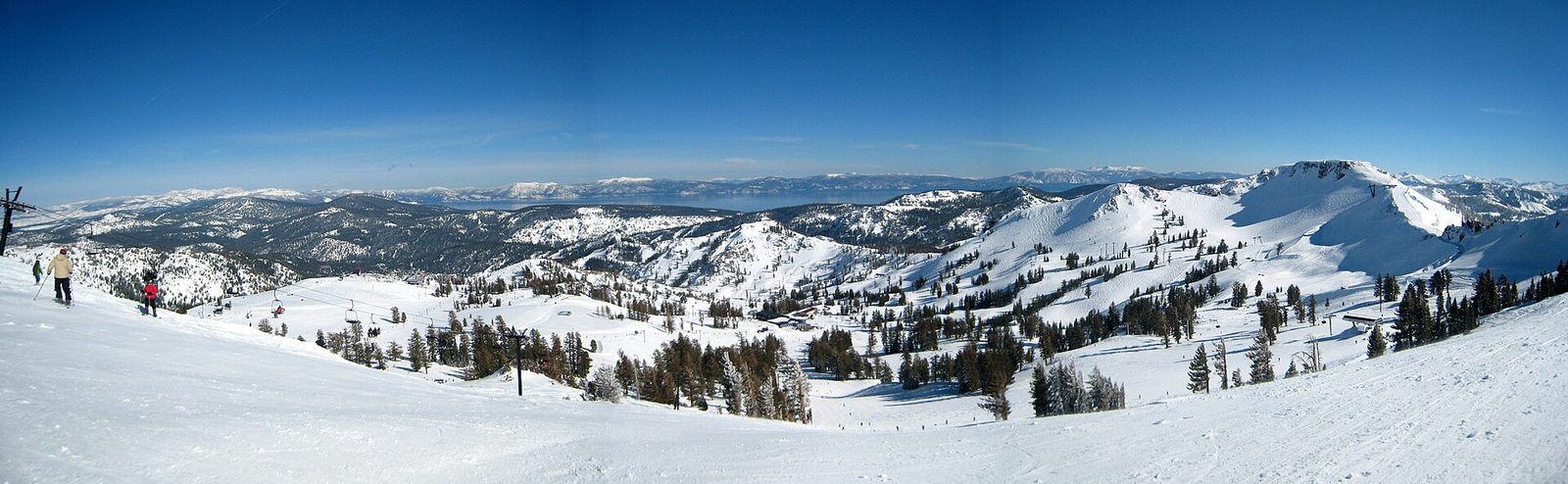
| Palisades Tahoe panorama | John M | CC BY-SA 2.0 | Commons |
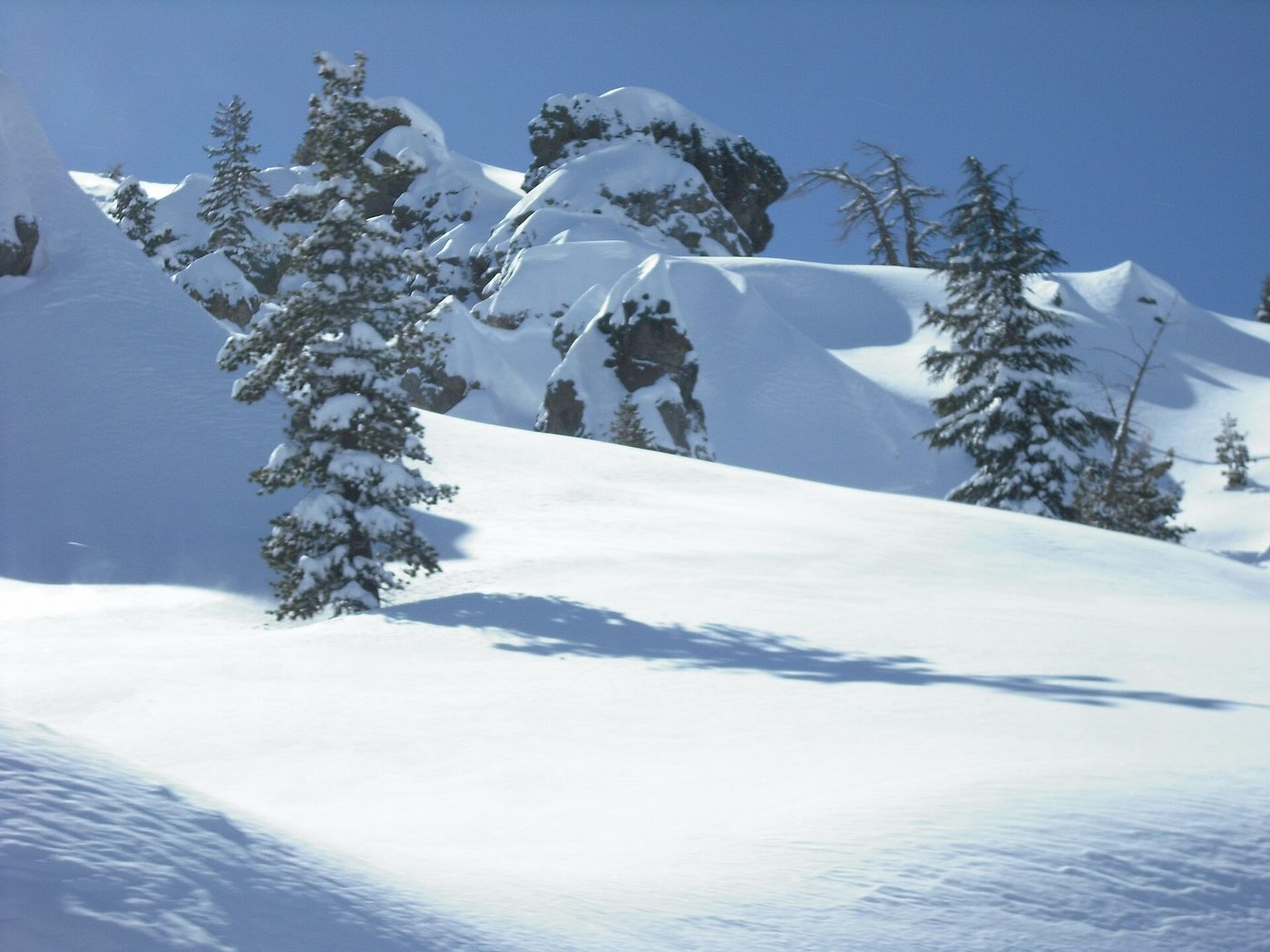
| Deep snow near Kirkwood, Carson Pass | skeight976 | CC BY 3.0 | Commons |
| Mount Rose, Nevada | Jrmichae | CC BY-SA 4.0 | Commons |
| Mount Bachelor, Oregon | Bonnie Moreland | Public domain | Commons.jpg) |
| Mammoth Mountain | Plane777 | Public domain | Commons |