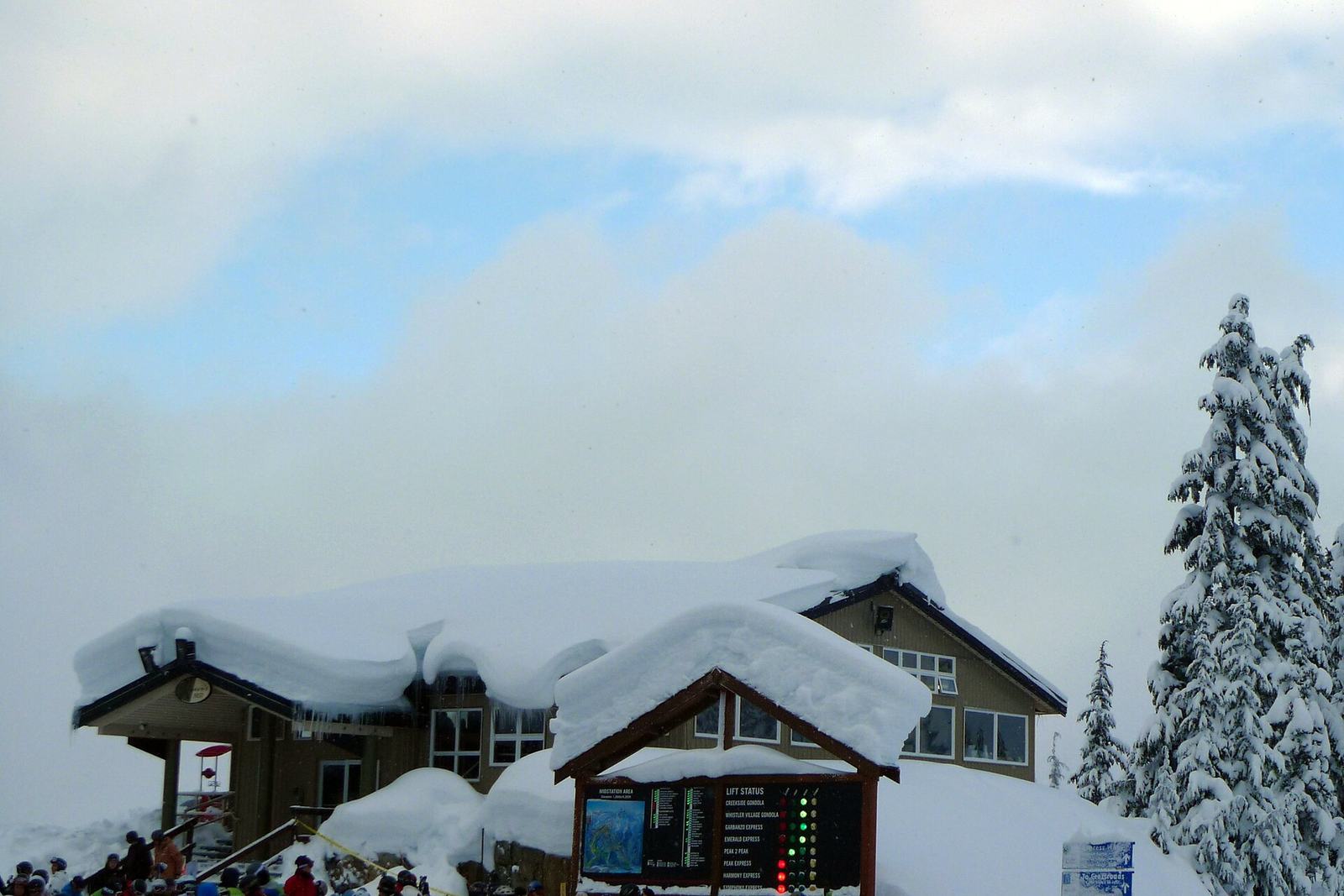
True ski in ski out resorts — where you clip in at your door and ski back to it — cost roughly 15% more per night than lodging in the same village and 25% to 30% more than a hotel a few miles down the valley. That premium is worth paying for two specific groups: families with small children, and skiers who care about being first on the lift after a storm. For everybody else, staying in town and taking the shuttle buys more skiing days than it costs.
That is the whole decision, and most lodging guides never state it, because most lodging guides are written by people selling lodging.
The trouble is that “ski-in/ski-out” has been stretched until it means almost nothing. It appears on listings that are a five-minute walk from a lift, on condos that are ski-in but not ski-out, and on hotels where the “ski access” is a shuttle that runs every twenty minutes. Before you can decide whether the premium is worth it, you have to know what you are actually being sold.
This guide sorts out the vocabulary, gives you honest numbers on the cost difference, explains why rental supply in the big ski towns is legally capped and what that does to prices, and then walks through the decision by trip type — because a family of five with a four-year-old and a pair of twenty-somethings on an Ikon Pass should not be booking the same room.
What does ski in ski out actually mean?
True ski in ski out means you can put your skis on at your accommodation’s door, ski to a lift without removing them, and ski back to the door at the end of the day without walking, riding a shuttle or crossing a road. Anything that requires carrying your skis, even for two minutes in ski boots, is something less than that — and the industry uses at least four terms for the gradations, none of them regulated.
Here is the honest hierarchy, from best to most misleading:
| Term as used in listings | What it usually means in practice | What to ask before booking |
|---|---|---|
| True ski-in/ski-out | Door to snow, both directions, no walking | “Can I ski back to the building, or only to it?” |
| Ski-in, walk-out | You can ski home but must walk or ride to the lift in the morning | “How far is the morning walk, in minutes, in boots?” |
| Slopeside | On or beside the mountain, but with a walk of 2–10 minutes | “Is there a path, and is it uphill?” |
| Walk to lifts | 5–15 minutes on a pavement, often carrying gear | “Which lift, and is there a gear locker at the base?” |
| Shuttle access / “steps from the slopes” | A bus. Usually free, usually every 10–20 minutes | “How often does it run at 8am and at 4pm?” |
The single most useful question is not “is it ski-in/ski-out?” — every listing will say yes. It is: “Can I ski back to the building at the end of the day, or do I have to take the shuttle home?” Return access is much harder to engineer than access out, so a lot of properties that are genuinely ski-out are not ski-in. Ask both directions, separately.
The second most useful thing is a map. Pull up the resort’s trail map, find the building, and check whether there is a green run reaching it. If the only run that reaches your lodging is a blue and your six-year-old is skiing wedge turns, the ski-in half of the promise is theoretical.
How much more does slopeside lodging actually cost?
SKI Magazine’s own estimate is that ski-in/ski-out runs about 15% more per night than lodging elsewhere in the village and 25% to 30% more than accommodation further from the resort. Property managers quote wider spreads — 30% to 60% against comparable lodging a few miles out — and travellers report saving $100 to $400 a night by staying in a nearby town.
Both are true, because they are measuring different things. The 15% figure compares like with like inside a resort village. The 60% figure compares a slopeside condo against a highway motel in the next town, which is not the same product at all.
Here is a more useful way to look at it, using indicative ranges rather than quotes, because resort lodging is dynamically priced and any specific number is stale within a week:
| Where you stay | Typical nightly range, peak season | What you give up |
|---|---|---|
| True ski-in/ski-out, marquee resort | $450–1,100+ | Money. A lot of it |
| Base village, 2–5 minute walk | $300–650 | Two minutes and some convenience |
| Ski town centre, shuttle or short drive | $200–450 | 15–30 minutes each way, boot-carrying |
| Nearby valley town, 20–40 minutes out | $110–250 | 40–80 minutes a day, a rental car |
| City base (e.g. Salt Lake, Denver, Burlington) | $90–200 | An hour each way, but far more restaurants |
Ranges as of 10 September 2026 for the 2026/27 season, for a two-adult room or a comparable condo in peak weeks. Holiday fortnights run substantially higher; midweek in January and April run substantially lower.
The number that actually matters is not the nightly rate. It is the nightly rate multiplied by nights, divided by the days you will ski. A $600 slopeside room for five nights and four ski days is $750 a ski day in lodging alone. A $220 town room for the same trip is $275. That $475-a-day difference buys a private lesson, or two lift tickets, or the flights home.
When the premium genuinely pays for itself
Small children. This is the strongest case by a distance. Carrying a four-year-old’s skis, boots, helmet and your own gear across a parking lot in the dark, twice a day, for six days, is the single most exhausting part of a family ski trip. Being able to go back to the room for a nap at 11am, or to send one parent home with a meltdown while the other keeps skiing, changes the trip completely. Our family ski vacations guide goes further into how this plays out.
Powder mornings. If you are the sort of skier who will be in the lift line at 8:15am on a storm day, being 200 feet from the lift instead of a 25-minute shuttle ride is worth real money. It is worth it maybe six days a season, but those six days are why you ski.
Short trips. On a two-night weekend, the transfer time is a much larger fraction of the trip. Three hours of shuttling across a 48-hour trip is a meaningful percentage of your skiing.
Groups splitting the cost. A four-bedroom slopeside condo divided by eight adults often lands under a mid-range hotel room each, and it comes with a kitchen.
When it is not worth it
Longer trips. Over seven nights the absolute dollar difference gets large, and the marginal convenience per day is the same. Six extra minutes a day is not worth $2,000.
Trips where you will not ski every day. If two of your five days are rest days, spa days or drive days, you are paying a skiing premium for non-skiing nights.
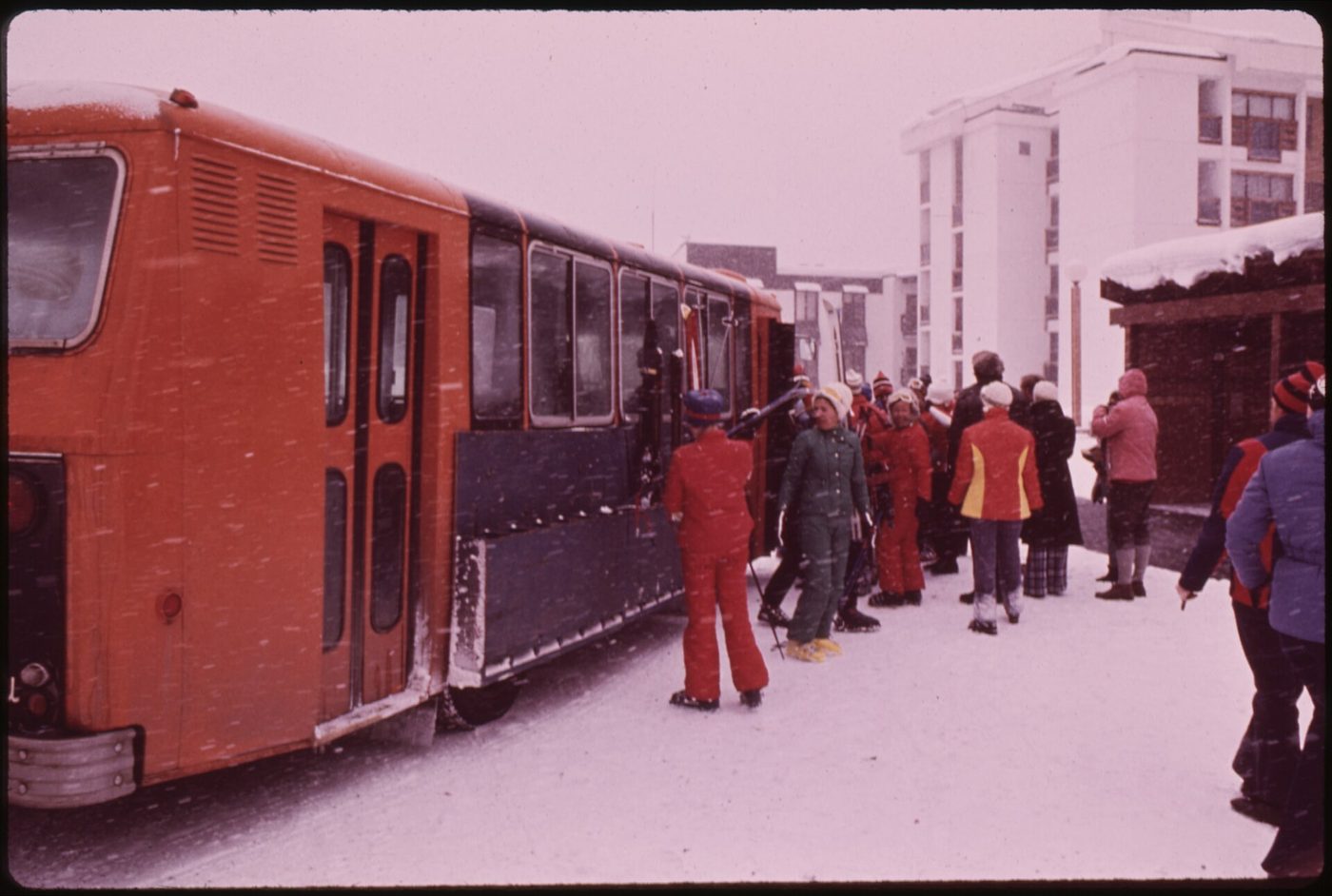
Resorts with genuinely good bus systems. Park City’s town-wide free bus, Steamboat’s free shuttle, Vail’s in-town bus and Jackson’s START service are frequent, warm and reliable. In those towns the premium buys you very little.
Anywhere the “ski-in/ski-out” is nominal. If the return route is a long cat track that closes at 3:45pm, you are paying for a phrase.
Condo, hotel or rental house?
The accommodation type matters as much as the location, and for families it usually matters more.
| Hotel | Condo / rental | Rental house | Hostel / motel | |
|---|---|---|---|---|
| Kitchen | Rarely | Yes | Yes | Sometimes |
| Daily housekeeping | Yes | Rarely | No | Varies |
| Ski storage / boot dryers | Usually | Usually | Sometimes | Rarely |
| Cost per person, group of 6 | High | Low | Lowest | Lowest |
| Cost per person, couple | Moderate | Moderate | High | Low |
| Front desk when something breaks | Yes | Maybe | No | Yes |
The kitchen is the hidden variable. On-mountain lunch runs $25 to $40 per person and resort-town dinners run $40 to $90. A family of four eating breakfast in the condo and taking packed lunches saves $120 to $200 a day — which by itself can close most of the gap between a town hotel and a slopeside condo.
Ski storage is the second hidden variable. A building with a heated ski locker at the base means you never carry gear anywhere. Some town hotels have this; many slopeside condos do not. Ask.
Watch the fees. Resort fees, cleaning fees, “amenity fees” and parking add 15% to 30% to the headline rate on many mountain properties, and they are frequently not shown until checkout. Compare all-in totals, never nightly rates. Parking in particular has become a real cost: several major resorts now charge $30 to $60 a day for on-site parking, which quietly closes part of the gap between staying in town and staying on the mountain.
Why is ski town lodging so expensive and so scarce?
Because supply in the biggest ski towns is legally capped, and has been for several years. This is the part of the market almost no lodging guide explains, and it changes how you should book.
After short-term rentals hollowed out local housing, several resort towns wrote hard limits into their codes:
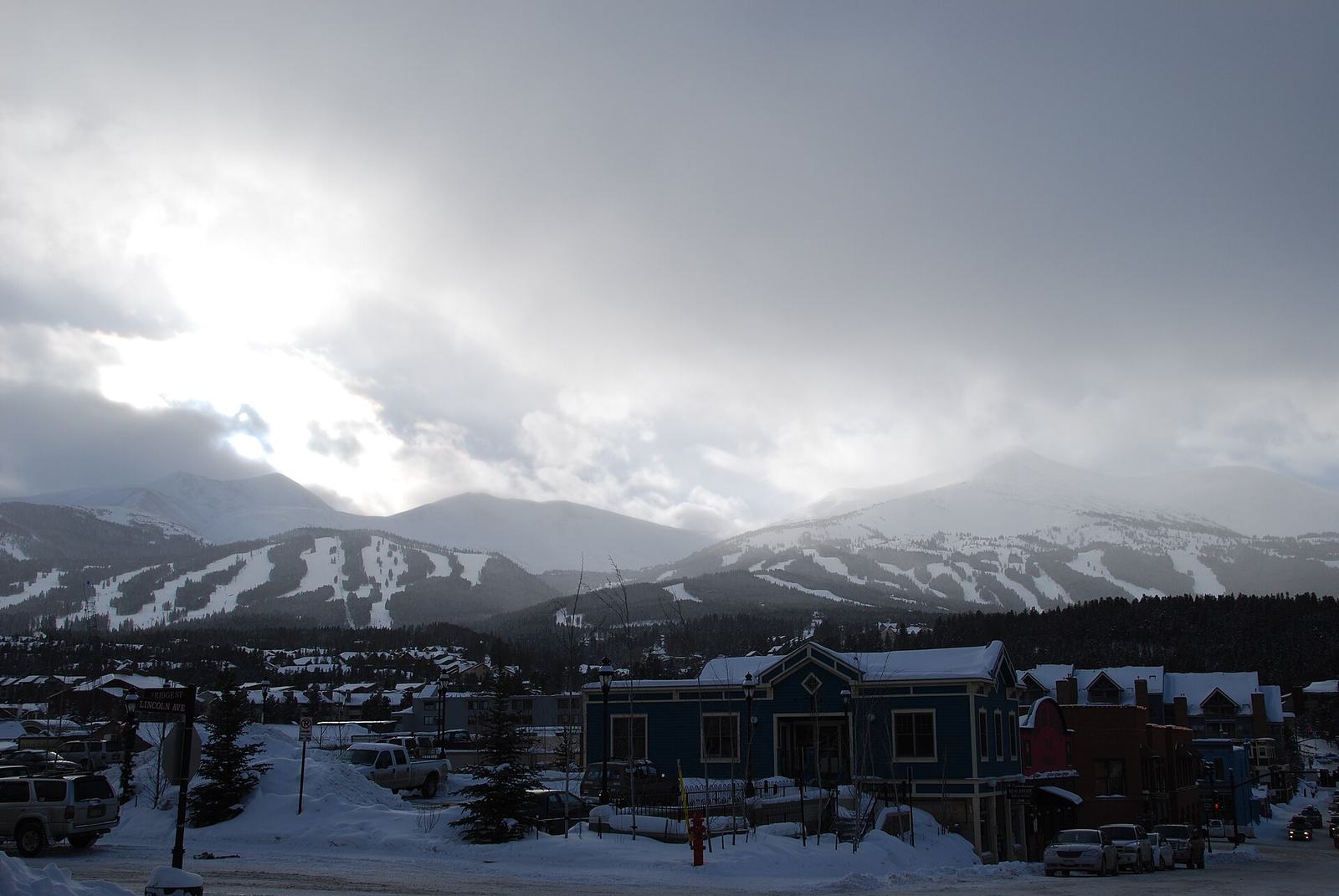
- Breckenridge divides the town into four short-term rental zones with a licence cap in each. Zone 1 allows about 92% of properties to hold a licence and currently has no waitlist; Zone 2 allows 51%; Zone 3 allows just 10%. Crucially, the licence attaches to the owner, not the address — when a property sells, the licence dies with the sale.
- Steamboat Springs approved an overlay-zone map that divides the city into green zones (licence freely available), yellow zones (capped) and red zones where short-term rental licences are prohibited outright.
Other Colorado and Utah towns have variations on the same idea. The practical consequences for you as a traveller:
- Rental inventory is smaller than the town’s size suggests, and it does not grow when demand does. Peak weeks sell out genuinely, not as a booking-site scare tactic.
- Book earlier than feels reasonable for Christmas, Presidents’ week and Spring Break — six to nine months out for a specific property, and expect the good ones to have been gone since summer.
- Verify the licence. A rental advertised in a capped or prohibited zone without a valid licence can be cancelled by the platform or shut down by the town, sometimes days before your trip. Ask the host for the licence number; legitimate operators expect the question.
- Hotels behave differently. Hotel supply is not capped the same way, which is part of why hotel pricing in these towns has held up better than rental pricing has fallen.
Where should you stay at the big ski destinations?
The right answer differs by resort, because the geography differs. A few patterns worth knowing before you book:
Purpose-built base villages (Beaver Creek, Snowmass Village, Northstar, Whistler’s Upper Village, Deer Valley’s Silver Lake) are where true ski-in/ski-out lives. They are convenient, expensive, and quiet at night. Good for families, less good if you want a bar with locals in it.
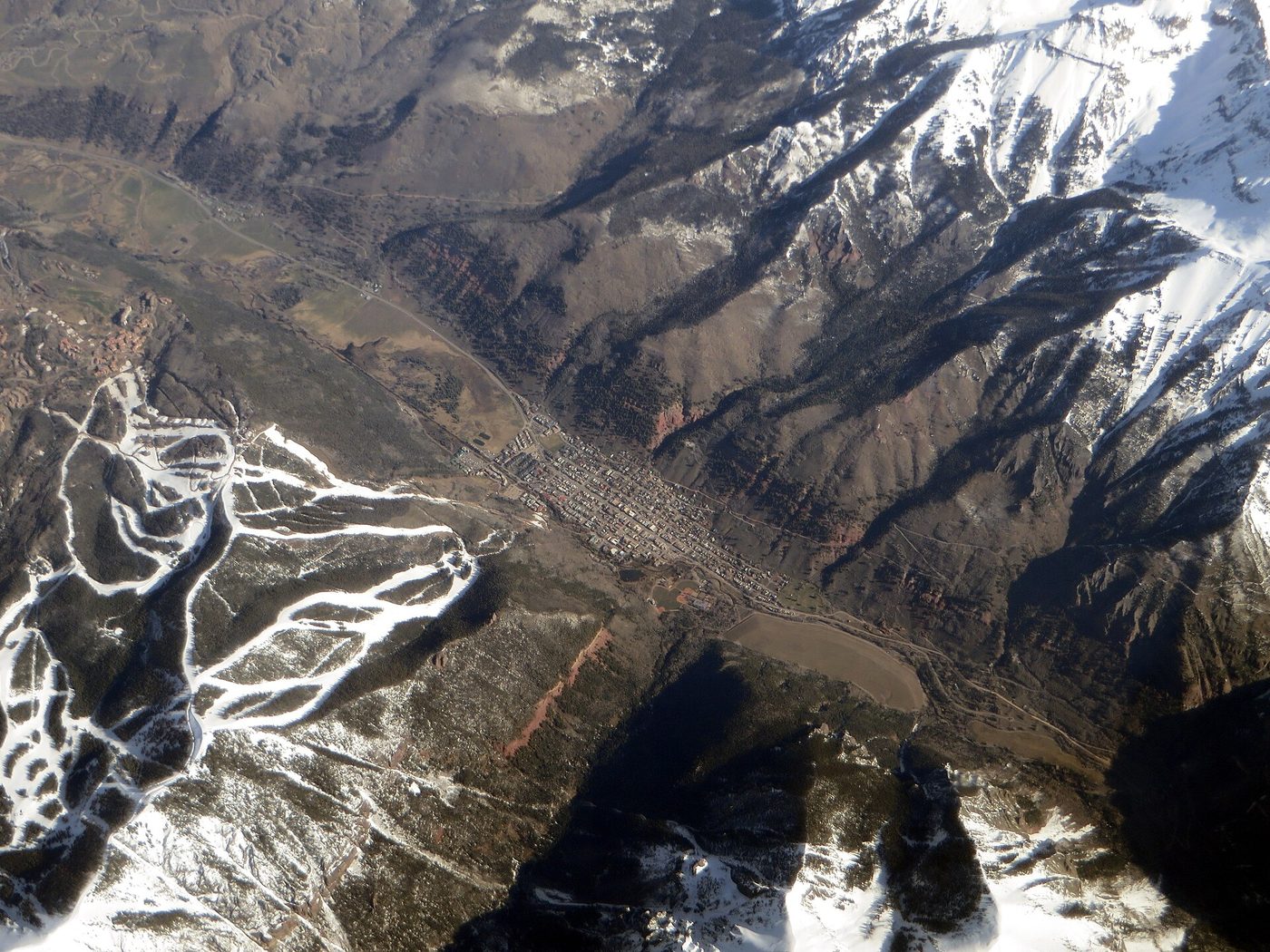
Real towns that happen to have a mountain (Park City, Telluride, Jackson, Steamboat, Aspen, Breckenridge, Stowe) give you restaurants, history and a life beyond skiing, usually at 20% to 40% less per night. Most have free buses. This is the best default for adults without small children.
Valley towns 20 to 40 minutes out (Ogden for Snowbasin, Silverthorne and Frisco for Summit County, Truckee for north Tahoe, Salt Lake City for the Cottonwoods, Canmore for Banff) are where the value is. You need a car, and you should check what the road does in a storm.
Cottonwood Canyons, Utah are the exception that proves the rule: the road is the bottleneck, not the distance, so staying up the canyon at Alta or Snowbird removes a problem that money genuinely cannot solve any other way. Our Utah ski resorts guide covers why.
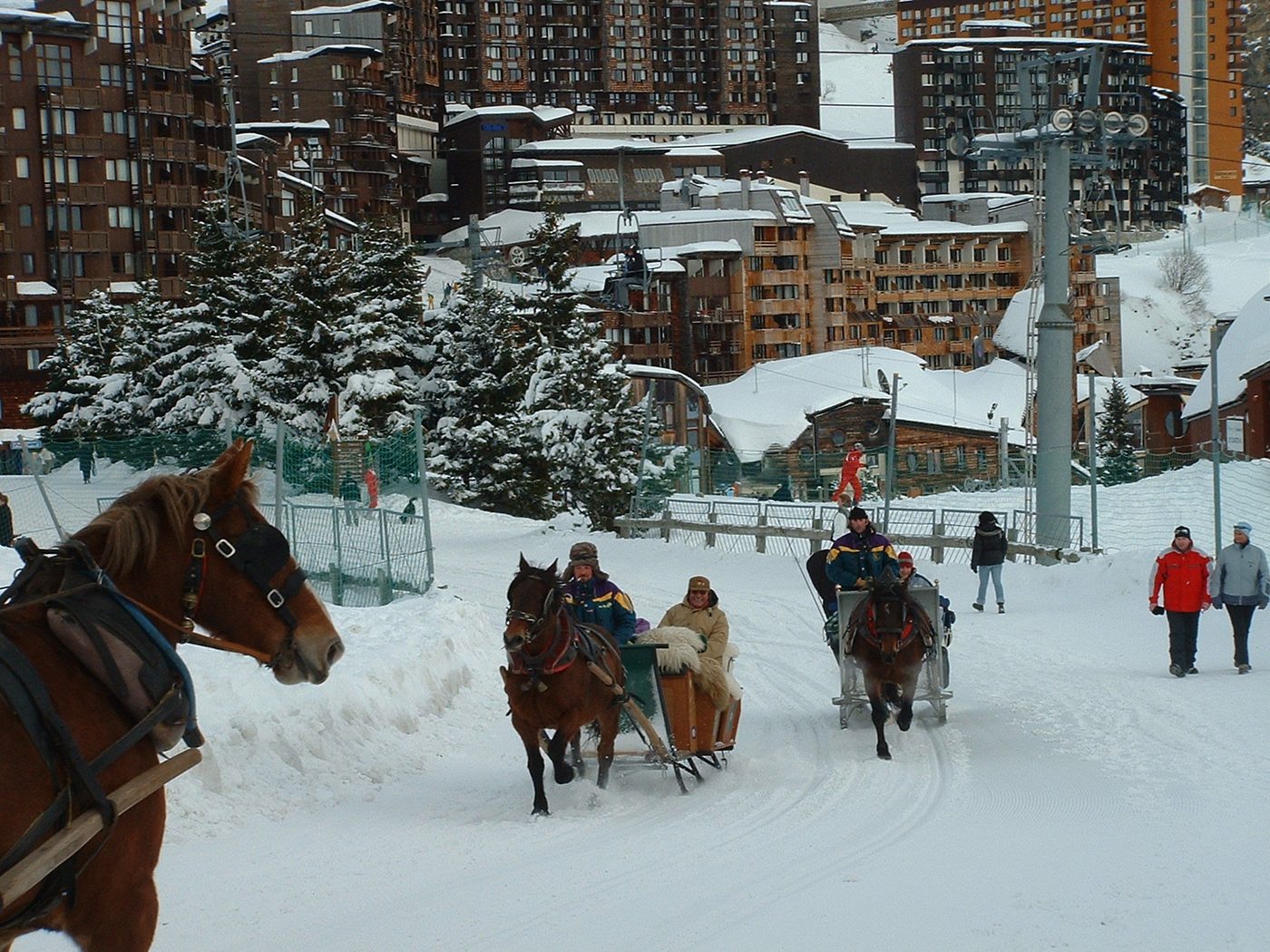
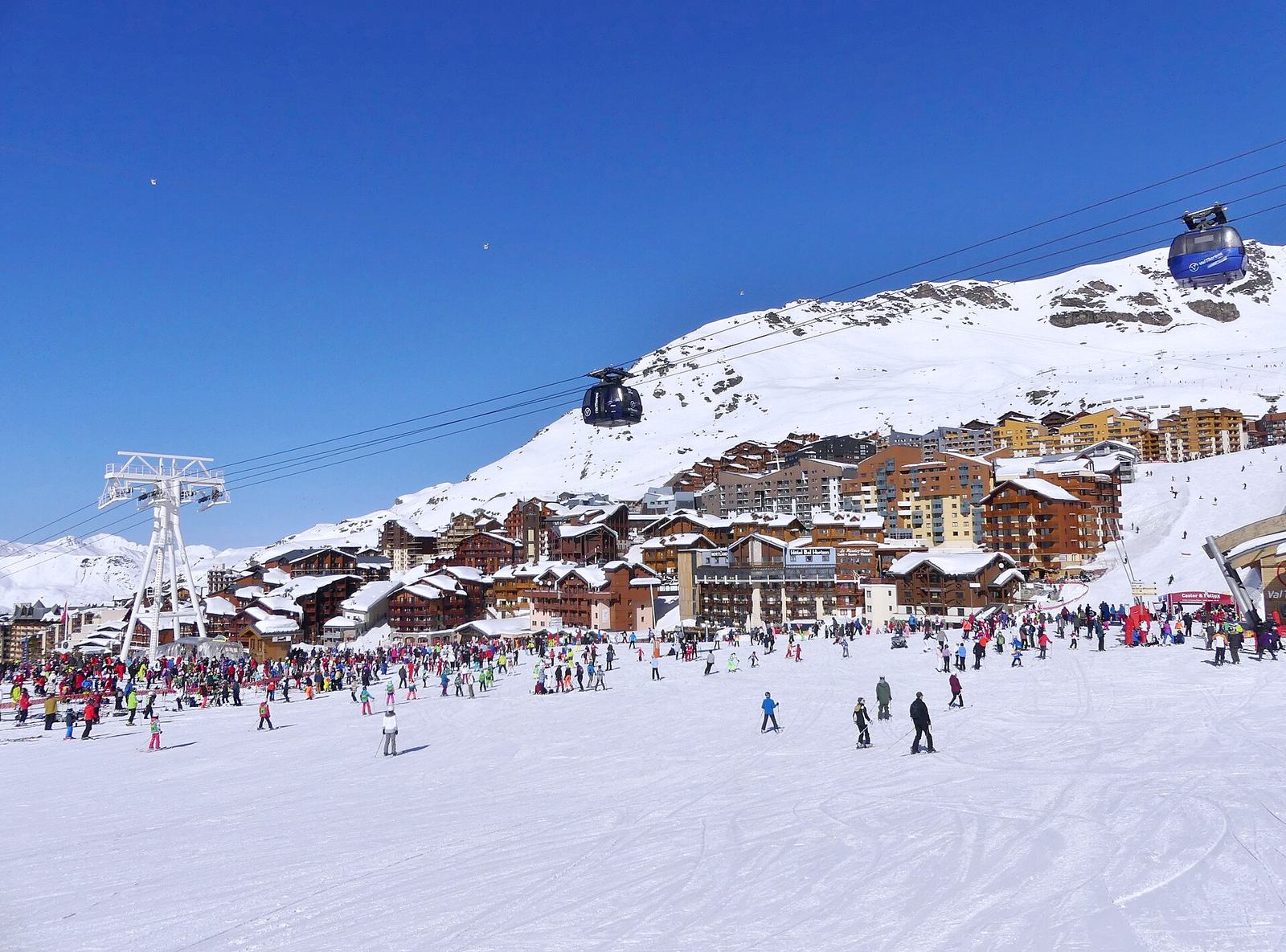
European resorts are structured differently again — most villages are compact enough to walk, half board is common, and the “ski-in/ski-out” label matters much less because the whole village sits on the snow. See skiing in Europe for how that changes the math.
Which resorts actually deliver true ski-in/ski-out?
Some mountains are built for it and some are not, and the difference is topography rather than money. A resort whose base sits in a narrow valley has room for a lodge and a car park, and that is all. A resort with a broad shelf of terrain at mid-mountain — or a purpose-built village designed from nothing in the 1960s and 70s — can put hundreds of beds directly on the snow.
Where slopeside genuinely means what it says, in the US and Canada:
- Beaver Creek, Colorado. Escalators from the village to the snow. Almost comically convenient, priced accordingly.
- Snowmass Village, Colorado. The base village runs up the hill, so a very large share of the beds are true ski-in/ski-out on both counts.
- Deer Valley’s Silver Lake, Utah. Mid-mountain lodging with lifts on three sides.
- Northstar, California. Compact village, gondola, well-designed return runs.
- Whistler Upper Village and Blackcomb Benchlands, BC. Genuinely on the snow, and the rest of Whistler Village is a five-minute walk.
- Big Sky’s Mountain Village, Montana. Sprawling but well connected.
- Sun Valley’s River Run and Warm Springs, Idaho. Ski-out is easy; ski-in depends on which base you pick.
Where the phrase is usually optimistic:
- Jackson Hole, Wyoming. Teton Village has a handful of true slopeside properties and a great many “two-minute walk” ones.
- Alta and Snowbird, Utah. A short list of lodges, all of them booked out by October for peak weeks. Worth it here for canyon-access reasons rather than convenience.
- Most East Coast resorts. Vermont and New Hampshire base areas are compact, and the lodging is usually a short shuttle or drive away. See east coast ski resorts for the regional picture.
- Taos, Telluride town, Aspen town, Park City’s Main Street. Great places to stay. Not ski-in/ski-out, whatever the listing says.
The single best-value structure in North American skiing is a real ski town with a free bus and a gondola — Telluride, Park City, Steamboat, Whistler. You get restaurants, a fraction of the nightly rate, and access that is only marginally slower than slopeside.
What to check before you pay the deposit
A short checklist that catches almost every lodging mistake. Run it before you enter a card number, not after.
- Find the building on the trail map. Not the resort on a road map — the building, on the piste map, with the runs that reach it.
- Ask about the return route by name. “Which run brings me back to the property, and what is its difficulty?” A green answer is a real answer.
- Confirm the all-in total. Nightly rate plus taxes, resort fee, cleaning fee, parking, and any mandatory amenity charge.
- Confirm parking, and its cost. $30–60 a day at major resorts, and some properties charge separately from the resort.
- Ask about ski storage. A heated locker at the base changes the trip more than an extra bedroom does.
- Ask about the shuttle timetable, specifically at 8:00–8:30am and 3:30–4:30pm. Frequency at those two windows is what you actually experience.
- Read the cancellation clause. Thirty to sixty days is normal; peak weeks are often non-refundable.
- For a rental, ask for the short-term rental licence number. Legitimate hosts in regulated towns have one and expect the question.
- Check what a storm does to your access. If the road to your valley town closes, what is your plan?
- Check the kitchen, honestly. A “kitchenette” with two hob rings and no oven does not feed six people for a week.
The one that catches most people is number three. A $320 nightly rate that becomes $438 after a 12% lodging tax, a $45 resort fee and a $180 one-off cleaning charge is not a $320 room, and comparison sites frequently show the first number and not the last.
When should you book ski lodging?
Book peak weeks — Christmas, New Year, Presidents’ week, Spring Break — six to nine months ahead, and book January and early-April midweek stays four to eight weeks ahead when prices are softest. Slopeside inventory at popular resorts is genuinely finite, so the good properties go first; off-peak town lodging behaves like normal travel and rewards waiting.
A booking sequence that works:
- Decide the pass first. It determines the resort, which determines the town. Our ski pass guide walks through that decision.
- Then the dates. Lodging price varies more by week than by property — see the ski season guide for which weeks cost what.
- Then the lodging, because it is the constrained resource and the largest line item.
- Then the flights, which are the most flexible of the four.
Most people do this in exactly the reverse order, book the cheap flight first, and then discover that the week they chose is the most expensive lodging week of the season. The full sequence is in how to plan a ski trip.
Cancellation policies at mountain properties are stricter than ordinary travel. Thirty to sixty days is common for full refunds, and peak-week bookings are frequently non-refundable outright. Read that clause before you pay the deposit, especially if anyone in the party is likely to get injured skiing — which, over a week, is not a remote possibility.
What does a week of ski lodging cost, all in?
Four realistic scenarios for a 2026/27 six-night trip, showing the lodging line only.
| Scenario | Lodging choice | Six nights | Per person |
|---|---|---|---|
| Couple, mid-range, Colorado | Town hotel, free shuttle | $1,500–2,400 | $750–1,200 |
| Family of four, convenience-first | Two-bed slopeside condo | $3,000–5,400 | $750–1,350 |
| Family of four, value-first | Two-bed condo, valley town, car | $1,200–2,100 | $300–525 |
| Group of eight, splitting | Four-bed slopeside house | $4,200–7,800 | $525–975 |
Indicative ranges as of 10 September 2026, peak-season, before taxes and fees. Add 15–30% for resort fees, cleaning and parking, which are not always shown in the advertised rate.
Notice the third row. A family that accepts a 25-minute drive cuts its lodging bill by more than half, and that saving is larger than what most families spend on lift tickets for the same trip. Notice also that the family in row two pays about the same per person as the couple in row one — which is the real argument for a condo. Full cost modelling for a trip is in our ski trip cost guide.
Six mistakes people make booking ski lodging
1. Booking on the phrase, not the map. “Ski-in/ski-out” is unregulated. Find the building on the trail map before you pay.
2. Comparing nightly rates instead of all-in totals. Resort fees, cleaning and parking routinely add 15% to 30%.
3. Ignoring the return route. Ski-out is easy to build, ski-in is not. Ask specifically whether you can ski home.
4. Assuming a car solves everything. Several resorts now charge $30 to $60 a day to park, and canyon and pass roads close in storms. Sometimes the shuttle is not a compromise, it is the better product.
5. Booking before deciding the week. Lodging price varies more by date than by property. Move the week, not the standard.
6. Not checking whether the rental is licensed. In Breckenridge, Steamboat and a growing list of towns, an unlicensed rental in a capped zone is a booking that can evaporate.
Frequently asked questions
What does ski in ski out mean exactly?
It means you can ski directly from your accommodation to a lift and back again without removing your skis or taking transport. In practice the term is used loosely for anything within a short walk, so ask two specific questions: how long is the walk to the lift, and can you ski back to the building at the end of the day.
Is ski in ski out lodging worth the extra cost?
For families with young children and for skiers who want to be first on the lift after a storm, usually yes. For couples, longer trips, and any resort with a frequent free shuttle, usually no — the 15% to 30% premium buys convenience rather than skiing, and staying in town often buys a better week for less money.
How much more expensive is slopeside lodging?
Roughly 15% more per night than other lodging in the same village, and 25% to 30% more than lodging further out, by SKI Magazine’s estimate. Compared against a valley town 20 to 40 minutes away, the gap is much larger — often 50% or more, or $100 to $400 a night in absolute terms.
Should I book a hotel or a condo for a ski trip?
A condo for any group of four or more, or any trip longer than four nights. The kitchen alone saves $120 to $200 a day for a family, and per-person cost falls sharply as the group grows. A hotel makes more sense for couples, short trips, and anyone who values daily housekeeping and a front desk over a stove.
How far in advance should I book ski accommodation?
Six to nine months for Christmas, New Year, Presidents’ week and Spring Break, especially for a specific slopeside property. Four to eight weeks is fine for January and April midweek stays, when demand is soft and prices drop. Short-term rental supply in several major ski towns is capped by law, so peak-week scarcity is real rather than manufactured.
Can you save money staying in a town near the ski resort?
Yes, substantially — typically $100 to $400 a night, which over a week is $700 to $2,800. The costs are a rental car, 40 to 80 minutes of daily driving, and exposure to road closures during storms. For most families that trade is worth making; for a two-night weekend or a powder-chasing trip, it usually is not.
What is a chalet, and what does half board mean?
A chalet is simply a mountain house, most commonly used in Europe. It may be self-catered or staffed with a cook and host. Half board means breakfast and an evening meal are included in the price but lunch is not — a common arrangement in Alpine hotels and catered chalets, and a genuine saving given on-mountain lunch prices.
Do ski resorts charge for parking now?
Many do. Paid or reserved parking is now standard at major Colorado, Utah and Tahoe resorts on weekends and holidays, commonly $30 to $60 a day, with free lots further out and a shuttle. Factor it in when comparing a town stay against a slopeside one — it can close a third of the gap.
The bottom line
Ski in ski out resorts sell convenience, and convenience is worth a great deal on exactly two kinds of trip: the one with a four-year-old, and the one where you intend to be on the first chair after a storm. On every other trip, the money is better spent on more days, better lessons or a longer stay.
So decide in this order. What is the trip actually for? Who is in the party, and how old are they? How many days will you ski, and will you ski every one of them? Then price the all-in total per skiing day, not the nightly rate, and compare that against the same number for a place in town.
From here, the detail sits in the guides beneath this one. What does ski in ski out mean takes the definitions apart properly, ski condo vs hotel runs the numbers on accommodation type, and when to book ski lodging covers the calendar. If you are optimising for price, start with cheap lodging near ski resorts or ski hostels USA; if you are optimising the other way, luxury ski hotels. And if you have not chosen a town yet, the best ski towns, ski town vs base village, ski vacation rentals and dog friendly ski towns each take one angle on that question.
Price ranges, lodging premiums and short-term rental rules checked 10 September 2026 for the 2026/27 season. Resort lodging is dynamically priced and municipal rental codes change — confirm rates and licensing directly before booking.
Where you stay shapes the evening as much as the day. A real ski town gives you restaurants, bars and a life after the lifts close; a purpose-built base village tends to go quiet early; and a condo with a kitchen and a hot tub is often the best-value après setup of all. Our guide to apres ski covers the bars, hot springs and off-slope activities worth planning around.
Sources
- SKI Magazine — when is ski-in/ski-out lodging worth the money, checked 10 September 2026
- Town of Breckenridge — historical development of short-term rental licence caps and regulations, checked 10 September 2026
- Steamboat Pilot & Today — short-term rental regulations in Steamboat officially approved
- Ikon Pass — 26/27 pricing and access, checked 10 September 2026
- Epic Pass — official pass pricing and Epic Mountain Rewards lodging discount, checked 10 September 2026
Nightly price ranges are compiled from operator listings across Colorado, Utah, Vermont and Tahoe and are given as ranges rather than quotes, because mountain lodging is dynamically priced and any single figure is stale within days.
Image credits
| Image | Photographer | Licence | Source |
|---|---|---|---|
| Snow-buried mountain lodge, Whistler (featured image) | Ruth Hartnup | CC BY 2.0 | Commons.jpg) |
| Snowmass Village gondola | William D. Moss | Public domain | Commons |
| Free Vail shuttle bus, February 1974 | U.S. National Archives | Public domain | Commons.jpg) |
| Avoriaz, France | John Williams | CC BY 2.0 | Commons |
| Breckenridge, Colorado | Jasen Miller | CC BY 2.0 | Commons |
| Telluride, Colorado, from the air | Ken Lund | CC BY-SA 2.0 | Commons.jpg) |
| Val Thorens, France | Florian Pépellin | CC BY-SA 4.0 | Commons.JPG) |