The best ski pass for beginners is almost never a full Epic or Ikon pass. A true first-season skier will ski four to six days, mostly on green terrain every resort has, and gets zero value from unlimited access to Jackson Hole or Vail. The strongest options, in order: a resort’s own beginner package bundling lesson, rental and a limited lift ticket; the Indy Pass’s Learn to Turn product at $189; a state kids-ski-free passport if children are involved; or a short-trip product like an Epic Day Pass if you already know your resort.
Buying a full season pass as a first purchase is the single most common beginner mistake in this whole category, and it comes from a reasonable instinct — the pass looks like the “serious” option, and marketing rewards buying big. But a beginner’s actual season looks nothing like an experienced skier’s, and the products built for volume and terrain prestige solve problems a beginner does not have yet. For the full pass landscape once you are past this stage, see the best ski pass for 2026/27.
What a beginner actually needs from a pass
A first-season skier’s real requirements are narrow: a handful of days, beginner terrain (which every resort has, regardless of pass prestige), and — critically — a lesson and rental bundled in, since almost nobody’s first days happen on owned gear with self-taught technique. None of that requires unlimited access, terrain variety, or a marquee mountain. It requires low commitment, low cost, and a package that gets a new skier onto snow with instruction rather than assuming they already know what they are doing.
This is why the products that win this comparison are the ones explicitly built for beginners, not the products that happen to be cheapest among the season-long options.
Gear is worth naming specifically, since it shapes which pass actually makes sense. A true first-timer almost always rents rather than owns skis, boots and poles, and several of the products ranked below — resort beginner packages especially — bundle that rental into the same purchase as the lesson and lift access. A pass bought separately from gear, the way an experienced skier shops, leaves a beginner solving rental logistics on top of everything else, which is one more reason the bundled option tends to win even when its sticker price looks similar to buying the pieces separately. Walking through a base village’s rental shops before booking anything, the way you would compare a few hotels before picking one, is a worthwhile five minutes for a first-time buyer.
The best options, ranked
- A resort’s own beginner package. Nearly every resort bundles a lesson, rental and a limited-access lift ticket at a price well below buying the three separately, and several convert into a season pass credit if the skier keeps going. This is almost always the correct first purchase, full stop.
- The Indy Pass Learn to Turn tier, $189 for either an adult or a kid, flat — the cheapest dedicated multi-visit product covered anywhere in this pass category, aimed squarely at genuine first-timers.
- A state kids-ski-free passport, if children are involved — Colorado, Vermont and Utah all run programs described in detail below, several running $30 to $76 for a season of limited access at multiple resorts.
- Epic SchoolKids or an equivalent local children’s program, where available, which can mean free or steeply discounted access for young beginners specifically.
- An Epic Day Pass or similar short-trip product, for one to three days, if you already know the specific resort and do not need the lesson-and-rental bundle a beginner package provides.
A rough cost comparison
| Option | Typical first-season cost | What’s included |
|---|---|---|
| Resort beginner package (3-4 visits) | $200–$500 | Lesson, rental, limited lift access, often credited toward a future pass |
| Indy Learn to Turn | $189 | Multi-visit access at participating resorts, no lesson bundled |
| State kids passport (where eligible) | $30–$76 | 3-5 days across multiple resorts, no lesson or rental bundled |
| Full Epic Local | $849 | Unlimited-ish access at a large resort roster, no lesson or rental bundled |
| Full Epic Pass | $1,145 | Unlimited access at 42 resorts, no lesson or rental bundled |
The gap in that table is not just price — it is what each option assumes you already have. The top three assume you are starting from zero and price accordingly; the bottom two assume you already own or can independently source gear and instruction, which a true first-timer typically does not.
Notice what is missing: a full Epic or Ikon pass does not appear until you are no longer a beginner in the sense this guide means. Once technique and confidence are established and the day count climbs past six or seven, is a ski season pass worth it becomes the relevant question instead.

Common mistakes beginners make when buying a pass
Buying the “safe” big pass instead of running the actual math. A full Epic or Ikon pass feels like it removes risk — unlimited access means never worrying about running out of days — but for someone who will ski four to six days, it is simply the most expensive option on this entire list, not the safest.
Skipping the lesson to save money. A beginner package’s lesson component is the single highest-value piece of the bundle, and it is also the piece people cut first when trying to save a few dollars. Skipping it is how a first season turns into three days of frustration on a magic carpet rather than genuine progress.
Buying gear before renting it a few times. Owning skis, boots and poles as a true first-timer is rarely the right early move — foot shape, ability level and preferences all change fast in the first season, and rental gear (often bundled into the beginner package anyway) avoids buying the wrong equipment before you know what you actually need. Ski gear for beginners covers exactly what is worth owning early and what to keep renting.
Assuming a kids’ program applies without checking eligibility. State passport programs and Epic SchoolKids both have specific grade, age or state requirements, and assuming your child qualifies without checking the current terms is a common source of last-minute surprises. Confirm eligibility before counting on the discount in your season’s budget.
Choosing a resort for its reputation rather than its beginner terrain. A resort famous for expert terrain and marquee status is not automatically a good place to learn — beginner-specific infrastructure like a dedicated learning zone, gentle green runs away from faster traffic, and a genuinely patient ski school culture matter more to a first season than a name on a bucket list. Check what a resort actually offers a true beginner before booking around its reputation among experienced skiers.
Why does a resort’s own beginner package usually win?
Resort beginner packages exist because resorts want new skiers to come back, and the economics reflect that: bundling a lesson, rental and a limited lift ticket costs meaningfully less than buying all three individually, and the lesson component is the part a true beginner needs most and would otherwise skip to save money — exactly the wrong thing to cut. Many resorts also apply some or all of the package price toward a season pass if the skier returns for a second package or upgrades later in the same season, which removes the risk of a wasted first purchase.
Because these packages are resort-specific and change every season, check directly with the specific resort you plan to visit rather than assuming a generic number. The pattern holds broadly across the industry even though the exact price does not.
The Indy Pass Learn to Turn tier
At a flat $189 for either an adult or a kid, Learn to Turn is the standout budget option among genuine multi-resort products. It is priced well below every other pass covered on this site and is aimed specifically at first-timers rather than repackaged from a product built for someone else. The trade-off is a smaller participating resort list than Indy’s main network, so check current participation before assuming your preferred beginner-friendly hill is included. Full detail on how it fits into the broader Indy network is in the Indy Pass guide.
State passport programs: free or nearly free skiing for kids
For families with school-age children, several states run passport programs that are difficult to beat on price, and are worth checking before any other option on this list.
| Program | Price | Grades | What it covers |
|---|---|---|---|
| Colorado Ski Country Passport | $76 | K–6 | 4 days each at 19 Colorado resorts, plus 2 free junior rentals |
| Ski Vermont Fifth Grade Passport | $30 | 5th grade | 3 vouchers at 20 resorts plus ~24 cross-country areas; no residency requirement |
| Ski Utah Passport | ~$69 | 4–6 | 3 days each at 15 Utah resorts |
| Epic SchoolKids Utah Pack | Free | K–5 | 5 days at Park City |
These programs are not a substitute for an adult’s own pass, but for a family with kids in the qualifying grade range, they are close to the best deal in skiing — the Vermont program in particular costs less than a single window lift ticket and covers three separate visits with no state-residency requirement at all. Prices and exact terms shift slightly year to year; confirm current details directly with each program before assuming last season’s numbers hold.
Colorado’s program is worth a closer look, since it has run for three decades and expanded meaningfully over that time — originally a 5th/6th grade program, it now covers grades K through 6, which materially widens the number of families who can use it. The four-day allotment at each of 19 resorts is generous enough that a family could realistically build most of a season around it, especially paired with an adult beginner package at one or two of the same resorts. Vermont’s program stands out for a different reason: at $30 with no residency requirement, it is genuinely open to a family visiting from out of state, not just Vermont residents, which is unusual among programs of this kind and worth knowing if a Northeast ski trip is on the calendar regardless of where the family actually lives.
Should a beginner ever buy Epic or Ikon?
Only in specific cases — a family where some members are experienced enough to use a full pass and the beginner is along for the ride, or a beginner who is genuinely confident they will ski often enough, quickly enough, to reach the break-even point. For most first-season skiers, the honest day count is four to six days, well under the seven-to-nine-day break-even a full Epic or Ikon pass needs, and well under even the five-to-seven-day break-even of a mid-tier pass. Buying the big pass “to be safe” usually means paying for access that goes unused while the actual bottleneck — lessons, comfort on snow, basic technique — goes unaddressed.
The exception worth naming directly: Epic SchoolKids and similar programs sometimes bundle a full-access product for children at a steep discount or for free, which changes this calculus completely for a qualifying child, even though it would not for an adult beginner paying full price.
There is also a mixed-family case worth addressing directly, since it comes up often: a household where one or two members are experienced, full-pass-worthy skiers and one or two are true beginners. In that situation, buying full passes for the experienced skiers and a separate beginner-specific product for the newer skiers is usually the right split, rather than either buying everyone the same expensive pass or holding the experienced skiers back to a beginner product they will outgrow in a week. Epic Friend Tickets and similar guest-discount programs can help bridge the gap on days the whole family skis together, letting the beginner join the pass holders’ trip at a reduced rate without a full pass purchase.
When should a beginner upgrade to a full season pass?
Once the season’s actual ski-day count climbs past roughly six or seven days, and once green-and-easy-blue terrain has stopped being the entire draw — both signs that the break-even math for a full pass has shifted in its favor and that a wider resort roster has started to matter. That transition typically happens in a second or third season, not the first, though some beginners progress faster and some take longer, and there is no penalty for staying on a lower-commitment product for more than one season if that matches the real pace of progress.
At that point, the comparison shifts entirely to Epic Pass vs Ikon Pass and the full break-even framework in is a ski season pass worth it, both written for a skier who has outgrown the beginner-specific products covered in this guide — or start over at the best ski pass for 2026/27 for the complete field.
Frequently asked questions
Do I need my own gear before buying a beginner pass?
No — most beginner passes and packages either bundle rental gear directly or are designed to be used alongside a resort’s own rental shop, so there is no need to buy skis, boots or a snowboard before your first day. Wait until you have a season or two of rental experience before considering a purchase.
What is the cheapest way to start skiing?
A resort’s own beginner package — lesson, rental and a limited lift ticket bundled together — is usually the cheapest genuine path to a first day on snow, since it is priced below buying the three components separately and often credits toward future visits. The Indy Pass Learn to Turn tier at $189 is the cheapest dedicated multi-visit product if you want more than one or two days.
Should a beginner buy a full Epic or Ikon pass?
Generally no — a true beginner’s four-to-six-day season falls well short of either pass’s seven-to-nine-day break-even point against advance-purchase tickets, so a resort beginner package, a state kids passport, or the Indy Learn to Turn tier delivers more value for less money.
Are state ski passport programs only for residents?
It depends on the program — Vermont’s Fifth Grade Passport explicitly has no residency requirement, while other state programs may have their own eligibility rules. Check the specific program’s current terms directly rather than assuming residency requirements are uniform across states.
How many days should a beginner expect to ski in a first season?
Most first-season skiers ski somewhere between four and six days, which is exactly why the products built around unlimited access rarely make financial sense for a true beginner — the break-even math needs more days than most beginners will actually use.
When does it make sense to upgrade from a beginner pass to a full season pass?
Once your actual ski-day count consistently exceeds six or seven days a season and you are looking for terrain beyond beginner and easy-intermediate runs, the math shifts toward a full pass. Run the numbers specifically using is a ski season pass worth it rather than upgrading on a guess.
Do beginner packages include ski or snowboard rental?
Yes, in almost every case — the whole point of a resort beginner package is to bundle rental gear with the lesson and lift access into one purchase, since a true first-timer rarely owns equipment yet. Confirm the specific rental terms (skis versus snowboard, helmet included or not) with the resort directly, since bundles vary.
Is it worth buying gear before a first lesson?
Generally no. Renting for the first several days, often through a resort beginner package, lets a new skier or snowboarder figure out preferences and fit before spending money on equipment that might not suit their eventual style or ability level. Ski gear for beginners covers what is worth buying early versus what to keep renting.
Can adults use the same beginner programs as kids?
Resort beginner packages and the Indy Learn to Turn tier are generally open to adults and kids alike. The state passport programs and Epic SchoolKids, by contrast, are specifically age- or grade-restricted and do not extend to adult beginners — adults should look to the resort package or Indy’s Learn to Turn tier instead.
How long should a beginner stay on a beginner-specific pass before upgrading?
There is no fixed timeline — some skiers progress fast enough to outgrow a beginner product within one season, others take two or three. The signal to watch is your actual ski-day count and whether beginner terrain still fits your ability, not a calendar deadline.
Do beginner packages work for snowboarding as well as skiing?
Yes — nearly every resort’s beginner package covers both skiing and snowboarding with the same bundled lesson-rental-lift structure, and the Indy Learn to Turn tier and most state passport programs make no meaningful distinction between the two disciplines either.
Is it better to start with private lessons or a group beginner package?
Group lessons, bundled into a standard beginner package, are typically far cheaper and perfectly adequate for a genuine first-timer, since the fundamentals taught in the first few days are largely the same regardless of group size or price point. Private lessons become more valuable later, once a skier wants faster, more individualized progress — see luxury ski vacations for where private instruction fits into the broader cost picture.
Sources
- indyskipass.com
- Colorado Ski Country — Ski Passport
- Ski Vermont — Fifth Grade Passport
- Epic SchoolKids — Utah
Image credits
| Image | Photographer | Licence | Source |
|---|---|---|---|
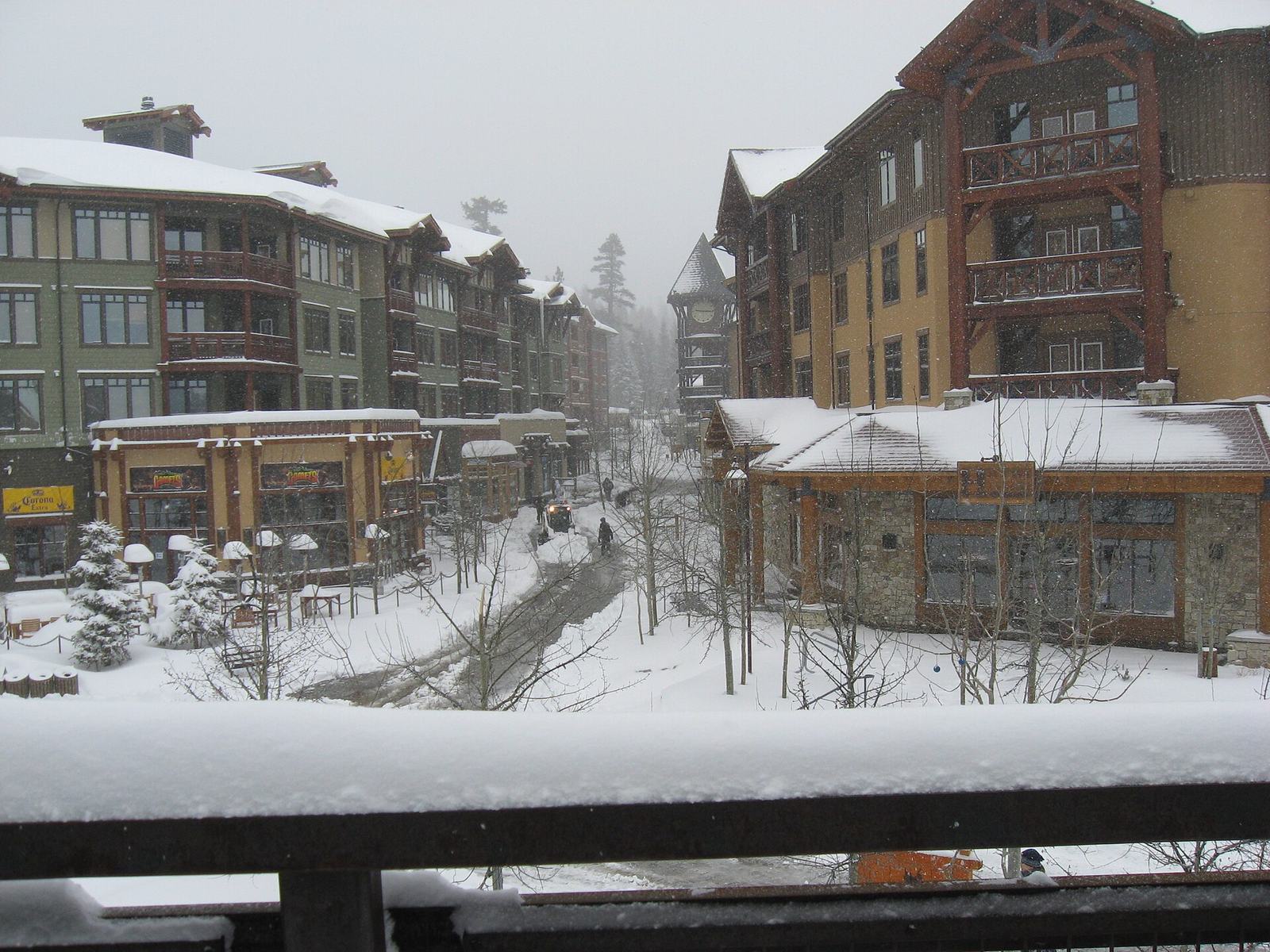
| The Village at Mammoth, California (featured image) | Nandaro | CC BY-SA 3.0 | Commons |
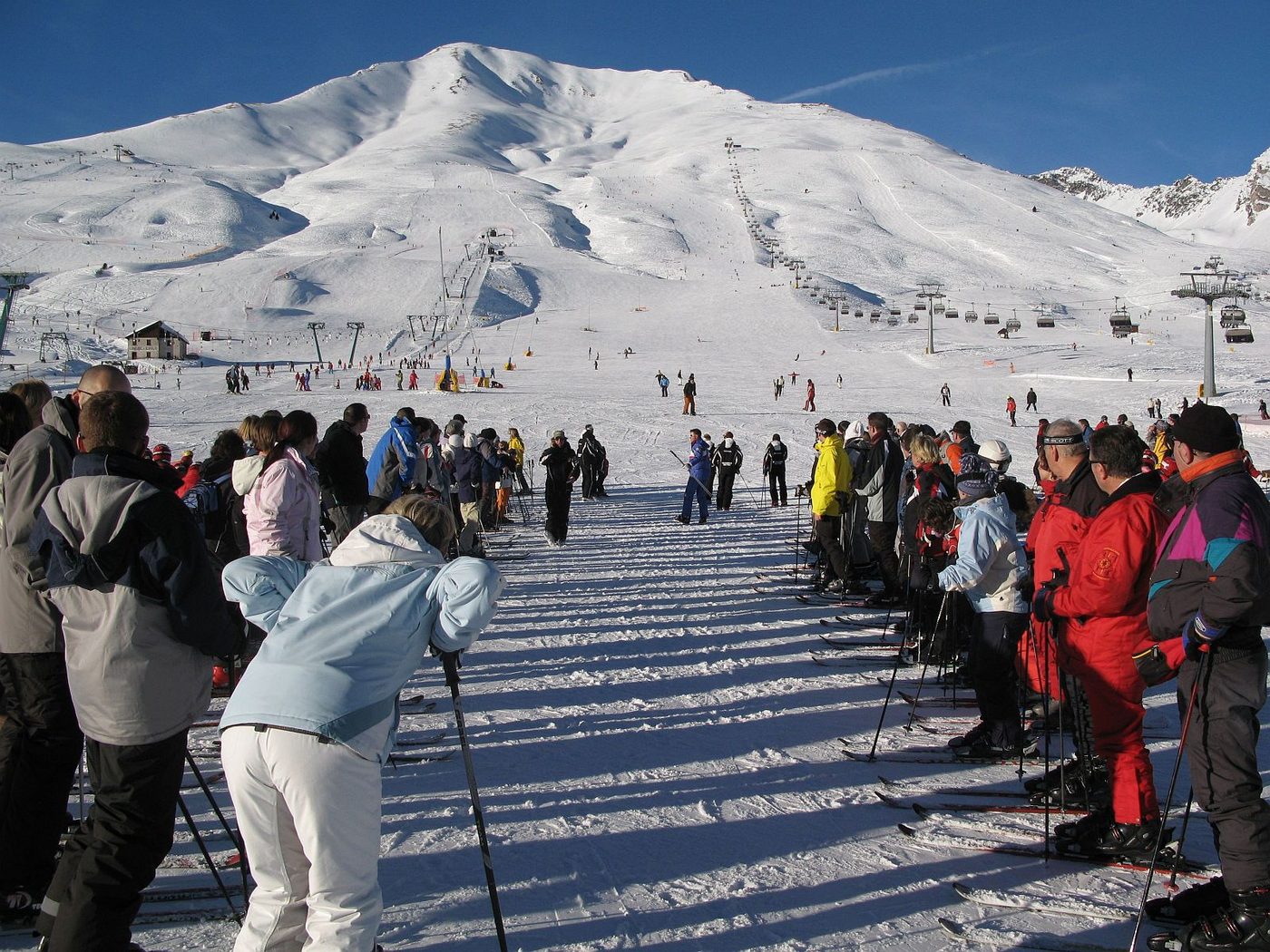
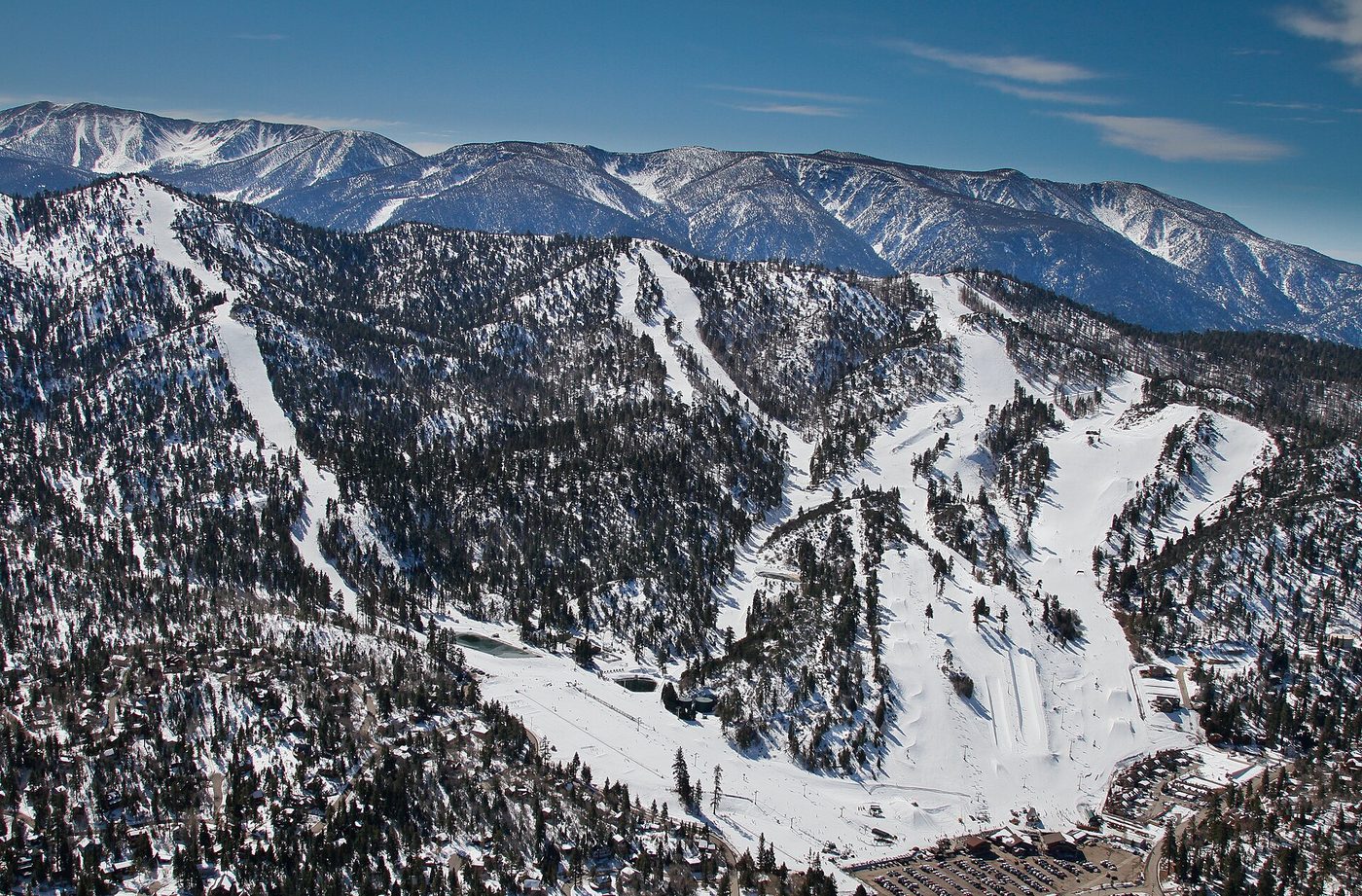
| Bear Mountain, Big Bear Lake, California | bearmountain.com | CC BY-SA 3.0 | Commons |
| Ski school group lesson, Passo del Tonale | — | — | Site media library |
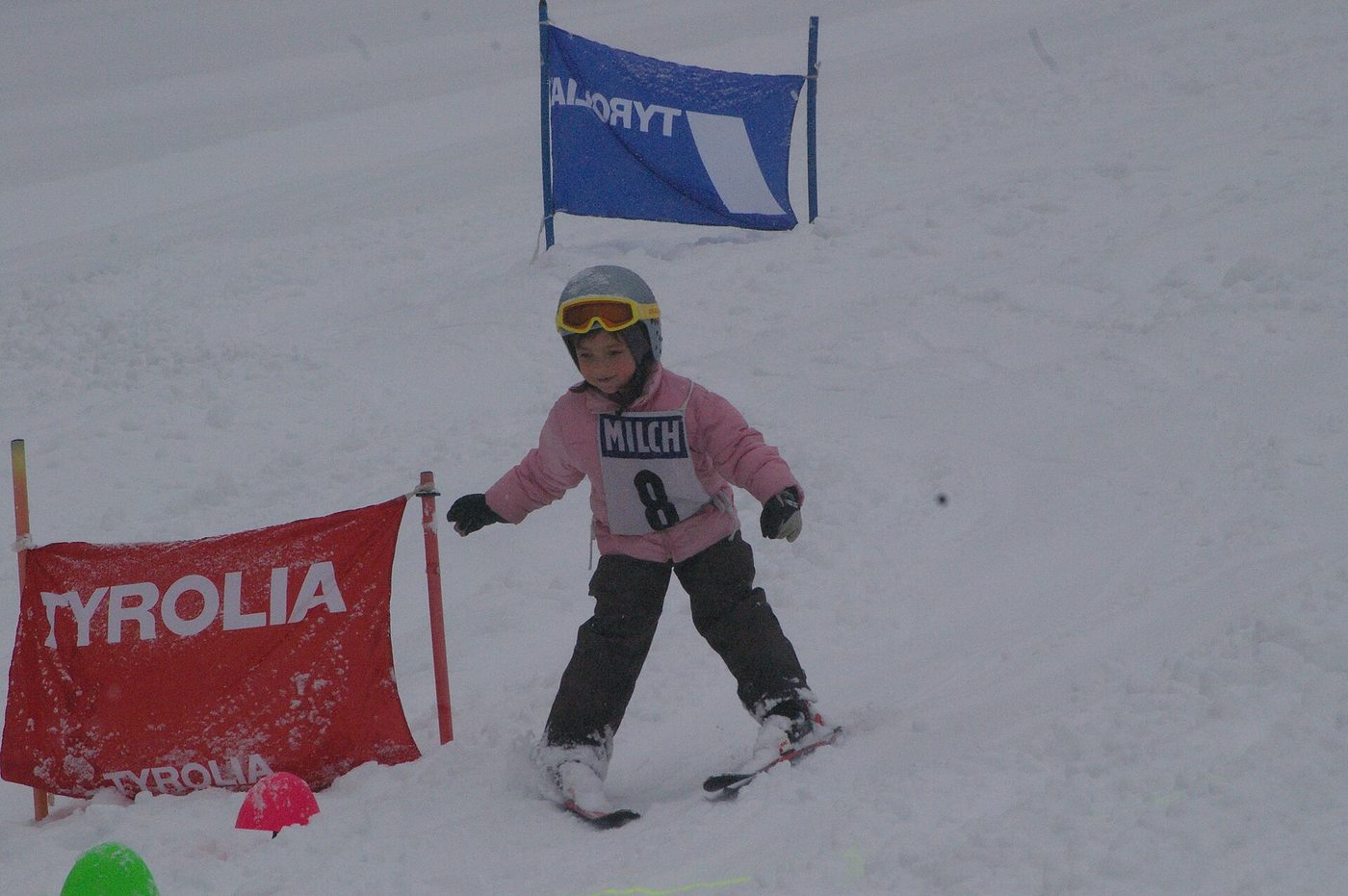
| Child ski school race course | — | — | Site media library |
| Park City beginner chairlift, Utah | — | — | Site media library |
| Sun Valley ski school sign, Idaho | — | — | Site media library |