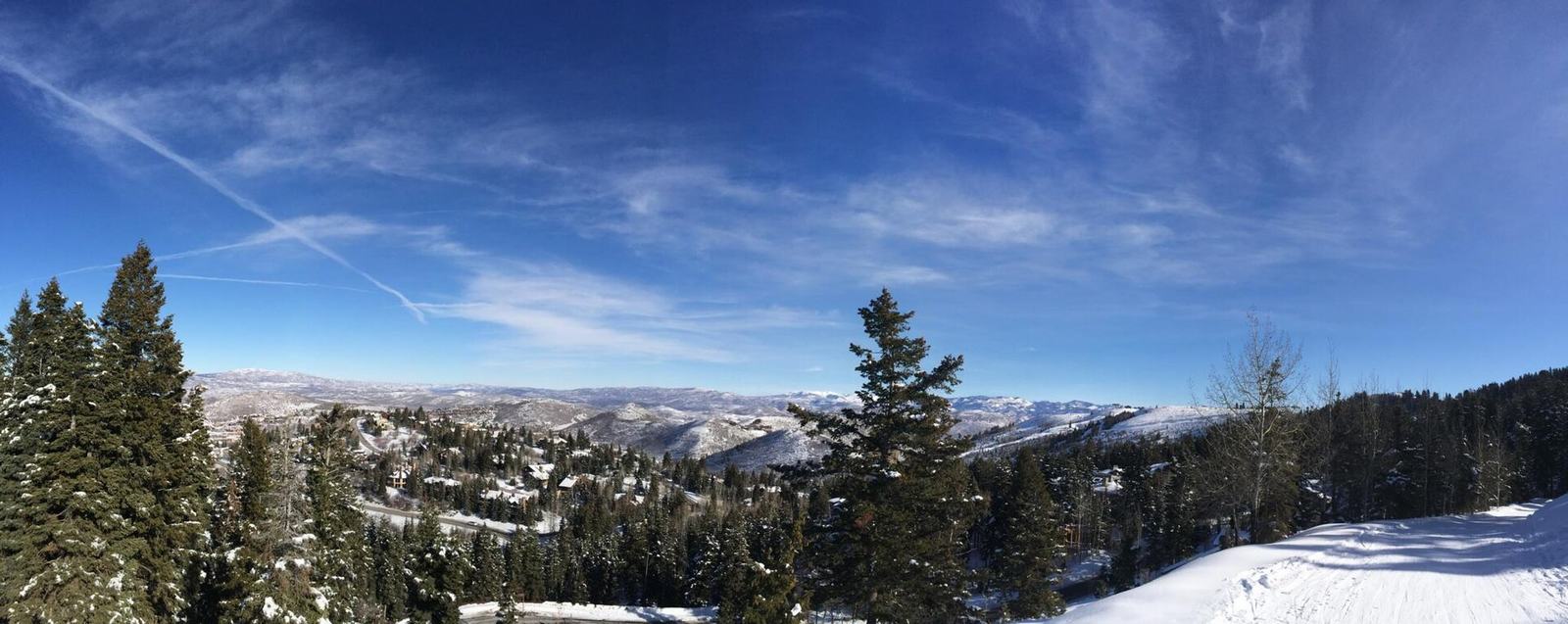
Utah ski resorts are the easiest destination skiing in America to actually reach — ten mountains inside an hour of a major international airport, averaging 300 to 546 inches of unusually dry snow. The catch is that the two best of them, Alta and Snowbird, sit at the top of a two-lane canyon that jams solid on powder mornings, and your pass decides which half of the state you get. Sort out the pass and the canyon and Utah is very hard to beat.
That is the whole state in a paragraph, and the two constraints in it are the ones nobody tells you about until you are sitting in traffic on State Route 210 watching your first tram of the day leave without you.
What follows is the honest version. Verified numbers from Ski Utah and the resorts themselves, clearly labelled where they are self-reported. The Epic and Ikon split, which for 2026/27 splits Utah down the middle. Which mountains deserve the reputation they have, which are quietly better than their reputation, and which one is having the biggest season of its life. And a straight answer on the thing most guides skip entirely: how you get up the canyon at 8am in February.
Why Utah, and what the snow claim actually means
Utah puts “The Greatest Snow on Earth” on its licence plates, which is the kind of claim we normally treat as marketing. In this one case there is a physical mechanism behind it worth understanding, because it changes how you plan.
Storms come off the Pacific, dump most of their moisture crossing Nevada’s basin and range, and arrive at the Wasatch Front already wrung out. Then they hit the Great Salt Lake, pick up a little extra moisture and a lot of instability, and slam into a mountain wall that rises 7,000 feet in a few miles. The result is snow with a low water content — light, dry, and deep — falling at high elevation onto cold ground.
The practical translation: Utah snow stays skiable longer after a storm than snow almost anywhere else in North America. A Tuesday storm is still producing good turns on Thursday in the trees. That is worth more on a four-day trip than raw snowfall totals, and it is why skiers who have been everywhere keep coming back to a state whose biggest resort is not even the biggest in the country.
The second reason is geography. Salt Lake City International is a Delta hub, sits at 4,227 feet, and puts you at a base area in 30 to 55 minutes depending on which canyon you pick. No other major US ski destination comes close. If you have ever spent four hours driving from Denver to a Colorado resort — and our Colorado ski resorts guide is honest about that drive — the difference is startling the first time.
How do the Utah ski resorts compare on size and snowfall?
These are Ski Utah’s published figures, which come from the resorts themselves. Nobody audits resort acreage anywhere in the industry, so treat every number in the first column as directional. Snowfall averages are more reliable — they come from long-run records — but the period each resort uses to compute its average is not standardised either.
| Resort | Skiable acres | Vertical drop | Avg. snowfall | Lifts | 2026/27 pass |
|---|---|---|---|---|---|
| Park City Mountain | 7,300 | 3,226 ft | 360 in | 41 | Epic (unlimited) |
| Powder Mountain | 4,700 | 2,519 ft | 360 in | 7 | Independent |
| Deer Valley | 4,500 | 3,120 ft | 300 in | 31 | Ikon (7 days full pass) |
| Snowbasin | 3,000 | 3,254 ft | 300 in | 13 | Ikon (7 days full pass) |
| Alta | 2,614 | 2,538 ft | 546 in | 5 | Ikon (7 full, shared with Snowbird / none on Base) |
| Snowbird | 2,500 | 3,240 ft | 500 in | 14 | Ikon (7 full, shared with Alta / 5 Base) |
| Solitude | 1,200 | 2,494 ft | 500 in | 8 | Ikon (unlimited) |
| Brighton | 1,050 | 1,745 ft | 500 in | 9 | Ikon (7 full / 5 Base) |
| Beaver Mountain | 828 | 1,700 ft | 400 in | 6 | Independent |
| Brian Head | 650 | 1,320 ft | 360 in | 8 | Independent |
| Eagle Point | 650 | 1,500 ft | 350 in | 5 | Indy Pass |
| Sundance | 540 | 2,150 ft | 300 in | 9 | Independent |
| Nordic Valley | 500 | 1,695 ft | 300 in | 5 | Independent |
| Cherry Peak | 200 | 1,265 ft | 322 in | 4 | Independent |
Resort statistics from Ski Utah, checked 10 September 2026. Pass access checked against the operators’ own 2026/27 pages the same day; always confirm before buying.
Ski Utah lists fifteen resorts. Ten of them sit within an hour of Salt Lake City International, four average 500 inches or more of snow a season, and exactly one — Park City Mountain, at 7,300 acres — is bigger than 4,700 acres. Two things jump out of that table.
Alta’s 546 inches is the highest published average in the state, from a mountain with five lifts and 2,614 acres. It is a small ski area by modern standards that happens to sit in the single best snow-catching position in North America. That is the entire argument for Alta, and it is a good one.
Park City is more than twice the size of anything else in Utah and gets 360 inches — a perfectly good number that is nonetheless 186 inches less than Alta. Size and snow are not the same axis, and in Utah they point in opposite directions.
Which pass gets you where? The 2026/27 split
For 2026/27 the Epic Pass and the Ikon Pass share no resorts anywhere in the world. In Utah that fork is unusually brutal, because it separates the state’s largest resort from all of its best snow.
Epic gives you Park City Mountain, unlimited. That is 7,300 acres, the largest lift-served ski area in the United States, with Canyons and Park City permanently connected by the Quicksilver gondola. It is one resort in Utah, and it is a big one.
Ikon gives you everything else that matters. Solitude unlimited on both tiers; Brighton at seven days on the full pass and five on Base; Alta and Snowbird sharing seven days on the full pass, with Base keeping five at Snowbird and dropping Alta; Deer Valley and Snowbasin at seven days on the full pass and nothing at all on Base. That is four of the five snowiest resorts in the state.
| If you hold | You get in Utah | You do not get |
|---|---|---|
| Epic Pass ($1,145) | Park City Mountain, unlimited | Alta, Snowbird, Solitude, Brighton, Deer Valley, Snowbasin |
| Ikon Pass (from $1,449) | Solitude unlimited; 7 days each at Brighton, Deer Valley, Snowbasin; 7 days shared between Alta and Snowbird | Park City Mountain |
| Ikon Base (from $1,019) | Solitude unlimited; 5 days each at Snowbird, Brighton | Park City, Alta, Deer Valley, Snowbasin |
| Neither | Everything, at the window price | Your money |
Pass prices checked 10 September 2026. Both passes raise prices during the autumn; see our ski pass guide for the full access comparison and the break-even math.
The honest verdict: for a Utah-focused trip, Ikon is the better pass and it is not close. Four resorts on Ikon average 500 inches or more; Park City averages 360. Ikon Base is the value play if you can live without Alta, Deer Valley and Snowbasin: unlimited Solitude plus five days each at Snowbird and Brighton, outside the holiday blackouts, is more Cottonwood skiing than most people fit into one season anyway.
Epic makes sense in Utah only if Park City is where you are going regardless — because you own property there, because your group is split across ability levels and Park City’s terrain spread is genuinely excellent, or because you are combining Utah with Colorado’s Epic mountains on the same pass.
The Cottonwood Canyons: the best skiing and the worst traffic
Little Cottonwood Canyon holds Alta and Snowbird. Big Cottonwood holds Solitude and Brighton. All four are inside 45 minutes of downtown Salt Lake City on a clear Tuesday, and all four are effectively unreachable on a Saturday morning after a foot of new snow.
The problem is structural. Each canyon has one road. Both roads are two lanes. Both close for avalanche control, sometimes for hours, sometimes with an “interlodge” order that legally requires everyone already up there to stay indoors. There is no alternative route and there is no shoulder to pass on.
Is the Little Cottonwood Canyon traffic problem being fixed?
Eventually, but not this season. UDOT is taking over canyon bus service from UTA and adding roughly 30 buses across two winters, with the aim of cutting Alta and Snowbird headways from every 30 minutes to every 10 to 20 minutes. It also plans winter-only tolling at both canyon mouths, priced somewhere between $5 and $25. UDOT’s own target date for both is 2028, and the valley mobility hub that makes the bus plan work does not break ground until spring 2027.
For 2026/27, plan as though nothing has changed, because nothing has. Here is what actually works:
- Ride the bus. UTA ski buses run from park-and-ride lots at the canyon mouths. They have no special priority, but they let you sleep, they cost a few dollars, and they solve the parking problem entirely.
- Reserve parking. Alta, Snowbird, Solitude and Brighton all run paid or reserved parking on weekends and holidays. Book it when you book the lodging, not the night before.
- Be at the canyon mouth before 7:00am on a powder day. Not 7:30. The queue on SR-210 forms in the dark.
- Or simply ski a different day. Utah snow stays good. Tuesday after a Saturday storm is the trade almost nobody makes and almost everybody should.
- Stay up the canyon. Slopeside lodging at Alta or Snowbird removes the problem completely, which is a large part of what you are paying for — see our guide to ski-in ski-out lodging for whether that premium is worth it.
The thing to avoid: driving up on a Saturday powder morning in a rental car with summer tyres, arriving at 9:30, and finding the lots full. That is the standard first Utah trip, and it is entirely preventable.
The resorts, honestly assessed
Alta — the snow, and the price you pay for it
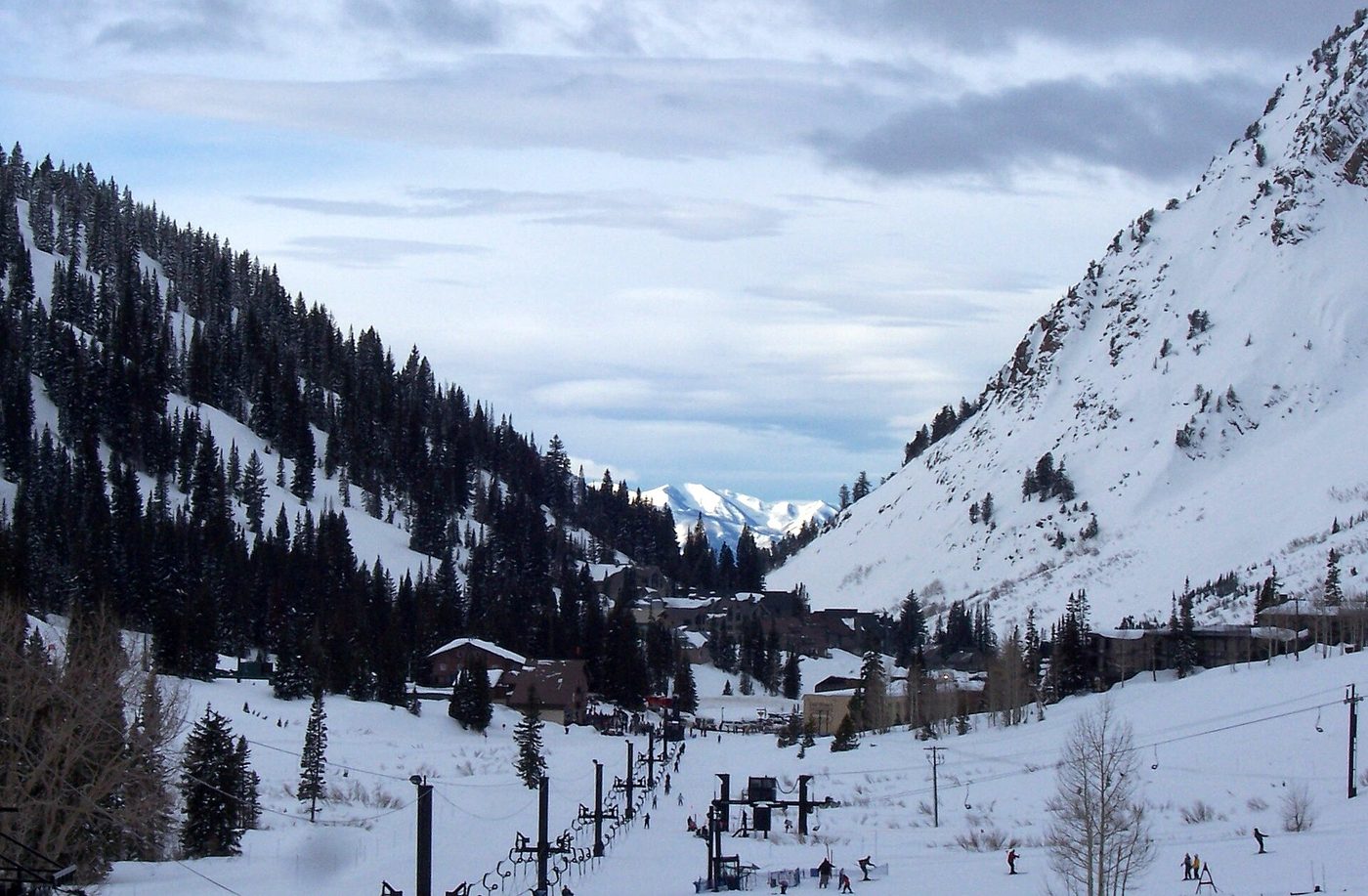
546 inches, five lifts, no snowboarders. Alta is one of three US ski areas that still bans snowboarding, and the ban is not going anywhere. If half your group rides, Alta is off the list before you start.
For skiers, the terrain is exceptional and deceptively deep. The lift-served acreage is modest, but a huge amount of Alta’s skiing is accessed by short traverses and boot-packs that hold snow for days. It is a mountain that rewards knowing it. A first-timer at Alta on a bluebird Tuesday may wonder what the fuss is about; the same skier three days after a storm, following someone who knows the High Traverse, will understand immediately.
Not worth it if: you want a village, a spa, a range of restaurants, or a beginner progression that goes beyond the basics. Alta’s base is functional and old-fashioned, and that is the point.
The Alta–Snowbird combined ticket links the two areas via Mineral Basin and is one of the genuinely great lift tickets in North America. It is a separate product from either resort’s own pass day, and it is not included on Ikon. Buy it once.
Snowbird — steep, and open into May
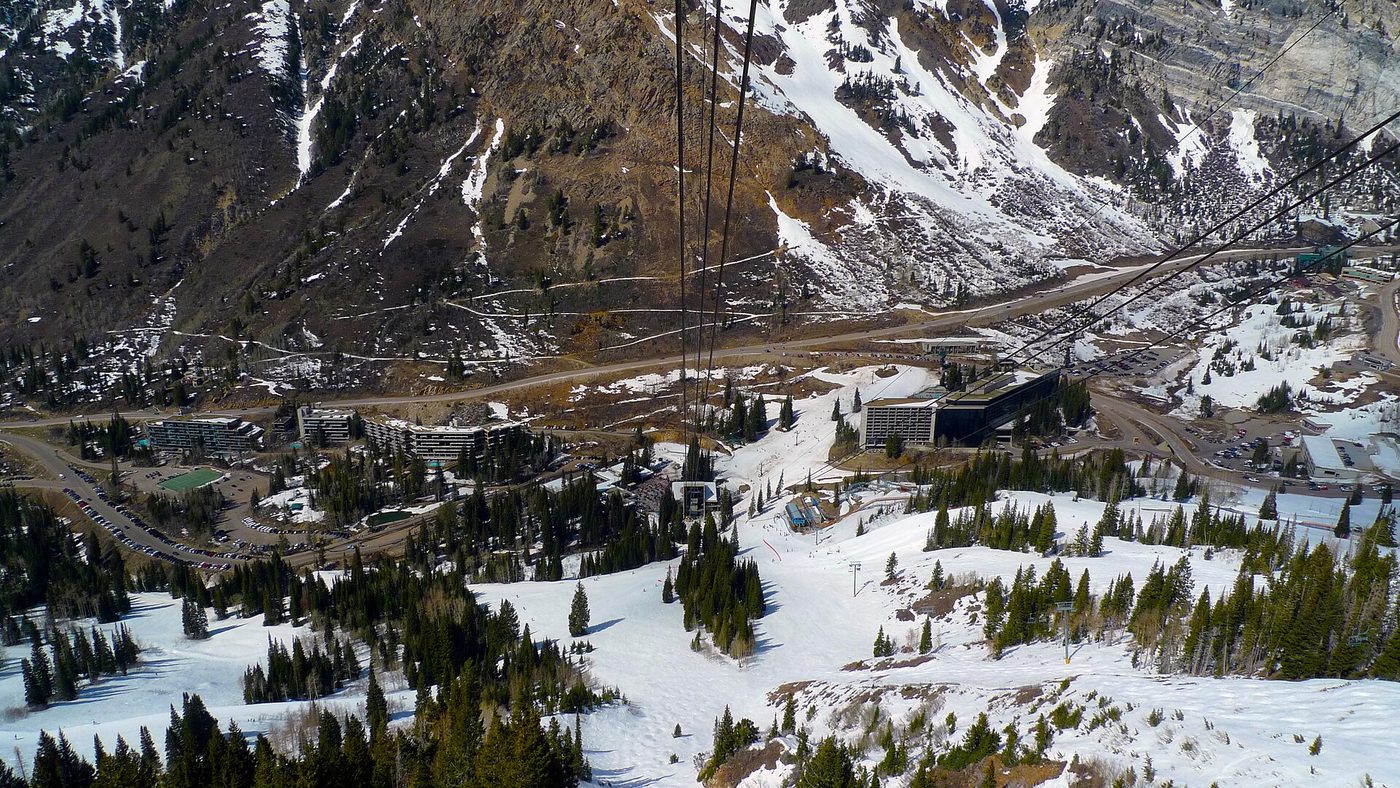
Snowbird gets 500 inches, 3,240 feet of vertical, and holds a season that regularly runs into late May. The tram is the signature: 125 people, 2,900 vertical feet, seven minutes, and a lift line that becomes its own social event on a storm day.
It skis steep. The bulk of Snowbird’s terrain is advanced, and the beginner area at the base is genuinely limited. It is a superb mountain for a confident intermediate who wants to become an advanced skier, and a frustrating one for a family with mixed abilities.
Snowbird or Alta — which should you ski?
Ski Alta if you value snow preservation and low-angle powder in trees, and if you like a mountain that hides its best skiing from people in a hurry. Ski Snowbird if you want sustained steep pitches, more vertical per lap and a longer season. Both average around 500 inches, they share a single seven-day allotment on the full Ikon Pass (Ikon Base covers Snowbird only), and the combined ticket means you do not actually have to choose.
Park City Mountain — size, town, and a beginner network that works
7,300 acres across two former resorts, 41 lifts, and a genuine historic mining town at the base with restaurants that people fly in for. Park City’s advantage is not snow quality, it is that everyone in your group can have a good day. The beginner and lower-intermediate terrain is extensive and well-connected, the ski school is enormous, and non-skiers have Main Street.
The trade is crowds and dilution. 360 inches is a good average, not a great one, and 7,300 acres of mostly moderate terrain gets tracked out faster than Alta’s 2,614 acres of steep. Weekend lift lines at the Canyons side can be substantial.
Best for: mixed-ability groups, families, first destination trips, anyone whose trip includes people who will not ski every day.
Deer Valley — the expansion nobody saw coming
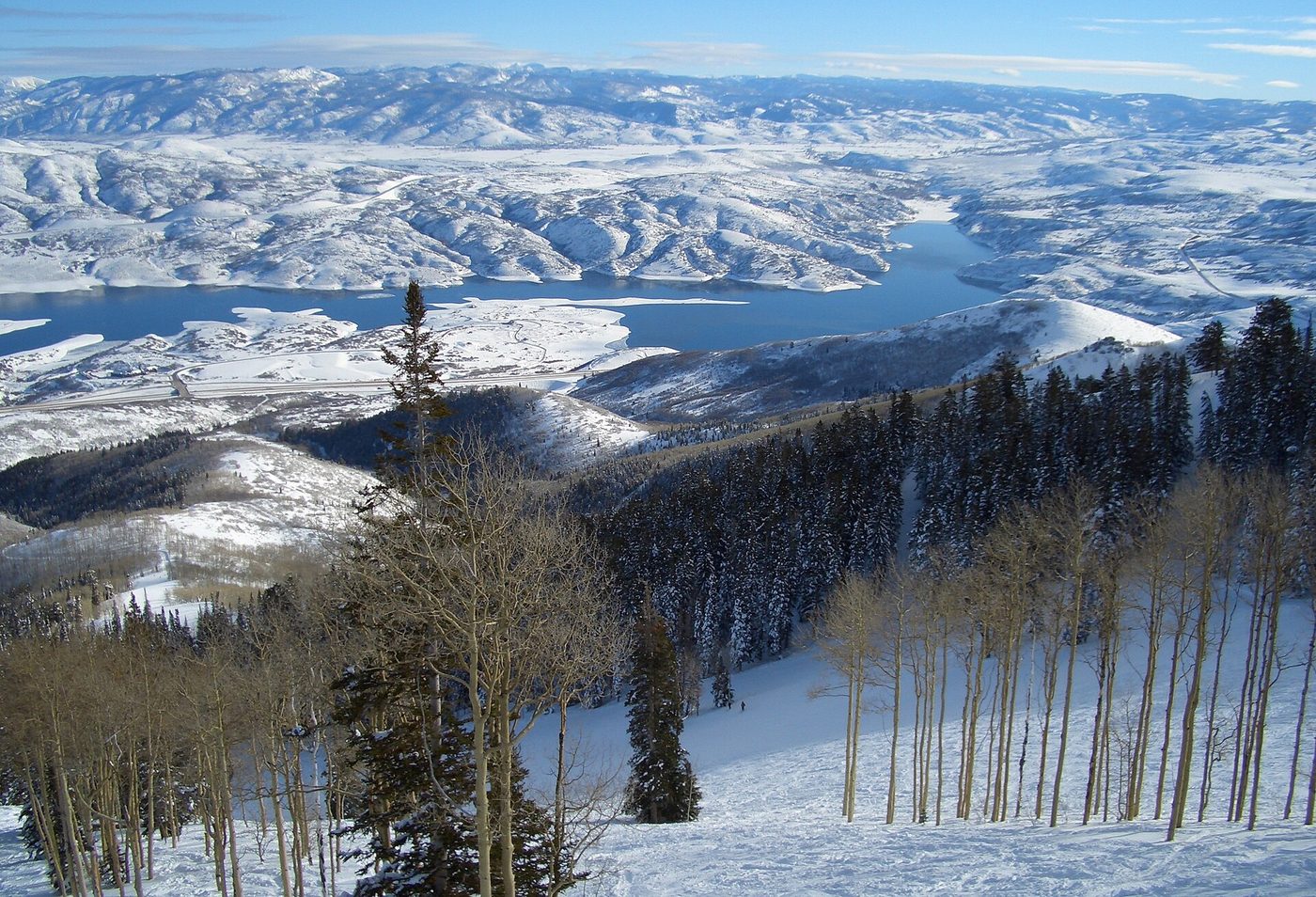
Deer Valley is having the biggest season of any resort in the country. The “Expanded Excellence” project takes it to 4,500 skiable acres served by 11 new chairlifts, including a 10-person gondola — more than doubling the resort. New for 2026/27 is the Hail Peak Express, opening 200 acres and seven new runs off the resort’s eastern edge, reached from the new Deer Valley East Village base area with over 1,200 new day-skier parking spaces.
Important caveats, because the marketing does not lead with them. The East Village on-mountain lodge’s interior — ski school, rentals, food hall — is being built out through 2027 and opens for the 2027/28 season. This winter, East Village is a base area and a lift, not a finished village.
Deer Valley remains skiers only and still caps daily skier numbers, which is the actual product: uncrowded, immaculately groomed runs and service that is closer to a hotel than a ski resort. Access is included on the Ikon Pass at seven days, subject to reservations; the full pass has no blackout dates.
Not worth it if: you snowboard (you cannot), you want steeps (there are some, but that is not what you are paying for), or you resent paying resort prices for lunch. Deer Valley is expensive on purpose.
Snowbasin — the one that keeps winning
Snowbasin has been voted the number one resort in America by USA Today 10Best readers two years running. It has 3,254 feet of vertical, the most in Utah, hosted the 2002 Olympic downhill, and has base lodges that are frankly absurd — marble bathrooms, chandeliers, a level of finish that makes sense only when you learn the resort was built by a billionaire with strong opinions.
What it does not have, historically, is crowds or slopeside lodging. It sits about 50 minutes from Salt Lake City in the Ogden valley, away from the Cottonwoods entirely, and most people stay in Ogden or Huntsville and drive. 300 inches is the lowest average of the majors, but the terrain is superb and the lift lines are short.
Snowbasin is the answer when Little Cottonwood is closed for avalanche control and you need somewhere to ski. Locals know this. Put it on the list.
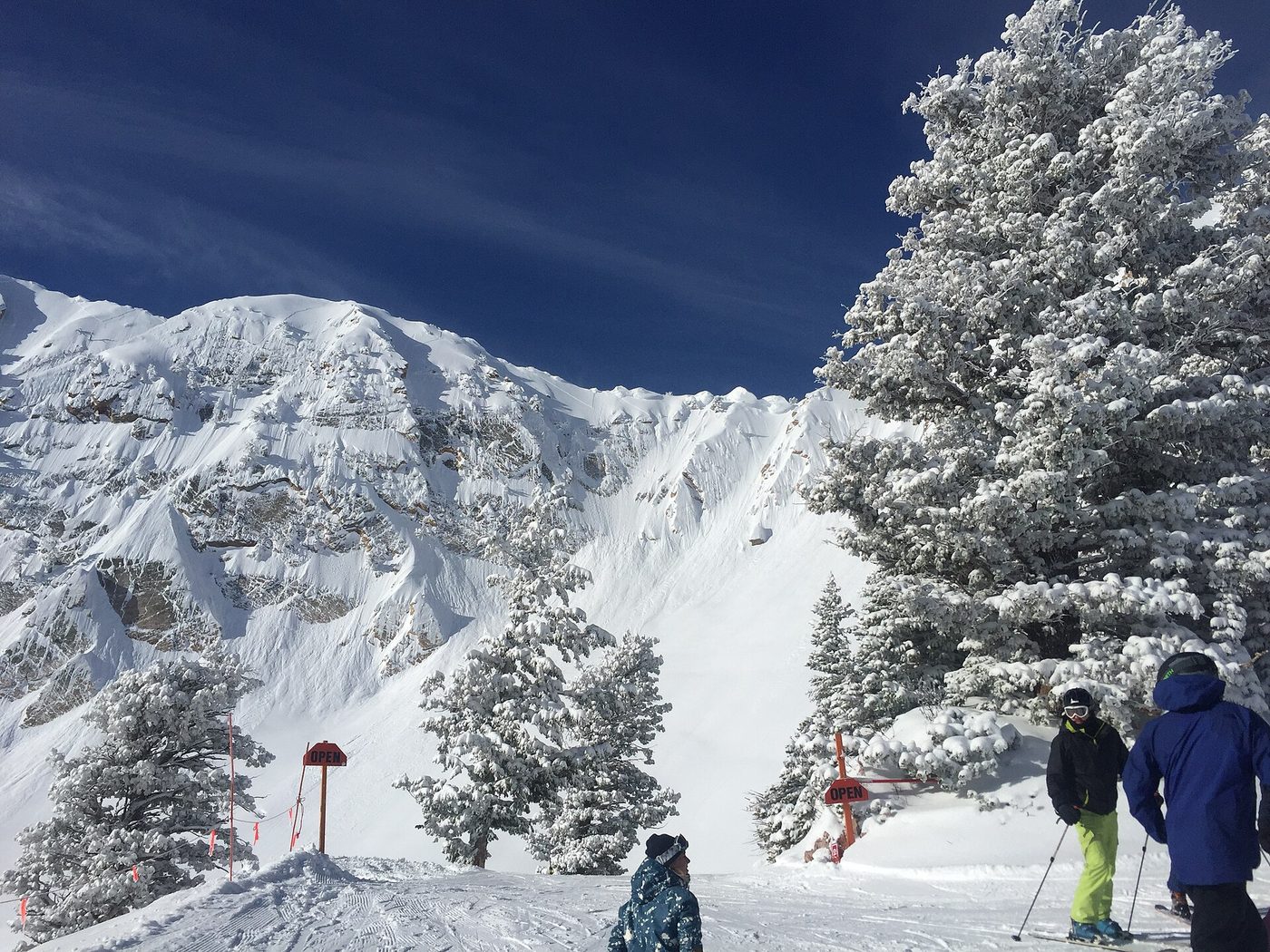
Solitude and Brighton — Big Cottonwood’s value pair
Both average 500 inches. Solitude is unlimited on the Ikon Pass, including Ikon Base, which makes it the best-value skiing in Utah by a distance for anyone holding that pass. Brighton is capped: seven days on the full pass, five on Base, and Base days black out over the holidays.
Solitude is 1,200 acres, quiet, and has a small pedestrian village. Honeycomb Canyon is a legitimately excellent piece of terrain that stays soft for days.
Brighton is 1,050 acres, snowboarder-friendly (unlike its Little Cottonwood neighbours), night-skis until 9pm most nights, and has a long tradition as the place Salt Lake locals learn. It is the least pretentious ski area in the state.
Powder Mountain — big, strange, and changing
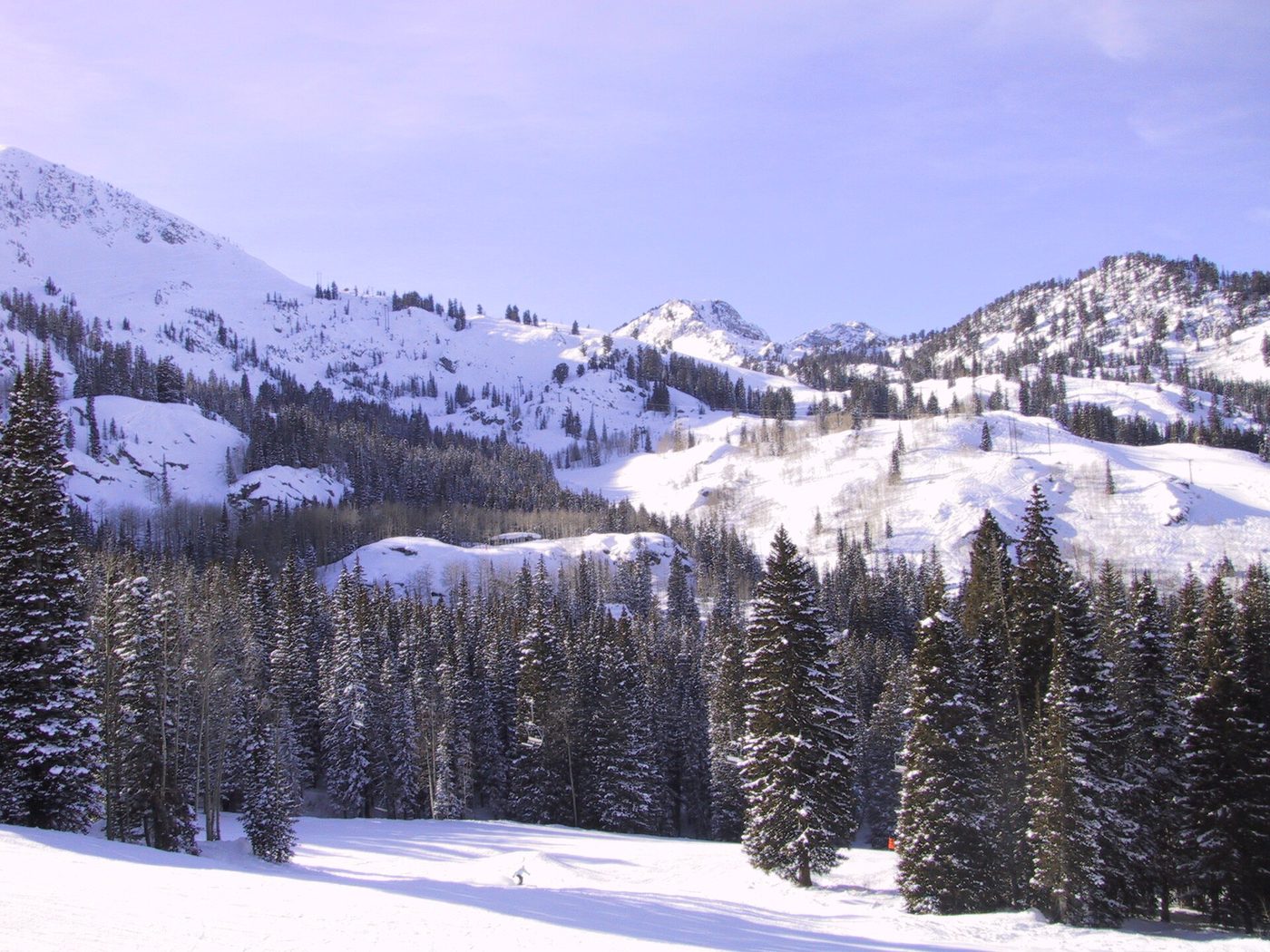
4,700 acres on the Ski Utah table, much of it snowcat-served, some of it now private following the resort’s shift toward a members-and-guests model. A 2026 expansion opened over 1,000 acres of advanced terrain to the public. It is worth a day if you like empty, unpolished skiing and you have checked exactly what your ticket includes this season — the answer has changed twice in three years.
The small ones worth knowing
Sundance (540 acres, Robert Redford’s resort, an hour south) is beautiful, mellow and adult. Eagle Point is on the Indy Pass, four hours south, and is essentially a private mountain that sells tickets. Beaver Mountain and Nordic Valley are family hills with family prices. Brian Head is in southern Utah at high elevation and is a completely different trip — closer to Las Vegas than to Salt Lake.
What does a Utah ski trip cost?
Utah is not cheap, but it is cheaper than Colorado for the same quality of skiing, mostly because you can stay in Salt Lake City and drive up. A ski day in the US averages around $322 per person all-in; Utah lands near that average at the Cottonwood resorts and well under it if you stay in the valley.
| Line item | Salt Lake City base | Park City base | Slopeside Cottonwoods |
|---|---|---|---|
| Lodging per night | $110–200 | $250–500 | $300–700 |
| Lift ticket, advance | $130–200 | $180–260 | $150–220 |
| Rental gear per day | $45–70 | $50–85 | $50–85 |
| Transport per day | $15–40 (car or bus) | $0–25 | $0 |
| Lunch on mountain | $20–30 | $25–40 | $25–40 |
Ranges as of 10 September 2026, for the 2026/27 season. Advance purchase saves 20–40% against walk-up window prices at every Utah resort. Never pay the window rate.
Three ways to cut it meaningfully:
- Stay in Salt Lake City or Sandy, not at the resort. You will save $150–300 a night and lose 30 to 45 minutes each way. On a four-day trip that is a good trade for most people; on a powder-chasing trip it is not.
- Ski Solitude and Brighton on an Ikon Base pass. Unlimited days at Solitude, no reservation, no blackout, plus five days at Brighton outside the holiday blackouts. Both average 500 inches.
- Go in January outside the holidays, or in April. Utah’s April skiing is genuinely good — the snowpack is deep and the prices collapse. Our ski season guide covers the trade-offs week by week.
Kids ski cheaply here too: the Ski Utah passport costs around $69 and gives grades 4 through 6 three days at each of 15 Utah resorts, and Epic SchoolKids Utah is free for Utah K–5 students with five days at Park City. Confirm both with the operators — deadlines move every autumn.

How do you plan a Salt Lake City ski trip?
Fly into SLC, stay in one place, and drive or bus to a different canyon each day. Utah is the only US destination where a multi-resort trip needs no repositioning at all — Alta, Snowbird, Solitude, Brighton, Park City and Deer Valley are all within an hour of the same hotel, and Snowbasin is within an hour of the airport.
A four-day Ikon itinerary that works:
| Day | Resort | Why |
|---|---|---|
| 1 | Solitude or Brighton | Solitude is unlimited on the pass; easier canyon, gentle re-entry after the flight |
| 2 | Alta / Snowbird combined | The main event. Early start, ideally after a storm |
| 3 | Snowbasin | Different valley, short lift lines, best lodges in the state |
| 4 | Deer Valley | New terrain, immaculate grooming, civilised finish |
If half your party does not ski, invert it: base in Park City, ski Park City Mountain and Deer Valley, and day-trip to the Cottonwoods. Park City’s Main Street gives non-skiers something to do that Alta’s base area emphatically does not.
If you are building your first ski trip from scratch, work through how to plan a ski trip first — it covers the sequencing (pass, then dates, then lodging, then flights) that saves the most money.
Rent a car with proper winter tyres, or do not rent one at all. Utah canyon roads run traction-law restrictions during storms, and a rental with all-season tyres on a rear-wheel-drive sedan will be turned back at the canyon mouth. Either book an AWD vehicle explicitly or plan around the bus. Our ski travel logistics guide covers the flying and driving side in detail.
Utah versus Colorado, in three lines
The comparison everyone makes, answered plainly:
- Utah wins on access. 30 to 55 minutes from a major airport, against two to four hours for most of Colorado.
- Utah wins on snow quality. Alta, Snowbird, Solitude and Brighton all average 500 inches or more of low-density snow. Only Wolf Creek in Colorado matches that, and it is nowhere near an airport.
- Colorado wins on scale and variety. More resorts, more ski towns, more terrain, more of everything — and correspondingly more driving, higher altitude and higher prices.
For a first destination ski trip, Utah is the more forgiving choice, because if the canyon closes you can still ski, and if the flight is delayed you have not lost a day driving. For a second or third trip, Colorado’s range starts to matter more. Both are covered in full in our best ski resorts in the US guide.
Frequently asked questions
What is the best ski resort in Utah?
There is no single answer, but there is a clear split. For snow and terrain quality, Alta and Snowbird — Alta averages 546 inches, the most in the state. For size and mixed-ability groups, Park City Mountain at 7,300 acres. For service and grooming, Deer Valley. Snowbasin has won USA Today’s 10Best public vote two years running on the strength of short lift lines and remarkable base lodges.
How many ski resorts are there in Utah?
Fifteen, including Woodward Park City’s action-sports park. Ten of them are within roughly an hour of Salt Lake City International Airport, which is the highest concentration of destination-quality skiing near a major airport anywhere in North America.
Is Epic or Ikon better for Utah?
Ikon, clearly, for a Utah-focused trip. Ikon covers Solitude unlimited plus limited days at Alta, Snowbird, Brighton, Deer Valley and Snowbasin. Epic covers exactly one Utah resort, Park City Mountain, though it covers it unlimited. Since the two passes share no resorts in 2026/27, this is a genuine either/or.
Which Utah ski resorts do not allow snowboarding?
Alta and Deer Valley are skiers-only, and both bans are long-standing and unlikely to change. Snowbird, Park City, Snowbasin, Solitude, Brighton and every other Utah resort welcome snowboarders. If your group includes riders, plan around those two.
How bad is Little Cottonwood Canyon traffic?
Bad enough to plan around on weekends and powder days — a single two-lane road serves both Alta and Snowbird, and it closes for avalanche control without warning. UDOT’s tolling and expanded bus service target 2028, so nothing changes for 2026/27. Take the bus, reserve parking, arrive before 7am, or ski midweek.
When is the best time to ski in Utah?
Mid-January through mid-March for the deepest, driest snow, avoiding the fortnight around Christmas and the February holiday weekends. Early April is the value window: the snowpack is still deep at Cottonwood elevations, the sun is out, and lodging prices drop sharply. Snowbird routinely runs into late May.
Do I need a car for a Utah ski trip?
No, and sometimes it is better not to have one. UTA ski buses serve all four Cottonwood resorts from valley park-and-rides, resort shuttles run from SLC airport, and Park City has a free town-wide bus. If you do rent, book an AWD vehicle with winter-rated tyres — canyon traction laws are enforced.
Is Deer Valley worth it in 2026/27?
Yes, with one expectation set correctly. The Hail Peak Express and 200 new acres open this season and the resort now runs 4,500 acres, but the East Village’s finished lodge — ski school, rentals, food hall — arrives for 2027/28. This winter you get the terrain and the parking, not the completed village.
The bottom line
Utah is the most efficient ski destination in the United States. Nothing else lets you land at a major airport, be on a chairlift in under an hour, and choose between six serious mountains from the same hotel bed.
Get two decisions right and the rest is easy. Buy the Ikon Pass unless Park City is the whole reason for the trip. Plan around the canyon — bus, reserved parking, early start, or a midweek day. Everything else is preference: Alta for snow, Snowbird for steeps, Park City for the group, Deer Valley for the service, Snowbasin for the day the canyon is closed, Solitude and Brighton for value.
From here, the guides underneath this one go deeper: the best ski resorts in Utah ranks them properly, Alta vs Snowbird settles the Little Cottonwood question, Little Cottonwood Canyon traffic covers the access problem in full, and Salt Lake City ski trip builds the itinerary day by day. If you are still deciding between states, Utah vs Colorado skiing puts the two head to head, and Park City skiing, Deer Valley skiing, Brighton vs Solitude, Utah snow quality and cheap Utah skiing each take one piece of it.
Resort statistics, pass access and prices checked 10 September 2026 for the 2026/27 season. Lift ticket prices, pass terms and expansion timelines change frequently — confirm directly with the resort before booking.
For groups that include snowboarders, the skiers-only rule at Alta and Deer Valley is the constraint to plan around. Snowbird, Brighton, Solitude, Park City and Snowbasin all welcome riders, and Brighton in particular has a long history as the place Salt Lake snowboarders learn. If someone in your party is new to it, our guide to snowboarding for beginners covers lessons, rental and how to get past the difficult first two days.
Sources
- Ski Utah — Utah resort statistics, checked 10 September 2026
- Deer Valley Resort — Expanded Excellence updates for the 26/27 season, 29 June 2026
- Deer Valley — Expanded Excellence major terrain expansion
- KPCW — Deer Valley to open 200 new skiable acres this winter, 31 August 2026
- UDOT — Cottonwood Canyons project information
- UDOT Connect — moving forward with travel solutions for Little Cottonwood Canyon
- KUER — 2028 is UDOT’s target date for buses and tolls in Big and Little Cottonwood, 16 June 2026
- Ikon Pass — 26/27 pricing and access, checked 10 September 2026
- Ikon Base Pass — 26/27 pricing and access, checked 10 September 2026
- Epic Pass — official pass pricing, checked 10 September 2026
- Snowbasin — USA Today 10Best number one resort in America
Image credits
| Image | Photographer | Licence | Source |
|---|---|---|---|
| Deer Valley panorama (featured image) | Hayjones | CC BY-SA 4.0 | Commons |
| Snowbird, Little Cottonwood Canyon | Don Ramey Logan | CC BY 4.0 | Commons |
| Alta, Little Cottonwood Canyon | Baileypalblue | Public domain | Commons |
| Deer Valley over the Jordanelle Reservoir | Steve Jurvetson | CC BY 2.0 | Commons |
| Snowbasin Resort | Gyejournal | CC BY-SA 4.0 | Commons |
| Brighton peaks, Big Cottonwood Canyon | Unknown author | CC BY-SA 2.5 | Commons |
| Park City First Time lift | InSapphoWeTrust | CC BY-SA 2.0 | Commons.jpg) |