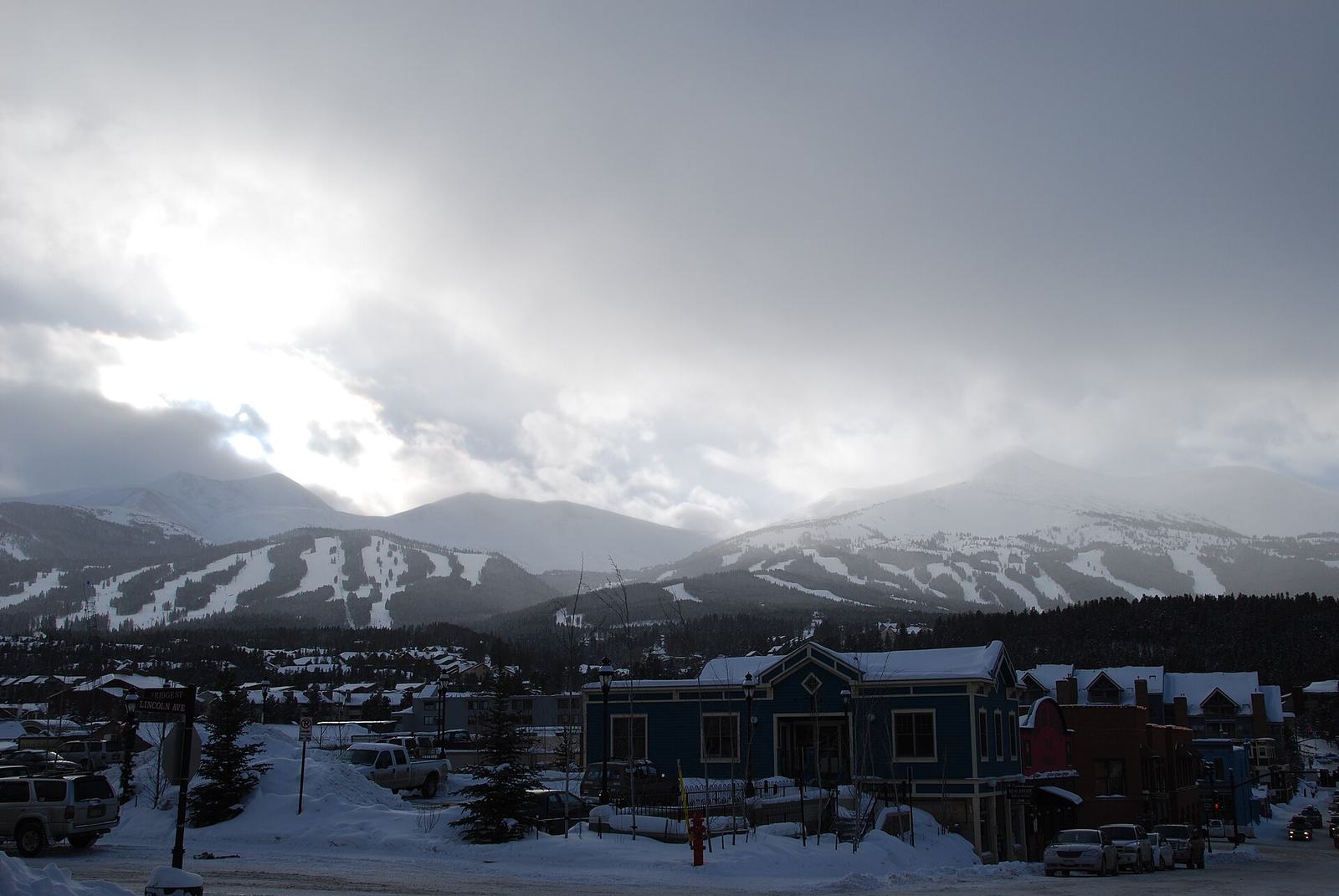
How to plan a ski trip comes down to nine decisions taken in the right order: dates, pass, resort, budget, lodging, lessons, rentals, travel and insurance. Fix the dates first, because they set the price of everything else. Book lodging and lessons three to six months out, buy your pass before the autumn price rises, and leave the packing list until the final week.
Order matters more than effort here. Most bad ski trips are not the result of laziness — they are the result of doing the right things in the wrong sequence. Someone falls in love with a resort, books a condo, then discovers the pass they already own does not work there and lift tickets are $280 a day. Someone else books a February half-term week without checking that it is the single most expensive and most crowded fortnight of the North American season.
A ski trip has more moving parts than almost any other kind of holiday. You are booking transport, accommodation, equipment, tuition and admission to a mountain, and four of those five things either sell out or get more expensive the longer you wait. This guide takes the decisions in the order that stops them fighting each other, and it tells you honestly which ones you can leave late.
The nine decisions, in the order that matters
Work down this list. Each row depends on the ones above it, and almost none of them depend on the ones below.
| # | Decision | When to make it | Why it comes here |
|---|---|---|---|
| 1 | Dates | 6–9 months out | Sets price, crowds, snow odds and lodging availability all at once |
| 2 | Pass or tickets | Before mid-November | Pass prices climb through autumn and gate which resorts are affordable |
| 3 | Resort | After 1 and 2 | Your dates and your pass have already cut the list in half |
| 4 | Budget | Alongside 3 | The resort you can afford is a different question from the one you want |
| 5 | Lodging | 4–6 months out | Ski-in ski-out units and family-sized apartments sell out first |
| 6 | Lessons | 2–3 months out | Holiday-week ski school genuinely fills up |
| 7 | Rentals | 2–4 weeks out | Online pre-booking saves 10–20% and skips the morning queue |
| 8 | Flights and transfers | 2–4 months out | Mountain airports are small; the cheap seats go early |
| 9 | Insurance | At the first big non-refundable payment | Cancellation cover has to predate the reason you cancel |
A confession before you start: you do not need to do all nine well. You need to do the first four well, and the rest is admin. If you get the dates, the pass, the resort and the budget right, a mediocre lodging choice is a minor annoyance. Get the first four wrong and no amount of careful hotel booking rescues the week.
When should you start planning a ski trip?
Start six to nine months out for a peak-season week at a major resort, and three to four months out for a quiet midweek trip in January or late March. The binding constraint is rarely flights. It is lodging with the right number of beds, and ski school places during school-holiday weeks, which fill first and never come back.
That said, the panic surrounding ski booking is partly manufactured. Outside the Christmas fortnight, the Presidents’ Day weekend and the February school holidays, plenty of lodging is still available six weeks out, often at a discount as operators clear unsold inventory. If your dates are flexible and your party is two adults rather than six people and a toddler, you have far more room than the booking sites want you to believe.
The genuinely time-sensitive items are narrower than you would think:
- Season passes. Prices step up several times between March and November. Buying in spring saves real money.
- Holiday-week lodging. Christmas, New Year and Presidents’ Day sell out early and stay sold out.
- Ski school over the holidays. Children’s programmes cap enrolment and fill months ahead.
- Large groups. Anything needing four or more bedrooms in one unit has thin supply everywhere.
Everything else — rentals, lift tickets on a pass, restaurant tables, airport transfers — can wait. We break the full calendar down month by month in when to book a ski trip.
Step 1: Choose the dates before you choose the mountain
Your dates decide roughly 60% of what a ski trip costs and almost all of how it feels. The same condo at the same resort can differ by a factor of three between the last week of December and the second week of January, and the second week of January skis better.
Here is the honest calendar for North America:
- Late November to mid-December. Cheap, quiet and a genuine gamble. Terrain is limited to whatever snowmaking covers. Fine for a first-timer who will spend the week on green runs anyway; poor for anyone who wants the whole mountain.
- Christmas to 2 January. The most expensive and most crowded fortnight of the year, and the snowpack is often still thin. Avoid unless school holidays force your hand.
- Early to late January. The best value window of the season. Cold, quiet, good coverage, low prices. The reason people stay away is that it is cold, which is a strange objection to a ski holiday.
- Presidents’ Day weekend and the February half-terms. Peak prices, peak lift lines, generally excellent snow.
- March. The sweet spot for most people: the deepest snowpack of the year, longer days, warmer temperatures and prices that soften once the school holidays pass.
- April. Soft snow, sunshine, cheap tickets, closing parties and shrinking terrain as the season winds down. Wonderful for intermediates, frustrating for anyone chasing powder.
If you are torn between January and March and cannot decide, take March. You get more daylight, deeper snow and a much better chance that the beginner in your group is comfortable rather than frozen. Our full seasonal breakdown, including opening dates and how the snowpack builds through the winter, is in the ski season guide.

Step 2: Decide the pass before the resort
This is the step most first-time planners skip, and it is the one that costs the most money. For the 2026/27 season the Epic Pass and the Ikon Pass share no resorts anywhere in the world. Choosing a pass is not a discount decision. It is a decision about which half of the world’s marquee resorts you can afford to visit.
The arithmetic is brutal, and it is why the passes exist at all. A full Epic Pass costs $1,145 for adults 31 and over as of 10 September 2026. A walk-up window ticket at Jackson Hole peaks at $356. Three days of window-price skiing costs more than an entire season on a pass. Nobody should be paying window rates, and if your plan involves buying lift tickets at the ticket office on the morning of day one, the plan is wrong.
| Epic Pass | Ikon Pass | Indy Pass | |
|---|---|---|---|
| Full adult price | $1,145 (31+) | From $1,449 (23+) | Add-on tier from $319 adult / $219 kid |
| Mid-tier option | Epic Local, $849 | Ikon Base, from $1,019 | — |
| Unlimited access | 42 resorts | 18 destinations | None — two days per resort |
| Total destinations | About 90 | 70-plus | 200-plus independents |
| Suits | Colorado and Tahoe volume, families | Utah, Wyoming, big-mountain terrain | Road trips, small hills, value |
Prices checked 10 September 2026. Epic rose on 7 September 2026; Ikon steps up again through October and November.
A few things worth knowing before you buy. Ikon’s renewal price undercuts the new-buyer price by roughly $50, so if you held one last season, log in before you shop. Ikon also sells a fully refundable add-on for about 20% more, available through 15 January 2027 — worth it if your dates depend on something outside your control, and a waste of money if they do not. And Jackson Hole, Deer Valley, Sun Valley, Snowbasin and three of the four Aspen mountains are off the Ikon Base Pass entirely, which is precisely the sort of detail that ruins a trip planned in the wrong order.
If you are skiing four days or fewer, at one resort, once this season, a pass is probably not for you. Buy discounted advance tickets and skip the argument. We work through the break-even maths, tier by tier, in the ski passes guide.
Step 3: Pick the resort around your weakest skier
Not your strongest. Groups are limited by their least confident member, and a resort with legendary expert terrain and a token beginner area will make one person miserable for a week while everyone else has a wonderful time and cannot understand why.
Four questions settle the resort choice once your dates and pass are fixed:
- What can the least confident person in the group actually ski? If the answer is “greens, slowly”, you need long, gentle top-to-bottom runs, not a big vertical drop.
- How far is the resort from an airport? The difference between a 35-minute transfer and a four-hour mountain drive is a full skiing day across a round trip, plus the risk of a pass closure.
- Does everyone need to ski together, or will the group split? Big multi-face resorts suit mixed groups because everyone finds their own terrain off shared lifts.
- Is the village somewhere you want to spend five evenings? A purpose-built base area with three restaurants gets old faster than you expect.
Salt Lake City puts you on snow faster than any other major US gateway — under an hour to four separate resorts. Denver is a two-hour drive to most of Summit County on a good day and considerably worse on a Saturday afternoon in February. Aspen and Telluride are beautiful and will cost you most of a travel day from a hub airport.
Some mountains are simply honest about not being for everyone, and that honesty is useful. Alta, Jackson Hole and Mad River Glen do not pretend to be beginner resorts, and you should believe them.
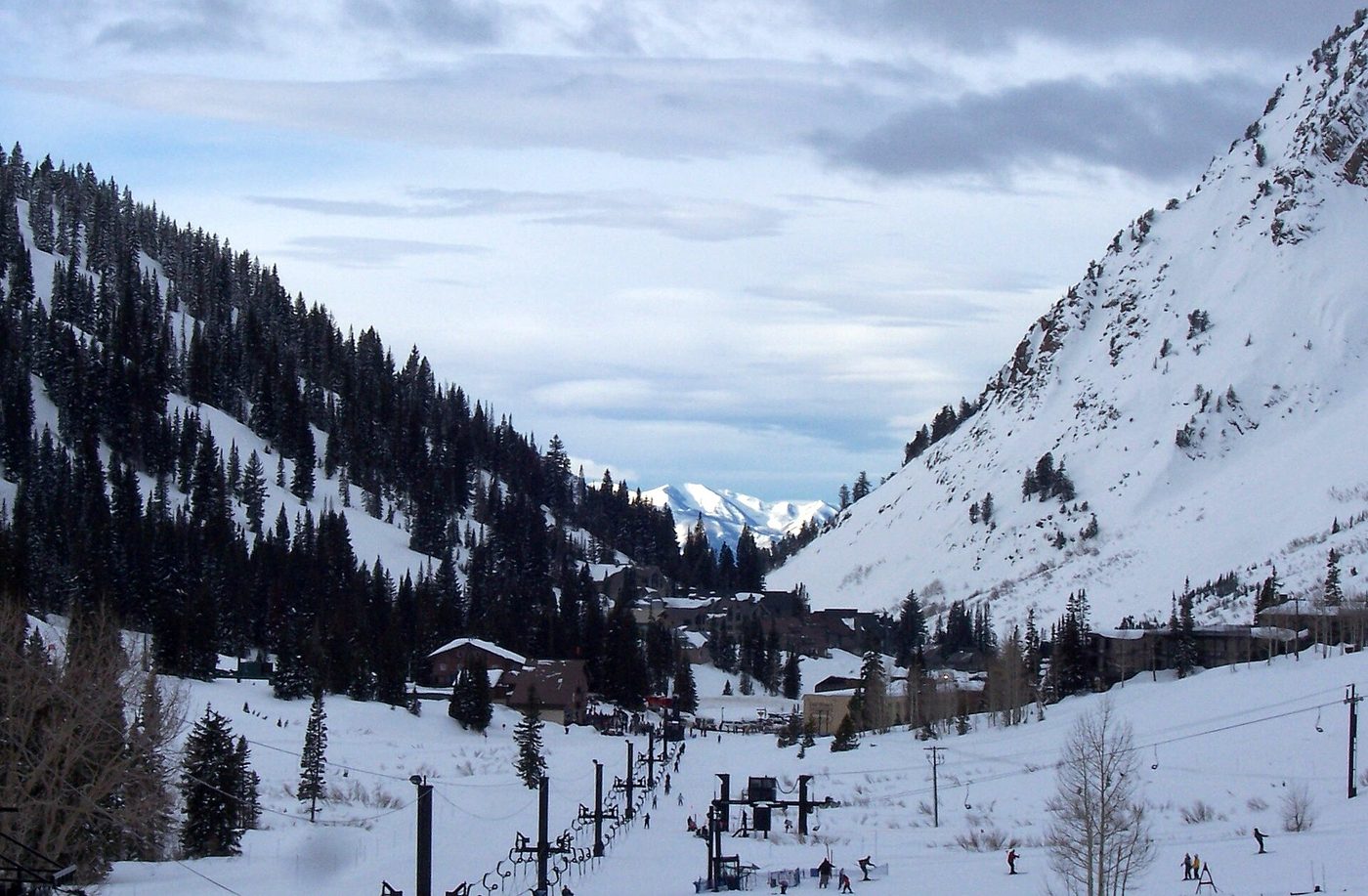
The full comparison, including which resorts each ranking system rates and where those systems disagree, is in our guide to the best ski resorts in the US. If you are travelling with children, go straight to family ski vacations, which organises resorts by the age of the child rather than by acreage — because the age of the child is the variable that changes every other answer.

Step 4: Build the budget from line items, not averages
The commonly quoted figure is about $322 per person per day all-in for a North American ski trip. That number is true and almost useless, because the real range runs from roughly $60 a day at a small local hill to well over $500 a day at a marquee destination in February.
Build it from the parts instead. Here is what the line items actually run for the 2026/27 season, checked 10 September 2026:
| Line item | Budget | Mid-range | High end |
|---|---|---|---|
| Lift access per day | $0 on a pass, or $60–90 advance | $90–160 advance | $200–356 at the window |
| Lodging per night | $70–120 | $120–250 | $400+ slopeside |
| Ski or snowboard rental | $35–55/day, $300–500/week | $55–75/day | $90+/day demo gear |
| Group lesson | $150–200 | $200–350 | $700–1,200 private |
| On-mountain lunch | $10 packed | $25–35 | $60+ sit-down |
| Airport transfer, return | $80 shared shuttle | $200 rental car plus fuel | $600+ private |
Three-to-four day trip totals: roughly $800–$1,500 per person on a budget, $1,500–$3,000 mid-range, $3,000–$6,000 and up at the luxury end.
Two savings are much larger than all the rest, and both are structural rather than clever. Book lift access in advance — advance online rates routinely run 20–40% below the window, and the window price is best understood as a fine for poor planning. And shift your dates by one week out of a holiday period, which can halve lodging with no effect at all on the skiing.
The savings people chase that do not really work: skipping lessons to save $200 and then spending three of five days frustrated on the same slope, and driving four hours each way to a cheaper resort to save $40 a night. The full line-by-line breakdown, refreshed every season, lives in our guide to ski trip cost.
Step 5: Book lodging, and be honest about ski-in ski-out
Ski-in ski-out is the most oversold phrase in the industry. It legitimately means you can click into your skis at the door and ski to a lift, and where that is true it is transformative for families, because the mid-morning trip back for a forgotten glove costs four minutes instead of an hour. The phrase is also applied, with a straight face, to properties a 400-yard uphill walk from the nearest chair.
Before you pay the premium, ask three questions:
- Which lift, and can a beginner ski to it? “Ski access” that requires a blue run is not ski access for a first-timer.
- Is it ski-in ski-out, or ski-in only? Plenty of properties you can ski home to still need a shuttle in the morning.
- What is the alternative? At many resorts a free, frequent, five-minute shuttle from a town condo at half the price is the better deal.
The three broad options, roughly:
Slopeside hotel or condo. Most convenient, most expensive, usually the weakest food scene. Best for families with small children and for short trips where time on snow matters most.
Town lodging with a shuttle. Cheaper, better restaurants, more character. Costs you 15–30 minutes at each end of the day. The best value for most groups. Breckenridge, Telluride and Jackson all do this well.
Valley lodging, 20–40 minutes out. Substantially cheaper, requires a car, and turns a snowy morning into a driving problem. Good for budget trips and confident winter drivers; poor for anyone nervous about mountain roads.
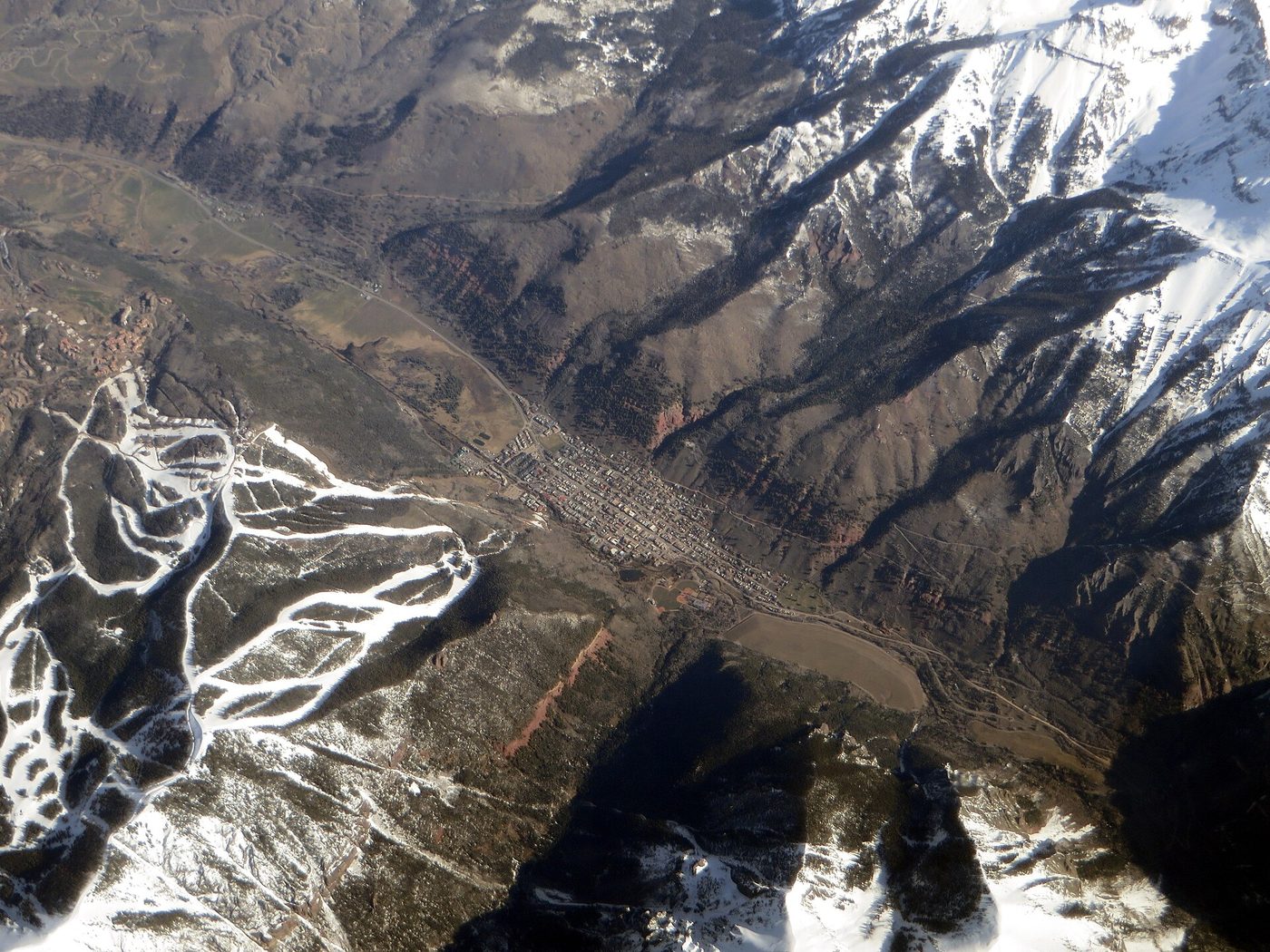
We go deeper on all of this, including what the phrase means in practice at specific resorts, in where to stay on a ski trip.
Step 6: Lessons and rentals are booked in advance, not on arrival
If anyone in your group has never skied, book a lesson. Not a friend teaching them, not a video — a lesson, from an instructor, on day one. This is the highest-return purchase on the entire trip, and the reason is unromantic: being taught badly by a partner is the most reliable way to end a relationship with skiing, and occasionally with the partner.
A group lesson runs roughly $150–$350 depending on the resort and the week; a private runs $700–$1,200 for a full day. For a genuine beginner, a half-day group lesson on each of the first two days beats one long private, because the limiting factor early on is leg strength and concentration rather than instruction. For an intermediate who has been stuck at the same level for years, the reverse is true: two hours of private coaching will do more than another week of skiing.
Rentals are simpler. Book online, two to four weeks out. You will save 10–20% against the walk-up rate, your gear will be waiting rather than fitted in a scrum at 8:30am, and you will get better skis, because the good stock goes to reservations. Rent boots that fit rather than boots that feel comfortable in the shop — a boot that feels roomy on carpet will feel like a bucket on a slope.
Three practical notes worth having:
- Rent at the resort, not at the airport, unless you are driving somewhere with no rental shop. Airport rental adds a bag to carry for the sake of a small saving.
- Beginners should never buy skis. Rent for at least a full season of skiing before you spend anything.
- Boots are the exception. If you ski more than about a week a year, buy boots and rent skis. Boots are where fit matters and rental boots are where fit goes to die.
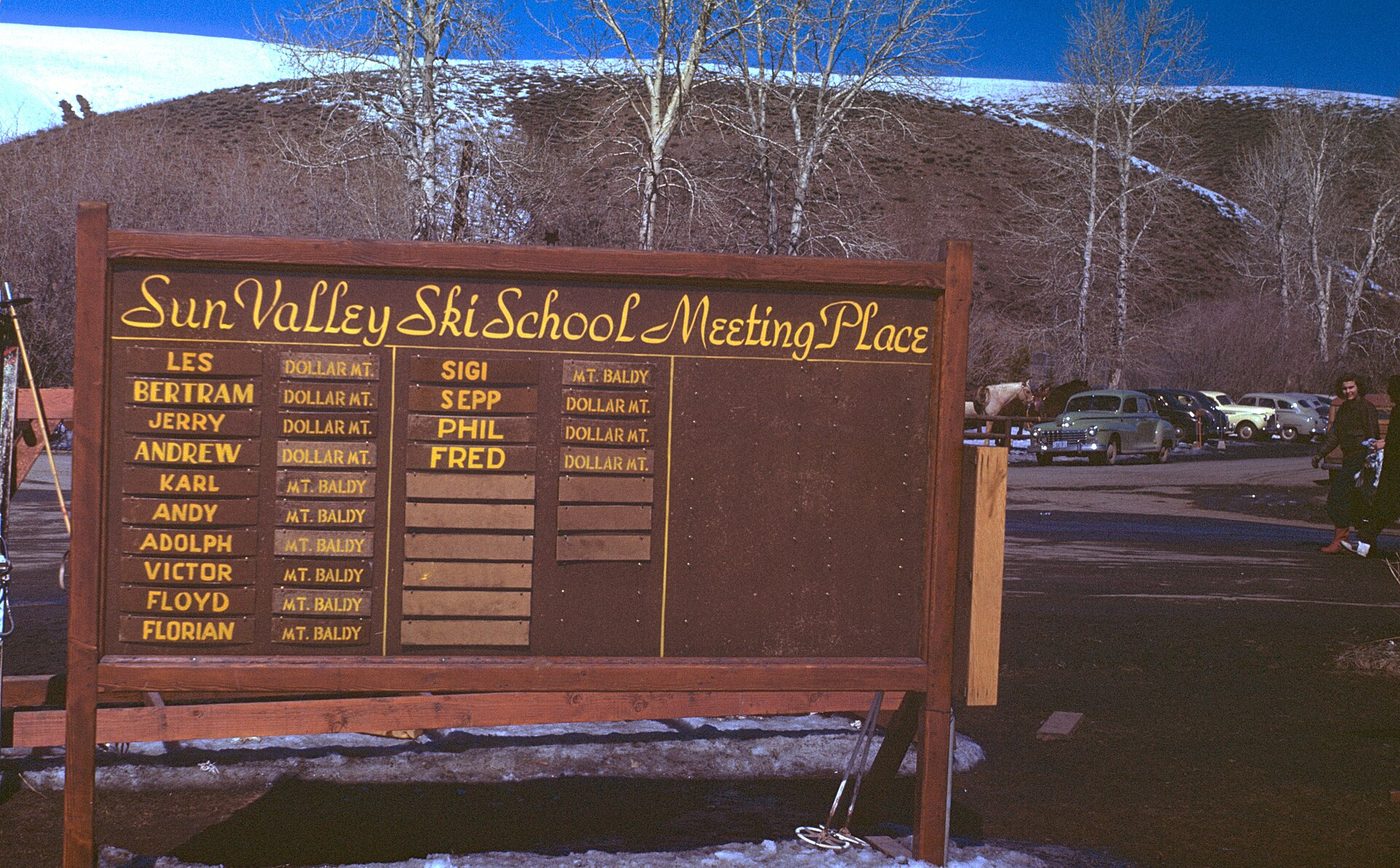
Booking lessons is fiddlier than it sounds — the terminology varies by resort and the good programmes sell out. How to book ski lessons covers it properly, and skiing for beginners is the place to start if this is somebody’s first time on snow.
Step 7: Flights, bags and the drive at the far end
Mountain airports are small, weather-exposed and expensive. Flying into a hub and driving is often cheaper and usually more reliable, but the drive is a real cost in time and risk rather than a rounding error.
The rules of thumb that hold up:
- Fly into the hub if the drive is under two hours. Denver to Summit County, Salt Lake City to the Cottonwoods, Reno to North Lake Tahoe.
- Fly into the mountain airport if the drive is over three hours, and accept the price. Aspen, Jackson, Montrose for Telluride.
- Never book the last flight out on the final day. Mountain weather closes airports and roads, and a missed connection on a Sunday in February is an expensive night.
- Arrive the day before you ski. A travel day and a ski day are two different things, and combining them wastes a lift ticket.
On bags: most major US carriers — United, Delta, American and Alaska among them — now treat a ski or snowboard bag plus a boot bag as a single checked item, subject to the ordinary checked-bag fee rather than an oversize charge, provided the combined weight stays under 50 pounds. Those ordinary fees rose across the industry in April 2026 and now sit around $35–$50 for a first checked bag on most carriers, more at the airport than prepaid online. The details differ by airline and change every season, so confirm with your carrier before you pack. The whole subject — bag fees, shipping skis, whether to bring gear at all — is covered in ski travel logistics.
The week before: what actually needs doing
The final week is admin, and it is short:
- Check the resort’s snow report and open terrain, not just the forecast.
- Confirm lesson and rental bookings, and put the confirmation numbers somewhere offline.
- Check whether your rental car has winter tyres or chains, and whether the route requires them.
- Pack layers, goggles and gloves in the carry-on — a missing ski bag is survivable, a missing bag containing all your warm clothing is not.
- Charge everything, download offline maps and screenshot the trail map.
Full lists live in the ski trip packing list and, for a genuine first-timer, the first ski trip checklist. What to actually put on your body is a separate question, answered in what to wear skiing.
Should you book a package or plan it yourself?
Book a package if you are travelling to Europe, if you want flights, transfers, lodging and lift access under one booking reference, or if the trip is complicated enough that a single point of failure is worth paying for. Plan it yourself if you already hold a pass, if your dates are flexible, or if you want one specific property rather than whatever the operator has contracted.
| Package | Do it yourself | |
|---|---|---|
| Price | Often cheaper at peak dates, rarely cheaper off-peak | Usually cheaper if you already hold a pass |
| Flexibility | Fixed dates, fixed properties, fixed transfers | Complete |
| When it goes wrong | One phone number, one company responsible | You are the travel agent |
| Suits | Europe, first-timers, families, holiday weeks | Pass holders, repeat visitors, road trips |
| Does not suit | Anyone with a pass already, anyone fussy about lodging | Anyone who dislikes admin |
The honest verdict: for a domestic American trip where you already hold a pass, packages rarely win. For a first trip to the Alps, where you are handling transfers from Geneva, half board, a chalet and a local lift pass in a foreign currency, a package is frequently both cheaper and considerably less stressful. (Half board means breakfast and dinner included; a chalet is a catered mountain house, usually staffed, with most meals provided; a piste is a marked, patrolled run.) We compare the two properly in ski vacation packages vs DIY, and cover the European version specifically in skiing in Europe.
Do you need ski travel insurance?
Yes for any trip with significant non-refundable cost, and yes for any trip abroad. Two risks matter: cancellation before you travel, which is the expensive one, and medical evacuation off a mountain, which is the catastrophic one. Ordinary travel policies frequently exclude skiing, and almost all exclude anything off-piste or outside patrolled boundaries.
Read the exclusions rather than the headline. The clauses that matter are the definition of “winter sports” — often a paid add-on rather than standard cover — the off-piste terms, since many policies cover it only with a guide, and whether mountain rescue and helicopter evacuation are included. In the United States that bill can run into five figures without cover.
One thing that is not insurance but works a little like it: many resorts sell a cheap per-ticket refund product, and both Epic and Ikon offer their own cancellation options. Ikon’s refundable add-on for 2026/27 costs about 20% on top of the pass price and stays available until 15 January 2027. Buy cover at the moment you make the first large non-refundable payment, because a policy bought after a storm appears in the forecast will not pay out for a cancellation caused by that storm. Ski travel insurance goes through the clauses line by line.
How many days should a ski trip be?
Five or six days on snow is the sweet spot for most people. Three days is enough to justify the flights but not enough to progress. Seven or more starts running into fatigue, particularly for beginners, whose legs give out well before their enthusiasm does. Build in one non-skiing day on any trip longer than five days.
The finer version depends on who you are. A first-timer will get more from four days with two lessons than from seven days of unstructured skiing, because early progress is limited by tiredness and by how much correction anyone can absorb in a day. A strong skier at a big resort could spend ten days and still not ski everything. A family with young children should plan around half-days, and should treat a swimming pool or a tubing hill as trip infrastructure rather than a treat.
Travel days count against you. A Saturday-to-Saturday week with travel at both ends gives six ski days if everything works and five if it does not, so booking a Sunday-to-Friday midweek block frequently buys the same amount of skiing at a lower price and with far shorter lift lines. We work through the trade-offs in how many days a ski trip should be and offer worked schedules in the ski trip itinerary guide.
The mistakes that wreck otherwise good ski trips
Most ski-trip failures are not exotic. They repeat, and every one of them is avoidable.
Booking the resort before the pass. Covered above, and worth repeating because it is the expensive one.
Planning around the best skier. The strongest person in the group is the least likely to have a bad week wherever you go. Optimise for whoever is most likely to struggle.
Underestimating altitude. Colorado resorts sit between roughly 8,000 and 12,000 feet. Flying in from sea level and skiing hard on day one, on no sleep and a couple of drinks, is how people spend day two in bed. Drink water, take the first day easy and go gently on the first evening.
Skiing five days straight with no rest. Day four is when injuries happen — tired legs, false confidence, and the run you would not have taken on day one.
Cheaping out on the lesson but not the lodging. It should be the other way round. Nobody remembers the condo.
No weather contingency. Mountain roads close and lifts shut on high wind. Plan one flexible day and stop treating a forecast as a schedule.
Arriving with the wrong clothing. Cotton, in any layer, is the classic, and it is genuinely miserable. Nothing else on this list ruins a day as quickly or as cheaply.
There are more, catalogued with a certain amount of grim enjoyment in ski trip mistakes. If you are organising for other people rather than only yourself, planning a ski trip with friends covers the social logistics — splitting costs, matching abilities, and the group chat that quietly decides everything. Going alone is a genuinely good idea and has its own guide in solo ski trips, and if you have left the whole thing far too late, the last-minute ski trip is more encouraging than you would expect.
Frequently asked questions
How far in advance should I book a ski trip?
Six to nine months for a holiday week at a major resort, three to four months for midweek dates in January or March. Season passes should be bought in spring for the best price. Rentals, lift tickets on a pass and restaurant tables can all wait until the final month.
Is it cheaper to book a ski package or book everything separately?
Packages usually win at peak dates and for European trips, where transfers, half board and lift passes are bundled. Booking separately usually wins if you already hold an Epic or Ikon pass, or if your dates are flexible enough to chase off-peak lodging prices.
What is the cheapest month to go skiing?
January, outside the first week, is the cheapest month with reliably good conditions. April is cheaper still, but with shrinking terrain and softer snow. Early December is inexpensive and a genuine gamble on coverage.
Do I need my own ski gear for a first trip?
No. Rent everything except clothing, and consider borrowing that too. Skis, boots and poles come as a package from any resort rental shop. The only purchases worth making before a first trip are socks, goggles and gloves.
How much does a week-long ski trip cost?
Roughly $1,500–$2,500 per person for a budget week in North America, $2,500–$4,500 mid-range, and $6,000 upwards slopeside at a marquee resort in February. Lift access and lodging dominate, and both fall sharply outside the holiday weeks.
Should I buy a season pass for just one trip?
Usually not, if the trip is four days or fewer at a single resort — advance-purchase tickets will be cheaper. A pass wins from about five days, or from three days if it also covers a second trip or a local hill near home.
Is a ski trip worth it for a complete beginner?
Yes, with two conditions: book lessons, and pick a resort with genuinely good beginner terrain rather than a token learning area. A first-timer who spends four days with an instructor at Park City or Keystone will have a very different week from one dropped at Jackson Hole with a friend.
The bottom line
Planning a ski trip well is mostly a matter of sequence. Dates, then pass, then resort, then budget — get those four in the right order and the remaining five decisions are administration. Get them out of order and you will spend money correcting the first mistake for the rest of the process.
Two habits do more than everything else combined: book lift access in advance rather than at the window, and book a lesson for anyone who needs one. Both are unglamorous, both save several hundred dollars or several wasted days, and both are the first things people cut.
From here, the natural next steps are when to book a ski trip if you are still pinning down dates, the ski passes guide if the pass decision is open, and ski trip cost if the budget is the thing keeping you awake.
Pass prices, lift ticket ranges and cost figures checked 10 September 2026 for the 2026/27 season. Ski pricing changes several times a season — confirm directly with the operator before booking.
Rentals are step seven for a reason — they can wait. When you get to them, our ski gear guide covers what to rent, what to buy, how to get boots that actually fit, and the seasonal calendar that makes gear 30–50% cheaper in spring than in February.
One destination shortcuts several of the steps above. Utah is the only US ski region where you can land at a major airport, be on a chairlift inside an hour, and reach six serious mountains from a single hotel — no repositioning, no four-hour transfer, no second rental car. Our guide to Utah ski resorts works through the pass decision, the verified resort numbers and the one genuine catch, which is canyon traffic on a powder morning.
Sources
- Ikon Pass — 26/27 pricing, access and refundable add-on terms, checked 10 September 2026
- Ikon Base Pass — 26/27 resort access and blackout terms, checked 10 September 2026
- Epic Pass — official pass pricing and product tiers, checked 10 September 2026
- Indy Pass — independent resort roster and pass terms, checked 10 September 2026
- National Ski Areas Association — industry participation and season data
- NOAA National Weather Service — mountain forecasts and winter storm warnings
Lift ticket, lodging, rental and lesson ranges are compiled from operator-published rates and cross-checked across multiple resorts. Airline baggage terms are summarised from major US carriers’ published sporting-equipment policies and should be confirmed with your carrier before travel.
Image credits
| Image | Photographer | Licence | Source |
|---|---|---|---|
| Breckenridge, Colorado (featured image) | Jasen Miller | CC BY 2.0 | Commons |
| Mammoth Mountain, California | Plane777 | Public domain | Commons |
| Alta, Little Cottonwood Canyon | Baileypalblue | Public domain | Commons |
| Park City First Time lift | InSapphoWeTrust | CC BY-SA 2.0 | Commons.jpg) |
| Telluride from the air | Ken Lund | CC BY-SA 2.0 | Commons |
| Snowmass Village gondola | William D. Moss | Public domain | Commons |
| Sun Valley ski school board | Sba2 at English Wikipedia | CC BY 2.5 | Commons |
| Jackson Hole aerial tram | Enricokamasa | Public domain | Commons |