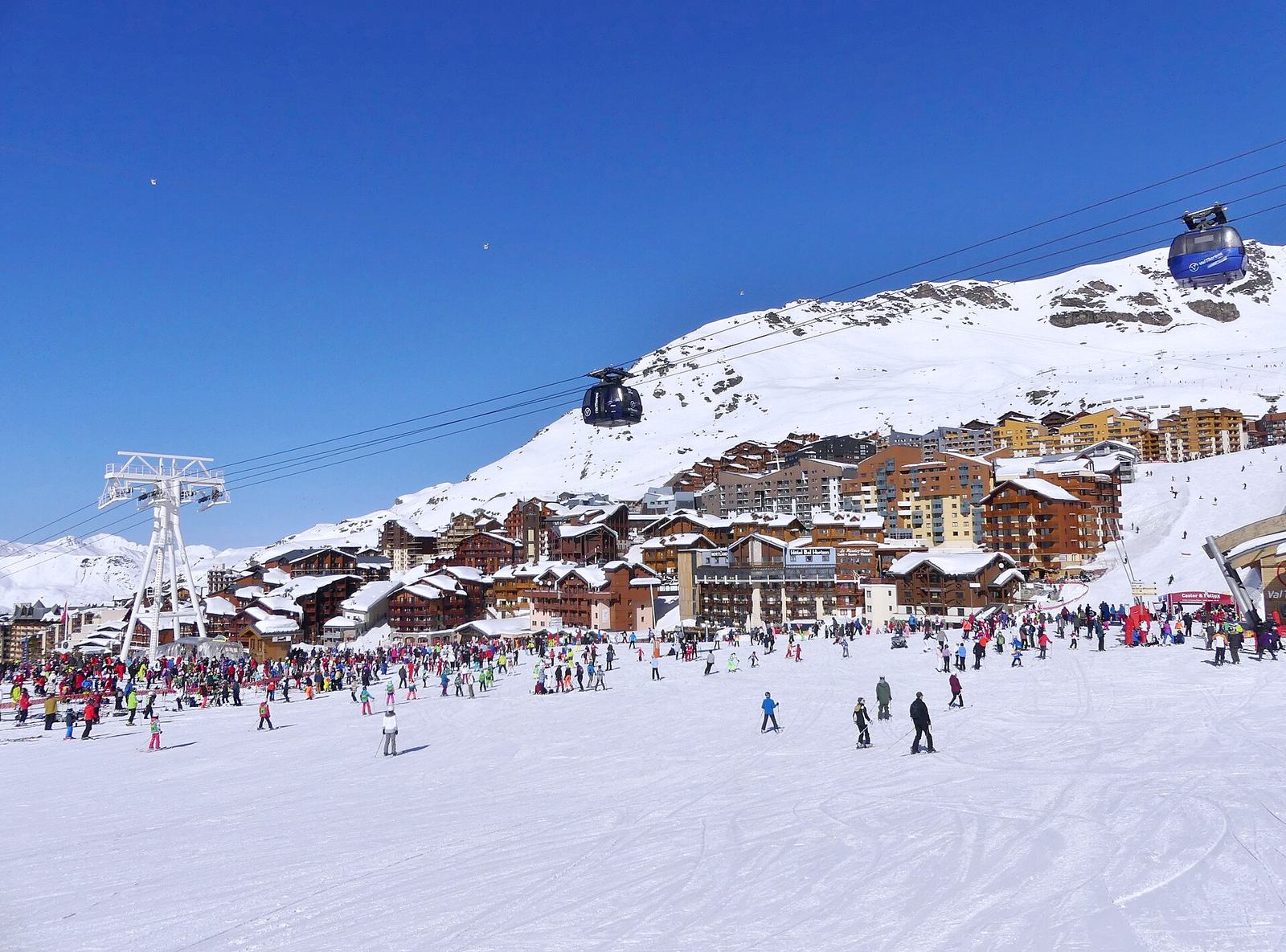
The best ski resorts in Europe for an American skier are the ones that solve the two problems the Alps create: the transfer from the airport and the altitude of the village. France’s high purpose-built resorts — Val Thorens, Tignes, Val d’Isère — are the snow-sure, easy answer. Austria has the best towns and the best value. Switzerland has the finest scenery and the highest prices. Italy has the best food and the softest lift lines.
Here is the number that reframes the whole question. A six-day adult lift pass covering Les 3 Vallées — the largest linked ski area in the world, 600 kilometres of piste across Courchevel, Méribel and Val Thorens — costs €421 for the 2026/27 season, dropping to €378.50 in the low-season windows. Six days at a marquee American resort will not leave you change from $1,000.
That gap is the reason a week in the Alps frequently costs less than the same week in Colorado even after a transatlantic flight, and it is the single most useful thing an American skier can know about Europe. What follows is written for a US departure: the flights, the transfers, the vocabulary, the mistakes.
The four Alpine countries, honestly compared
| France | Austria | Switzerland | Italy | |
|---|---|---|---|---|
| Best for | Linked size, snow-sure altitude | Value, towns, après-ski | Scenery, rail access, service | Food, sunshine, quiet pistes |
| Typical village altitude | 5,000–7,500 ft | 2,500–5,000 ft | 3,300–5,300 ft | 3,300–5,900 ft |
| 6-day pass, rough range | €300–€420 | €290–€380 | Considerably higher; dynamic | €250–€360 |
| Lodging style | Self-catered apartments, chalets | Family-run hotels and pensions | Hotels, expensive apartments | Hotels, half board |
| Food on the mountain | Good, expensive | Excellent, cheap | Excellent, very expensive | The best in the Alps |
| Main gateway airports | Geneva, Lyon, Grenoble | Innsbruck, Salzburg, Munich | Geneva, Zurich | Milan, Venice, Innsbruck |
| Watch out for | Purpose-built villages with no soul | Low altitude in a warm winter | The price of literally everything | Shorter, later season in places |
Pass ranges are indicative across major areas and were checked 10 September 2026. Individual resorts vary widely and Swiss resorts increasingly use dynamic pricing.
The trade-off that structures everything: altitude versus atmosphere. France’s purpose-built resorts sit high, hold snow reliably, and look like the 1970s concrete they largely are. Austria’s villages are beautiful, sociable and often sit below 3,500 feet, which in a warm winter is a genuine problem. You can have snow security or charm easily; having both means paying Swiss prices or picking carefully.
Why a European ski trip often costs less than an American one
Add up an American week at a marquee resort: six days of lift access at $130–$160 advance, lodging at $250 a night, a lunch on the hill at $30, a lesson at $200. Now add up the French equivalent: a €421 six-day pass covering an area three times the size, a self-catered apartment, a €20 lunch and a €150 group lesson week.
The flight closes some of the gap and rarely all of it. Three structural reasons:
- Lift access is sold competitively in Europe. Resorts are typically owned by lift companies or communes, not by integrated hospitality groups, and they compete with the resort down the valley on price.
- Lodging is a genuine open market. Family hotels, pensions and apartments compete against each other. There is no equivalent of the American base village where one company owns everything.
- Mountain restaurants are restaurants. They serve real food at prices real people pay, because European skiers would simply not buy a $30 cafeteria burger.
There are real costs on the European side that Americans underestimate: the transfer from Geneva can be €100 or more per person each way, ski hire is not always cheaper, and the euro-dollar rate moves. But the headline conclusion holds. We work through the full arithmetic in Europe ski trip cost and compare the two systems in skiing in Europe vs USA.
The vocabulary, translated
Three words appear constantly and mean something specific:
- Piste. A marked, patrolled, groomed run. Off-piste means outside those markers, unpatrolled, with avalanche risk — the European boundary rules are completely unlike America’s, and this catches Americans out badly.
- Chalet. In the British-influenced market, a catered mountain house with staff who cook breakfast, afternoon cake and dinner most nights. Not a rental cabin.
- Half board. Breakfast and dinner included in the hotel rate. Standard in Austria and Italy, and much better value than it sounds.
Two more: a ski pass is a lift pass, not a season product, and ski school means a national school (ESF in France, Skischule in Austria) rather than a resort department.
France: the biggest linked areas in the world
France has the largest ski areas on earth and the least attractive villages to look at. Both facts follow from a 1960s state programme that built resorts high, fast and functionally.
Les 3 Vallées — Courchevel, Méribel, Val Thorens, Les Menuires, Saint-Martin — is the largest linked ski area in the world at around 600 km of piste. Val Thorens, at 7,545 feet, is the highest ski village in Europe and essentially snow-certain. A six-day adult pass is €421 for 2026/27, €378.50 in the low-season windows (5–18 December 2026 and 10–18 April 2027), with a child pass at €345.
Espace Killy — Val d’Isère and Tignes — is the connoisseur’s choice: high, snow-sure, with the best combination of piste skiing and accessible off-piste in France. Val d’Isère is the rare French resort with a village that predates the lifts.
Paradiski (La Plagne and Les Arcs) and Portes du Soleil (twelve resorts across the French-Swiss border) round out the giants.
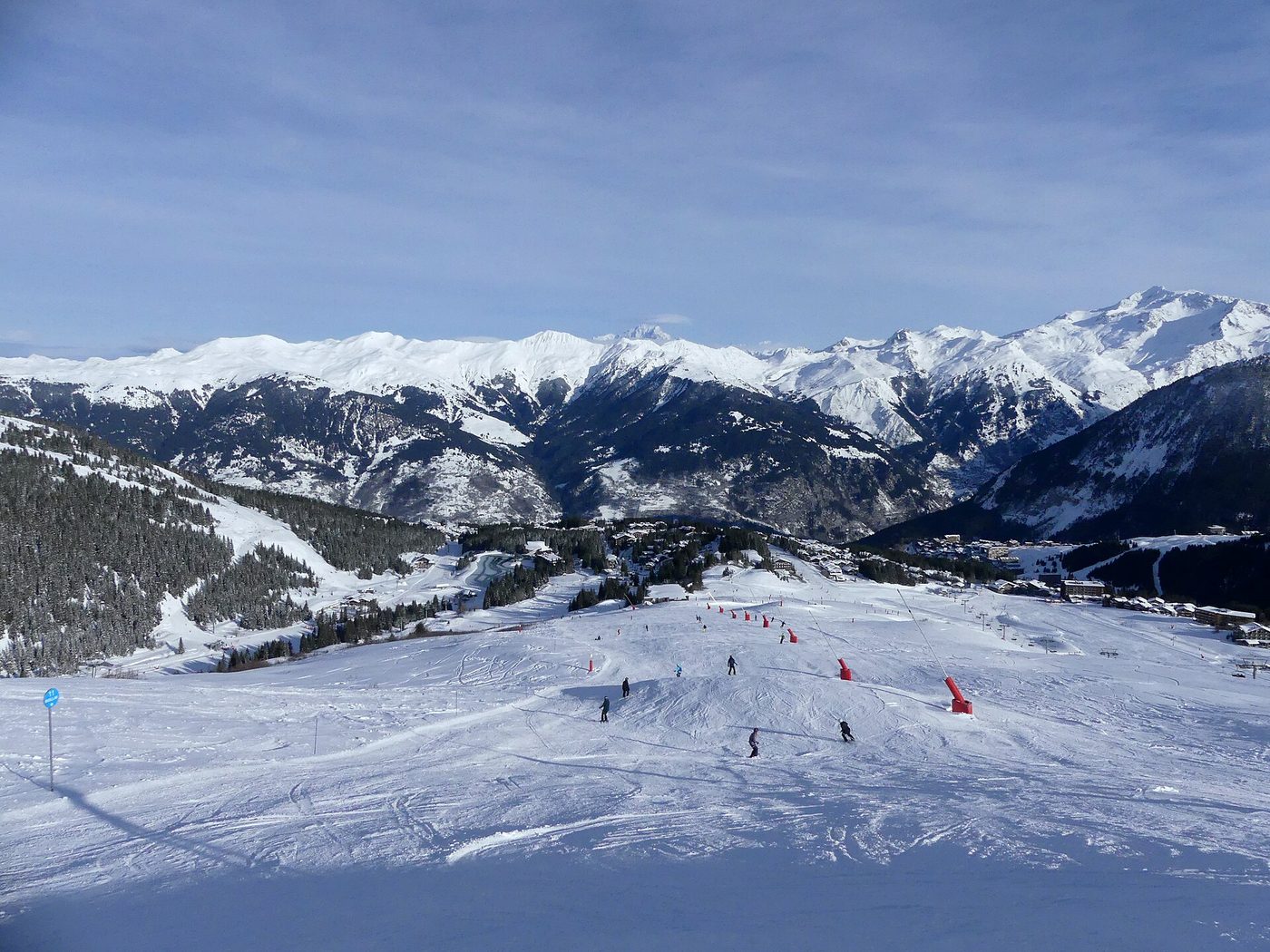
The honest verdict on France: unbeatable if you want to ski a lot of kilometres on reliable snow at a reasonable price, and genuinely disappointing if you were hoping for a Christmas-card village. Val Thorens is a concrete town at 7,500 feet. It is also open when everywhere else is brown. French ski resorts covers the whole country.
Austria: the best value and the best evenings
Austria is where most Europeans actually ski, and there is a reason. Family-run hotels serving half board, a ski school system that is genuinely excellent with children, lift passes cheaper than France, and villages that are real places with churches and butchers rather than purpose-built plazas.
The names worth knowing: St. Anton for serious terrain and legendary après-ski; Kitzbühel for the most beautiful town in the Alps and the Hahnenkamm downhill; Ischgl for a huge linked area and a nightlife scene that is not for everyone; the SkiWelt and Ski Amadé for enormous, gentle, well-priced areas ideal for families and intermediates; Obergurgl and Sölden for altitude.
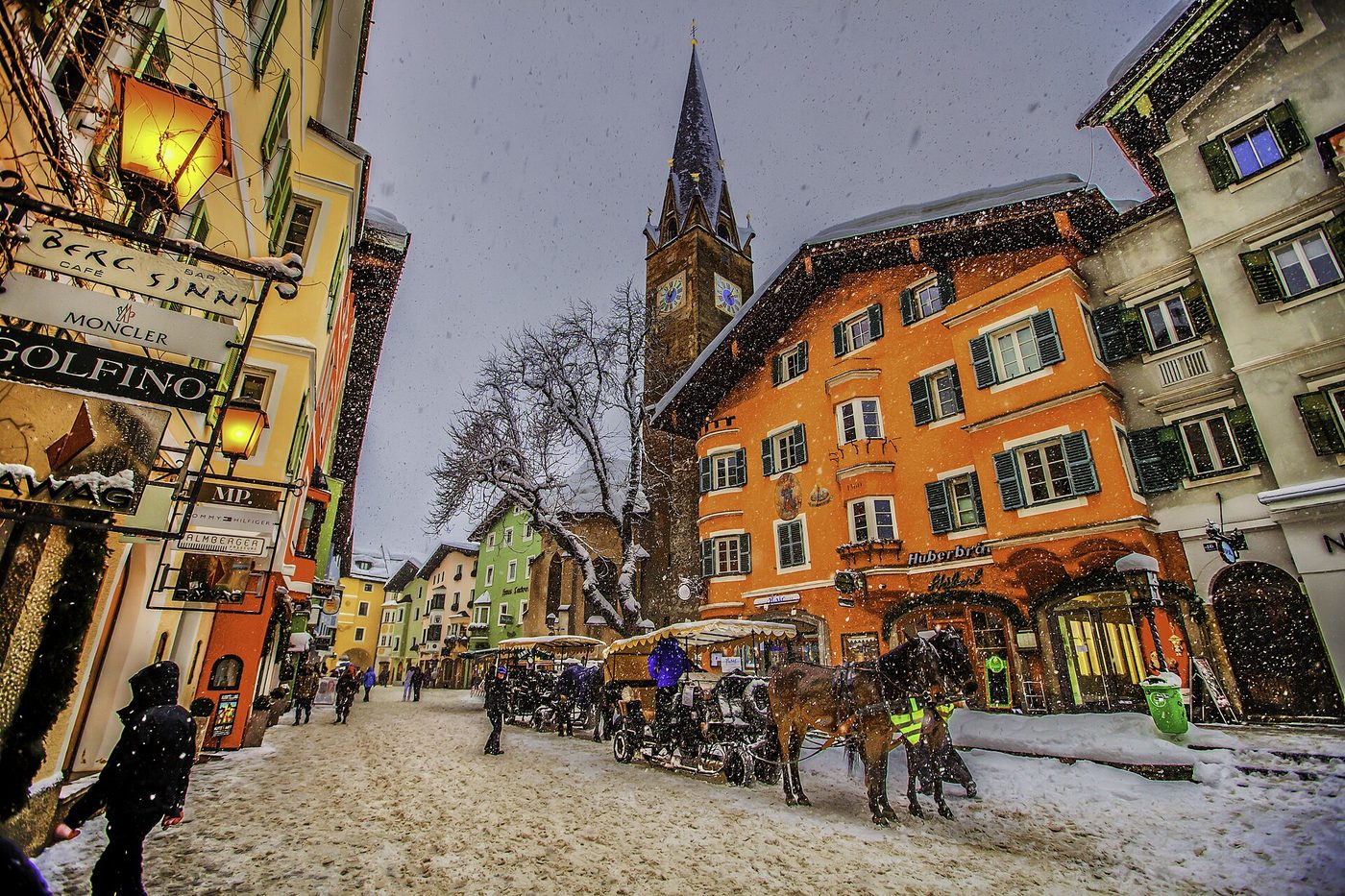
The catch is altitude. Many Austrian villages sit between 2,500 and 4,000 feet, which is lower than the base of most Colorado resorts and roughly the elevation of Denver’s suburbs. In a cold winter it is irrelevant. In a warm one it means skiing down to a bus at the bottom, or not skiing down at all. If you are booking Austria for late March, pick a resort with glacier access or a high village — Obergurgl at 6,300 feet, Ischgl at 4,600 — rather than a picture-postcard valley town.
The honest verdict on Austria: the best all-round value in the Alps, the best food-and-lodging package, the best ski schools, and a real weather risk at the margins of the season. Austrian ski resorts goes resort by resort.
Switzerland: the most beautiful and the most expensive
Switzerland is the version of the Alps that appears in photographs, and it charges accordingly. Zermatt sits beneath the Matterhorn with no cars, reached by a mountain railway; Verbier has the best lift-served off-piste in Europe; the Jungfrau region — Wengen, Mürren, Grindelwald — is served by a rail network that makes a car actively unnecessary.
Swiss pricing deserves a straight answer: it is the most expensive skiing in the world, and Zermatt in particular uses dynamic pricing that changes with date, demand and how far ahead you book. We were not able to verify a single stable six-day figure when we checked on 10 September 2026, which is itself the point — check the operator’s own booking page for your exact dates rather than trusting any published number, including ours. Expect Swiss lift passes to run substantially above the French equivalent, and expect food and lodging to run higher again.
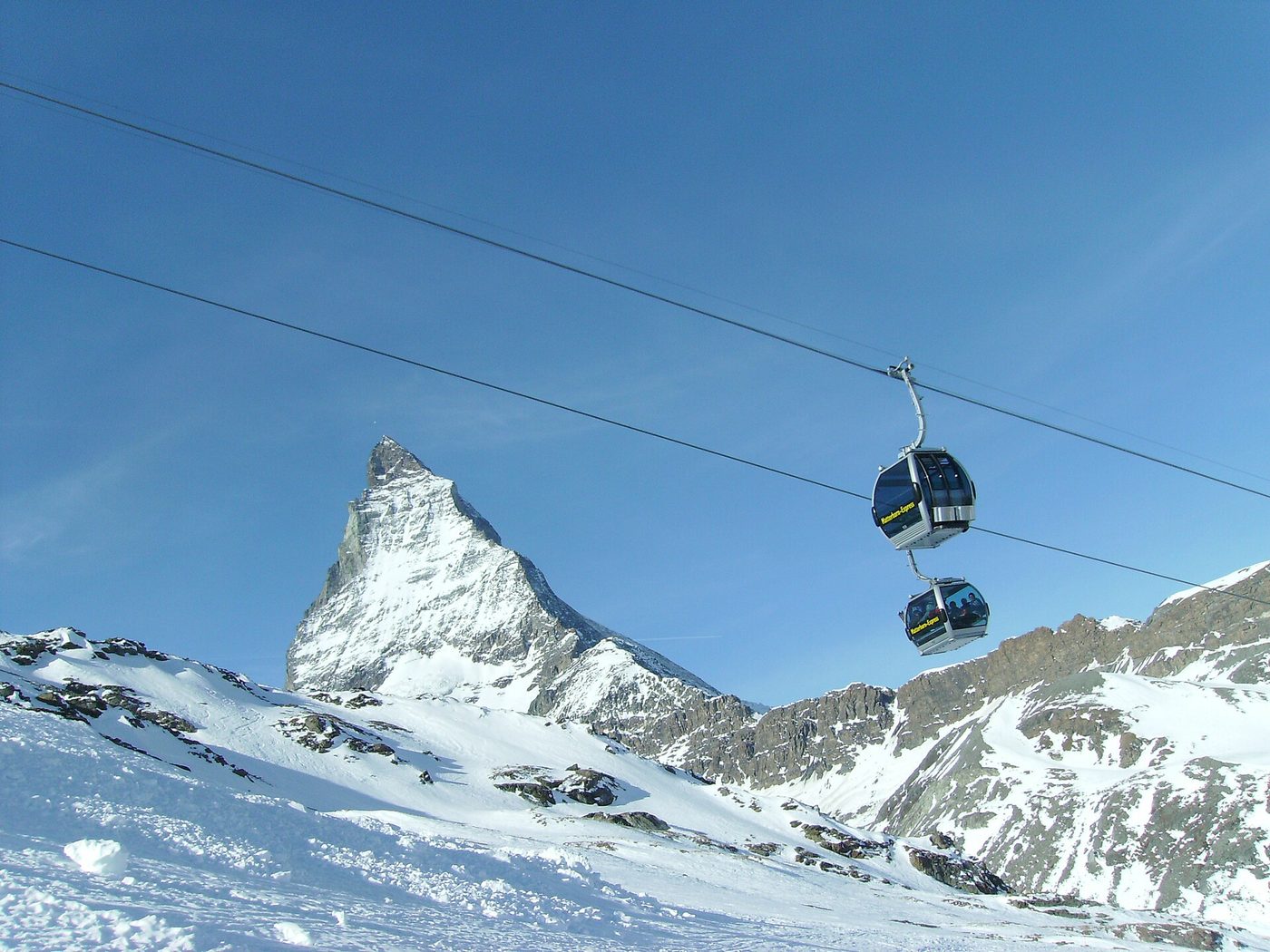
What you get for the money is real: immaculate lifts, punctual trains, high villages that hold snow, and restaurant service of a standard that does not exist in American skiing. What you do not get is value. A Swiss week costs what an American week costs, which removes the main reason for the flight.
The honest verdict on Switzerland: worth doing once, properly, probably car-free by train, and hard to justify as a default. Swiss ski resorts has the detail, and Zermatt skiing covers the flagship.
Italy: the best food and the quietest pistes
Italy is the most underrated skiing in the Alps for Americans, and the reason is that nobody markets it to them.
The Dolomites are geologically unlike anywhere else in skiing — pale limestone towers above wide, sunny, immaculately groomed pistes. Dolomiti Superski links twelve areas on one pass covering around 1,200 km of piste. The Sella Ronda is a circuit of four valleys around the Sella massif that you ski in a day, which is one of the great experiences in the sport and requires only intermediate ability.
Cortina d’Ampezzo is the glamorous name. Alta Badia and Val Gardena are the better skiing. Courmayeur and Cervinia sit on the Italian side of Mont Blanc and the Matterhorn respectively, with Cervinia linked over the ridge to Zermatt — which means you can ski Switzerland and have lunch in Italy at half the price, an arbitrage that locals have exploited for decades.
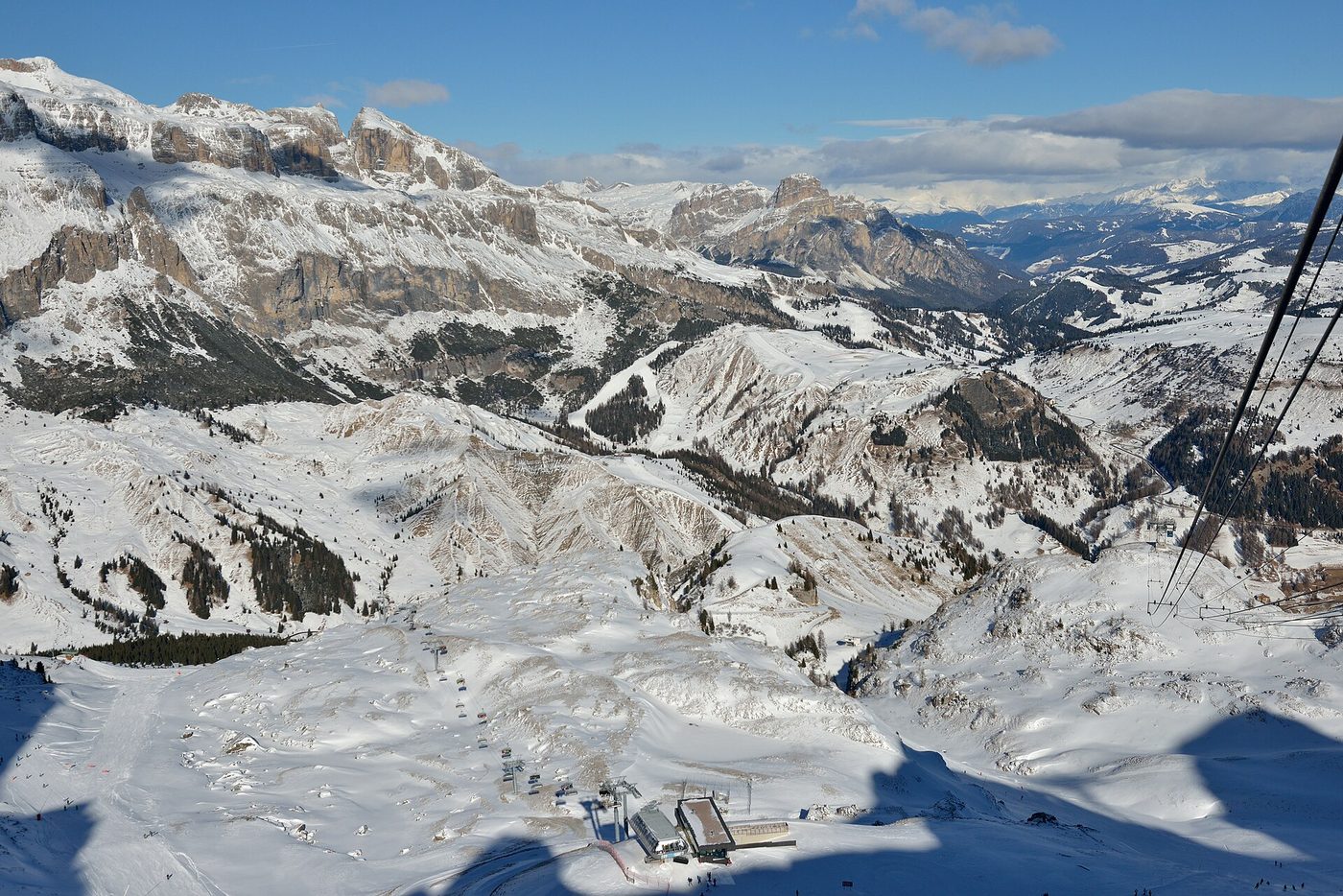
Two caveats. Italian resorts are frequently sunny and south-facing, which is delightful in January and means slush in April. And the Dolomites are largely intermediate terrain — magnificent cruising, limited steep skiing, and not the place for an expert chasing couloirs.
The honest verdict on Italy: the best-value quality skiing in the Alps for intermediates, the best mountain lunches anywhere, and the country most likely to make an American wonder why they ever paid $30 for a cafeteria burger. Italian ski resorts covers it properly.
Which European resort should an American choose?
For a first Alpine trip, choose a high, snow-sure resort with a transfer under two hours from a major airport. That points at Val Thorens or Tignes from Geneva, St. Anton or the SkiWelt from Innsbruck, and Alta Badia from Innsbruck or Venice. Beyond that, the choice follows the same four questions as any ski trip: ability, budget, party and travel time.
Matched to the American skier:
- You normally ski Colorado and want more terrain for less money: Les 3 Vallées or Espace Killy.
- You are travelling with children: Austria, for the ski schools, the half board and the gentle terrain. The SkiWelt or Ski Amadé.
- You want the trip of a lifetime and the budget is open: Zermatt or Verbier, by train.
- You are an expert: Chamonix or Verbier, with a guide. Neither is a resort in the American sense.
- You want to eat well and ski all day without terror: the Dolomites.
- You are trying to do this cheaply: Bulgaria, Andorra or Slovenia, seriously — see cheap European skiing in Andorra and Bulgaria.
The best Alps ski resorts for Americans ranks them with the US departure built in, and cheap ski resorts in Europe covers the value end across the whole continent.
How much does a week in the Alps cost from the US?
Budget roughly $2,000–$2,800 per person for a mid-range week in France or Austria including flights, and $3,500–$5,000 for Switzerland. The lift pass, which dominates an American budget, is the smallest surprise here: €421 buys six days across the largest linked ski area in the world. Flights and transfers are the two lines Americans routinely underestimate.
A worked mid-range week for one person, sharing an apartment, in France in late January:
| Line item | Cost | Notes |
|---|---|---|
| Return flight, US East Coast to Geneva | $650–$900 | Cheaper midweek, cheaper booked early |
| Airport transfer, return | €100–€160 | Shared shuttle; a private car is far more |
| Six-day 3 Vallées lift pass | €421 | €378.50 in the low-season windows |
| Self-catered apartment, 7 nights | €400–€700 | Per person, sharing |
| Ski and boot hire, 6 days | €120–€180 | Book online in advance |
| Food and drink | €300–€450 | Supermarket breakfasts, mountain lunches, some dinners out |
| Group ski lessons, if needed | €150–€220 | Six mornings, which is the European standard format |
| Approximate total | $2,100–$2,900 | Excluding insurance and incidentals |
Prices checked 10 September 2026. Currency movements will shift the dollar figure.
Two comparisons worth making explicitly. That week costs about what four days at a marquee Colorado resort in February costs, and it delivers roughly three times the terrain. And the single biggest line is the flight — which means the marginal cost of a second week in Europe is remarkably low, and why people who make the trip once tend to keep making it.
Where the European budget can blow up: Switzerland, where every line item roughly doubles; a private transfer, which can cost more than the lift pass; February half-term, when accommodation doubles across the entire Alps at once; and eating dinner out every night in a French resort, which is neither cheap nor especially good compared with the Austrian half-board equivalent.
Where it can shrink dramatically: Bulgaria, Andorra, Slovenia and the smaller French and Austrian areas, where a full week including lift pass and lodging can come in under $1,200 before flights.
Which European resort suits your ability?
The Alps sort by ability differently from American resorts, and getting this wrong is the most common way an Alpine trip disappoints.
Beginners. Europe’s weak spot. Many Alpine resorts have beginner terrain at the top of a lift rather than at the base, and the nursery slopes at big French resorts can be crowded, steep-ish and shared with fast traffic. Austria is markedly better: gentle valley terrain, excellent ski schools with English-speaking instructors, and areas like the SkiWelt and Ski Amadé that are essentially built for progression. If someone in your group has never skied, book Austria.
Intermediates. Europe’s overwhelming strength, and where the Alps beat America outright. The Dolomites, Les 3 Vallées, Paradiski and the SkiWelt offer hundreds of kilometres of long, wide, well-groomed blue and red pistes with the sort of point-to-point journeys — ski from one valley to another, have lunch in a different country — that simply do not exist in the US. A confident intermediate gets more from a week in the Alps than from anywhere else on earth.
Advanced skiers on-piste. Well served: St. Anton, Val d’Isère, Verbier, Ischgl and Zermatt all have serious pitch and length. European red and black gradings run steeper than American blue and black respectively, so calibrate downward for the first day.
Experts and off-piste skiers. Chamonix and Verbier are the two names, and both come with a caveat that bears repeating: this is uncontrolled avalanche terrain reached by lift, not sidecountry. Hire a guide, carry the equipment, and treat the Vallée Blanche as the glaciated mountaineering route it is rather than the tourist run it is marketed as.
Non-skiers. Far better catered for than in America. Alpine towns have shops, cafés, spas, railways and things to do that are not skiing, which matters enormously on a mixed trip.
Getting there: flights, transfers and the Geneva problem
The flight is the easy part. The transfer is where European ski trips go wrong.
Geneva serves the French Alps and part of Switzerland, and is the single most useful airport for an American skier — direct flights from several US cities, and resorts from 90 minutes to three hours away. It is also chaotic on a Saturday in February, when the entire British and French ski market changes over on the same day. Book a transfer in advance, and if you can fly midweek, do.
The other gateways: Lyon and Grenoble for the French Alps with shorter transfers than Geneva to some resorts; Innsbruck for Austria, with transfers frequently under an hour; Salzburg and Munich for the Austrian east; Zurich for Switzerland, with excellent rail onward; Milan and Venice for Italy.
Four practical rules:
- Fly on a weekday if at all possible. Saturday is European changeover day and the roads and airports reflect it.
- Price the transfer before you book the flight. A €120 return transfer per person changes which airport is cheapest.
- In Switzerland and Austria, take the train. It goes to the resort, it is punctual, and it removes the car entirely. This is genuinely better than driving and Americans consistently underestimate it.
- Do not fly in and ski the same day. A transatlantic flight plus a three-hour transfer is a full day, and jet lag will take the first morning regardless.
Geneva airport to the ski resorts covers the transfer options and timings, and ski travel logistics handles bags, boards and what to check.
What Americans consistently get wrong in the Alps
Seven mistakes, all avoidable, all common.
Treating off-piste like sidecountry. This is the serious one. In America, terrain inside the boundary is avalanche-controlled. In Europe, the marked piste is controlled and everything else is not — including terrain that looks like an obvious shortcut between two runs. People die every season making this mistake. If you are skiing off-piste in Europe, carry a transceiver, shovel and probe, and hire a guide.
Booking a low village in late season. Charm at 2,800 feet is a liability in April.
Underestimating the transfer. Three hours from Geneva to Val d’Isère on a February Saturday is optimistic.
Expecting American-style service culture. Lift queues in Europe are a scrum rather than a line. This is not rudeness, it is just how it works, and complaining does not help.
Not booking ski school early. European ski schools run week-long morning courses that fill, particularly at half-term.
Assuming the mountain restaurant needs a reservation — and then discovering that at the good ones, it does.
Ignoring half board. Americans instinctively want flexibility and end up paying €50 a head for dinner every night. Half board in an Austrian family hotel is frequently excellent and included.
Small things that catch people out
None of these will ruin a trip, and all of them will make the first two days smoother.
- Bring a coin or a card for the lift pass deposit. Most European resorts charge a small refundable deposit on the pass card itself.
- Lunch is a sit-down meal. Mountain restaurants take an hour, serve wine, and are one of the best parts of the day. Budget the time as well as the money.
- Trail markings are different. Blue is easy, red is intermediate, black is difficult, and there is no green in most countries. A European red will surprise an American who reads it as a blue.
- Lifts close earlier than you expect, often around 4pm, and the last lift home from a distant valley closes earlier still. Missing it means an expensive taxi around the mountain.
- Ski schools run mornings, not full days. Six mornings is the standard week, which suits children far better than an American full-day programme and surprises parents expecting all-day childcare.
- Tipping is modest. Rounding up is normal; American percentages are not expected and can be awkward.
- Bring your EU plug adapter and check your phone plan. Switzerland is not in the EU roaming zone, and a day in Zermatt on a US carrier’s default rate is genuinely expensive.
Is skiing in Europe better than skiing in the US?
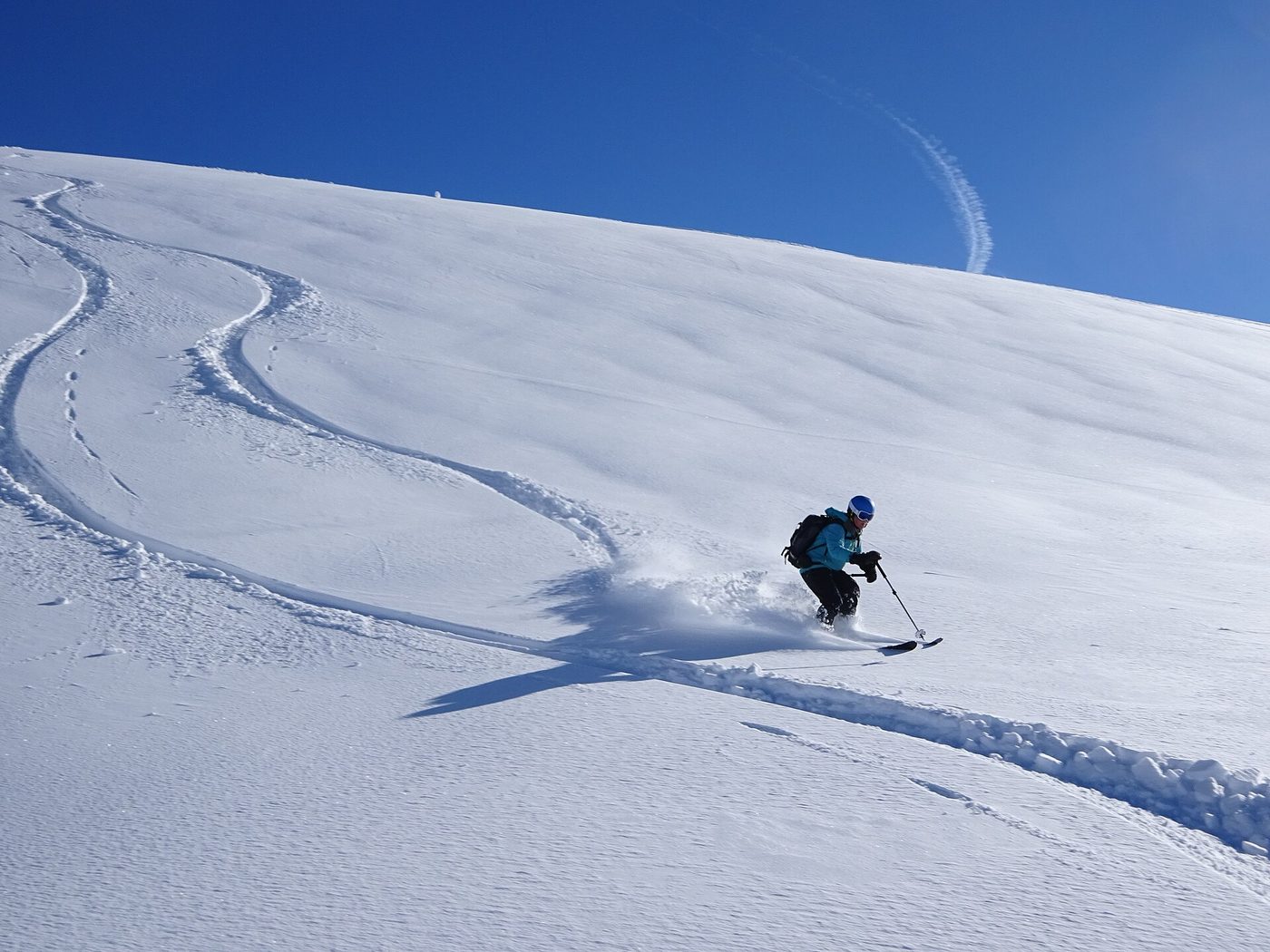
Different rather than better. Europe wins on price, on linked terrain size, on mountain food and on village atmosphere. The US wins on snow quality in the west, on lift infrastructure, on grooming consistency, on beginner terrain and on avalanche-controlled in-bounds skiing. The right answer depends on which of those you care about.
Where each system genuinely wins:
Europe is better at: value, the sheer scale of linked areas, eating lunch, staying in a real town, glacier and high-altitude skiing, and the fact that a lift pass costs a third of what it costs in Colorado.
America is better at: snow quality in Utah and the northern Rockies, high-speed lift infrastructure, consistent grooming, genuinely well-designed beginner areas, in-bounds avalanche control, and a service culture that Europeans find slightly absurd and quietly enjoy.
Neither is better at: crowds. A half-term Saturday in the Alps and a Presidents’ Day Saturday in Summit County are equally unpleasant.

The comparison in full, including the arithmetic on a like-for-like week, is in skiing in Europe vs USA. For the American side of the ledger, start at the best ski resorts in the US.
When should you ski in Europe?
Mid-January to mid-March, with late January the sweet spot for snow and price. Most Alpine resorts open the first weekend of December and close between mid-April and early May; glacier skiing at Tignes, Val Thorens, Hintertux and Zermatt starts as early as October. Avoid the fortnight around Christmas and the February half-terms, when the entire European market travels at once.
The European calendar differs from the American one in three ways worth planning around:
- The season starts later and is more altitude-dependent. A low Austrian village in early December can be skiing on a single machine-made strip.
- Half-term is the crush. British, French, Dutch and German school holidays overlap through February and stagger across three or four weeks. Prices double.
- April is excellent at altitude and finished at the bottom. High French resorts ski well into late April; low Austrian villages do not.
Cross-reference against the season as a whole in the ski season guide, which also covers the 2026/27 forecast.
Frequently asked questions
Is it cheaper to ski in Europe or the US?
Generally Europe, often substantially. A six-day pass for Les 3 Vallées — the largest linked ski area in the world — is €421 for 2026/27, against roughly $800–$1,000 for six advance-purchase days at a marquee American resort. Mountain food and lessons are also markedly cheaper. Transatlantic flights close some of the gap but rarely all of it.
Which country in the Alps is best for skiing?
France for the largest linked areas and snow-sure altitude, Austria for value and village atmosphere, Switzerland for scenery and service at a premium, Italy for food and quiet intermediate cruising. For a first Alpine trip from the US, France or Austria are the easiest to get right.
Do I need to speak the language to ski in Europe?
No. English is spoken throughout the ski industry in all four Alpine countries, and ski schools routinely teach in English. Learning a few words is appreciated but nothing about the trip requires it.
Is off-piste skiing in Europe dangerous?
More dangerous than American sidecountry, and the difference catches Americans out. European resorts control the marked pistes only — everything outside them is uncontrolled avalanche terrain regardless of how close it is to a lift. Carry avalanche equipment and hire a guide.
How far in advance should I book a European ski trip?
Four to six months for a February half-term week, two to three months otherwise. Catered chalets and family hotels with half board sell out earliest. Lift passes and rentals can wait, and in most European resorts you can buy the pass on arrival without penalty.
What is a catered chalet?
A mountain house with staff who provide breakfast, afternoon cake and dinner on most days, usually with wine included. It is a British-market institution, common in France and Austria, and frequently better value than a hotel of equivalent comfort. Catered chalet skiing covers how it works.
Can Americans use Epic or Ikon in Europe?
Partly. Both passes include European partners, though the terms are limited and the specific resorts change each season. Neither functions the way it does in North America, and for a single European trip a local six-day pass will almost always be cheaper than buying a national pass for the purpose. See the ski passes guide.
The bottom line
For an American skier, the Alps are the best value in the sport and the easiest place to make a booking mistake. The two decisions that matter are how high the village sits and how long the transfer is — get those right and almost any Alpine country delivers a very good week.
If you want one recommendation: a high French resort in Les 3 Vallées or Espace Killy, flying into Geneva midweek, self-catered, in late January. It is snow-sure, enormous, and costs less than a comparable week in Colorado including the flight.
If you want the trip you will talk about for twenty years, it is Zermatt or the Dolomites, and you should budget accordingly.
From here: the best Alps ski resorts for Americans for the ranked list, Europe ski trip cost for the budget, Chamonix skiing or Val d’Isère skiing if you already have a resort in mind, and how to plan a ski trip for the booking sequence.
Lift pass prices checked 10 September 2026 against the operators’ own pages for the 2026/27 season. European pass pricing varies by date and several Swiss resorts use dynamic pricing — confirm for your exact dates before booking.
One structural difference worth knowing: in most Alpine villages the whole settlement sits on the snow, so “ski-in/ski-out” carries far less of a premium than it does in North America, and half board is the normal arrangement rather than a luxury. Our guide to ski lodging and where to stay compares the two systems and the vocabulary each uses.
The Alps are not the only long-haul option worth weighing. Japan offers the opposite trade: far less vertical and very little above-treeline terrain, but more than 14 metres of exceptionally light snow a season at Niseko and day passes from around ¥11,100 in Hakuba. For an American on the west coast the flight is comparable to Europe. Our guide to skiing in Japan sets the two side by side honestly.
For a lot of Americans the biggest cultural surprise in the Alps is not the lift system but the afternoon. The famous après bars — the MooserWirt and the Krazy Kanguruh in St Anton, La Folie Douce in Val Thorens — are on the mountain, the dancing starts on the tables in ski boots, and the evening ends with a ski run down to the village. Our guide to apres ski explains how it differs from home, and how to get down safely.
Sources
- Les 3 Vallées — 2026/27 week pass prices, checked 10 September 2026
- Les 3 Vallées — full ski pass range and low-season dates, checked 10 September 2026
- Val d’Isère — official ski pass prices, checked 10 September 2026
- Zermatt Bergbahnen / Matterhorn Paradise — ski pass prices and dynamic pricing, checked 10 September 2026
- Ski amadé — multi-day ticket prices, Austria, checked 10 September 2026
- Epic Pass — European partner resorts, checked 10 September 2026
- Ikon Pass — European destinations, checked 10 September 2026
Village altitudes, piste kilometres and area sizes are as published by the resorts and lift companies. Where a resort uses dynamic pricing we say so rather than quoting a figure that will not match what you are shown.
Image credits
| Image | Photographer | Licence | Source |
|---|---|---|---|
| Val Thorens, France (featured image) | Florian Pépellin | CC BY-SA 4.0 | Commons |
| Courchevel 1850 piste | Florian Pépellin | CC BY-SA 4.0 | Commons |
| Kitzbühel in snow | Valerii Tkachenko | CC BY 2.0 | Commons |
| Matterhorn Express, Zermatt | SteGrifo27 | CC BY-SA 3.0 | Commons |
| Sella and Alta Badia, Dolomites | Wolfgang Moroder | CC BY-SA 3.0 | Commons |
| Off-piste at Chamonix | Webwizzard | CC BY-SA 4.0 | Commons |
| Vail powder day | Brendan Gray | CC BY-SA 2.0 | Commons |