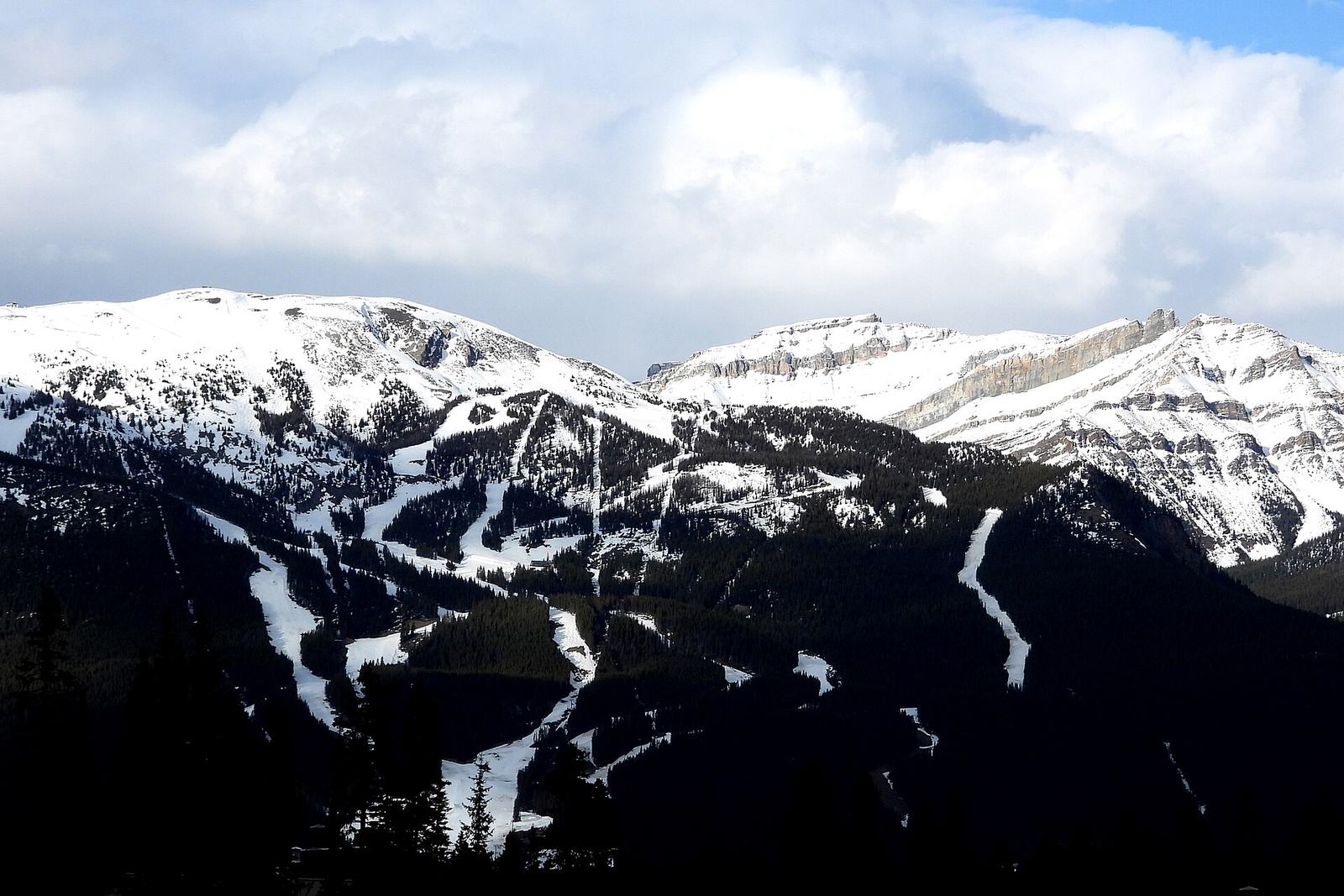
The best ski resorts in Canada are bigger than anything in the United States and, for an American paying in US dollars, usually cheaper. Whistler Blackcomb runs 8,171 acres across two mountains with 5,280 feet of vertical — the second-largest lift-served drop in North America, after Revelstoke — and averages 422 inches of snow. Banff’s SkiBig3 adds 7,748 acres across three resorts inside a national park. The honest catch is that Canadian skiing is colder, further from most American cities, and involves a border crossing.
That is the trade, and for most people it is a good one. A week at Whistler or Banff costs less than the same week at Vail or Aspen, and you get more mountain for it. The reason more Americans do not go is not that Canada is worse — it is that Denver is closer than Vancouver and people do not think about it.
This guide covers what is genuinely worth flying for: the two big destinations, the interior British Columbia resorts that most people have never heard of and should have, Quebec’s completely different eastern skiing, what the exchange rate actually saves you, and which pass to hold. It also says which parts of the reputation do not survive contact with a February morning at minus 25.
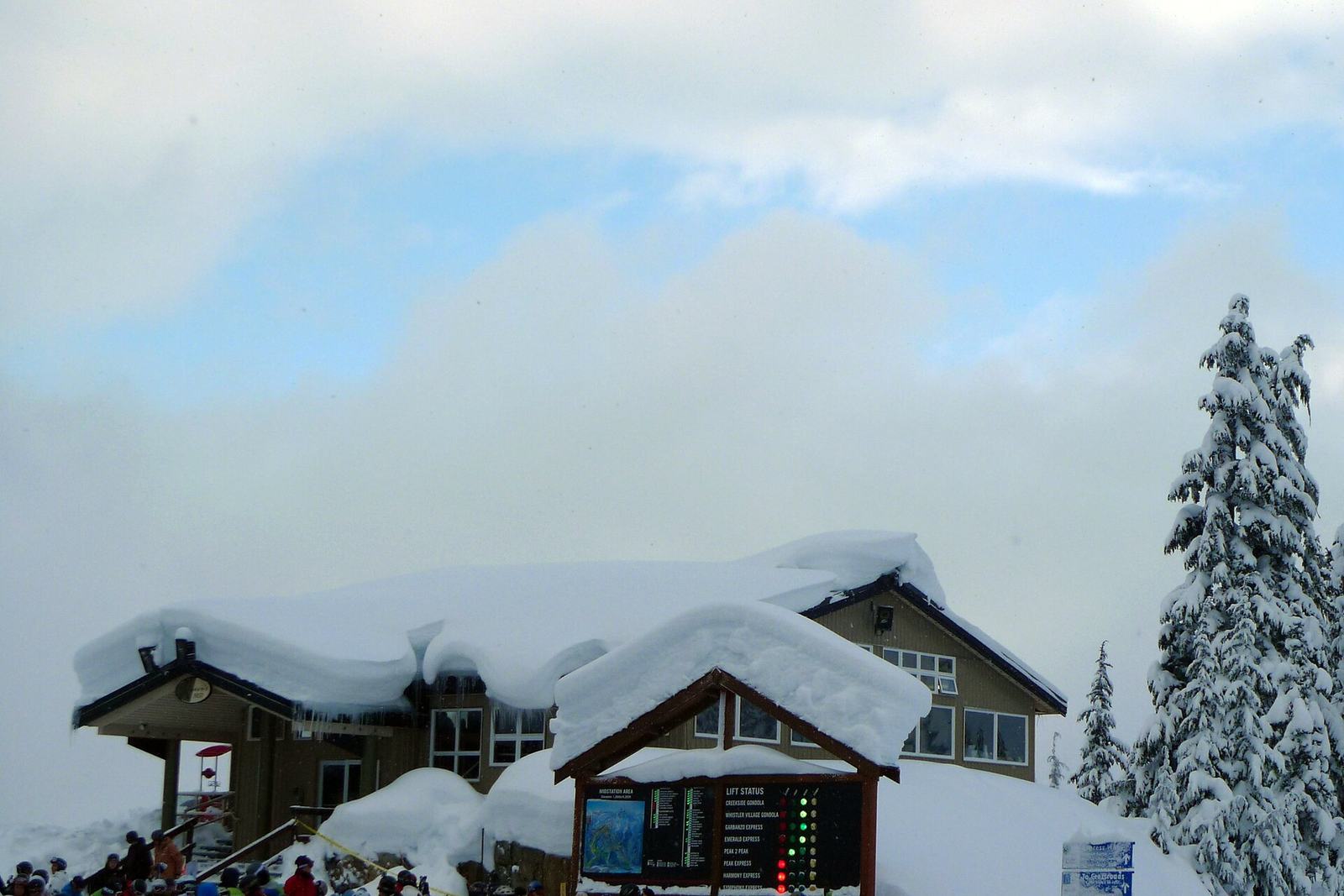
Whistler Blackcomb: the biggest in North America
Whistler Blackcomb is not close to being matched anywhere on the continent. 8,171 acres across two side-by-side mountains, 200-plus marked runs, 16 alpine bowls, three glaciers, more than 38 lifts, and an average of 422 inches (1,072 cm) of snow a year. Blackcomb’s vertical drop is 5,280 feet — a mile — which is the second-largest lift-served vertical in North America, after Revelstoke, and roughly 900 feet more than Snowmass, the biggest in the US.
The PEAK 2 PEAK Gondola links the two mountains at altitude, holds the record for the longest unsupported span of any lift in the world, and turns a full day into a genuinely enormous playground. It also means you can chase the weather across two mountains without going back to the base.
What that scale actually means in practice:
- You will not ski it in a week. Most visitors ski perhaps a third of the terrain in five days, and that is with a plan.
- Whistler Village is the best ski village in North America, and it is not a close call. Pedestrian, walkable, hundreds of restaurants, a genuine town of 14,000 people. There is nothing in the US that matches it.
- Whistler Blackcomb is on the Epic Pass. For Epic holders it is the single most valuable destination on the pass.
- It is 2 to 2.5 hours from Vancouver International, on the Sea to Sky Highway — one of the most spectacular drives in North America, and one that closes for landslides and snow.
The honest caveats. Whistler’s base sits at only 2,140 feet, so lower-mountain conditions can be wet and heavy, and rain at the base with snow up high is a normal February occurrence. The upper mountain is where the good snow is. Crowds are real: Whistler is one of the busiest resorts on the continent, and the Village Gondola queue on a Saturday morning is a serious commitment. And 422 inches, while excellent, is Pacific coastal snow — dense, not the dry stuff you get in Utah’s Cottonwoods or interior BC.
Banff and Lake Louise: three resorts in a national park
SkiBig3 is the collective name for Banff Sunshine (3,358 acres), Lake Louise (4,200 acres) and Mt Norquay (190 acres) — 7,748 acres combined, with around 30 feet of snow a year, all inside Banff National Park. One lift ticket or pass covers all three, and a free shuttle connects them to the town of Banff.
They are genuinely different mountains, which is the point:
Lake Louise is the biggest and the most varied, with terrain on four faces and a view across to Victoria Glacier that is on every Canadian tourism poster ever printed. The back bowls are enormous and largely ungroomed. It is also the coldest of the three and the most exposed.
Banff Sunshine sits higher, holds the best natural snow of the three, and has a genuinely rare feature in the Delirium Dive — inbounds terrain that requires a transceiver, shovel and probe and a partner to enter. Sunshine’s season regularly runs to late May.
Mt Norquay is tiny at 190 acres, ten minutes from town, and is where Banff locals learn, race and night-ski. Do not fly for it; do use it.
The Ikon terms for 2026/27, checked 10 September 2026: the full Ikon Pass gives seven days across all three with no blackout dates; Ikon Base gives five days with blackouts on 26–30 December 2026, 16–17 January 2027 and 13–14 February 2027. Those Base blackouts cover exactly the weeks most Americans would want to travel, which is worth knowing before you buy the cheaper tier.
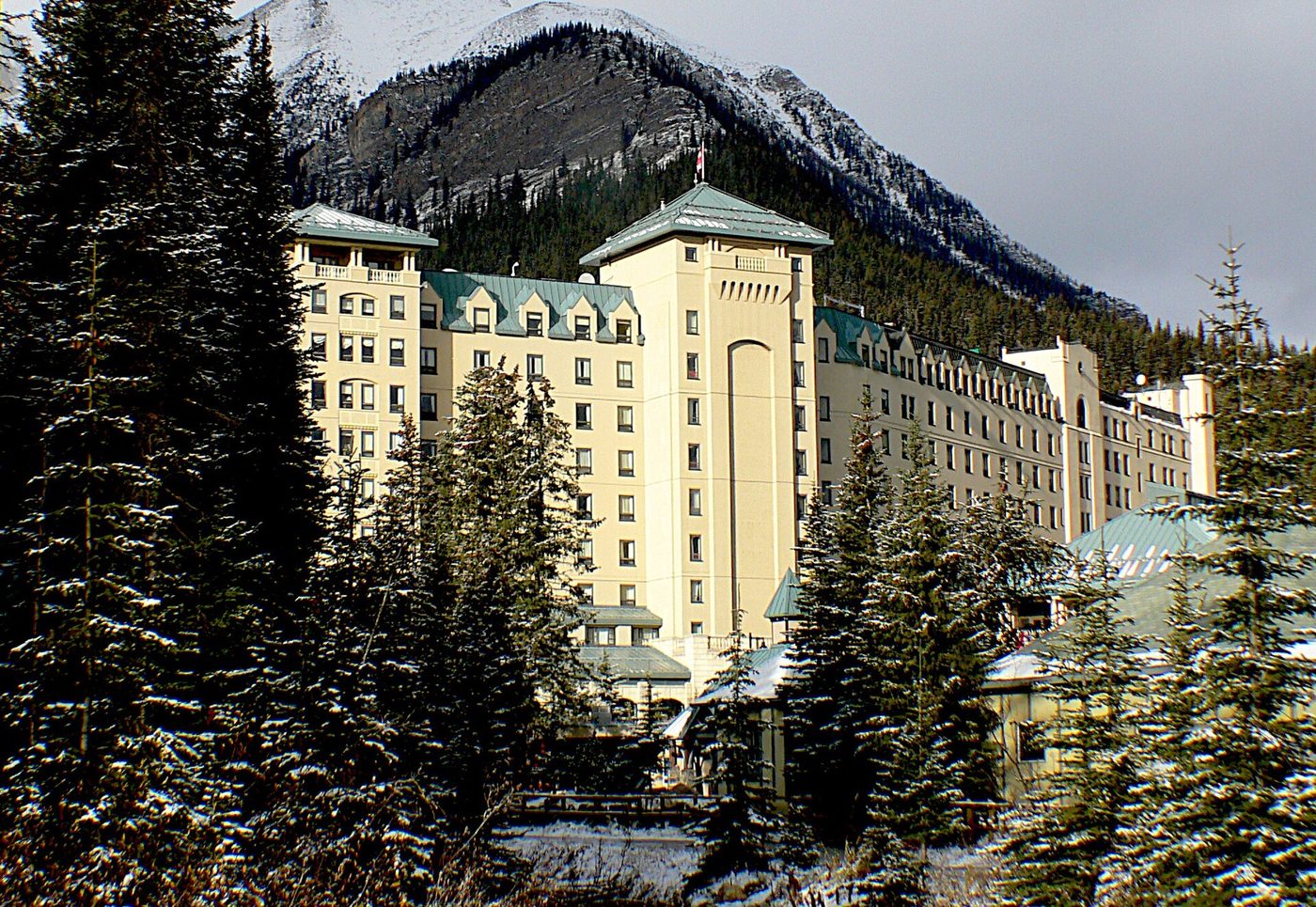
The town of Banff is the other half of the product. It is a real town of 8,000 people inside a national park, with hot springs, restaurants, wildlife and a level of scenery that makes the drive from Calgary worth doing in daylight. Our ski-in ski-out lodging guide explains why staying in a town like this usually beats staying at a base area.
The honest caveat is cold. Banff sits at 4,540 feet in the Canadian Rockies and January routinely delivers days at -20°F or colder, with wind. That is not “brisk” — it is a genuine constraint that shortens days and requires real equipment. Check what to wear skiing before a Banff trip in a way you would not for Colorado.
The interior BC resorts almost nobody flies for
This is where the value is, and where the snow is driest.
| Resort | Province | Skiable acres | Vertical | Pass | Known for |
|---|---|---|---|---|---|
| Whistler Blackcomb | BC | 8,171 | 5,280 ft | Epic | Scale, village, Peak 2 Peak |
| Lake Louise | AB | 4,200 | ~3,250 ft | Ikon | Back bowls, the view |
| Banff Sunshine | AB | 3,358 | ~3,510 ft | Ikon | Natural snow, long season |
| Revelstoke | BC | ~3,120 | 5,620 ft | Ikon | Biggest vertical in North America |
| Sun Peaks | BC | ~4,270 | ~2,890 ft | Ikon | Second-largest in Canada, ski-through village |
| Big White | BC | ~2,765 | ~2,550 ft | Independent | Dry snow, family, ski-in/ski-out |
| Fernie | BC | ~2,500 | ~3,550 ft | Epic (7 shared days) | Five bowls, powder, unpretentious |
| Kicking Horse | BC | ~2,800 | ~4,314 ft | Epic (7 shared days) | Steep, serious, 60% expert |
| Panorama | BC | ~2,975 | ~4,265 ft | Ikon | Vertical, quiet, family village |
| Red Mountain | BC | ~3,850 | ~2,919 ft | Ikon | Independent, uncrowded, cult following |
| Mont Tremblant | QC | ~755 | ~2,116 ft | Ikon | The best village in eastern North America |
Acreage and vertical are resort-reported and unaudited industry-wide. Whistler Blackcomb and SkiBig3 figures come from the operators’ own pages, checked 10 September 2026.
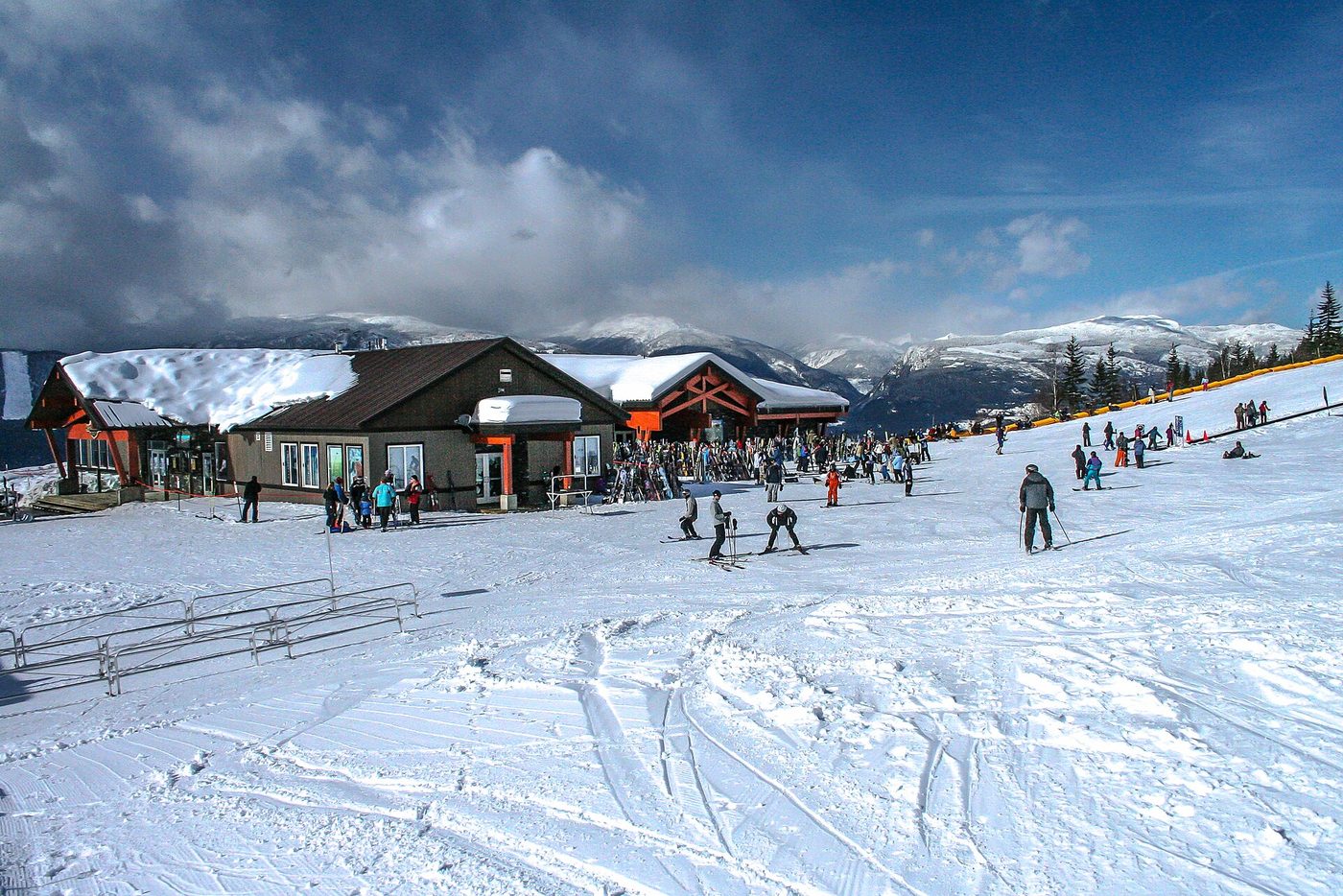
Revelstoke’s 5,620 feet is the largest vertical drop of any ski resort in North America — more than Whistler Blackcomb’s 5,280. It has relatively few lifts for its size, which means long, uninterrupted descents and an atmosphere closer to a European resort than a North American one. It is also on the Ikon Pass, which is remarkable value.
Kicking Horse is roughly 60% expert terrain and has some of the most serious inbounds steeps in North America. It is not a family mountain and it does not pretend to be.
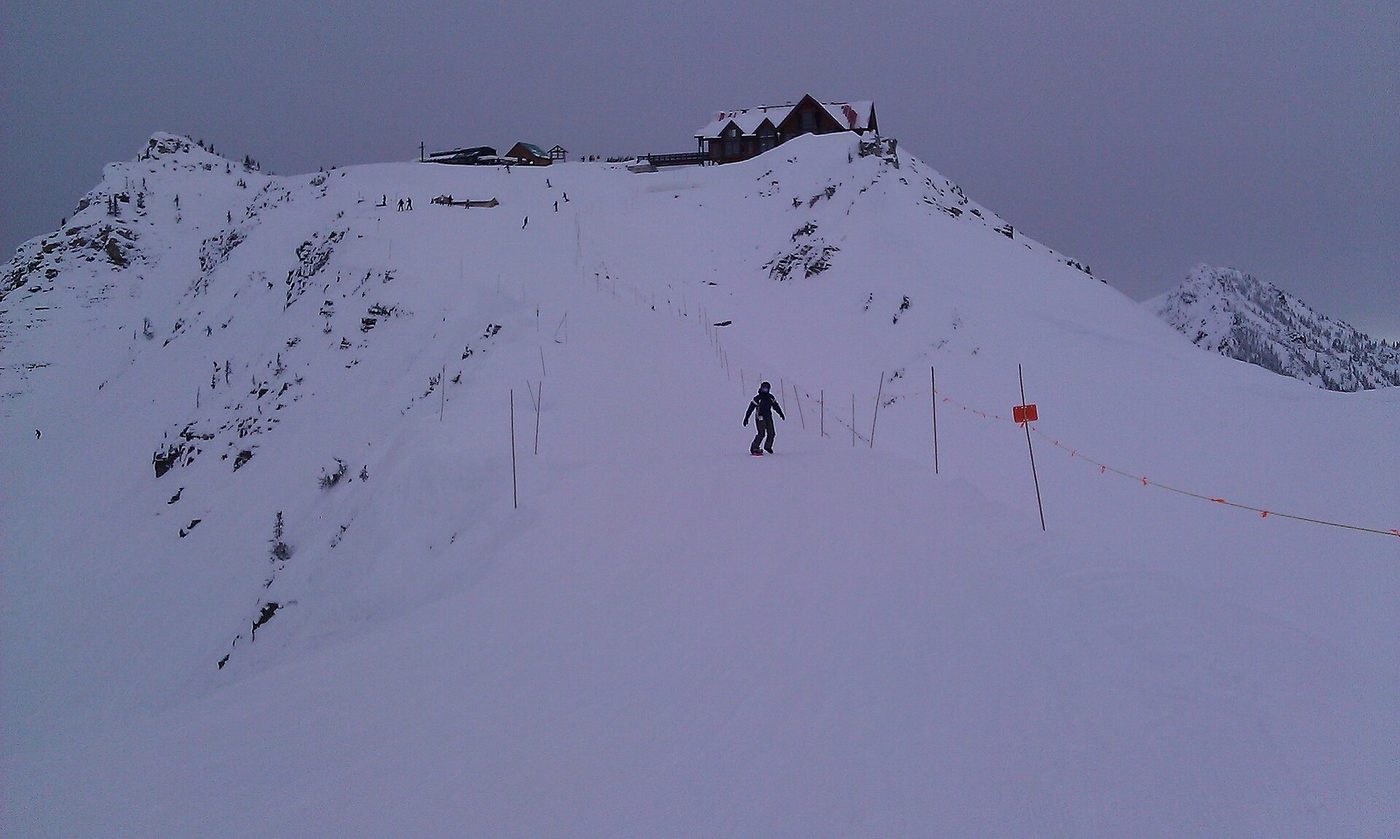
Red Mountain in Rossland is the cult choice: independent, unpolished, with an ownership structure that includes a crowdfunded community share offering, and terrain most people would call underrated if more people knew about it.
The interior BC snow is the point. Away from the coast, the snow dries out substantially. Revelstoke, Fernie, Kicking Horse and Big White get snow closer in quality to Utah’s than to Whistler’s, and they get a lot of it. If snow quality is what you are optimising for, this is where to look, not Whistler.
Is skiing cheaper in Canada?
Usually yes, for an American, and the reason is the exchange rate rather than the underlying prices. Canadian resorts price in Canadian dollars, and every US dollar buys meaningfully more of them — which discounts lift tickets, lodging, food, rentals and lessons all at once, before you have compared anything.
Where the savings show up and where they do not:
Genuinely cheaper: lodging, restaurants, on-mountain food, ski lessons, rental gear, and lift tickets at the interior BC resorts, which are dramatically cheaper than comparable US mountains.
About the same: Whistler and Banff lift tickets at the window, which are priced for an international market.
More expensive: getting there, if you are flying from anywhere that is not the Pacific Northwest or the northern Plains. Vancouver and Calgary are well served but they are not cheap hubs from the eastern US.
A realistic comparison for a six-night trip, two people:
| Banff / Lake Louise | Colorado destination resort | |
|---|---|---|
| Lodging, six nights | $900–2,100 | $1,500–3,600 |
| Lift tickets, five days each | $900–1,400 | $1,300–2,200 |
| Food and drink | $600–1,100 | $900–1,600 |
| Ground transport | $300–600 | $400–900 |
| Total, excluding flights | $2,700–5,200 | $4,100–8,300 |
Indicative US-dollar ranges as of 10 September 2026 for the 2026/27 season, based on operator-published pricing converted at prevailing rates. Exchange rates move, and a swing of ten cents changes every line in this table — check the rate before you commit. Advance-purchase lift tickets run well below window prices at every Canadian resort.
Two things that erode the saving. Cross-border phone roaming, if you do not sort out a plan, is expensive enough to notice. And credit-card foreign-transaction fees at 2.5 to 3% apply to every purchase for six days — use a card that does not charge them, which is the single easiest money you will save on the trip.
Full modelling for either destination is in our ski trip cost guide, and is skiing cheaper in Canada goes further into the comparison.
Which pass covers Canada?
The Canadian split mirrors the American one exactly, which makes the decision simpler than it looks.
Epic gives you Whistler Blackcomb, unlimited on the full pass. That is 8,171 acres and the best village in North America on one pass, and for a lot of Epic holders it is the main reason to hold the pass at all. It also adds seven days shared across the Resorts of the Canadian Rockies group: Fernie, Kicking Horse, Kimberley, Nakiska, Mont-Sainte-Anne and Stoneham.
Ikon gives you most of the rest: SkiBig3 (Banff Sunshine, Lake Louise, Norquay), Revelstoke, Panorama, Red Mountain, Sun Peaks, Mont Tremblant and Blue Mountain. Day counts vary by resort and by tier — the full pass generally offers seven days, Base five with blackouts.
Big White and Sun Peaks both sell their own season passes at prices that will surprise an American used to Vail and Alterra pricing, and both are worth checking if you are going to one place for a week.
Pass access checked 10 September 2026 against the operators’ own pages. Day counts, blackouts and partner lists change every season — confirm before purchase. Full comparison in our ski pass guide.
The honest verdict: if you want one enormous mountain and a real village, Epic and Whistler. If you want variety, better snow quality and lower prices, Ikon and a British Columbia interior road trip. If you already hold a pass, that decision is made for you and both answers are good.
How do you get to Canadian ski resorts?
Fly to Vancouver for Whistler, Calgary for Banff, and Kelowna or Cranbrook for interior British Columbia. Calgary is the best-value ski gateway in North America — an international airport 90 minutes from Banff and two hours from Lake Louise, with none of Denver’s I-70 problem.
| Airport | Resorts | Drive |
|---|---|---|
| Vancouver (YVR) | Whistler Blackcomb | 2–2.5 hr |
| Calgary (YYC) | Banff, Lake Louise, Sunshine, Norquay | 1.5–2.5 hr |
| Calgary (YYC) | Kicking Horse, Panorama | 3–3.5 hr |
| Kelowna (YLW) | Big White, Sun Peaks, Revelstoke | 1–3 hr |
| Cranbrook (YXC) | Fernie, Kimberley | 1–1.5 hr |
| Montreal (YUL) | Mont Tremblant | 1.5–2 hr |
| Quebec City (YQB) | Mont-Sainte-Anne, Le Massif | 40 min–1.5 hr |
Crossing the border matters more than it used to. Americans need a passport or an enhanced driver’s licence, and driving across with skis is straightforward but the queue at a busy weekend crossing is not. Flying is generally simpler unless you live in Washington, Montana or northern New England.
Winter driving in the Rockies is serious. The Trans-Canada Highway between Calgary and Revelstoke crosses Rogers Pass, which has one of the largest avalanche-control operations in the world and closes regularly. British Columbia enforces a winter tyre requirement on designated highways from 1 October to 30 April — this is law, not advice, and rental cars are not automatically compliant. Confirm winter tyres explicitly when you book. Our ski travel logistics guide covers the wider driving and flying picture, and driving to Canada for a ski trip goes into the border and highway specifics.
What is Quebec skiing like?
Completely different, and worth its own trip. Quebec’s resorts are eastern mountains — smaller, colder and reliant on snowmaking, much like Vermont — but with a culture, food and language that make the trip feel far more foreign than the flight time suggests.
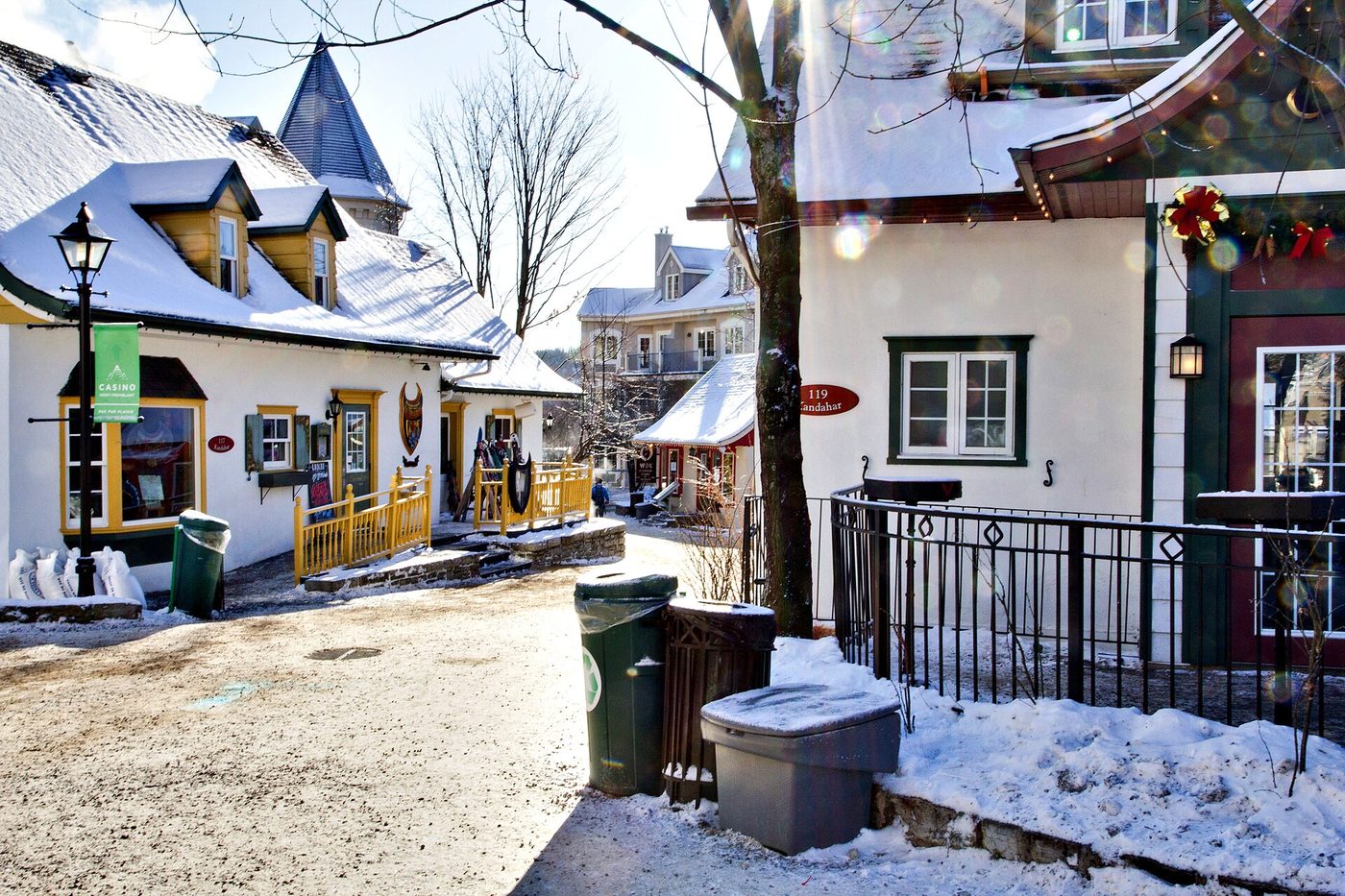
Mont Tremblant is the flagship: about 755 acres, 2,116 feet of vertical, and a pedestrian village that is the best in eastern North America by a distance. It is on the Ikon Pass, 90 minutes from Montreal, and it is genuinely charming rather than synthetic.
Le Massif de Charlevoix has the largest vertical east of the Rockies in Canada, drops toward the St Lawrence River, and you ski down toward the water from the parking lot at the top.
Mont-Sainte-Anne is 30 minutes from Quebec City, which means you can ski a real mountain and sleep in a walled seventeenth-century city. There is nothing else like that in North America.
The caveat is cold. Quebec in January is colder than Vermont and much colder than Colorado, with a damp cold that cuts harder than the number suggests. February and March are the sensible months. Quebec ski resorts covers the region in detail.
When should you ski in Canada?
Late January through mid-March for the best combination of snow depth, open terrain and daylight, with March into April the value window at Whistler and Banff and May still viable at Banff Sunshine and Whistler’s glacier.
- November–December: Whistler and Banff open early, terrain is limited, and the holiday fortnight is expensive and crowded.
- January: The deepest snow and the coldest weather. In Banff and Quebec, genuinely cold — plan around it.
- February: Peak conditions across the country and peak prices. Ikon Base blackouts hit two February weekends in 2026/27.
- March: The sweet spot. Long days, deep base, softening snow, falling prices.
- April–May: Whistler runs into late May most years, Banff Sunshine similarly. Spring skiing in the Rockies with a national park around you is a specific and excellent thing.
Canada ski season covers the calendar in detail, and the ski season guide puts it alongside the US.
What is cat-skiing and heli-skiing, and is it worth it in Canada?
Cat-skiing puts you in a heated snowcat that grinds up a mountain with no lifts on it; heli-skiing does the same job with a helicopter and covers far more ground. British Columbia’s interior ranges — the Monashees, Selkirks, Purcells and Cariboos — are where the modern industry was invented in the 1960s, and they remain the largest concentration of it anywhere in the world.
The honest assessment, because this is where the marketing gets loudest:
What you are buying is untracked snow and terrain no lift reaches, in quantities that do not exist inbounds. A cat-skiing day typically yields eight to twelve runs; a heli day can yield twelve to twenty, with vertical totals that dwarf a lift day.
What it costs. We do not publish a figure here, because operators price by package, by lodge, by season week and by vertical guaranteed, and any single number would be wrong within a month. What is safe to say is the shape: a cat-skiing day costs several times a lift ticket, a heli-skiing day costs several times a cat day, and a week at a fly-in lodge is a five-figure commitment. Get a written quote that states what happens to your money on a weather day before you pay a deposit.
What can go wrong. Weather grounds helicopters, and a heli week can lose days to flat light or wind — most reputable operators have a policy for this and you should read it before booking. Avalanche risk is managed by professional guides, but it is managed, not eliminated, and you will be issued a transceiver, shovel and probe and taught to use them because you may need to.
Who it suits. Strong intermediates and above who can ski a full day in variable snow without exhaustion. It is not a stunt for a first-time powder skier, and reputable operators will ask you honest questions about your ability.
The cheaper version worth knowing about: several BC resorts sell single cat-skiing laps or half-days as an add-on, and a few — including Powder Mountain in Utah, on the American side — offer snowcat access at a fraction of a full-day price. If you want to try the experience rather than commit a week to it, that is the way in.
How do you plan a week at Whistler?
Base in Whistler Village, ski the two mountains rather than one, and keep the alpine for the clear days. Whistler is large enough that an unplanned week means skiing the same three lifts repeatedly, and its weather varies enough vertically that where you ski should change with the forecast.
A structure that works:
| Day | Where | Why |
|---|---|---|
| 1 | Whistler mid-mountain | Learn the layout, avoid committing to the alpine on day one |
| 2 | Blackcomb via PEAK 2 PEAK | Cross at altitude, ski the Blackcomb glacier side |
| 3 | Whistler alpine bowls | Save for a clear day — the bowls are pointless in flat light |
| 4 | Blackcomb trees | The right call when it is snowing or socked in |
| 5 | Whichever is skiing better | Ask a lift operator. They will tell you honestly |
Two practical points. The Village Gondola queue on a weekend morning is genuinely long — use the Creekside base instead, which loads from a smaller car park a few minutes south and is consistently faster. And the alpine closes in high wind, more often than visitors expect, so build a tree-skiing day into the plan rather than treating it as a disappointment.
Five things Americans get wrong about a Canadian ski trip
1. Assuming Whistler is the only option. It is the biggest and the most famous, and it is also the most crowded and the wettest at the base. Revelstoke, Fernie, Kicking Horse and Red Mountain get drier snow, cost far less and have a fraction of the traffic.
2. Underestimating the cold in Alberta and Quebec. Colorado cold and Canadian Rockies cold are different categories. A January day at Lake Louise can be -25°F with wind, which changes what you wear, how long you ski and whether the lifts run at all.
3. Not checking the winter tyre law. British Columbia requires winter or all-season mountain-snowflake tyres on designated highways from 1 October to 30 April. Rental agencies do not always supply them by default. Ask explicitly.
4. Paying foreign transaction fees. Two and a half to three percent on every purchase for a week adds up to real money for something that costs nothing to avoid.
5. Buying Ikon Base for a February trip to Banff. The 2026/27 Base blackouts land on 26–30 December, 16–17 January and 13–14 February — precisely the weeks most American families travel. Check the dates against your calendar before you save the money.
Whistler or Banff — which should you book?
Whistler for one enormous mountain and the best village in North America. Banff for three mountains, drier snow, lower prices and a national park. If you have never been to either and can only do one, Whistler is the more complete resort experience; Banff is the better trip.
| Whistler Blackcomb | Banff / SkiBig3 | |
|---|---|---|
| Terrain | 8,171 ac, one resort | 7,748 ac, three resorts |
| Vertical | 5,280 ft | ~3,510 ft (Sunshine) |
| Snow | 422 in, coastal and dense | ~360 in, drier and colder |
| Pass | Epic | Ikon |
| Village | Best in North America | A real town in a national park |
| Airport | Vancouver, 2–2.5 hr | Calgary, 1.5–2.5 hr |
| Weather risk | Rain at the base | Extreme cold |
| Price | Higher | Lower |
The tiebreaker is usually the pass you already hold, and after that the weather risk you would rather take. Rain at the Whistler base ruins a day; -25°F at Lake Louise shortens one. Both happen. Whistler vs Banff puts the two head to head properly.
Frequently asked questions
What is the best ski resort in Canada?
Whistler Blackcomb, on size and completeness: 8,171 acres across two mountains, 5,280 feet of vertical, 200-plus runs and the best ski village in North America. For snow quality rather than scale, the interior British Columbia resorts — Revelstoke, Fernie, Kicking Horse — are drier and far less crowded, and Revelstoke has the biggest vertical drop on the continent at 5,620 feet.
Is skiing in Canada cheaper than in the US?
For an American paying in US dollars, generally yes, because the exchange rate discounts lodging, food, lessons and rentals across the board. A six-night Banff trip commonly lands 30 to 40% below a comparable Colorado destination trip excluding flights. Whistler and Banff lift tickets at the window are priced for an international market and save you less.
Is Whistler or Banff better for skiing?
Whistler has more terrain in one place, more vertical and a better village; Banff has three separate mountains, drier and colder snow, lower prices and Banff National Park around it. Whistler is on Epic and Banff on Ikon, so for most people the pass they already hold settles it.
Which pass covers Canadian ski resorts?
Epic covers Whistler Blackcomb unlimited, plus seven days shared across the Resorts of the Canadian Rockies group, Fernie and Kicking Horse included. Ikon covers SkiBig3 in Banff — seven days on the full pass with no blackouts, five on Base with blackouts over Christmas and two weekends in January and February 2027 — plus Revelstoke, Panorama, Red Mountain, Sun Peaks, Mont Tremblant and Blue Mountain.
How much snow does Whistler get?
An average of 422 inches, or 1,072 centimetres, a year. It is Pacific coastal snow, so it is dense and wet compared with interior British Columbia or Utah, and with a base at 2,140 feet rain at the bottom while it snows at the top is a normal winter occurrence.
Do Americans need a passport to ski in Canada?
Yes — a valid passport, or an enhanced driver’s licence or NEXUS card if crossing by land. Bring proof of vehicle insurance if driving, and use a credit card with no foreign transaction fee, which saves 2.5 to 3% on everything you buy over the trip.
Do you need winter tyres to drive in British Columbia?
Yes, on designated highways from 1 October to 30 April — it is a legal requirement, not a recommendation, and rental vehicles are not automatically compliant. Confirm winter tyres explicitly when booking, and check the DriveBC road reports before crossing Rogers Pass, which closes regularly for avalanche control.
How cold does it get at Canadian ski resorts?
Cold enough to change how you plan. Banff and Lake Louise regularly see -20°F or lower in January, and Quebec is colder still with a damp cold that cuts harder. Whistler is mild by comparison and its problem is the opposite — rain at the base. February and March are the sensible months everywhere in Canada.
The bottom line
Canada is the best-value serious skiing in North America and Americans consistently overlook it. You get more terrain, more vertical, more snow at the interior resorts, a favourable exchange rate on everything you buy once you arrive, and in Whistler and Banff two of the best mountain towns anywhere.
Decide it in this order. Which pass do you hold — Epic points to Whistler, Ikon to Banff and interior BC. What are you optimising for — scale and village life, or snow quality and price. What weather risk can you tolerate — coastal rain or Rockies cold. And what does the exchange rate look like this month, because it moves every line of the budget.
Then go deeper: Whistler skiing guide, Banff skiing and Revelstoke skiing for the flagship mountains; BC ski resorts, Alberta ski resorts and Quebec ski resorts by province; Whistler vs Banff for the comparison everyone makes; and is skiing cheaper in Canada, driving to Canada for a ski trip and Canada ski season for the practicalities.
Resort statistics, pass access and price ranges checked 10 September 2026 for the 2026/27 season. Exchange rates move constantly and every US-dollar figure here moves with them — confirm current rates and prices with the operator before booking.
Some of the most respected backcountry ski terrain in North America sits well outside Canada’s resort boundaries — Rogers Pass and the interior ranges of British Columbia draw ski tourers from around the world for the same deep, dry interior snow that makes Revelstoke and Fernie worth the flight. It is a different sport from resort skiing in Canada, with its own gear, its own avalanche forecasting and its own learning curve. Our guide to backcountry skiing for beginners covers how to start that curve safely, in the US or anywhere else.
A Canadian season and a Southern Hemisphere one pair well for skiers who genuinely cannot get enough snow in one year — Whistler or the Rockies through the Northern Hemisphere winter, then Chile, Argentina, New Zealand or Australia once that season ends and the calendar flips. It sounds extreme, and the travel is long — Santiago and Queenstown are a full day of flying from most of North America — but it is the only way to ski a real winter in July. Our guide to summer skiing covers where winter actually is during the northern summer, and what a trip there involves.
Beyond Whistler on Epic and SkiBig3 and the interior BC resorts on Ikon, a meaningful roster of independent Canadian ski areas fills in the gaps the two megapasses leave uncovered, and many of them participate in the Indy Pass network at two days each. It is a genuinely useful way to sample smaller Canadian mountains without committing a full pass purchase to any single one of them. Our Indy Pass guide covers the tiers, the price and the catch.
A first season in Canada does not need a Whistler-sized commitment to start — most Canadian resorts run their own beginner package bundling a lesson, rental and limited lift access, the same pattern that works well south of the border. Our best ski pass for beginners guide ranks the options, and the same logic applies whether the first day happens in Colorado or British Columbia.
Sources
- Whistler Blackcomb — mountain information, checked 10 September 2026
- Tourism Whistler — stats and facts, checked 10 September 2026
- SkiBig3 — Ikon Pass access for Banff and Lake Louise, checked 10 September 2026
- Ikon Pass — SkiBig3 destination page, checked 10 September 2026
- SkiBig3 — Banff and Lake Louise ski resorts, checked 10 September 2026
- Epic Pass — official pass pricing and Whistler Blackcomb access, checked 10 September 2026
- Ikon Pass — 26/27 pricing and access, checked 10 September 2026
Acreage and vertical figures for resorts other than Whistler Blackcomb and SkiBig3 are compiled from operators’ own published statistics; nobody audits ski resort acreage anywhere in the industry, so treat them as directional.
Image credits
| Image | Photographer | Licence | Source |
|---|---|---|---|
| Ski trails at Lake Louise, Alberta (featured image) | Dick Thompson | CC BY-SA 2.0 | Commons.jpg) |
| Whistler in deep snow | Ruth Hartnup | CC BY 2.0 | Commons.jpg) |
| Fairmont Chateau Lake Louise | Bernard Spragg | CC0 | Commons.jpg) |
| Revelstoke mid-mountain day lodge | Murray Foubister | CC BY-SA 2.0 | Commons_-_the_mid_mountain_day_lodge_-_(28620313540).jpg) |
| Kicking Horse summit ridge | CrazyCanuck | CC BY-SA 3.0 | Commons |
| Village street, Mont Tremblant | Artur Staszewski | CC BY-SA 2.0 | Commons.jpg) |