Snowboarding for beginners comes down to one uncomfortable truth: the first two days are harder than skiing, and the third day is where it turns. Take a lesson, rent rather than buy, wear wrist guards and padded shorts, and learn on a gentle slope at a small hill rather than a marquee resort. Get through day three and snowboarding is usually faster to become competent at than skiing.
That is the honest shape of it, and almost nobody tells you before you start. Skiing lets you shuffle about looking vaguely competent on the first morning; snowboarding puts you on your backside, then on your knees, then on your backside again, for most of the first two days. A lot of people quit there. They quit precisely one day before it would have clicked.
This guide is built around getting you past that point. It covers what to expect on each of the first few days, what gear matters and what does not, how to choose between a group and a private lesson, where to learn and where not to, how to fall without hurting yourself, and the handful of mistakes that make beginners give up. It is written for adults and teenagers starting from zero, and for skiers thinking about switching.
Is snowboarding harder than skiing for beginners?
For the first two or three days, yes — noticeably. Your feet are locked to one board, you cannot step or shuffle to recover your balance, and every mistake ends with you on the snow. After that the curve inverts: linking turns on a snowboard comes faster than parallel skiing does, and many riders are cruising blue runs within a week.
The usual summary — “skiing is easy to learn and hard to master, snowboarding is hard to learn and easy to master” — is an oversimplification, but it points at something real. What makes the early days hard is that snowboarding has one central skill you cannot fake: controlling a single edge while facing sideways down a hill. Until your body understands that, you fall. Once it does, most of what follows is refinement.
What this means in practice:
- Budget three days minimum for a first trip. Two days of learning followed by going home is the worst possible outcome — you have paid for the painful part and skipped the rewarding part.
- Your first day will be spent mostly on the ground. This is normal. It is not a sign you are bad at it.
- Day two is usually worse than day one, because you are sore and still falling. Expect it.
- Day three is the usual turning point. Linked turns on gentle terrain start to happen.
If you are deciding between the two sports for a family or a group, our skiing vs snowboarding comparison goes into the trade-off in more detail, and skiing for beginners covers the other side.
What happens on your first three days?
It helps enormously to know what is coming, because the discouragement on day two is almost universal and almost always temporary.
| Day | What you will actually do | How it feels | The goal |
|---|---|---|---|
| 1 | Strapping in, skating with one foot free, sliding on the flat, heel-side “falling leaf” | Tiring, lots of falls, unfamiliar | Stop on your heel edge, on purpose |
| 2 | Toe-side sliding, first attempts at turning, the lift | Sore, frustrating, often worse than day one | One controlled turn in each direction |
| 3 | Linking heel-side and toe-side turns on a green | Suddenly it starts to work | Five linked turns without falling |
| 4–5 | Linked turns on easy blues, lifts without incident | Fun | Ride a whole green run top to bottom |
Day one is almost entirely about the heel edge. You will learn to stand up with the board across the slope, lean back slightly, and slide down on your heel edge while controlling speed — then do the same thing drifting side to side, a drill instructors call the falling leaf. You will fall toward the hill a great deal. That is correct.
Day two adds the toe edge, which feels much scarier because you are facing uphill with your back to where you are going. It also adds the chairlift, which is the single most intimidating moment for most new riders. Getting off a chairlift with one foot strapped in is awkward; everyone falls at least once. The lift operators have seen it thousands of times and will slow the lift if you ask.
Day three is when heel-side and toe-side join together into a turn. The first linked turn is a genuinely thrilling moment, and it is why people who get this far almost never quit.
First time snowboarding walks through day one in detail, and how to link turns snowboarding takes over from day three.
Do you need snowboarding lessons?
Yes. Take at least a half-day group lesson on your first day, and ideally a lesson on each of the first two days. Teaching yourself snowboarding — or being taught by a friend who rides — reliably produces more falls, more injuries, more frustration and a higher chance of quitting than a professional lesson does.
The reason is specific to snowboarding. The first skills are counter-intuitive: you have to lean toward the slope you are afraid of, commit weight to your front foot when every instinct says lean back, and look where you want to go rather than at your board. An instructor fixes these in minutes. A friend usually cannot see what you are doing wrong, and says “just go for it”.
Group or private?
| Group lesson | Private lesson | |
|---|---|---|
| Typical cost, destination resort | $150–250 half to full day | $350–900+ half to full day |
| Class size | Usually 4–8 | 1–3 |
| Progress per hour | Slower | Much faster |
| Best for | Day one, budget trips, social learners | Nervous learners, short trips, anyone stuck |
| The honest verdict | Excellent value on day one | Worth it once, usually on day two or three |
Ranges as of 10 September 2026 for the 2026/27 season. Lessons at small local hills cost substantially less, and multi-day “learn to ride” packages that bundle lesson, rental and a beginner-area lift ticket are usually the best value anywhere.
The cheapest way to learn is a package at a local hill. Most small ski areas sell a learn-to-ride package — lesson, board, boots, helmet and a beginner lift ticket — for a fraction of a single destination-resort lesson. And the Indy Pass Learn to Turn product, at $189 for adult or child as of 10 September 2026, is designed specifically for beginners learning at independent resorts. Our ski pass guide covers it alongside the other pass options, and best ski pass for beginners narrows it down.
Not worth it: learning at a marquee destination resort on your first trip if you can avoid it. A $250 lift ticket buys you access to 5,000 acres you will not touch, and the beginner area at a big resort is often crowded, shared with ski school, and a gondola ride from anywhere pleasant. Learn locally, then travel.
How do you ride a chairlift on a snowboard?
Unstrap your back foot before joining the lift line, keep your front foot strapped in, and let the board rest on the footrest on the way up. To unload, stand as the chair reaches the ramp, put your free foot on the stomp pad between the bindings, and glide straight ahead.
That is the whole technique, and it still feels awkward the first few times. Everyone falls getting off a chairlift at some point in their first week, and nobody at the top of the lift is watching you as closely as you think.
In the lift line, you move by “skating”: front foot strapped in, back foot free, pushing along on the toe side of the board like a scooter. Keep your back foot close to the board so you can plant it quickly.
Loading, sit toward the side your board is facing so it points forward rather than across the person next to you. Tell the operator you are new — they will slow the lift for you if you ask, and they would much rather do that than stop it after you fall.
Unloading is the part to rehearse in your head. Stand up as the chair reaches the ramp, weight over your front foot, back foot on the stomp pad. Do not try to turn. Glide straight, and drag your back toe gently in the snow if you need to slow down. Once you are clear of the ramp — genuinely clear, not three feet from it — sit down and strap in.
Surface lifts are harder than chairs. T-bars and platter lifts drag you uphill with your board pointing up the track and one foot free, and they are the hardest lift to ride on a snowboard. A magic carpet conveyor is the easiest of all. On day one, if you have the choice, avoid the T-bar entirely.
What gear do you need to start snowboarding?
Rent the board and boots; buy the things that touch your body. That is the whole rule for the first season.
Rent:
- Board. Rental boards are soft, forgiving and tuned for beginners, which is exactly what you want. Buying a board before you can link turns means buying for a rider you are not yet.
- Bindings. Come attached to the rental board and are set up by the shop.
- Boots — at first. But this is the first thing to buy once you know you will keep riding, because boots that fit change everything.
Buy or bring:
- Helmet. Look for ASTM F2040 (the US standard) or CE EN 1077 (the European one). ASTM’s test is the more demanding of the two — a faster drop onto three anvil shapes. Many helmets carry both. Rental helmets are fine, but a helmet that fits properly is cheap.
- Goggles. A lens with around 30 to 50% visible light transmission handles most days if you only own one pair.
- Waterproof outerwear. Snowboarders sit in snow far more than skiers do, so waterproofing matters more for you than for them. A jacket and trousers rated 10,000mm hydrostatic head is a sensible minimum; 15,000 to 20,000mm for wet snow.
- Waterproof gloves or mittens. You will put your hands in the snow constantly — every time you sit down, stand up or fall. Mittens are warmer; gloves are more dexterous for bindings.
- Wrist guards. The most useful $30 you will spend. Wrist injuries are the most common snowboarding injury, overwhelmingly among beginners who put a hand out to break a fall.
- Padded impact shorts. Unglamorous, invisible under ski trousers, and they make day two dramatically less painful.
Our beginner snowboard gear guide lists specific products, what to wear skiing covers layering (identical for riders), and the ski gear guide covers the helmet and goggle standards in more depth.
Rental costs run roughly $45 to $85 a day at destination resorts for a board, boots and helmet, and much less at local hills or valley rental shops.
Regular or goofy? How to set up your stance
Regular means your left foot is forward; goofy means your right foot is forward. Neither is better — it is simply which way your body naturally balances, and getting it wrong makes learning noticeably harder.
Three quick ways to find out, none of them perfect:
- Which foot do you kick a ball with? That is usually your back foot.
- Stand with your feet together and have someone nudge you gently from behind. The foot you step forward with is usually your front foot.
- Slide on a smooth floor in socks. Whichever foot leads is probably your front foot.
If the tests disagree, tell your instructor on day one. Switching your stance after a morning of falling is common and costs nothing.
Binding setup is best left to the rental shop on day one, but it helps to know the vocabulary:
- Stance width — roughly shoulder width, measured between binding centres.
- Binding angles — how far each binding is rotated. A common beginner setup has the front foot angled forward and the back foot straight or slightly angled backward. “Duck” stance (both feet angled outward) is popular for riding in either direction and is increasingly what shops set by default.
- Highbacks — the plastic plates behind your calves. Leaning back on them is how you apply pressure to your heel edge.
Snowboard bindings guide explains the settings properly.
How do you choose a snowboard?
Do not, for your first season. Rent, learn to link turns, and then buy. But when you are ready, choose by weight and boot size rather than by height.
Burton’s own guidance explicitly debunks the old rule of thumb that a board standing on its tail should reach somewhere between your nose and your chin. Weight matters far more, because it determines how the board flexes: every board size carries a minimum and maximum recommended rider weight, printed on the sticker or spec sheet. Below that range the board rides stiffer than intended; above it, softer.
Waist width matters more than length. If your boots overhang the edges too far, your toes and heels drag in the snow during turns — which throws you, suddenly and without warning, onto the snow. Manufacturers list the recommended boot size range for each board width, and anyone with large feet should look at “wide” models.
For a first board, look for:
- Soft to medium flex — more forgiving of mistakes.
- Rocker or hybrid rocker profile — less likely to catch an edge than traditional camber.
- All-mountain shape — a true twin or directional twin suits most learners.
- Length at the shorter end of your weight range — shorter boards are easier to turn; longer boards are more stable at speed, which you do not need yet.
How to choose a snowboard goes into flex, profile and shape in detail.
How do you fall safely on a snowboard?
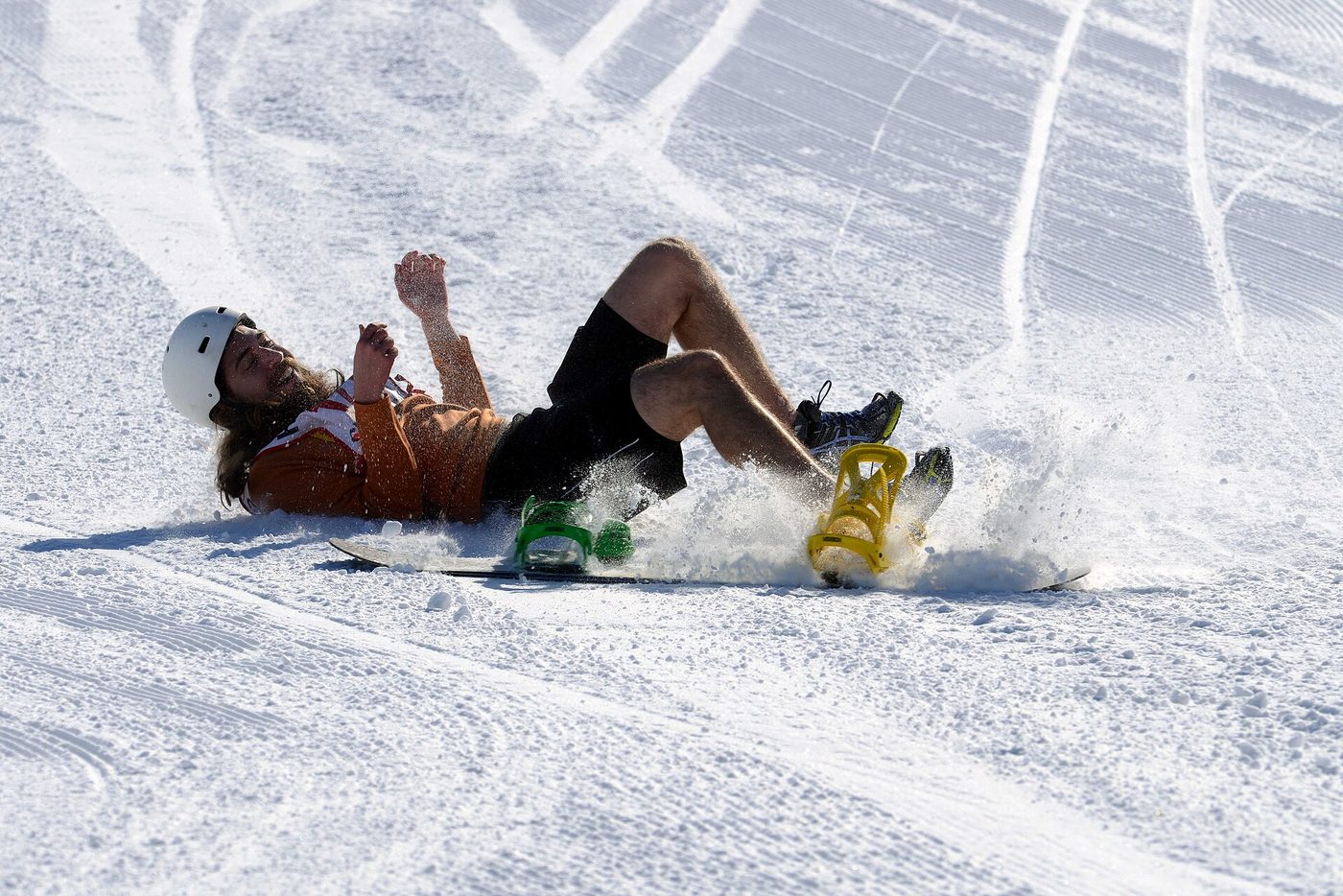
You will fall a great deal, so learn to fall well. The single most important rule: do not put your hands out. Most snowboarding injuries in beginners are wrists, and they happen because a rider instinctively reaches back or forward to catch themselves.
Falling backward (heel side):
- Tuck your chin toward your chest so your head does not snap back onto the snow.
- Sit down as though onto a chair — bottom first, then roll onto your back.
- Keep your arms in, forearms crossed over your chest if you can.
Falling forward (toe side):
- Drop onto your knees first.
- Let your forearms take the rest, not your hands and wrists.
- Try to roll rather than land flat.
Two other things that prevent most beginner injuries:
- Catching an edge — when the downhill edge of your board digs into the snow — throws you hard and fast, usually onto your head or wrists. It happens when the board is flat or the downhill edge is pressured. Keeping a little pressure on your uphill edge prevents it.
- Stop falling when you are tired. More beginner injuries happen in the last hour of the day than the first. When your legs are shaking, stop. The next morning will be better.
A helmet, wrist guards and padded shorts turn most beginner falls from painful to merely irritating.
Where is the best place to learn to snowboard?
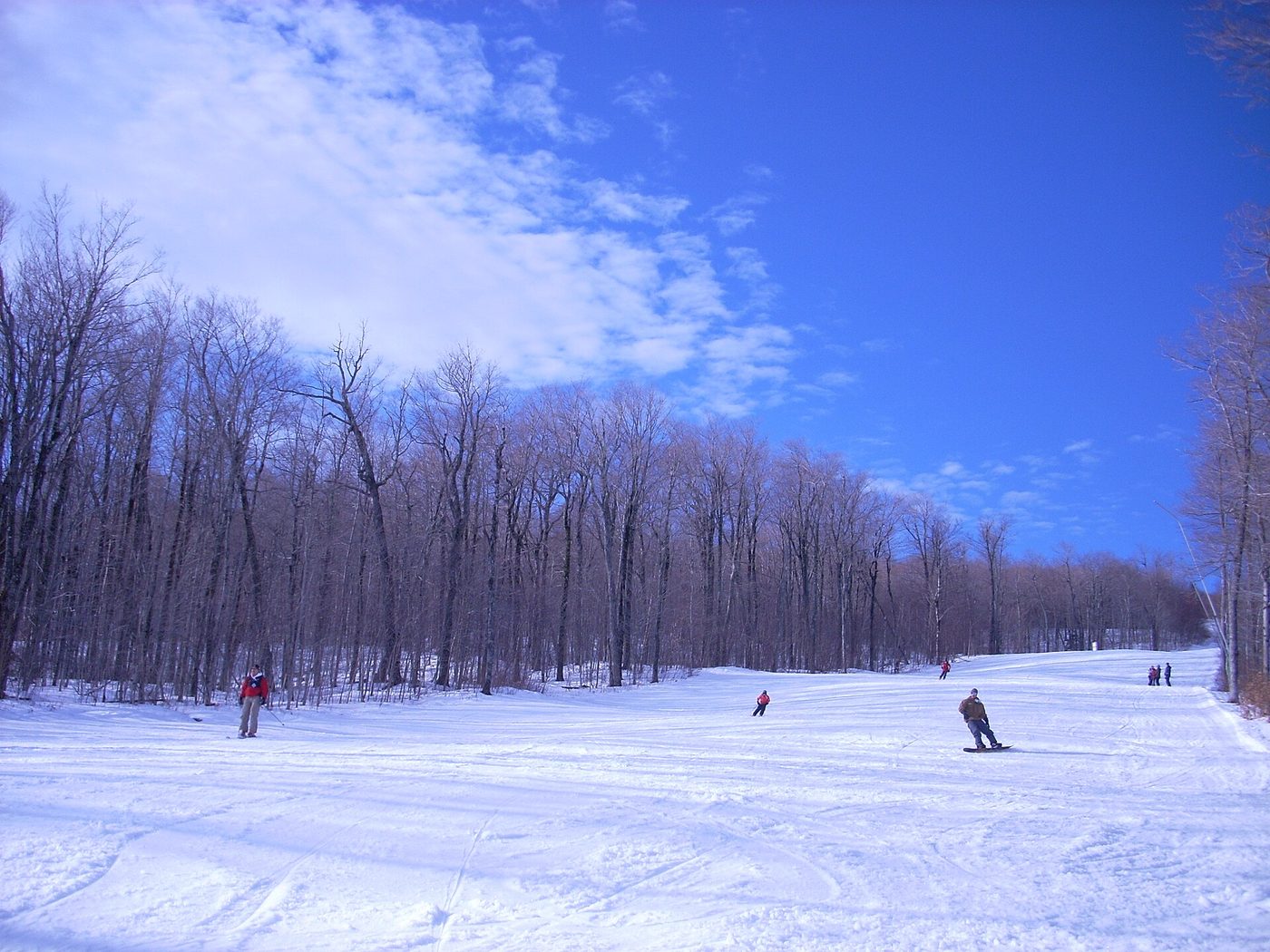
A small local ski area with a dedicated beginner zone, a slow chairlift or surface lift, and a gentle, wide, uncrowded green run. That describes a Midwest hill or a mid-size Northeast mountain far better than it describes Vail — and it will cost a fraction of the price.
What to look for:
- A separate learning area, ideally with a “magic carpet” conveyor lift. Learning to ride a chairlift on your first morning is unnecessary stress.
- Long, gentle, wide green runs, not short steep ones. You need space to make mistakes.
- Few flat sections. This is the snowboard-specific one. Flat cat tracks and run-outs are miserable on a snowboard because you cannot skate or pole like a skier. A resort full of long flat traverses is a bad place to learn.
- Soft snow if possible. Early-season manufactured snow and icy eastern mornings are harder to learn on than soft spring snow or fresh powder. Late-season spring conditions are genuinely the easiest time to learn.
Where snowboarding is not allowed at all: a small number of US resorts still ban snowboarding outright. Alta and Deer Valley in Utah, and Mad River Glen in Vermont, are skiers-only. Everywhere else welcomes riders. If you are planning a Utah trip, our Utah ski resorts guide covers which mountains to choose instead.
For resorts that are genuinely good for riders — good parks, good tree skiing, few flats — see the best snowboarding resorts. For regional options, east coast ski resorts is where a very large share of American riders learn.
What does it cost to learn to snowboard?
Less than most people assume, if you learn in the right place. A three-day beginner trip can cost under $500 at a local hill and well over $1,500 at a destination resort for exactly the same outcome.
| Line item, per day | Local hill | Destination resort |
|---|---|---|
| Lift ticket or beginner ticket | $40–90 | $150–260 |
| Board, boots and helmet rental | $30–50 | $45–85 |
| Group lesson | $50–120 | $150–250 |
| Learn-to-ride package (all of the above) | $80–180 | $220–400 |
Ranges as of 10 September 2026 for the 2026/27 season. Destination-resort prices vary enormously by date — buy lift tickets in advance, which runs 20–40% below the window rate.
The honest recommendation: buy a local learn-to-ride package for your first two or three days, get to the point of linking turns, and only then book a destination trip. Our ski trip cost guide models the full budget, and family ski vacations covers the costs when children are learning too.
Should skiers switch to snowboarding?
If you are a confident skier curious about riding, try it — but budget the same painful first two days any beginner faces. Your mountain sense, comfort on lifts and reading of terrain all transfer. The balance does not. Skiers often find their first day on a board more humbling than complete beginners do, because they expect to be good at it.
What carries over:
- Comfort with speed, snow and chairlifts.
- Understanding of edging — you already know that an edge holds and a flat base slides.
- Reading the fall line and choosing terrain.
What does not:
- Separate feet. You cannot recover a stumble by stepping.
- Facing sideways. Your eyes, shoulders and hips need to be retrained.
- Flat terrain. Skiers are used to skating and poling across flats. Riders are not so lucky.
Many good skiers are riding confidently within four or five days. Switching from skiing to snowboarding covers the transition in detail, and snowboarding with skiers covers the practicalities of a mixed group — including which resorts have the fewest flats.
When should you try the terrain park?
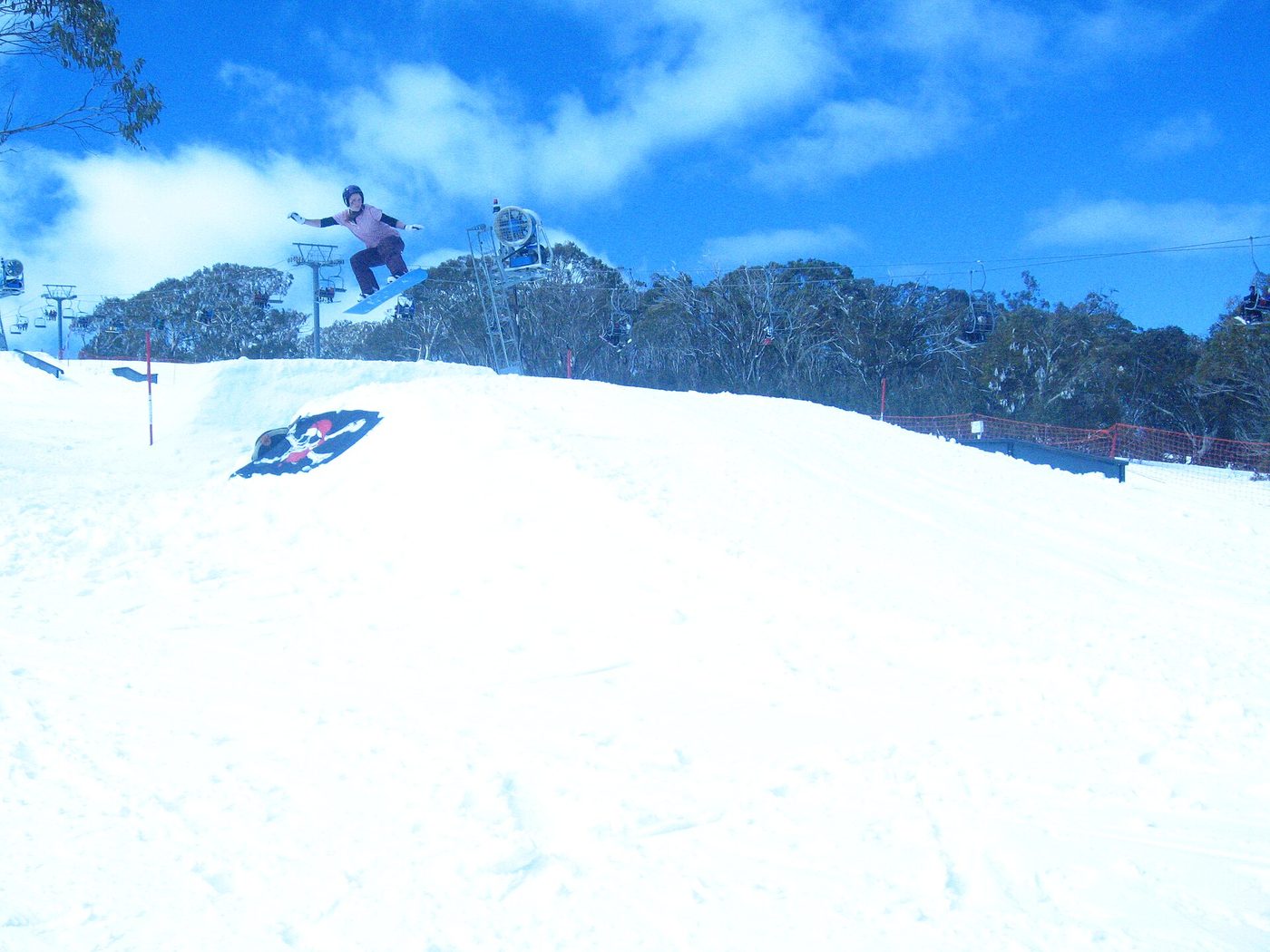
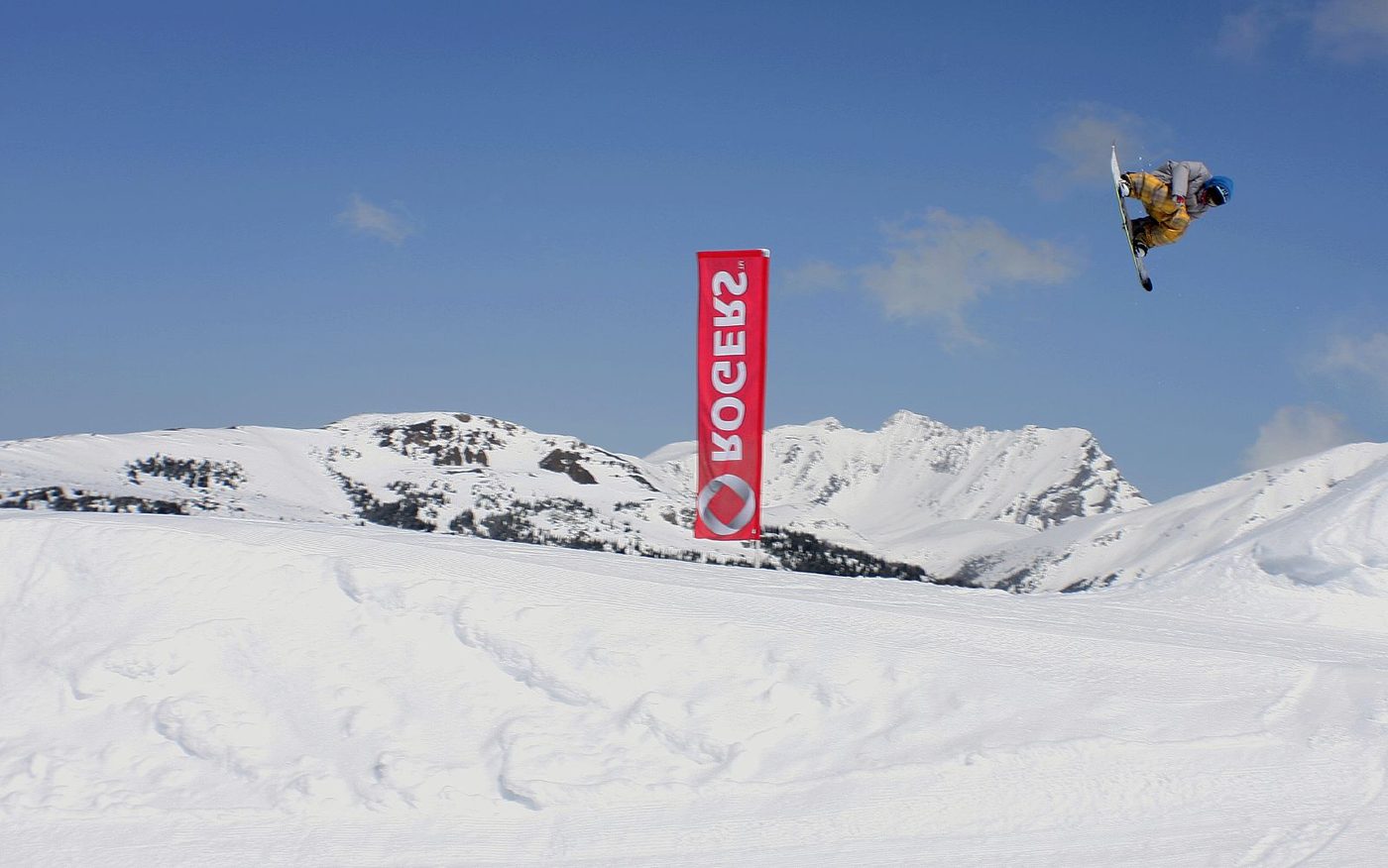
Not on your first trip, and not before you can link turns comfortably on blue runs and stop reliably on both edges. The terrain park is where snowboarding’s culture lives and it is enormously appealing, but it is also where the most serious beginner injuries happen.
A sensible progression:
- Linked turns on blues, both directions, controlled speed.
- Riding switch — with your other foot forward — on easy greens.
- Small features in the beginner park: the smallest boxes and the smallest jumps, which most resorts mark separately.
- A park lesson. Most resorts offer them, and an hour with a park instructor prevents habits that otherwise end in injury.
Every resort park follows Park Smart rules: look before you drop, start small, make a plan for every feature, and respect other riders. Read the signs at the entrance. Terrain park for beginners covers the full progression.
Seven mistakes that make beginners quit
1. Stopping after two days. The first two days are the hard part. Day three is usually where it clicks. Plan for at least three.
2. Learning from a friend. Take a lesson. Your friend cannot see what you are doing wrong and will say “just go for it”, which is the least useful advice in snowboarding.
3. Leaning back. The instinct is to lean away from the slope. It is exactly wrong: weight on the back foot means you cannot steer. Commit to the front foot.
4. Looking at your board. Your board goes where your eyes and shoulders point. Look where you want to go.
5. Buying a board too soon. Buy boots first, and a board only once you can link turns and know what you are buying for.
6. Skipping wrist guards and padded shorts. Two cheap purchases that make day two survivable.
7. Learning at a big, crowded, flat resort. Learn somewhere small, gentle and cheap. Then go to the famous mountains.
Frequently asked questions
How long does it take to learn to snowboard?
Most adults can link basic turns on gentle green runs by the end of their third day, and ride most blue runs comfortably within a week of total riding. The first two days are the hardest part and involve a lot of falling. Lessons on those first days shorten the whole process considerably.
Is snowboarding harder than skiing?
For the first two or three days, yes — your feet are fixed to one board and you cannot step to recover balance, so you fall much more. After that, many people find linked turns come faster on a snowboard than parallel turns do on skis. The early days are harder; the intermediate plateau is often shorter.
Should I rent or buy a snowboard as a beginner?
Rent. Rental boards are soft, forgiving and set up for beginners, and buying before you can link turns means choosing a board for a rider you are not yet. Boots are the first thing worth buying once you know you will keep riding, because fit makes the biggest difference to comfort and control.
Do I need lessons to learn to snowboard?
Strongly recommended. The key early skills are counter-intuitive — leaning toward the slope, weighting the front foot, looking ahead rather than down — and an instructor fixes them in minutes. A half-day group lesson on each of your first two days is the best value; one private lesson on day two or three is worth it if you are stuck.
How do I know if I am regular or goofy?
Regular means left foot forward and goofy means right foot forward. The foot you kick a ball with is usually your back foot, and the foot you step forward with when nudged from behind is usually your front foot. If you are unsure, tell your instructor — switching after a morning of falls is common and free.
What is the most common snowboarding injury?
Wrist injuries, overwhelmingly among beginners who put a hand out to break a fall. Wrist guards prevent a large share of them. The advice is simple: keep your arms in, fall onto your bottom or forearms rather than your hands, and stop riding when your legs get tired.
Can I snowboard at every ski resort?
Almost. Alta and Deer Valley in Utah and Mad River Glen in Vermont still ban snowboarding; every other major US resort welcomes riders. If your group includes snowboarders, check before booking a Utah trip in particular, since two of the state’s best-known mountains are skiers-only.
What is the best age to start snowboarding?
Most ski schools start children on snowboards somewhere between about five and seven, once they have the leg strength and balance to control a board — later than skiing, which often starts from three. There is no upper limit: plenty of adults learn in their forties and fifties, though falling costs more as you age, so wrist guards and padding matter more.
The bottom line
Snowboarding for beginners is two hard days followed by a sport that is enormous fun and remarkably quick to improve at. The people who quit are almost always the ones who quit on day two.
So set yourself up to reach day three. Take a lesson on each of the first two days. Rent the board and boots; buy the helmet, gloves, wrist guards and padded shorts. Learn at a small, gentle, uncrowded hill, ideally in soft spring snow, rather than at the famous resort you eventually want to ride. Fall onto your bottom and forearms, never your hands. And stop when you are tired, because tomorrow will be better.
From here: first time snowboarding walks through day one, how to link turns snowboarding takes over from day three, and beginner snowboard gear, how to choose a snowboard and snowboard bindings guide cover the equipment. When you are ready to travel, the best snowboarding resorts and terrain park for beginners are next. And if you are coming from skiing, switching from skiing to snowboarding and snowboarding with skiers are written for you. Once you can ride, how to get better at skiing covers the fitness and progression principles that apply just as much to riders.
Prices, lesson ranges and pass terms checked 10 September 2026 for the 2026/27 season. Resort lesson and rental prices vary by date and location — confirm with the resort before booking.
Sources
- Burton — snowboard size chart: why height is a myth, checked 10 September 2026
- Burton — understanding snowboard measurements, checked 10 September 2026
- Indy Pass — pass tiers including Learn to Turn, checked 10 September 2026
- ASTM F2040 — standard specification for helmets used for recreational snow sports
- Ski Area Management — US skier visits fall 14% in 2025/26
Lesson and rental prices are compiled from resorts’ own published rates across the Rockies, the Northeast and the Midwest, and are given as ranges because they vary by date, resort size and package.
Image credits
| Image | Photographer | Licence | Source |
|---|---|---|---|
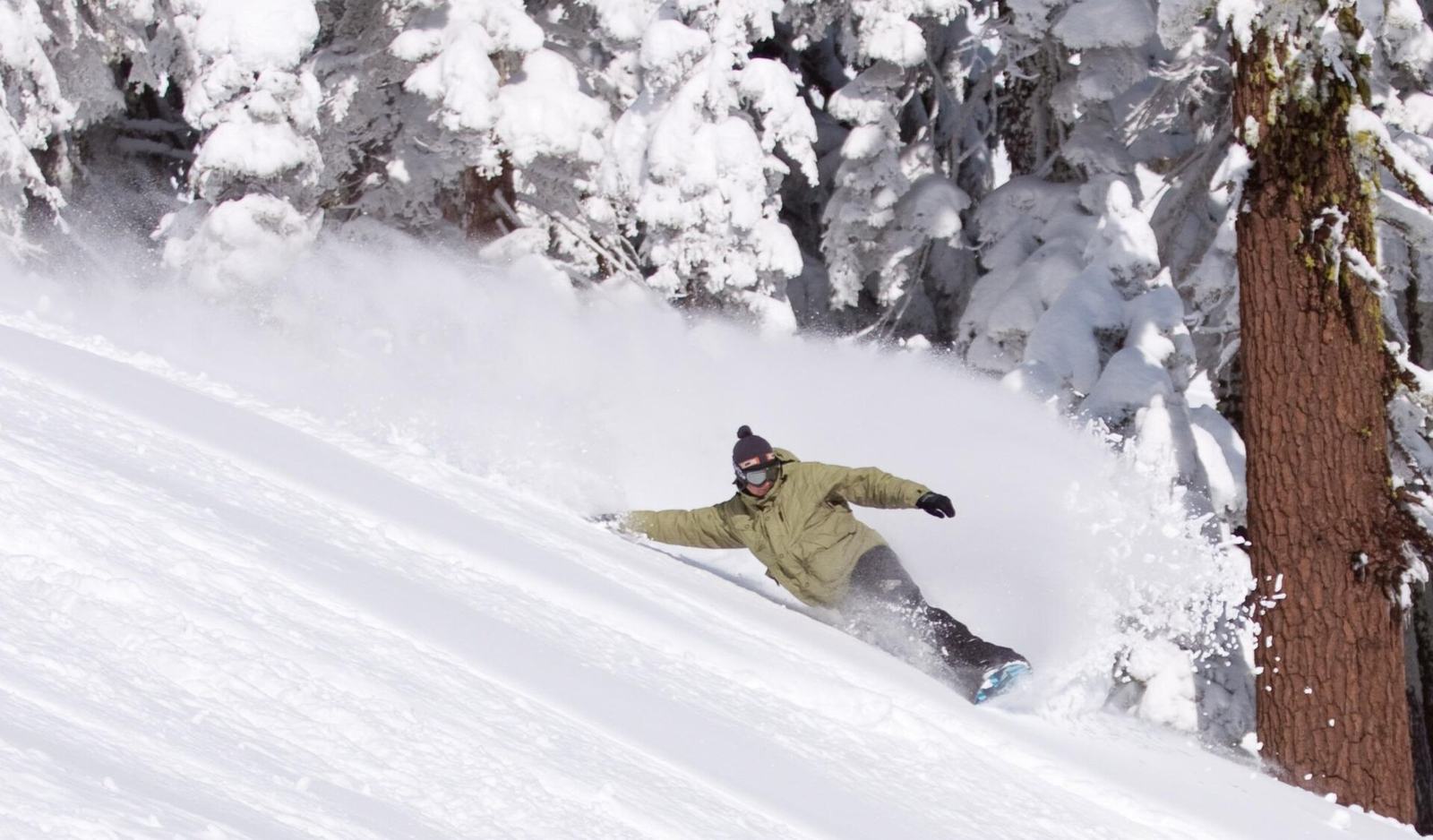
| Powder turn at Alpine Meadows, Lake Tahoe (featured image) | Ripley119 | CC BY-SA 3.0 | Commons |
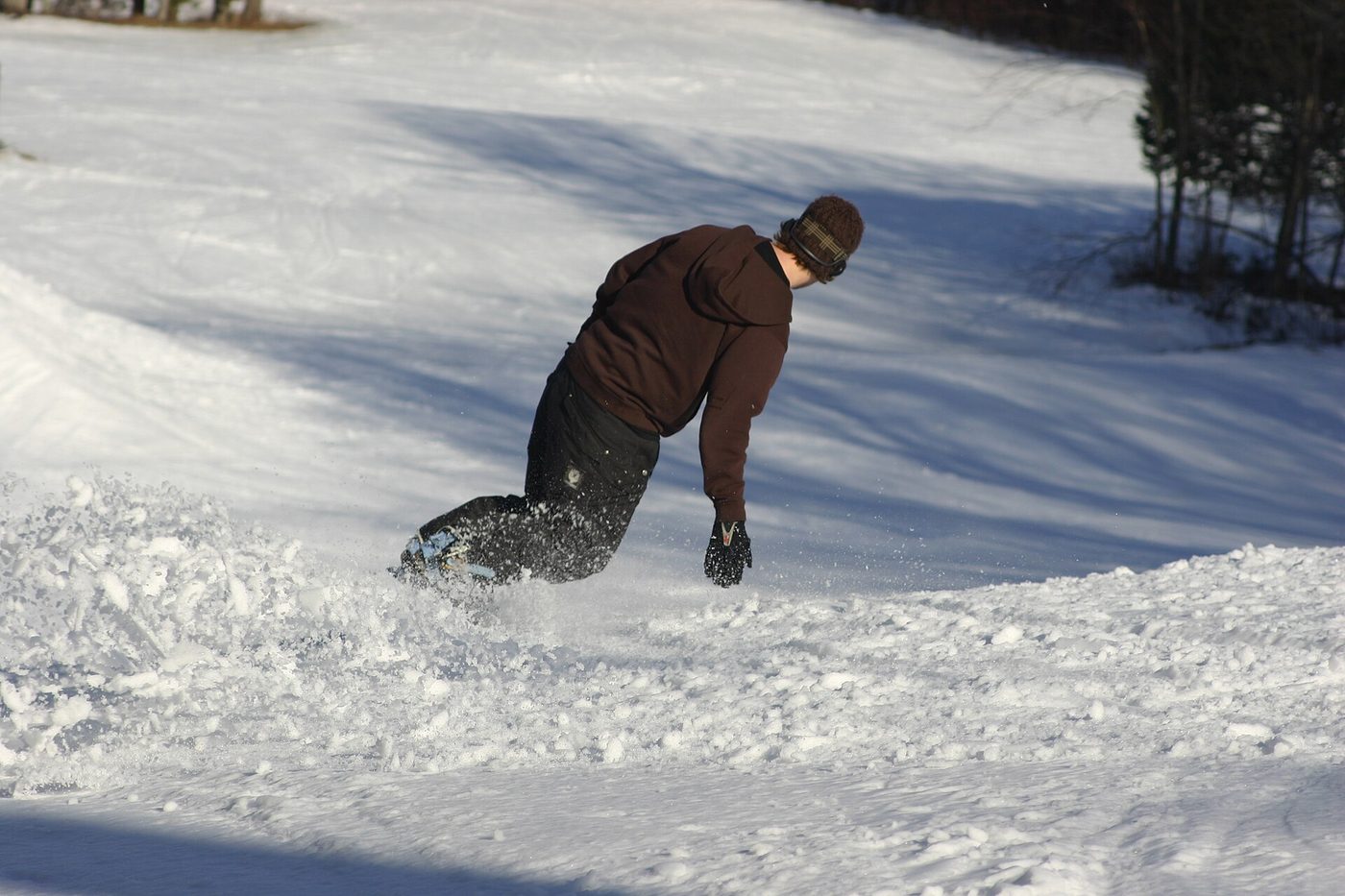
| Heel-side carve at Wachusett | grendelkhan | CC BY-SA 4.0 | Commons |
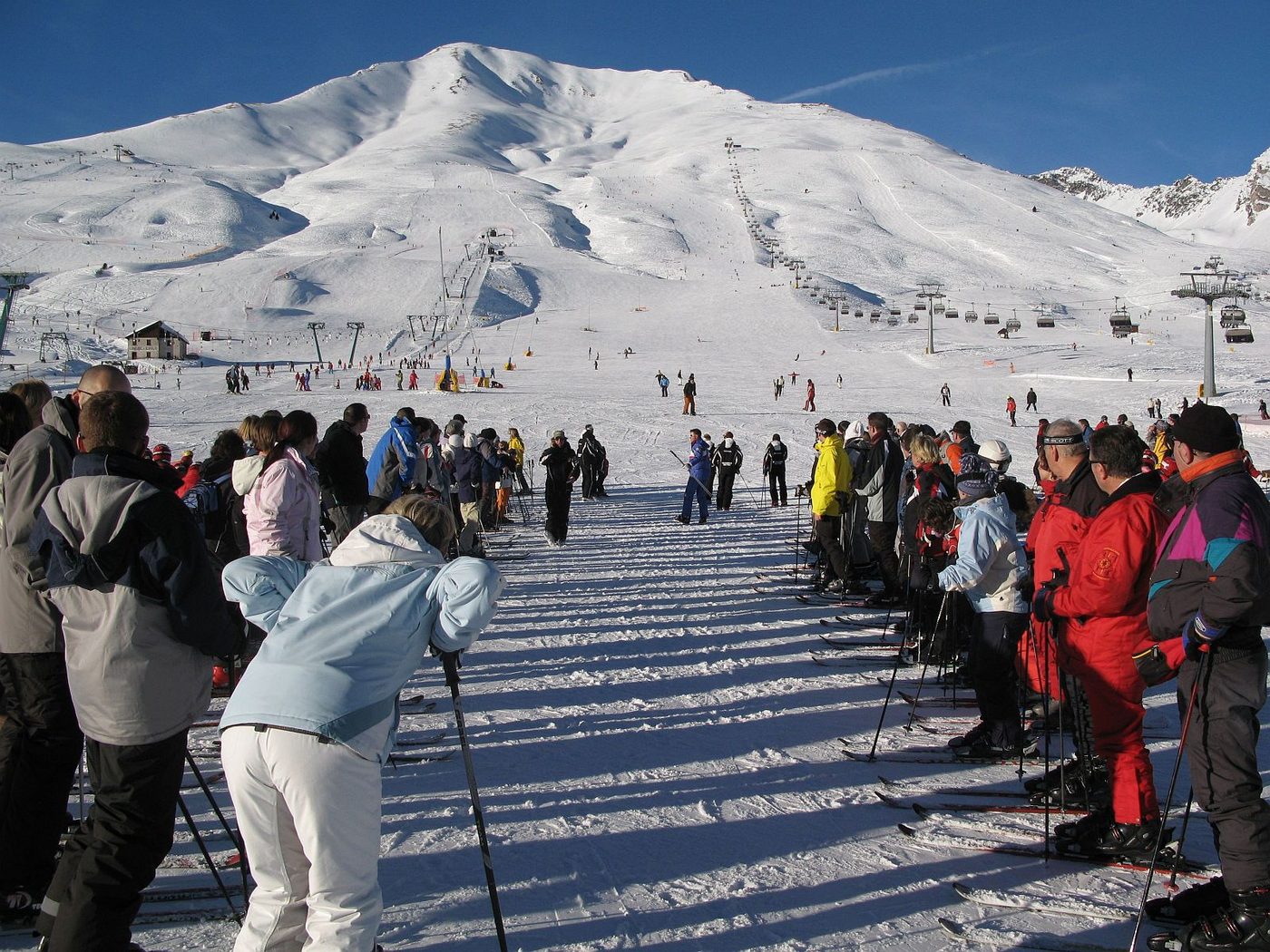
| Ski school at Passo Tonale | Zoran Kurelić Rabko | CC BY-SA 3.0 | Commons |
| Backward fall at a spring event | Staff Sgt. Sheila deVera | Public domain | Commons |
| New England groomed trail | Henry P. Gray | CC BY-SA 3.0 | Commons |
| Small jump, Selwyn Snowfields | Jwow976 | CC BY-SA 3.0 | Commons |
| Big air at Banff Sunshine | maureen | CC BY 2.0 | Commons |