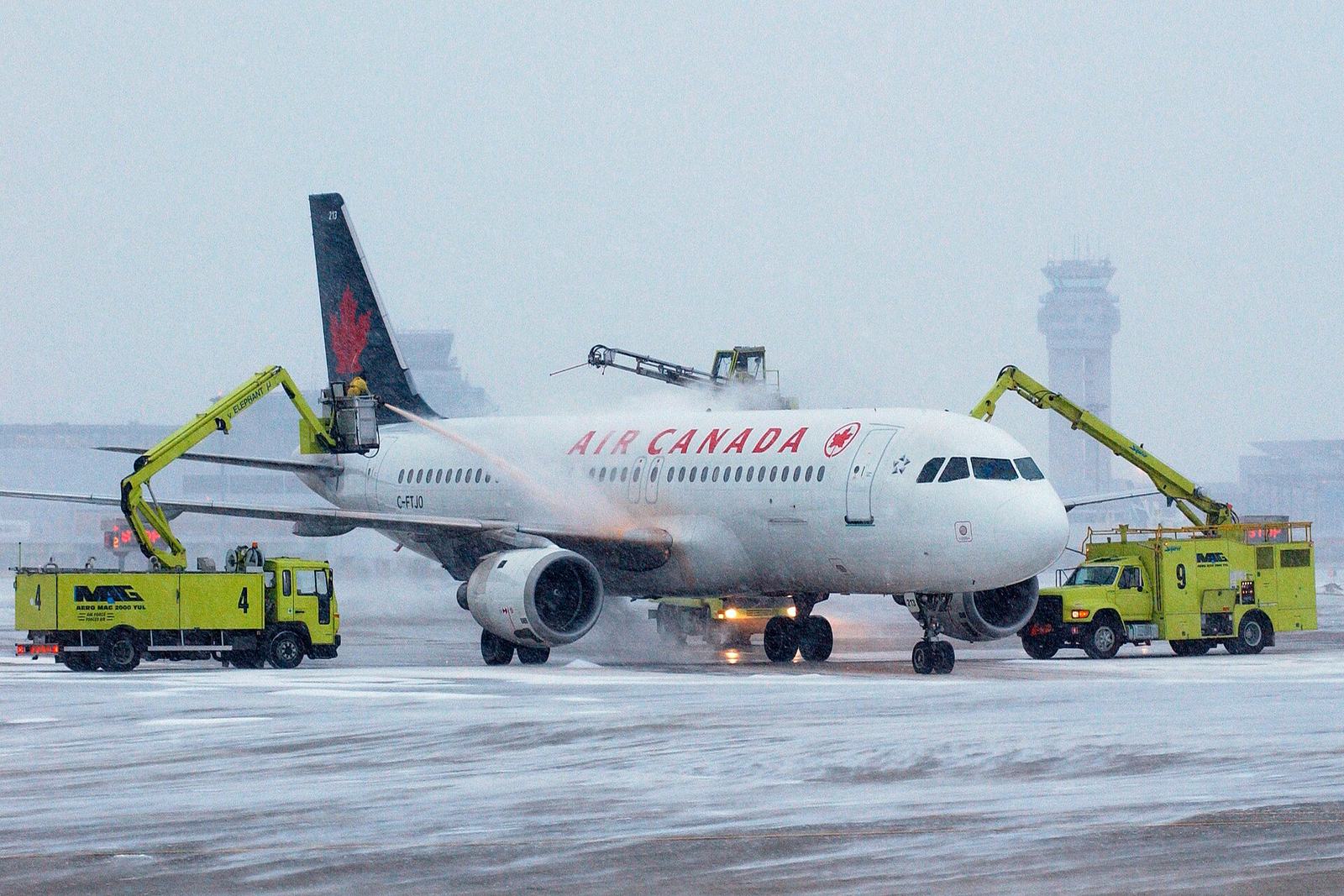
Flying with skis costs less than most people expect and goes wrong more often than most people plan for. United, Delta, American and Alaska all count a ski or snowboard bag plus a boot bag as a single checked item, charged at the normal bag fee — roughly $35 to $50 for the first bag as of September 2026 — provided the pair weighs under 50 pounds. The expensive mistakes are not the fees. They are the tight connection, the missing bag, and the four-hour drive nobody costed.
That last one is the real story. Airfare and bag fees are a small, predictable part of a ski trip’s transport budget. What actually costs you money and skiing days is the ground leg: the rental car you needed winter tyres on, the mountain pass that closed, the shuttle you missed, and the afternoon you spent on I-70 instead of on a chairlift.
This guide covers the whole chain — bag rules and fees by carrier, whether to ship instead, what to carry on, which airports actually put you on snow quickly, and how to drive to a resort in winter without ending up in a ditch or a queue. It is written for US skiers travelling domestically and to Europe.
What do airlines charge for ski bags in 2026/27?
US carriers raised checked-bag fees across the board in April 2026. The first checked bag now runs roughly $35 to $50 — United $45, Delta $45 prepaid or $50 at the airport, Southwest $45 since 9 April 2026, American from $40 — and the second bag $45 to $55.
The important part is what counts as one bag:
| Carrier | Ski/board bag + boot bag | First bag fee (domestic) | Notes |
|---|---|---|---|
| United | Counted as one item | ~$45 | Under 50 lb combined |
| Delta | Counted as one item | ~$45 prepaid / $50 at airport | Under 50 lb combined |
| American | Counted as one item | from ~$40 | Under 50 lb combined |
| Alaska | Counted as one item | Varies by fare | Long-standing ski-friendly policy |
| Southwest | Standard bag fee applies | ~$45 since 9 April 2026 | The free-bags era ended |
Fees checked 10 September 2026. Airline baggage terms change frequently and vary by fare class, route, elite status and card holding — confirm on the carrier’s own sporting-equipment page before you fly.
The practical consequence: flying with skis usually costs the same as flying with a suitcase. Two bags, one fee. That is a genuinely good deal, and it is the single most common thing people get wrong when budgeting a ski trip — they assume an oversize charge that does not apply.
The catch is the 50-pound limit. A ski bag with two pairs of skis, poles and a stuffed boot bag goes over 50 pounds easily, and overweight fees are punitive — often $100 to $200 per bag, more than the shipping alternative. Weigh the packed bag at home on a bathroom scale before you leave. This is a two-minute job that saves a lot of money.
Elite status and co-branded credit cards frequently waive the first bag entirely, which makes the airline’s own card a rational purchase for anyone taking two or more ski trips a season. Do the arithmetic before you buy anything: two round trips, two people, first bag waived, is roughly $180 to $200 a year.
Should you ship your skis instead of flying with them?
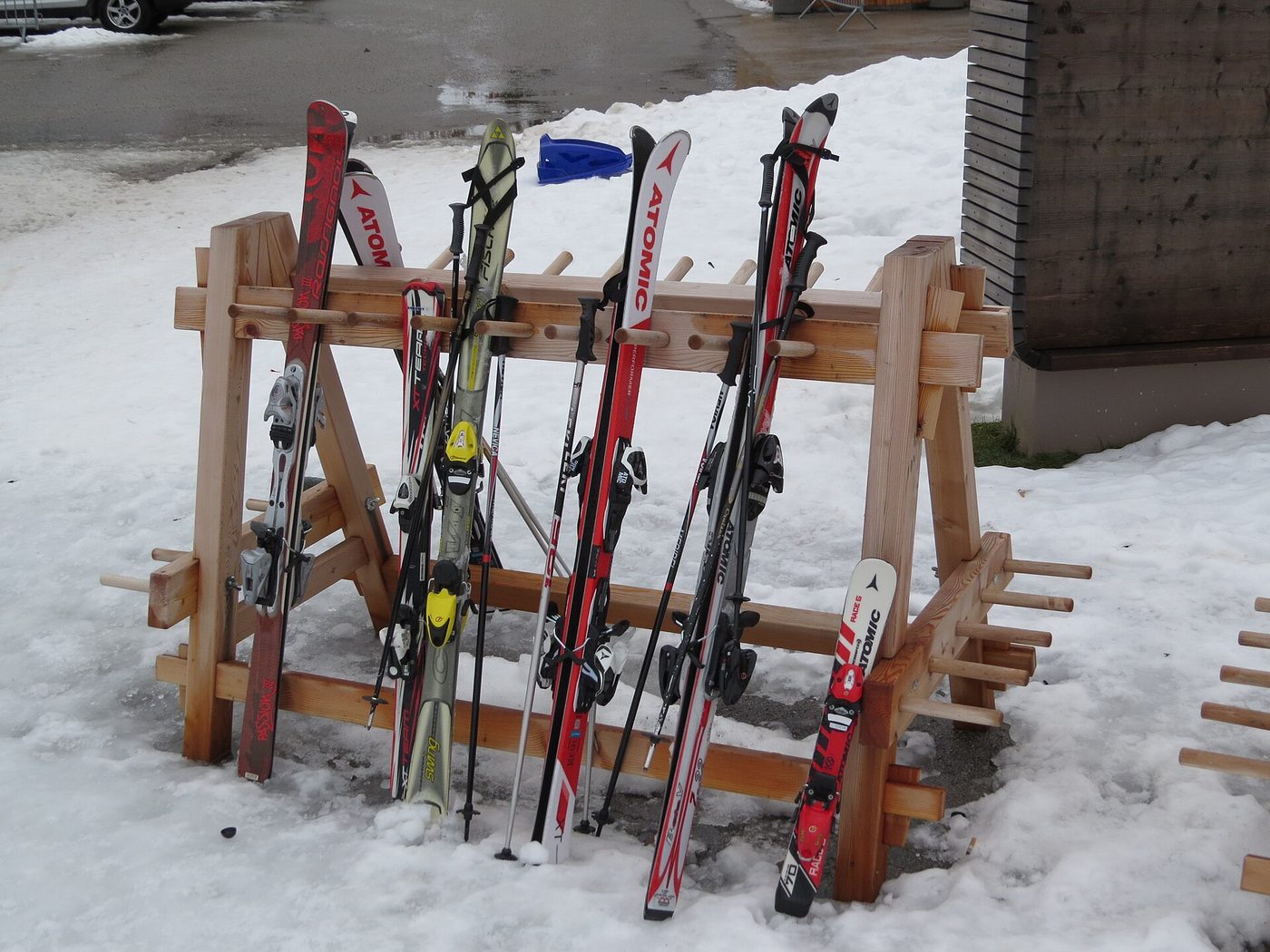
Ship when you are travelling with a group’s worth of gear, when your itinerary has a tight connection, or when you simply do not want to handle a ski bag through two airports. Fly with them when you are one or two people on a direct flight — at $45 a bag, checking is almost always cheaper than shipping.
The door-to-door services publish these starting points as of September 2026:
| Service | Advertised from | Practical round-trip range |
|---|---|---|
| LugLess | $23 one way | Under $100 round trip on the basic tier |
| Ship Skis | $39 one way | $90–180 round trip typical |
| Luggage Forward | — | ~$209 round trip for skis, express |
Prices checked 10 September 2026. All three price by distance, speed and insurance level, so the advertised “from” number applies to short domestic routes booked well ahead.
Luggage Forward’s own advice is worth repeating, because it is unusually honest for a vendor: shipping eight days before your trip and collecting the gear nine days after roughly halves the express price. The trade is that your skis are gone for a fortnight.
The comparison that decides it: a family of four on United, checking two ski bags and two boot bags, pays about $140 round trip in airline fees. Shipping four sets of gear will cost more than that at any of these services. Shipping wins on convenience and on itineraries with connections, not usually on price.
Where shipping genuinely earns its money:
- Long or multi-leg itineraries, especially international ones with a change of carrier, where mishandled-bag risk compounds.
- Trips where you arrive late and ski early. Gear waiting at the hotel beats gear arriving on the 11pm flight.
- Anyone travelling with a snowboard bag, a boot bag, a suitcase and a child. There is a limit to how many things one adult can move through an airport.
- Ski touring or racing setups you cannot replace with a rental.
Where it does not: short domestic hops, one or two people, or any trip where you would happily rent at the resort anyway. Rental gear at a destination resort runs $45 to $85 a day, so a week of rentals is not cheap either — the honest comparison is in rent or buy ski gear.
What should you carry on, and what goes in the hold?
Carry on everything that is hard to replace at a resort and cheap to carry: ski boots, helmet, goggles, gloves, base layers and any medication. Check the skis, poles and outerwear. TSA does not permit ski poles in carry-on baggage — they go in the hold with the skis — but boots and helmets are entirely allowed and are the smartest things to have with you.
The reasoning is about what a resort can and cannot fix at 8am on your first morning.
Replaceable at almost any resort in an hour: skis, poles, jacket, trousers, gloves, goggles, socks. Every base area has a rental shop and a retail shop.
Not replaceable: ski boots that fit. Boots are moulded to a specific foot, often heat-fitted, and a rental boot in an unfamiliar shell will ruin two days while you work out what hurts. If you own boots, they travel in the cabin. This one rule prevents more ruined ski trips than any other piece of packing advice.
Also carry on: prescription medication, contact lenses, a phone charger, and one full base layer. If your checked bag is delayed 24 hours, that combination means you can still ski tomorrow in rented outerwear.
A short list of things that catch people out at security:
- Ski poles: checked only. Same for ice axes and crampons.
- Avalanche airbag packs contain a compressed gas cartridge and are treated as hazardous material. Rules differ by carrier and prior airline approval is generally required — call the airline, do not assume, and do not turn up at the gate hoping.
- Ski wax and tuning tools are fine checked; edge files and scrapers are not carry-on items.
- Lithium battery packs and heated-glove batteries must be in the cabin, never in the hold. This is a fire rule and it is enforced.
Our ski trip packing list covers the full inventory, and what to pack in a ski carry-on drills into the cabin bag specifically.
How do you pack a ski bag properly?
Pad the tips and tails, put soft clothing around the bindings, and keep the whole thing under 50 pounds. A ski bag is not just a sleeve — it is padding, weight management and theft deterrence all at once, and the way you pack it decides whether your edges arrive intact.
The method that works:
- Base the skis together, bases facing in, and strap them at tip and tail. Rubber ski straps cost $5 and stop the pair scissoring inside the bag.
- Wrap the tips and tails in soft goods — a jacket at one end, ski trousers at the other. Tips and tails take the impact when a bag is thrown onto a belt.
- Pack clothing around the bindings, which are the heaviest, hardest, most damage-prone part.
- Do not pack the boots in the ski bag. They add 8 to 12 pounds and push you over the limit, and you want the boots with you anyway.
- Weigh it. Fifty pounds, on a bathroom scale, before you leave the house.
- Put a name and phone number inside the bag as well as outside. External tags come off.
- Consider an AirTag or Tile in the bag. Airlines will accept a passenger’s tracker location as evidence of where a bag actually is, and it turns a two-day argument into a twenty-minute one.
A padded bag is worth the money if you own good skis. A thin nylon sleeve protects against scratches and nothing else. If your skis cost $700, a $120 padded bag is cheap insurance — and it doubles as a much better bag to travel with. How to pack a ski bag goes step by step.
Which airports actually get you to the snow fastest?
The transfer, not the flight, is what decides whether you ski on arrival day. Here are realistic winter drive times — realistic meaning “in normal winter conditions”, not the times a mapping app gives you on a dry Tuesday in July.
| Airport | Resorts served | Typical winter drive |
|---|---|---|
| Salt Lake City (SLC) | Alta, Snowbird, Solitude, Brighton | 35–55 min |
| Salt Lake City (SLC) | Park City, Deer Valley | 40–60 min |
| Salt Lake City (SLC) | Snowbasin, Powder Mountain | 50–75 min |
| Reno-Tahoe (RNO) | North Lake Tahoe, Palisades | 45–75 min |
| Bozeman (BZN) | Big Sky | 60–75 min |
| Jackson Hole (JAC) | Jackson Hole | 20–30 min |
| Eagle County (EGE) | Vail, Beaver Creek | 30–50 min |
| Denver (DEN) | Summit County (Breck, Keystone, Copper, A-Basin) | 90 min–3 hr+ |
| Denver (DEN) | Vail, Steamboat, Aspen | 2.5–5 hr |
| Burlington (BTV) | Stowe, Sugarbush, Jay Peak | 45 min–1.5 hr |
| Albany (ALB) | Southern Vermont, Gore, Hunter | 1–2.5 hr |
| Boise (BOI) | Sun Valley, Bogus Basin | 20 min–2.5 hr |
| Vancouver (YVR) | Whistler Blackcomb | 2–2.5 hr |
| Calgary (YYC) | Banff, Lake Louise | 1.5–2.5 hr |
Drive times as of 10 September 2026, for normal winter conditions. Storms, I-70 closures and avalanche control can add hours without warning.
Salt Lake City is the fastest major ski gateway in North America, and it is not close. That is the single strongest argument for a Utah trip, and our Utah ski resorts guide makes it in full.
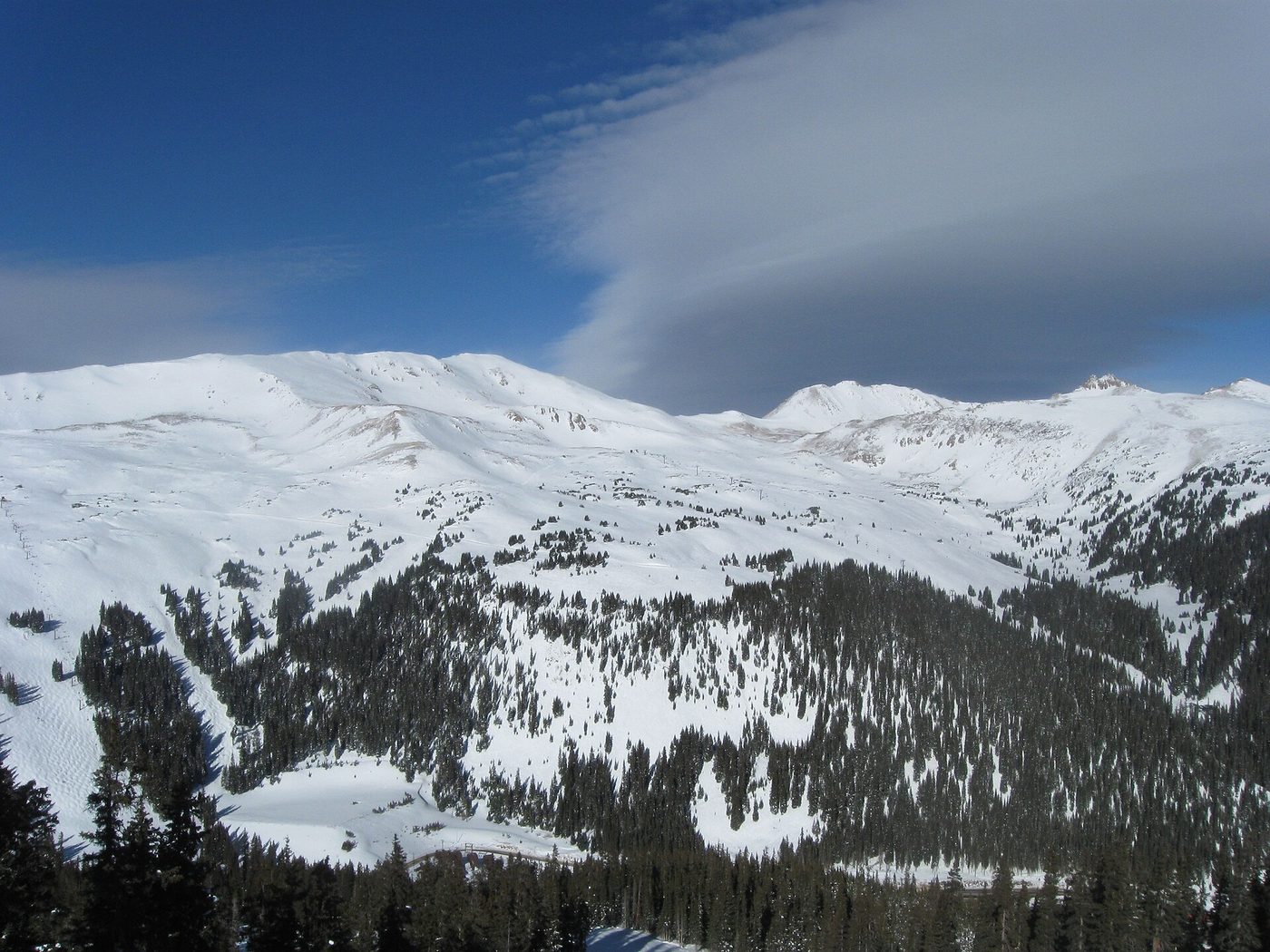
Denver is the most misunderstood. DEN is a huge, cheap, well-connected airport that is a long way from the mountains — and I-70 westbound on a Saturday morning in February is one of the worst recurring traffic problems in American skiing. A 90-minute drive becomes three or four hours several times each winter. The fix is not a better car; it is flying on a weekday, driving before 7am or after 6pm, or taking the Bustang or a resort shuttle and letting somebody else deal with it. Colorado ski resorts covers the specifics of that corridor.
Regional airports cost more and save time. Eagle County, Hayden (Steamboat), Aspen, Gunnison, Jackson and Montrose all charge a premium of $150 to $400 on a round-trip fare, and all of them save two to four hours of driving each way. On a four-day trip that is close to a full ski day, which is worth more than the fare difference for most people. On a ten-day trip it usually is not.
A cancelled flight into a regional airport is a much bigger problem than a cancelled flight into a hub. Small mountain airports have few daily services and weather-cancel more often. If you are flying into one, build a buffer day, or at least a plan B that involves the nearest hub and a rental car.
Do you need a rental car for a ski trip?
Not always, and increasingly not. The default assumption that you need a car costs people a great deal in rental fees, parking charges and stress on snowy roads.
You do not need a car when:
- You are staying in a resort town with a free bus. Park City, Vail, Aspen, Steamboat, Jackson, Whistler and Telluride all have genuinely good free public transport.
- You are staying slopeside and skiing the same mountain all week.
- You are going to Salt Lake City’s Cottonwood Canyons, where UTA ski buses run from valley park-and-rides and the canyon parking is the whole problem.
- A resort shuttle exists. Most destination resorts run scheduled airport transfers for $50 to $120 per person each way — often cheaper than a rental plus parking plus fuel for a couple.
You do need a car when:
- You are resort-hopping, which is the whole point of a Utah or Summit County trip.
- You are staying in a valley town 20 to 40 minutes out to save on lodging.
- You are travelling with small children and a lot of gear.
- You are skiing somewhere with no meaningful transit, which is most of Montana, most of Idaho, and much of New England.
If you rent, rent the right thing. All-wheel drive with winter-rated or all-weather tyres, not an all-season sedan. Several Western states enforce traction laws during storms, and Colorado’s applies to every passenger vehicle on I-70 between September and May. Utah’s canyon roads turn cars back at the mouth. Book AWD explicitly and confirm it at the counter — “or similar” is how you end up with a rear-wheel-drive Mustang in a blizzard, and that is not a joke, it happens every season.
Parking is now a real line item. Paid or reserved parking at major Colorado, Utah, Tahoe and Vermont resorts commonly runs $30 to $60 a day on weekends and holidays, with free lots further out and a shuttle. Factor it in before you decide the car is cheaper than the transfer.
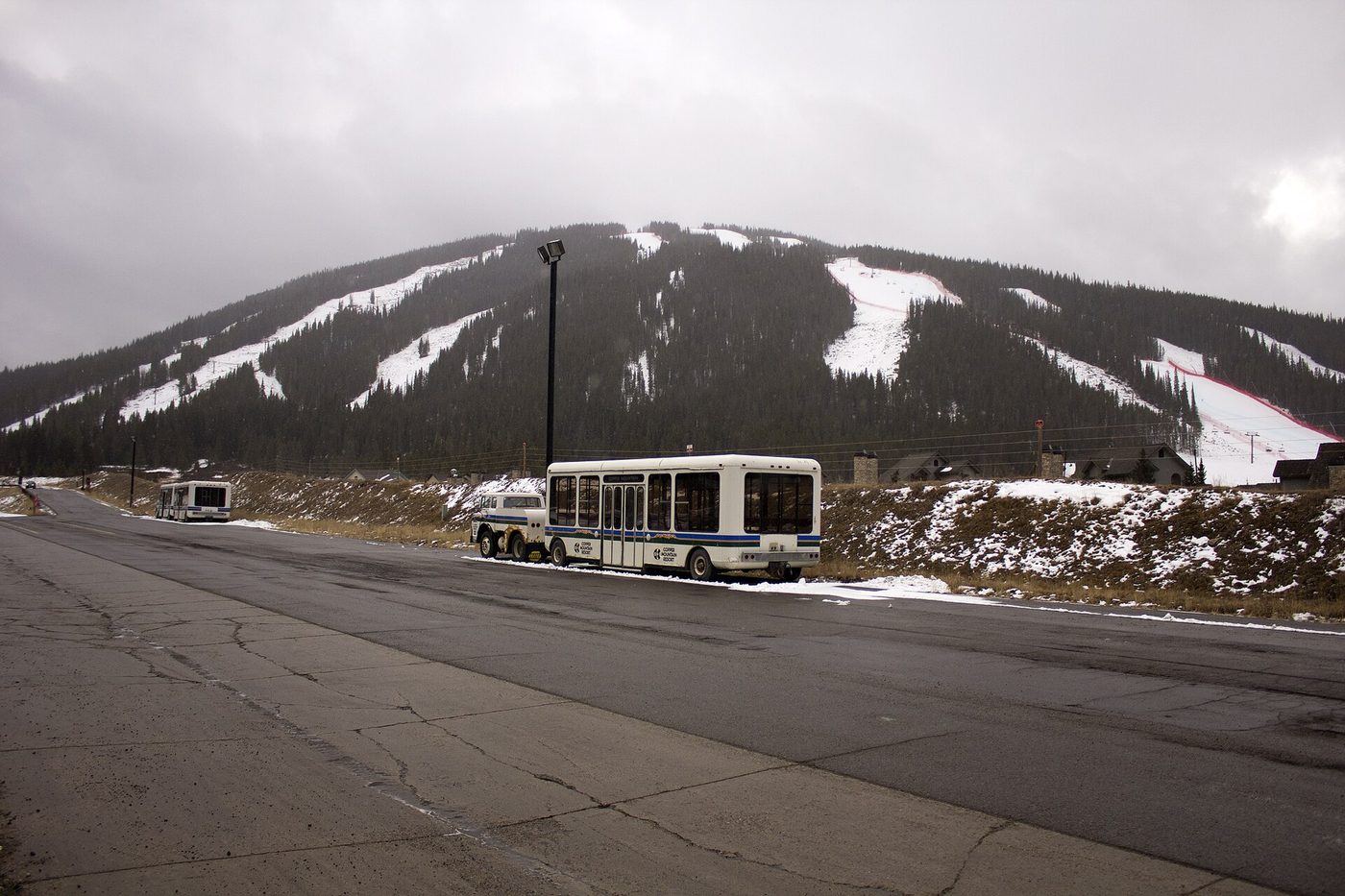
How do you drive to a ski resort in winter safely?
Leave earlier than you want to, keep the tank above half, and turn around rather than push through a closed pass. Mountain driving punishes optimism more than it punishes inexperience, and the two decisions that matter most — when you leave and whether you go at all — are both made before you get in the car.
The things that actually help:
- Check the state DOT before you leave, not en route. CDOT, UDOT, Caltrans and NHDOT all publish live road conditions, chain and traction law status and closure information. Bookmark the one you need.
- Know the traction law. Colorado’s Traction Law requires all-weather or snow tyres with adequate tread, or chains, on I-70 during storms; the Passenger Vehicle Chain Law is the stricter escalation. Fines are real and towing is worse.
- Fill up in the valley. Mountain fuel costs more, and a closure with a quarter tank and the heater running is a bad afternoon.
- Carry water, snacks, a charged phone and a warm layer in the cabin, not in the boot under the skis. If you are stopped for avalanche control for three hours, that is what you will want.
- Descend in a low gear, and do not ride the brakes. Long mountain descents cook brake pads.
- If the pass closes, stop. Every winter, several people try to beat a closure and cost themselves and a rescue crew a night.
Full detail is in winter driving to ski resorts, and rental car ski trip covers the booking side.
What is different about flying to Europe with skis?
European carriers generally treat ski equipment as a separately-declared sporting item with its own fee, rather than folding it into a standard checked allowance — and the fee is often lower than the US equivalent but must be booked in advance. Budget carriers charge separately and their weight limits are lower, sometimes 20 kg (44 lb) rather than 23 kg (50 lb).
Three things that catch American skiers out:
- Declare the skis when you book, not at the airport. Most European carriers price sports equipment far higher at the counter, and some will refuse it entirely if it was not pre-booked and the hold is full.
- Train transfers are usually better than driving. The TGV to the Tarentaise valley, the Zermatt shuttle train, and the Austrian rail network all reach ski areas directly, and they run in weather that closes roads. A car is often the worse option in the Alps, particularly in car-free villages.
- Renting in Europe is cheap and easy. European rental gear is inexpensive by US standards, well maintained, and available at the bottom of every lift. For a single Alpine week, many people are better off flying with boots only.
Our skiing in Europe guide covers the wider planning picture, and flying to Europe with skis goes into the carrier-by-carrier detail.
What happens if the airline loses your skis?
Report it before you leave the airport, keep the file reference, and start the resort rental process the same evening. Airlines reimburse reasonable replacement rentals against a delayed-bag claim, but almost nobody keeps the receipts, and a claim without receipts is a claim that gets denied.
The sequence that works:
- File at the airport baggage desk, in person, before leaving. Get a written file reference number.
- Photograph the bag tag and the claim form. These disappear.
- Rent what you need and keep every receipt — skis, poles, and outerwear if the clothing was in the missing bag.
- Submit the claim within the airline’s window, which is often 21 days for delayed baggage and shorter for some carriers.
- Check your travel insurance and your credit card. Many cards that paid for the flight include baggage delay cover, often $100 to $300 a day after a set delay period, and it stacks with the airline’s liability.
The pre-emptive fix is a tracker in the bag. It does not stop the bag going missing, but it converts “we don’t know where it is” into “it is in Denver, put it on the 4pm flight”, which is a much shorter conversation.
What does the transport half of a ski trip actually cost?
Modelling the ground leg properly is what stops a budget from being wrong by 30%. Here is a realistic set of numbers for two people on a four-night domestic trip.
| Line item | Fly and rent a car | Fly and use transfers | Drive from home (5 hr) |
|---|---|---|---|
| Airfare, two people | $400–900 | $400–900 | — |
| Checked bags, round trip | $140–200 | $140–200 | — |
| Rental car, 5 days | $300–600 | — | — |
| Fuel | $50–90 | — | $90–160 |
| Airport transfer / shuttle | — | $200–480 | — |
| Resort parking, 4 days | $0–240 | $0 | $0–240 |
| Total transport | $890–2,030 | $740–1,580 | $90–400 |
Indicative ranges as of 10 September 2026. Airfare varies enormously by origin and date; parking assumes a major resort charging on weekends.
Two conclusions from that table. Transfers often beat renting a car for a couple staying in one place, particularly once resort parking is counted. And driving is dramatically cheaper if you live within a day’s range, which is why East Coast and Midwest skiing has an economics all of its own — see east coast ski resorts for that picture. The complete trip budget is in ski trip cost.
Frequently asked questions
How much does it cost to fly with skis?
Usually just the standard checked bag fee, roughly $35 to $50 for the first bag as of September 2026. United, Delta, American and Alaska all count a ski or snowboard bag plus a boot bag as a single checked item, provided the combined weight is under 50 pounds. Overweight fees are where it gets expensive — often $100 to $200 per bag — so weigh the bag at home.
Do skis count as one bag or two?
On United, Delta, American and Alaska, a ski or snowboard bag and a boot bag together count as one checked item at the normal bag fee. Other carriers and most international airlines treat them separately or as declared sporting equipment with its own charge. Check the carrier’s sporting-equipment page before you book, not at the airport.
Is it cheaper to ship skis or fly with them?
Flying is usually cheaper for one or two people on a direct domestic flight, where checking costs about $45 a bag. Shipping starts around $23 to $39 one way and rises with distance and speed, and it wins on convenience, on multi-leg itineraries, and for anyone moving several sets of gear through connecting airports.
Can you take ski boots as carry-on?
Yes, and you should. Ski boots are the one piece of equipment a resort cannot replace for you — they are fitted to your feet and a rental shell will hurt. Helmets, goggles and gloves are also allowed in the cabin. Ski poles are not: TSA permits them in checked bags only.
What is the best airport to fly into for a ski trip?
Salt Lake City, by a wide margin, at 35 to 60 minutes from ten resorts. Reno for Tahoe, Bozeman for Big Sky, Eagle County for Vail and Beaver Creek, and Burlington for northern Vermont are all fast. Denver is cheap and well connected but sits 90 minutes to five hours from the mountains, with severe I-70 congestion on winter weekends.
Do I need a rental car at a ski resort?
Not if you are staying in a resort town with a free bus, staying slopeside, or skiing the Cottonwood Canyons, where buses solve a parking problem money cannot. You do need one for resort-hopping, for staying in a cheaper valley town, or anywhere without transit. If you rent, book all-wheel drive with winter-rated tyres explicitly — traction laws are enforced.
What do I do if my ski bag is delayed?
File a report at the airport baggage desk in person before you leave, get the written file reference, then rent replacement gear and keep every receipt. Airlines reimburse reasonable rental costs against a delayed-baggage claim, and many travel credit cards add their own baggage delay cover on top. A tracker in the bag makes the whole process dramatically shorter.
Are avalanche airbag packs allowed on planes?
They contain a compressed gas cartridge and are treated as hazardous material, so the answer depends on the carrier and generally requires prior approval. Rules differ meaningfully between airlines and between countries. Call the airline in advance — turning up at the gate and hoping is how the pack ends up in an airport bin.
The bottom line
Flying with skis is the easy part. Two bags for one fee, boots in the cabin, everything under 50 pounds, and a tracker in the ski bag — that is the whole airline problem, and it costs about the same as travelling with a suitcase.
The hard part is everything after baggage claim. Choose the airport by drive time rather than fare, be honest about whether you need a car, check the state DOT before you set off, and price parking and transfers before you assume the rental is cheaper. Get the ground leg right and you land, drive, and ski. Get it wrong and you spend the first day of your holiday on a motorway.
The guides beneath this one go into each piece: airline ski bag fees carrier by carrier, how to pack a ski bag step by step, shipping skis with the full cost comparison, and rent skis at resort or bring your own for the decision underneath all of it. For the ground leg, start with the best airports for skiing, then rental car ski trip, ski resort shuttle from the airport and winter driving to ski resorts. If you are heading across the Atlantic, flying to Europe with skis covers the differences, and what to pack in a ski carry-on covers the cabin bag.
Baggage fees, shipping prices and TSA rules checked 10 September 2026 for the 2026/27 season. Airline baggage terms change frequently and vary by fare and status — confirm with the carrier before you book.
Sources
- TSA — ski poles: what can I bring, checked 10 September 2026
- Ship Skis — cost to ship skis, checked 10 September 2026
- LugLess — ship skis, checked 10 September 2026
- Luggage Forward — ski shipping, checked 10 September 2026
- SKI Magazine — ski shipping services compared
- Colorado Department of Transportation — winter driving and traction laws, checked 10 September 2026
- UDOT — Cottonwood Canyons travel information, checked 10 September 2026
Airline baggage fees are taken from the carriers’ own published sporting-equipment and baggage pages and are quoted as ranges because they vary by fare class, route, elite status and card holding.
Image credits
| Image | Photographer | Licence | Source |
|---|---|---|---|
| Aircraft de-icing in winter (featured image) | Alexcaban | Public domain | Commons |
| Alpine skis in a rack, Annaberg | GT1976 | CC BY-SA 4.0 | Commons_Alpine_skis_in_Annaberg,_Lower_Austria.jpg) |
| Ski rental shop, Dumont, Colorado | Xnatedawgx | CC BY-SA 4.0 | Commons |
| Copper Mountain shuttle buses | Bidgee | CC BY-SA 3.0 AU | Commons |
| Loveland Ski Area above I-70 | Mitch Bennett | CC BY 2.0 | Commons |
| Winter Park day lodge | Murray Foubister | CC BY-SA 2.0 | Commons_-_(13843523774).jpg) |