
The best ski resorts in the US cannot be ranked into one list that works for everybody. The right mountain for you is decided by four things: which pass you hold, what you can afford per day, how well you ski, and how far you are willing to travel from an airport. Get those four right and the shortlist writes itself — Alta for snow, Park City for size, Loveland for value, Big Sky for terrain.
That answer is less satisfying than a numbered list, but it is the one that survives contact with a real trip. Every year a family flies to a resort that topped somebody’s ranking, discovers the beginner terrain is an afterthought and the lift tickets are $280 a day, and comes home convinced skiing is not for them. The mountain was not wrong. The match was.
This guide does three things the usual roundups do not. It shows you where the major ranking systems disagree and why. It gives you the numbers that are actually verifiable, clearly separated from the ones resorts make up about themselves. And it walks you through the decision in the order that matters, ending with a shortlist you can book.
The rankings disagree with each other, and that tells you something
Search “best ski resorts in the US” and you will be handed a number one. Search again on a different site and you will be handed a different number one. This is not sloppiness. Each system measures something genuinely different, and once you see what, you can pick the system that matches what you care about.
| Ranking system | What it actually measures | 2026 top pick |
|---|---|---|
| SKI Magazine Resort Guide | Reader survey — roughly 200,000 skiers rating 18 criteria from snow and challenge to après and guest service | Big Sky, MT (West) and Saddleback, ME (East) |
| USA Today 10Best | Public vote, expert-nominated shortlist | Snowbasin, UT, two years running |
| PeakRankings | Editorial “Mountain Score” weighing terrain, snow, lifts, crowds and aesthetics | Jackson Hole, WY (top US resort, 81/100) |
| Skiresort.info | Infrastructure-weighted star rating across a global database | Big Sky, MT (4.7/5) |
Four systems, three different winners. And the disagreement is instructive: the reader survey rewards resorts that feel good to visit, the editorial score rewards terrain quality, and the public vote rewards resorts with enthusiastic communities. Snowbasin does not have the biggest terrain in America, but it has short lift lines, good food and a devoted following. Jackson Hole does not win popularity contests, because a lot of people who go there find it too steep.
One detail worth pulling out: Sun Valley took first place in three individual SKI categories for 2026 — lifts, dining and parking — and placed top five in ten categories overall, without winning the overall title it held for three straight seasons earlier in the decade. That is what a strong resort with a specific profile looks like in the data.
The practical read: if a resort appears in the top ten of two or more of these systems, it is genuinely excellent. If it appears in exactly one, look at what that system measures before you book. Our full explanation of how these systems work, and which one to trust for your situation, is in how to choose a ski resort.
How we assess resorts on this site
We do not run a scoring system, and we are suspicious of anyone who claims a single number can rank a mountain. What we do instead is separate three kinds of information and label which is which.
Verifiable facts — acreage, vertical drop, lift counts, long-run snowfall averages, pass affiliation, published prices. These are checked against independent sources and dated. Where sources disagree, we say so rather than picking the flattering number.
Resort marketing — “best snow in the world”, “something for everyone”, trail-count percentages. We treat these as claims, not data, and we do not repeat them.
Judgment — whether a mountain suits beginners, whether the village is worth staying in, whether the crowds ruin a Saturday. This is opinion, informed by conditions on the ground, and we flag it as opinion.
Every price and statistic on this page carries the date it was checked. Ski pricing in particular changes several times a season, and a page that does not tell you when it was last verified is not telling you very much.
Start with the four questions that actually decide it
Before any resort names, answer these. In this order.
1. Which pass do you already have, or which will you buy?
For the 2026/27 season the Epic Pass and the Ikon Pass share no resorts at all. That is not a small overlap you can work around — it is a hard fork. Choosing a pass is choosing roughly half the country’s marquee resorts and giving up the other half.
If you already hold a pass, your shortlist is already half-written. If you do not, decide the pass before the resort, because the pass math almost always wins: a full Epic Pass runs $1,145 for adults 31 and over, and a single walk-up day at Jackson Hole in the Christmas week runs $289. Two or three days of window-price skiing costs more than a season of one.
2. What is your honest per-day budget?
A ski day in America ranges from about $60 all-in at a small local hill to well over $500 at a marquee destination once you count the ticket, rental, lunch and lodging. The national average lands near $322 per person per day, but averages hide everything that matters here. A three-to-four day trip at a major resort runs roughly $800 to $1,500 per person on a budget, $1,500 to $3,000 mid-range, and $3,000 to $6,000 and up if you are staying slopeside and eating out.
3. What is the weakest skier in your group?
Not the strongest. Groups are limited by their least confident member, and a resort with brilliant expert terrain and a token beginner area will make one person miserable for a week. Be honest about this before you fall in love with a photograph of a couloir.
4. How much travel are you willing to do at the end of the flight?
The difference between a 35-minute transfer and a four-hour mountain drive is a full skiing day across a round trip, plus the risk of a pass closure. Salt Lake City puts you on snow faster than any other major US ski gateway; Aspen and Telluride will cost you most of a travel day from a hub airport.
The biggest US ski resorts, by verified skiable acres
Resorts self-report acreage and nobody audits it, so treat every number in this category as directional. That said, the figures below are the ones consistently reported across independent sources.
| Resort | State | Skiable acres | 2026/27 pass |
|---|---|---|---|
| Powder Mountain | Utah | ~8,464 on paper (see note) | Independent |
| Park City Mountain | Utah | 7,300 | Epic |
| Palisades Tahoe | California | 6,000 | Ikon |
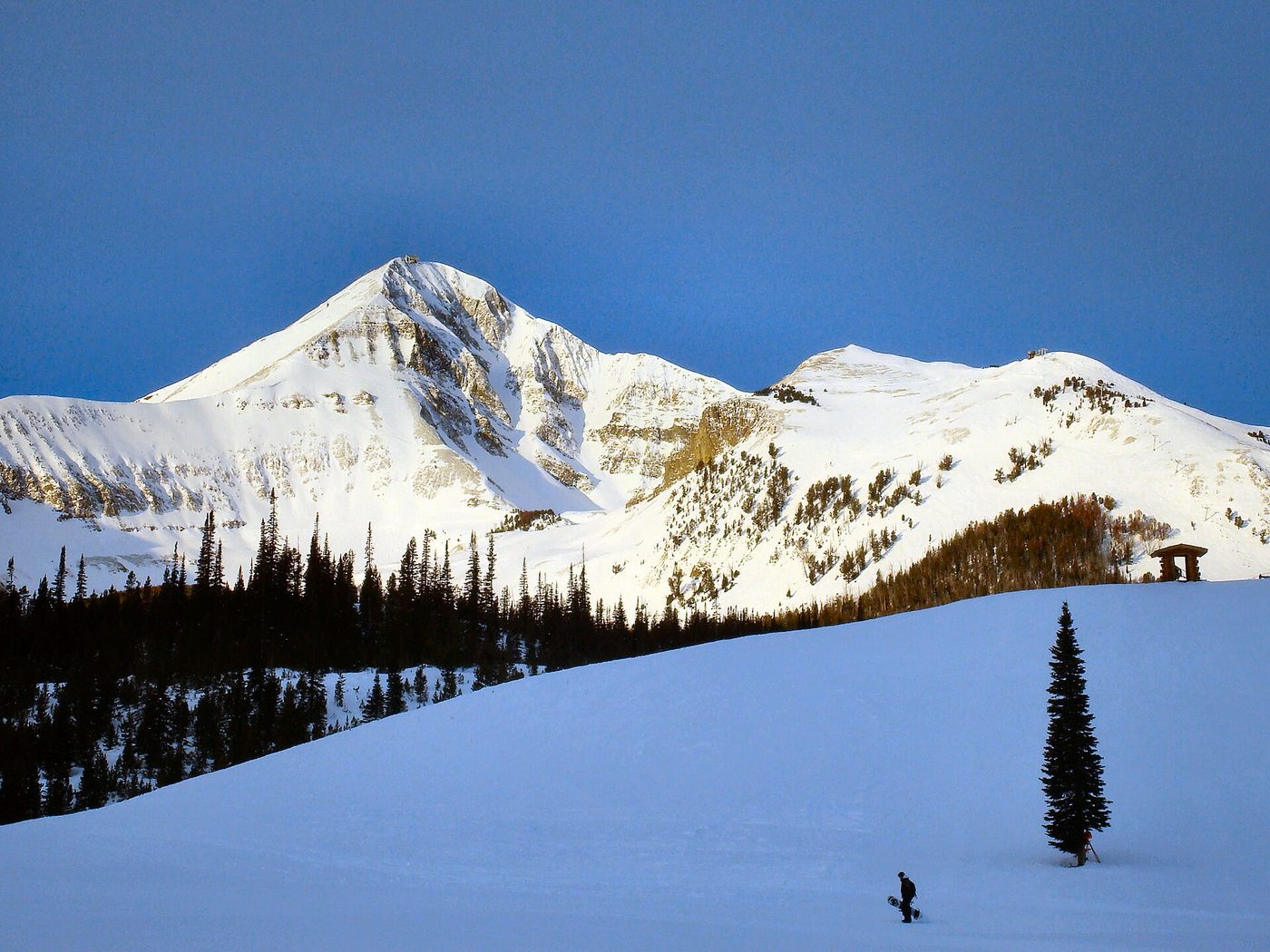
| Big Sky | Montana | 5,850 | Ikon |
| Aspen Snowmass | Colorado | 5,700 across four mountains | Ikon (limited days) |
| Vail | Colorado | 5,317 | Epic |
| Heavenly | California / Nevada | 4,800 | Epic |
| Mt. Bachelor | Oregon | 4,323 | Ikon |
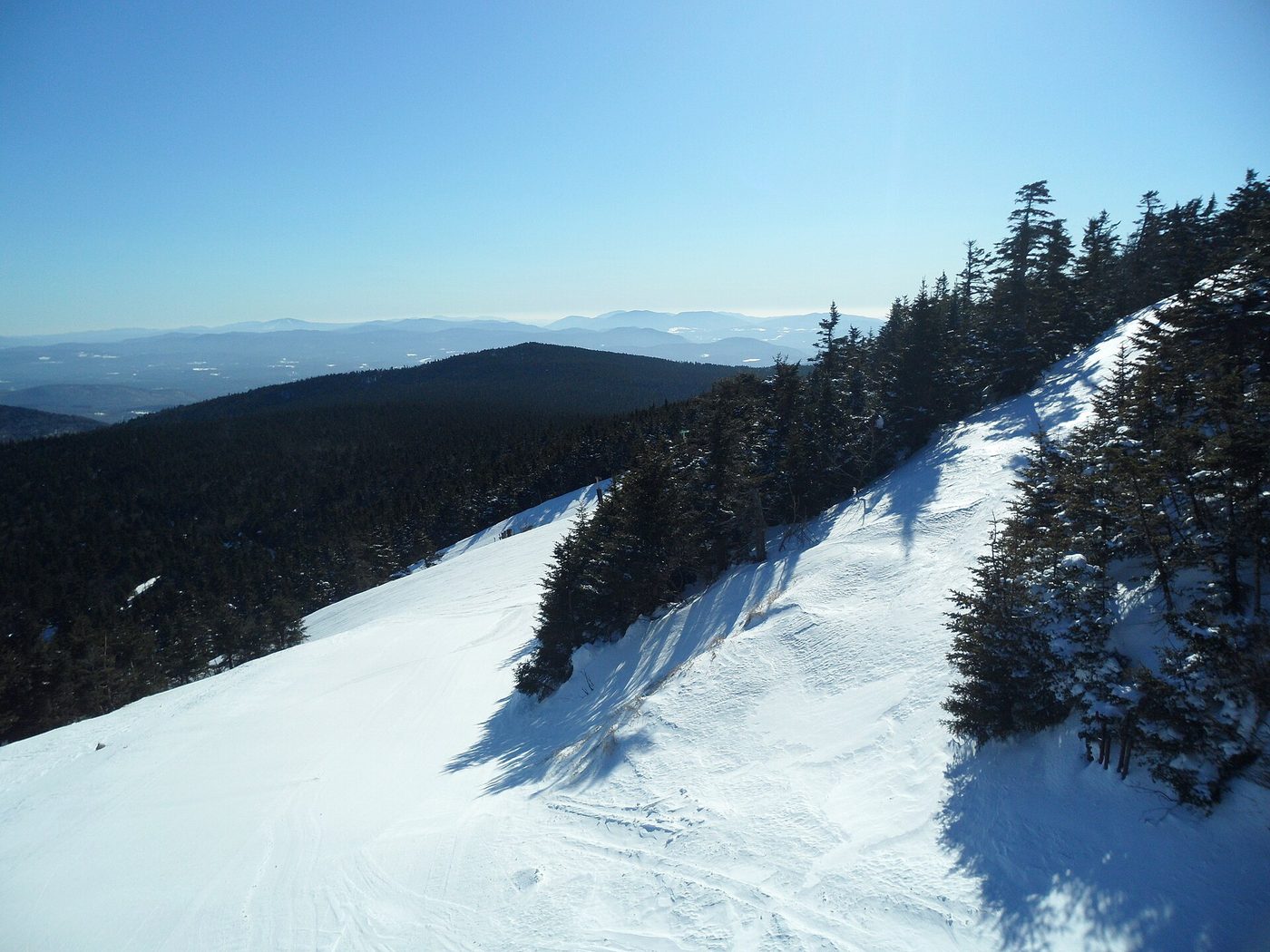
| Killington | Vermont | 1,509 — biggest in the East | Ikon |
The Powder Mountain note matters. Powder Mountain’s headline acreage is the largest in the country, but a large share of the mountain is reached by snowcat rather than lift, and some terrain has been converted to private members’ access. That is changing: a $40 million project announced in March 2026 opens more than 1,000 acres of advanced terrain to the public for 2026/27, around 900 of it lift-served with 2,200 feet of vertical, which takes public skiable terrain past 6,000 acres. It is a fascinating mountain and a terrible one to pick purely off a spec sheet — which is exactly why spec sheets are a bad way to choose.
That leaves Park City Mountain as the largest lift-served ski area in the United States, and Vail as the largest single mountain, since Aspen Snowmass and Park City both get there by connecting separate areas.
Size is not quality. A 7,300-acre resort you ski for four days is functionally a 2,000-acre resort, because you will not cover it. Size matters most for two groups: people staying a week or more, and mixed-ability groups who need everyone to find their own terrain off the same lift. We break down what acreage really buys you in the biggest ski resorts in the US.
The longest vertical drops
Vertical drop is the honest measure of how big a mountain feels. It is the number that determines whether a run lasts ninety seconds or fifteen minutes.
| Resort | State | Vertical drop | Notes |
|---|---|---|---|
| Snowmass | Colorado | 4,406 ft | Largest lift-served vertical in the US |
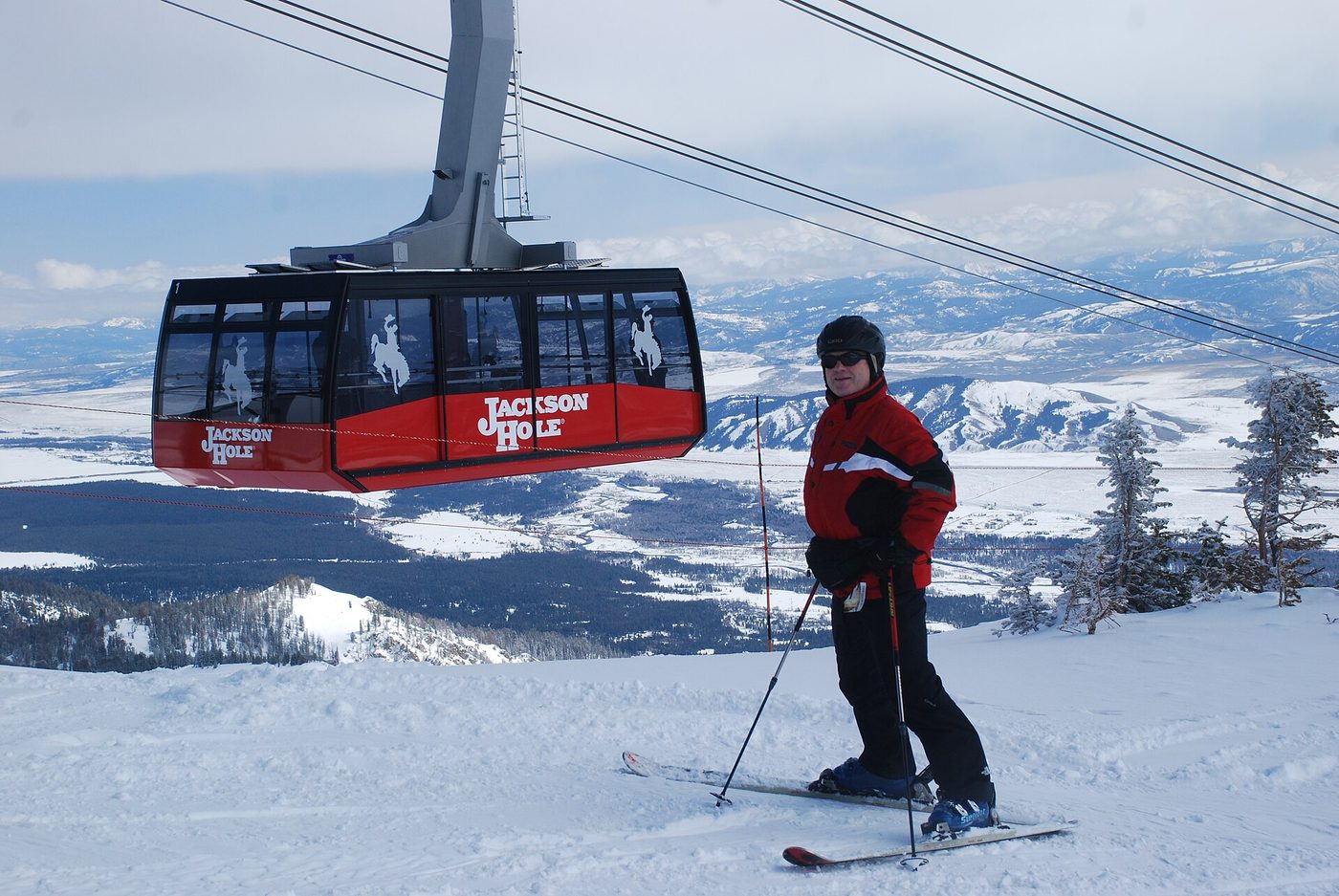
| Jackson Hole | Wyoming | 4,139 ft | Longest continuous lift-served descent, on one tram ride |
| Big Sky | Montana | 4,026 ft | Second-longest sustained vertical |
| Telluride | Colorado | 3,790 ft lift-served | 4,425 ft including hike-to terrain |
The Jackson Hole number is the one people feel. The Aerial Tram climbs 4,139 feet in one ride, and the run back down is a genuine mountaineering-scale descent rather than a series of linked trails. It is also why Jackson has a reputation that scares off intermediates unfairly — the tram terrain is severe, but the resort has plenty of moderate skiing that photographs badly.
The snowiest US ski resorts
Snowfall is the single number most worth chasing, because it changes what the mountain is on any given day more than any amount of terrain does.
| Resort | State | Average annual snowfall |
|---|---|---|
| Mt. Baker | Washington | ~663 in |
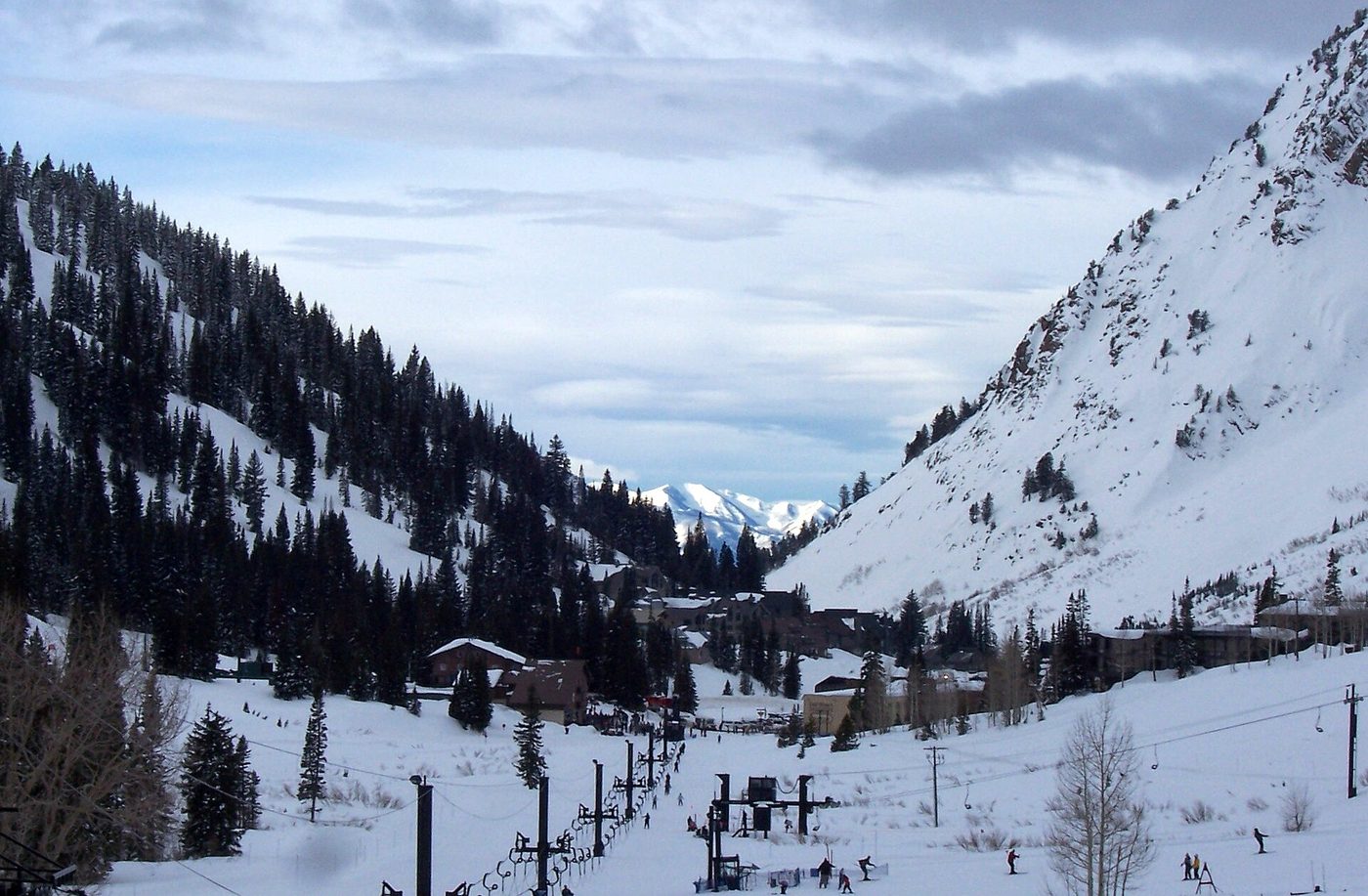
| Alta | Utah | ~500 in |
| Grand Targhee | Wyoming | ~500 in |
| Jackson Hole | Wyoming | ~458 in |
| Wolf Creek | Colorado | ~430 in |
Two caveats before you book a flight to Mt. Baker. First, these are season averages and a single season can miss badly in either direction. Second, quantity is not quality: the Pacific Northwest gets the most snow in the country and a good deal of it is dense and wet, while Utah’s Cottonwood Canyons get slightly less of a much lighter snow that skis far better. That difference is the entire reason Utah’s marketing department has been allowed to put a snow claim on the state’s license plates.
Full breakdowns are in the snowiest ski resorts in the US and the best powder ski resorts in North America, which covers how to actually be there when it snows rather than hoping.
Best US ski resorts by what you actually need
Best for beginners
Look for three things: a large, gently pitched learning area separated from through-traffic, long green runs from a real summit so you progress rather than lapping a carpet, and a ski school with small group sizes. Park City, Keystone, Northstar, Deer Valley and Bretton Woods all deliver this. Resorts like Jackson Hole, Alta and Mad River Glen do not, and are honest about it.
The mistake is picking a beginner resort purely on green-trail percentage. A resort where the greens are cat-tracks between parking lots will teach you nothing. Full analysis in the best ski resorts for beginners in the US, and if you have never clipped in at all, start with skiing for beginners.

Best for advanced and expert skiers
Jackson Hole, Alta, Snowbird, Big Sky, Crested Butte, Taos and Mad River Glen. What these have in common is sustained pitch, consistent snow and terrain that is not simply a black-diamond label on a groomed run. Jackson and Big Sky give you the vertical; Alta and Snowbird give you the snow; Taos and Crested Butte give you steep, technical skiing with fewer people on it. See best ski resorts for advanced and expert skiers.
Best on a budget
The cheapest good skiing in America is at independent areas and mid-sized mountains that never appear in national rankings: Loveland and Monarch in Colorado, Bogus Basin in Idaho, Whitefish in Montana, Magic Mountain in Vermont. Lift tickets at these run a fraction of destination-resort prices, and the Indy Pass exists specifically to string them together.
Independents also tend to have cheaper lodging nearby, which is usually the larger line item anyway. Details in the cheapest ski resorts in the US and underrated US ski resorts worth the trip.
Best for families
Family skiing is decided by logistics, not terrain: how far the ski school is from the parking, whether there is a lift you can all ride together, whether lodging has a kitchen, and whether there is something to do at 4pm when the kids are done. Keystone, Park City, Northstar, Smugglers’ Notch and Sunday River are built around this. Our full treatment is in family ski vacations.
Best for a first flight-free weekend
If the trip has to be short, the calculation flips entirely: transfer time dominates everything. That pushes you towards resorts within two hours of a major airport, or within driving distance of home. See best ski resorts near major airports and, for the Northeast in particular, best East Coast ski weekend itineraries.
Best for spring skiing
Late-season skiing is the best-value week of the year: soft snow, long days, cheap tickets, no lines. Mammoth, Arapahoe Basin, the high bowls at Palisades Tahoe, Timberline on Mt. Hood and Killington all run deep into spring, and Mammoth regularly operates from November into May and occasionally beyond. See the best spring skiing resorts in the US.
Best for couples, and best for groups
These pull in opposite directions. Couples want a walkable village, good food and quiet lodging — Telluride, Sun Valley, Stowe and Aspen. Groups want volume: nightlife, big rental houses, terrain that suits mixed abilities, and a bar that will take twelve people at 4pm — Breckenridge, South Lake Tahoe, Killington and Steamboat. Covered in the most romantic ski resorts and best ski resorts for groups.
Best for night skiing
Night skiing is chronically underrated as a way to add hours to a short trip or ski cheaply midweek. Keystone runs the largest night operation in Colorado; Bogus Basin, Boyne Mountain and a long list of Midwest and Northeast hills run lights several nights a week. See the best night skiing resorts in the US.
The best skiing by region
Colorado
The default answer, and for good reason: 26 ski areas, reliable snow, and the densest concentration of famous mountains in the country. It is also the most expensive and most crowded skiing in America, and the drive from Denver on I-70 is a genuine factor — that road climbs through high passes and can close in a storm.
Vail, Breckenridge, Keystone and Beaver Creek sit on Epic; Aspen Snowmass, Steamboat, Winter Park, Copper and Arapahoe Basin sit on Ikon. Altitude is a real consideration here in a way it is not elsewhere: Denver is at 5,280 feet, the town of Breckenridge is close to 9,600, and people routinely lose their first day to it. Full guide: Colorado ski resorts.
Utah
The best snow-to-effort ratio in the country. Salt Lake City International sits under an hour from Alta, Snowbird, Brighton, Solitude, Park City, Deer Valley and Snowbasin, which means you can land in the morning and ski in the afternoon. The Cottonwood Canyons produce the lightest snow in North America with unusual consistency.
The catch is canyon access. Little Cottonwood closes for avalanche control several times a season, and on a big powder weekend you can lose a morning sitting in traffic. Full guide: Utah ski resorts.
California, Tahoe and the Sierra
Tahoe gives you enormous resorts with a lake view and, when the Sierra is working, some of the deepest snowpack anywhere. Palisades Tahoe at 6,000 acres and Heavenly at 4,800 are the giants; Mammoth, four hours south, has the longest season in the state. Sierra weather is volatile — huge storms, then weeks of sun — and driving over Donner Pass in winter requires chains and attention. Full guide: Lake Tahoe ski resorts.
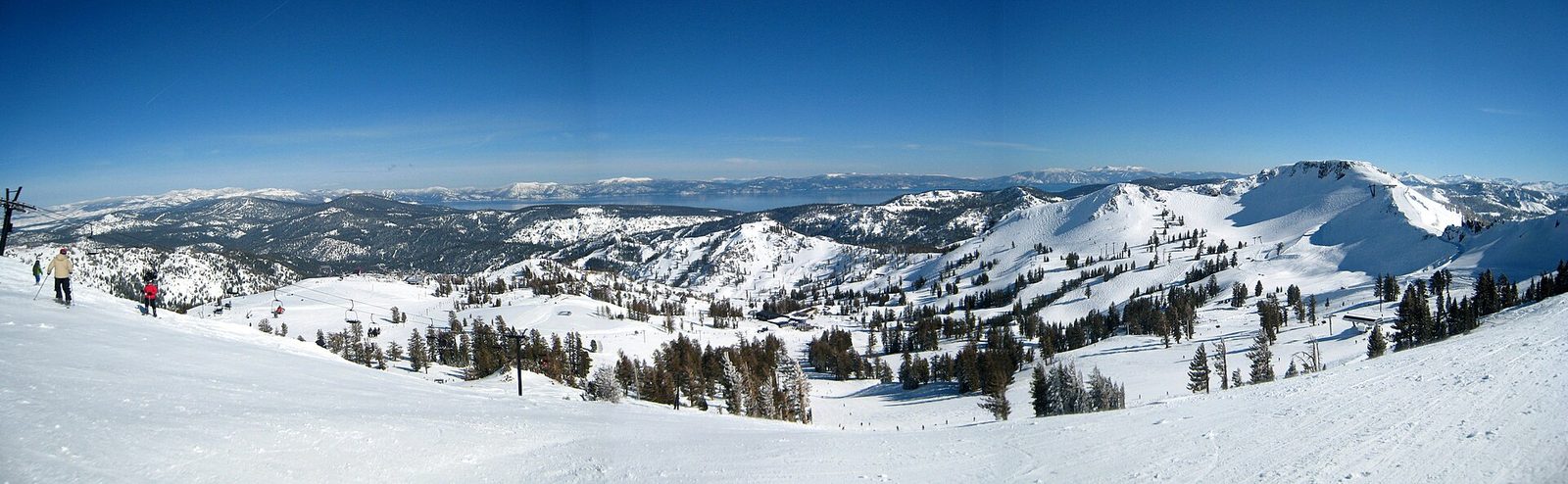
Montana, Wyoming and Idaho
The value play for big terrain. Big Sky, Jackson Hole, Grand Targhee, Sun Valley and Whitefish all offer serious mountains with a fraction of Colorado’s crowding, and the ski towns still feel like towns. The trade is flights: Bozeman, Jackson and Sun Valley are smaller airports with fewer routes and higher fares, so book early.
The Pacific Northwest
Mt. Baker, Crystal Mountain, Stevens Pass, Mt. Bachelor and Timberline. Enormous snowfall, low prices by national standards, spectacular volcanic scenery, and weather that can be genuinely difficult — heavy snow, rain at the base, fog. Skiers who love the Northwest love it fiercely; visitors expecting Utah’s blue skies are often disappointed.
The Northeast
Frequently dismissed and frequently wrong to be. Vermont, New Hampshire and Maine have real vertical, excellent snowmaking and, in Killington, the largest ski area east of the Mississippi. The 2026 SKI reader survey put Saddleback in Maine at number one in the East, ahead of Sugarloaf and Whiteface — a result that says a lot about what Eastern skiers now value.
The Northeast’s advantage is access. Tens of millions of people live within a half-day drive of a serious mountain, which makes weekend skiing a habit rather than an annual event. The disadvantage is ice, and learning to ski hardpack is a genuine skill. Full guide: East Coast ski resorts.
The Southwest and the Midwest
Taos in New Mexico is a legitimately great expert mountain that most of the country ignores — steep, high, dry, and reachable from Albuquerque. Wolf Creek in southern Colorado averages around 430 inches a season and gets a fraction of the traffic of the I-70 resorts, largely because it is nowhere near an interstate.
The Midwest — Michigan, Wisconsin, Minnesota — has small hills with short vertical and outstanding night skiing, and it is where a very large number of American skiers actually learn to ski. Dismissing it misses the point: a 300-foot hill twenty minutes from home produces more ski days per season than a 4,000-foot mountain you visit once a year. Ikon added three Midwestern areas as full partners for 2026/27 — Snowriver in Michigan, Lutsen in Minnesota and Granite Peak in Wisconsin, all seven days on the full pass and five on Base — and picked up Tamarack in Idaho and Devil’s Head in Wisconsin as two-day bonus mountains. All three Midwest resorts moved across from the Indy Pass, which tells you the big operators have worked this out too.

The pass decides more than people expect
For 2026/27 this is the most consequential choice on the list, because the two big passes no longer overlap at all.
| Epic Pass | Ikon Pass | |
|---|---|---|
| Full pass price | $1,145 adult (31+) | from $1,449 adult (23+) |
| Mid-tier | Epic Local, $849 | Ikon Base, from $1,019 |
| Unlimited access | 42 resorts | 18 destinations |
| Total destinations | roughly 90 | 70+ |
| Refunds | No unused-pass refund | Optional fully refundable add-on for +20%, through 15 Jan 2027 |
| Marquee US resorts | Vail, Beaver Creek, Breckenridge, Keystone, Crested Butte, Park City, Telluride (limited) | Aspen Snowmass, Jackson Hole, Big Sky, Steamboat, Deer Valley, Alta, Snowbird, Mammoth, Sun Valley, Snowbasin |
| New for 2026/27 | No new destinations; investment in existing resorts | Snowriver (MI), Lutsen (MN), Granite Peak (WI) |
Prices checked 10 September 2026. Both passes step up in price several times between spring and the start of the season — Epic rose $26 on 7 September alone — so the number you see today is the cheapest it will be. Discounted youth, teen and child tiers exist on both, and Ikon’s renewal price undercuts the new-buyer price by around $50.
Two details that catch people out. First, the Base tier excludes some of the reason people buy Ikon. For 2026/27 Jackson Hole, Alta, Deer Valley, Sun Valley, Snowbasin and the Aspen Mountain / Highlands / Buttermilk trio are full-pass only. Snowbird, Big Sky, Steamboat and Brighton are on Base but at five days each, and Snowmass is back on Base for the first time since 2019/20, with holiday blackouts. Arapahoe Basin is unlimited on Base. Check the list against your actual targets before you save $430 — for some itineraries Base is excellent value and for others it is a false economy.
Second, most of Ikon’s famous names are limited-day, not unlimited. The full pass gives you seven days each at Deer Valley, Snowbasin and Sun Valley, seven days shared between Alta and Snowbird, and seven days shared across the four Aspen Snowmass mountains. Its unlimited list is shorter and less glamorous: Steamboat, Winter Park, Palisades Tahoe, Mammoth, Copper and the like. Epic’s model is the opposite — fewer trophy names, far more unlimited access.
The rule of thumb: Epic if you will ski a lot of days at one or two mountains. Ikon if you will take two or three trips to different marquee resorts. The full break-even math, tier-by-tier comparison and the case for the Indy Pass and Mountain Collective are in our ski pass guide.
What does skiing in the US actually cost?
A US ski day averages around $322 per person all-in, but the honest range runs from about $60 at a small local hill to well over $500 at a marquee resort in February. Lift tickets and lodging drive almost all of the variance, and both fall sharply outside holiday weeks.
Lift tickets have separated into two economies. Buy in advance, or on a pass, and skiing costs what it always did. Walk up to the window on a peak day and it costs something else entirely: Jackson Hole’s walk-up rate passes $250, hits $289 across the Christmas-to-New-Year window, and peaks at $356. A Vail window ticket in February runs $307.
Nobody should ever pay these prices. They exist to make advance purchase look reasonable, and they work. The same day bought a few weeks ahead is routinely 20 to 40 percent less, and on a pass it is a rounding error.
Beyond the ticket, budget roughly $70–$250 a night for lodging, $300–$500 a week for rental gear, and $150–$350 for a lesson. Full line-item breakdowns by destination and trip style are in how much a ski trip costs.
When is the best time to ski in the US?
Late January is the best all-round window: reliable snow, moderate crowds and prices well below the holidays. Late March and April give you the softest snow, the longest days and the cheapest tickets of the season. The fortnight around Christmas is the worst value of the year.
The same mountain is a different product in December and April, and the calendar changes which resort you should pick.
- Early season (Nov–mid Dec): limited terrain, cheap, quiet. Best at high-altitude resorts with strong snowmaking — Arapahoe Basin, Loveland, Killington.
- Holidays (late Dec–early Jan): the most expensive and most crowded fortnight of the year. Avoid unless you have no choice.
- January: the value sweet spot. Cold, snowy, quiet after the first week.
- February–early March: peak conditions, peak crowds, peak prices. School holiday weekends are the worst days of the season at almost every resort.
- Late March–April: soft snow, long days, cheap tickets, shortening season. The best week of the year for intermediates.
Timing is covered properly in our ski season and snow conditions guide.

Five mistakes people make choosing a US ski resort
1. Choosing on acreage. You will not ski 7,300 acres in four days. Terrain variety and lift efficiency matter more than raw size for any trip under a week.
2. Choosing on last season’s snowfall. Last year tells you nothing about this year. Long-run averages and elevation are the signal; one big season is noise.
3. Ignoring the transfer. A cheap flight into a hub airport four hours from the mountain can cost you more in time, rental car and stress than a pricier flight into the regional airport.
4. Buying the wrong pass tier. Base and Local tiers exclude specific resorts and specific dates. Read the blackout list and the resort exclusions before you buy, not after.
5. Optimising for the strongest skier. The person having the worst time determines whether the trip was good. Pick for them.
So which one should you book?
If you want the shortest possible answer:
- First-time skier: Park City, Keystone or Bretton Woods. Book lessons before you book anything else.
- Confident intermediate wanting a great week: Big Sky, Steamboat or Sun Valley.
- Chasing snow above all: Alta or Snowbird, with a Utah trip built around the Cottonwood Canyons.
- Expert: Jackson Hole, Taos or Crested Butte.
- Family with young kids: Keystone, Northstar or Smugglers’ Notch.
- Tight budget: an Indy Pass and a mid-sized independent — Loveland, Whitefish, Magic Mountain.
- Weekend from a Northeast city: Killington, Sunday River or Whiteface.
- Considering leaving the country: compare against skiing in Europe before you commit, because a week in the Alps often costs less than a week in Colorado.
Frequently asked questions
What is the number one ski resort in the US?
There is no consensus. SKI Magazine’s 2026 reader survey put Big Sky first in the West and Saddleback first in the East; USA Today’s 10Best readers chose Snowbasin for the second year running; PeakRankings’ editorial score puts Jackson Hole top among US resorts. Resorts that appear near the top of several systems at once — Big Sky, Alta, Snowbasin, Aspen Snowmass — are the safest bets.
Which state has the best skiing in the US?
Colorado has the most famous resorts and the most of them; Utah has the best snow quality and the easiest airport access; Wyoming and Montana have the best terrain-to-crowd ratio. For a first destination trip, Utah is the most forgiving choice because you can be skiing within an hour of landing.
What is the largest ski resort in the US?
Park City Mountain in Utah, at 7,300 acres, is the largest lift-served ski area. Powder Mountain reports more total acreage but only part of it is lift-served, and Vail’s 5,317 acres make it the largest single mountain.
Which US ski resort gets the most snow?
Mt. Baker in Washington, averaging around 663 inches a season. Utah’s Alta and Wyoming’s Grand Targhee average around 500 inches of much lighter, drier snow, which many skiers prefer.
Is Epic or Ikon better?
Neither, universally. For 2026/27 the two passes share no resorts anywhere in the world, so it depends entirely on where you ski. Epic is stronger for unlimited access and lower headline prices — $1,145 against Ikon’s $1,449 as of 10 September 2026; Ikon is stronger for variety across marquee destination resorts, though most of its best-known names are limited-day. Our ski pass guide works through the math.
How much does a US ski trip cost?
Roughly $322 per person per day on average, but the real range is wide: $800–$1,500 per person for a budget three-to-four day trip, $1,500–$3,000 mid-range, $3,000–$6,000 and up at the luxury end. Lodging and lift tickets dominate, and both drop sharply outside holiday weeks.
Are US ski resorts more expensive than European ones?
Generally, yes — often substantially, particularly on lift tickets and on-mountain food. The gap narrows once you add transatlantic flights, but a week in the Alps frequently costs less than the same week in Colorado.
When is the best time to ski in the US?
Late January for the balance of snow, price and crowds. Late March and April for soft snow, sunshine and the cheapest lift tickets of the season. Avoid the fortnight around Christmas and the school-holiday weekends in February.
The bottom line
The best ski resort in the US is a question with no general answer and a very clear personal one. Fix your pass, fix your budget, be honest about the weakest skier in your group, and count the hours between the airport and the lift. Four constraints, and the list of candidates usually collapses to two or three.
From there, the detail lives in the guides beneath this one: start with how to choose a ski resort if you want to work through the decision methodically, or go straight to the best ski resorts for beginners, the cheapest ski resorts in the US or the best powder ski resorts if you already know what you are optimising for.
Prices, pass terms and resort statistics checked 10 September 2026 for the 2026/27 season. Lift ticket prices and pass access change frequently — confirm directly with the resort before booking.
Picking the mountain is only one of the decisions, and it is not the first one. If you have not yet fixed your dates or settled the Epic-or-Ikon question, work through how to plan a ski trip before you book anything — it takes the nine decisions in the order that stops them fighting each other.
Where you sleep shapes the week almost as much as which mountain you pick. Some resorts are built so that hundreds of beds sit directly on the snow; at others the phrase is stretched to cover a shuttle ride. Our guide to ski in ski out resorts names which is which, and explains why rental supply in Breckenridge and Steamboat is capped by law.
One more option belongs on the shortlist, and Americans routinely leave it off. Whistler Blackcomb is larger than anything in the United States at 8,171 acres with a mile of vertical, Banff’s three resorts add another 7,748 inside a national park, and the exchange rate discounts lodging, food and lessons across the board. Our guide to the best ski resorts in Canada sets out what the trip actually costs and where the catches are.
Sources
Linked below are the primary sources — pass operators, resort operators and industry press. Where a figure comes from a specialist ranking or database site we name it in the text rather than linking to it.
Passes and pricing
- Ikon Pass — 26/27 Ikon Pass pricing and access, checked 10 September 2026
- Ikon Pass — 26/27 Ikon Base Pass pricing and access, checked 10 September 2026
- Epic Pass — official pass pricing, checked 10 September 2026
- Epic or Ikon — Epic Pass prices increase after 7 September 2026
- The Storm Skiing Journal — 2026/27 Ikon Pass: Snowmass rejoins Base, three Midwest resorts join as full partners
Rankings and resort data
- SKI Magazine — how we rank resorts in the 2026 Resort Guide
- Ski Area Management — Saddleback and Big Sky top the 2026 SKI reader survey
- Big Sky Resort — named SKI Magazine’s number one resort in the West for 2026
- Snowbasin — USA Today 10Best number one resort in America
- Sun Valley — 2026 SKI Resort Guide results
- Powder Mountain — 2026/27 public terrain and infrastructure expansion
Editorial ranking scores are attributed in the text to PeakRankings and Skiresort.info; snowfall averages, vertical drops and skiable acreage are cross-checked against resort operators’ own published figures and long-run snow records, and we flag where they disagree.
Image credits
| Image | Photographer | Licence | Source |
|---|---|---|---|
| Vail powder day (featured image) | Brendan Gray | CC BY-SA 2.0 | Commons |
| Lone Peak, Big Sky | Dennis Matheson | CC BY-SA 2.0 | Commons |
| Jackson Hole aerial tram | Enricokamasa | Public domain | Commons |
| Alta, Little Cottonwood Canyon | Baileypalblue | Public domain | Commons |
| Park City First Time lift | InSapphoWeTrust | CC BY-SA 2.0 | Commons.jpg) |
| Killington, Vermont | EgorovaSvetlana | CC BY-SA 4.0 | Commons |
| Palisades Tahoe panorama | John M | CC BY-SA 2.0 | Commons |
| Telluride Mountain Village | Murray Foubister | CC BY-SA 2.0 | Commons.jpg) |
| Mammoth Mountain | Plane777 | Public domain | Commons |